
BYD takes advantage of Huawei’s Maextro V800 brake failures to boast about its metal pedals
The controversy over issues detected in the braking system of the Maextro V800 is generating a lot of discussion in China and around the world. This luxury model, developed by JAC and Huawei, has been the talk of the week after a test showed its brake pedal breaking several times, causing a sharp drop in the company’s stock price and forcing its officials to take action to mitigate damage to its reputation.
However, this damage risks spreading to other brands that have nothing to do with it. This is the case with BYD, which has turned to Chinese media to highlight its own technical solutions. Specifically, BYD’s luxury brand, Yangwang, has publicly demonstrated how the brake pedals in some of its models are constructed and the standards it applies during development.
BYD Shows Off Its Braking Pedals and Emphasizes Its Safety Standards
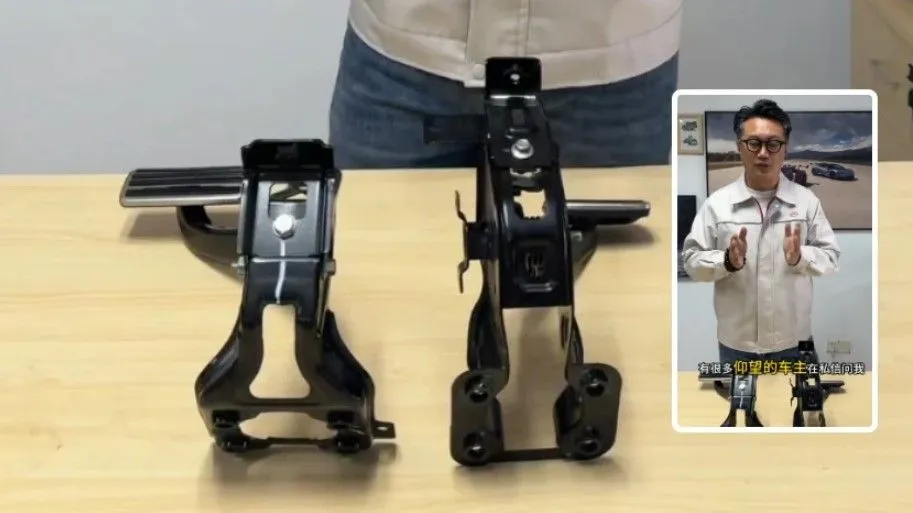
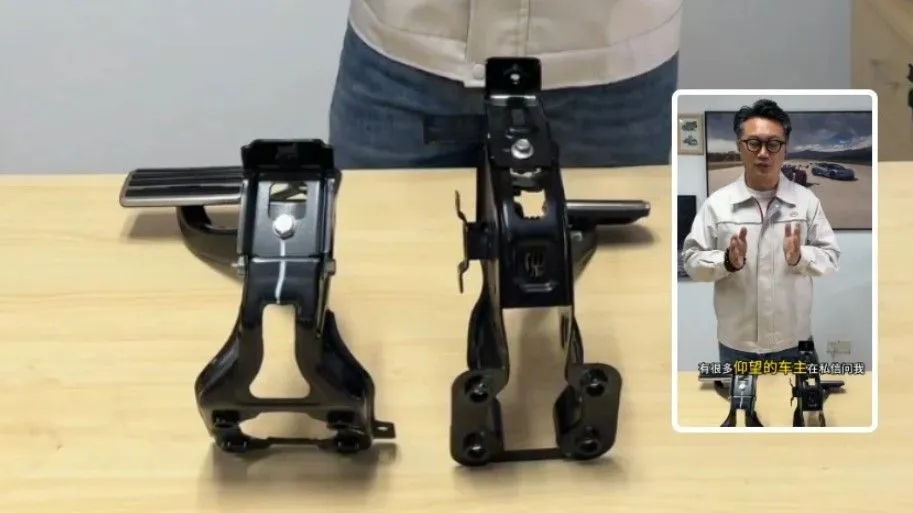
Zheng Yu, vice president of Yangwang, posted a video on China’s Weibo social media platform showing the braking pedal sets used in the Yangwang U7 and the luxury SUVs Yangwang U8 and U8L. He emphasized that both sets are entirely made of metal, with the pedal arms as well as their anchor bases constructed from stamped steel.
The demonstration contrasts with the solution used in the Maextro V800, whose brake pedal base is made of glass fiber reinforced polypropylene. Although the use of different materials does not necessarily mean a component is unsafe, this comparison comes at a particularly sensitive time for Huawei and JAC, which are trying to address the concerns raised by the defects detected.
Zheng Yu also explained some of the criteria Yangwang applies during the development of its vehicles. According to his statements, the brand requires that its brake pedals withstand a maximum force of 2,500 newtons. This requirement exceeds the minimum specified in China’s national standards, which demand that a pedal resist a force of 2,000 newtons for five seconds without breaking.
The video ends with a reference to BYD’s e4 platform featuring four electric motors, which allows independent control of torque applied to each wheel. The manufacturer also highlights the system’s emergency regenerative braking capability in certain situations where conventional brakes fail. However, it is unclear whether the Yangwang models can specifically detect a broken brake pedal and automatically trigger an emergency response to such a problem.
Maextro promises to repair affected vehicles free of charge
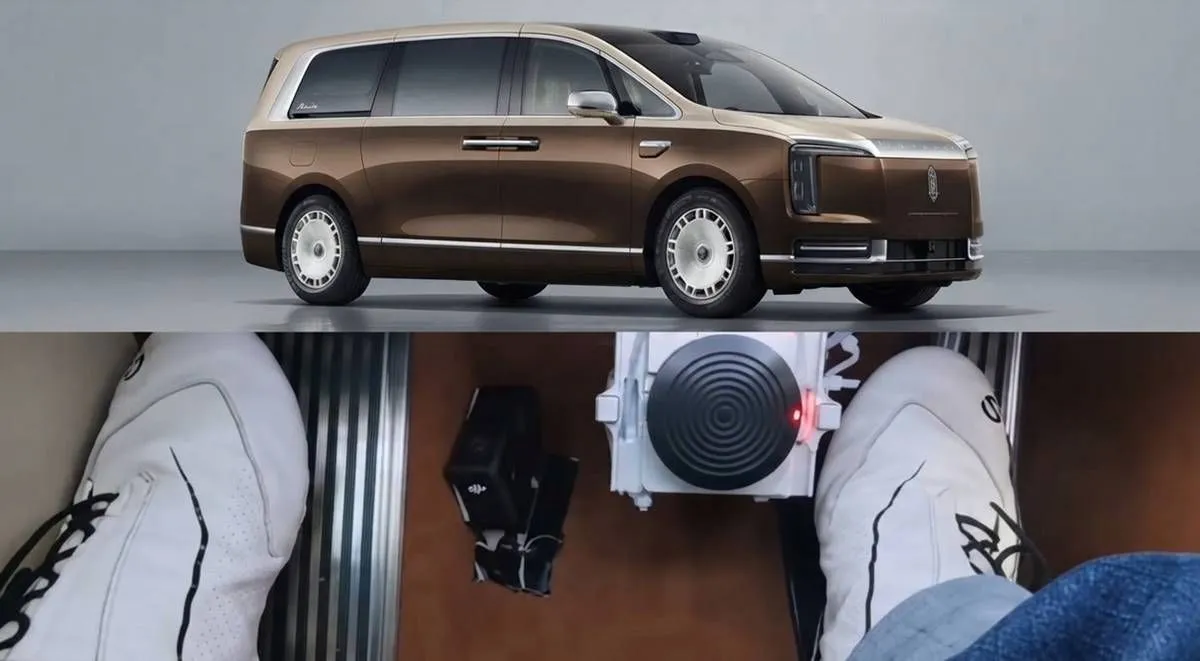
The Maextro V800 is one of the most exclusive models in Huawei’s automotive ecosystem, known as HIMA, and it is marketed as a luxury minivan. Its price reaches 1,016,000 yuan (123,000 euros), placing it in a segment where buyers expect a high level of quality, safety, and attention to detail.
After issues were discovered with the brake pedal mounts, Maextro announced that it would provide redesigned mounts to V800 owners at no cost. This measure aims to address customer concerns, although the incident could have consequences for both the brand’s reputation and that of JAC, the manufacturer involved in the development and production of its vehicles.
Yangwang’s reaction illustrates how a problem of this kind can quickly turn into a business opportunity for its competitors. In an increasingly competitive Chinese market, brands not only compete to offer more technology, power, or range but also need to convey confidence in fundamental aspects such as vehicle safety.
It also serves as a reminder of CATL President Robin Zeng’s words, who warned a few weeks ago that the pace of development and price pressures are starting to cause quality issues among some Chinese brands.