
The bus from Łomianek to Warsaw got stuck for 300 meters. No one wants to build them.
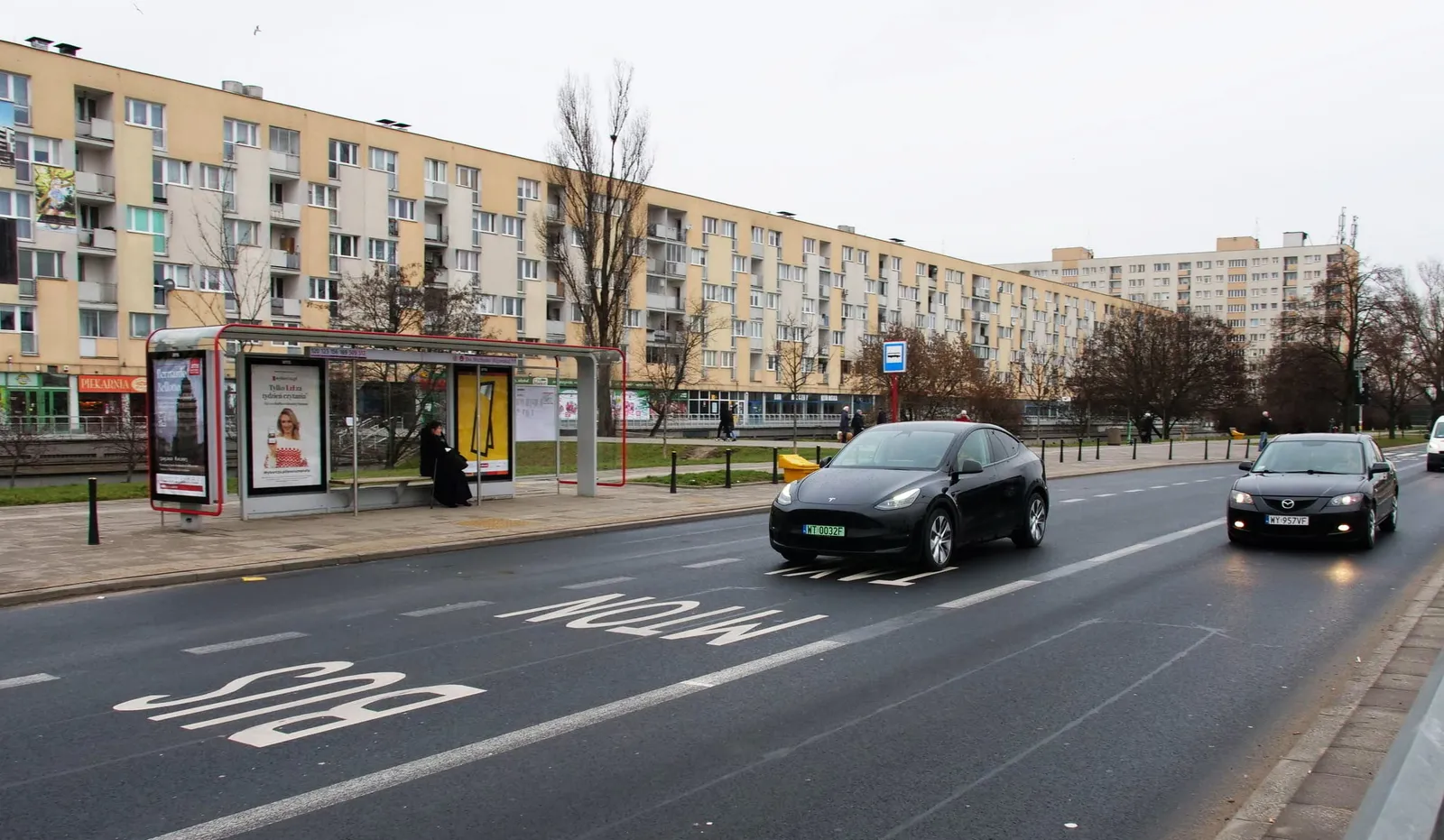
The idea was simple: buses traveling from Łomianek toward Warsaw should have their own lane and stop waiting together with cars in traffic jams at what is likely the most congested entrance to the capital. The local authorities reached an agreement, began preparations, designs were created, and work started in Łomianek.
Today, there is about 50 meters of bus lane there, which is a length only slightly greater than two articulated buses lined up one behind the other. Beyond that, a problem arises that could affect the entire project.
The bus lane ends after 50 meters
Łomianki is simultaneously modernizing the road network in the area of Brukowa Street. Roundabouts there are being rebuilt to allow buses to pass through even during subsequent phases of the project. Ultimately, the new infrastructure is intended to connect with Pułkowa Street on the Warsaw side of the border. And it is here that the dispute begins. Both parties claim they want to carry out their respective parts of the project, but there remains a section that neither side wants to take responsibility for.
“Currently, the roundabouts on Brukowa Street are being modernized. Buses won’t travel along that intended route, but they will have an alternative path ensured by these roundabouts,” says Piotr Rusiecki, a council member from Łomianki, as quoted by TVP Info.
The problem lies in the 300 meters of Pułkowa Street
The disputed section is about 300 meters long and runs along Pułkowa Street from the intersection with Dziwożona to the border between Warsaw and Łomianki. It may seem like a small distance, but without it, it’s hard to speak of a continuous bus lane leading toward the capital. “Neither Warsaw, the capital city, nor the authorities in Łomianki want to construct this section. It’s 300 meters of missing bus lane, and I can’t imagine a bus lane with a hole in the middle,” comments Rusiecki.
This means that even investing on both sides of the border may not solve the problem. The bus using the dedicated lane would have to rejoin regular traffic for a short distance before returning to the bus lane. With heavy traffic, such a point can become a bottleneck and limit the benefits of the entire investment.
Warsaw has its own plan and is waiting for funding
The Warsaw Urban Roads Authority has prepared a plan for its section of Pułkowa Street. It primarily involves reconstructing the intersection with Wóycickiego Street and establishing a bus lane several hundred meters earlier. “ZDM has prepared a plan to designate this bus lane, mainly for reconstructing the intersection with Wóycickiego Street, as well as setting up a bus lane several hundred meters earlier on Pułkowa Street,” says Jakub Dybalski, spokesperson for ZDM.
The project has been approved and is now awaiting funding. ZDM also claims to be fulfilling the agreements previously reached between Warsaw and Łomianki. “We are maintaining correspondence with both parties, and as I mentioned, we are carrying out our part of the agreements between the two cities,” emphasizes Dybalski. Warsaw, however, does not indicate any intention to take responsibility for the entire problematic section identified by Łomianki.
Łomianki also do not intend to build it
Łomianek’s position is equally firm. Mayor Tomasz Dąbrowski stated in correspondence sent to Warsaw authorities that the municipality has no intention of designing or constructing the section located on the capital’s side. As a result, both parties are willing to carry out work within their areas of responsibility, but no one wants to take on the missing connection. “We have the latest letter showing ongoing disputes between the agencies. No one wants to take responsibility for that section, and no one wants to build it,” says council member Rusiecki.
The situation is further complicated by the need to properly connect the infrastructure being built on the Łomianek side with Pułkowa Street. Without this, even the 50-meter-long bus lane has little significance for daily bus traffic. The bus lane was supposed to be completed much earlier.
According to council member Rusiecki, local officials assured them about a year ago that the project would be completed much faster. “We received assurances around a year ago from Warsaw’s vice mayor and the mayor of Łomianek that this bus lane would be built by summer, at the latest by the end of the year,” he recalls.
Today, such a deadline seems unrealistic. The Warsaw section of the project is still waiting for funding confirmation, and the dispute over the missing 300 meters has not yet been resolved. However, fears that building the bus lane would require tree cutting have not materialized. According to ZDM, the prepared plan does not include removing any trees.
A few hundred meters could determine the fate of the entire project
The dispute highlights a typical issue with investments spanning municipal borders. For passengers, the administrative boundary between Łomianki and Warsaw doesn’t matter—what counts is whether the bus can cover the entire route faster. From the perspective of road managers, however, each section already has a specific responsibility, design, and funding source.
Until Warsaw and Łomianki agree on who is responsible for the missing approximately 300 meters of Pułkowa Street, it’s difficult to determine a realistic completion date for the entire route. For now, the most tangible outcome of the project remains a 50-meter section of bus lane, while buses heading to the capital still face the same traffic jams as cars.
Piotr Sobczyk