
Smaller batteries and ultra-fast charging: Is this the future of electric cars?
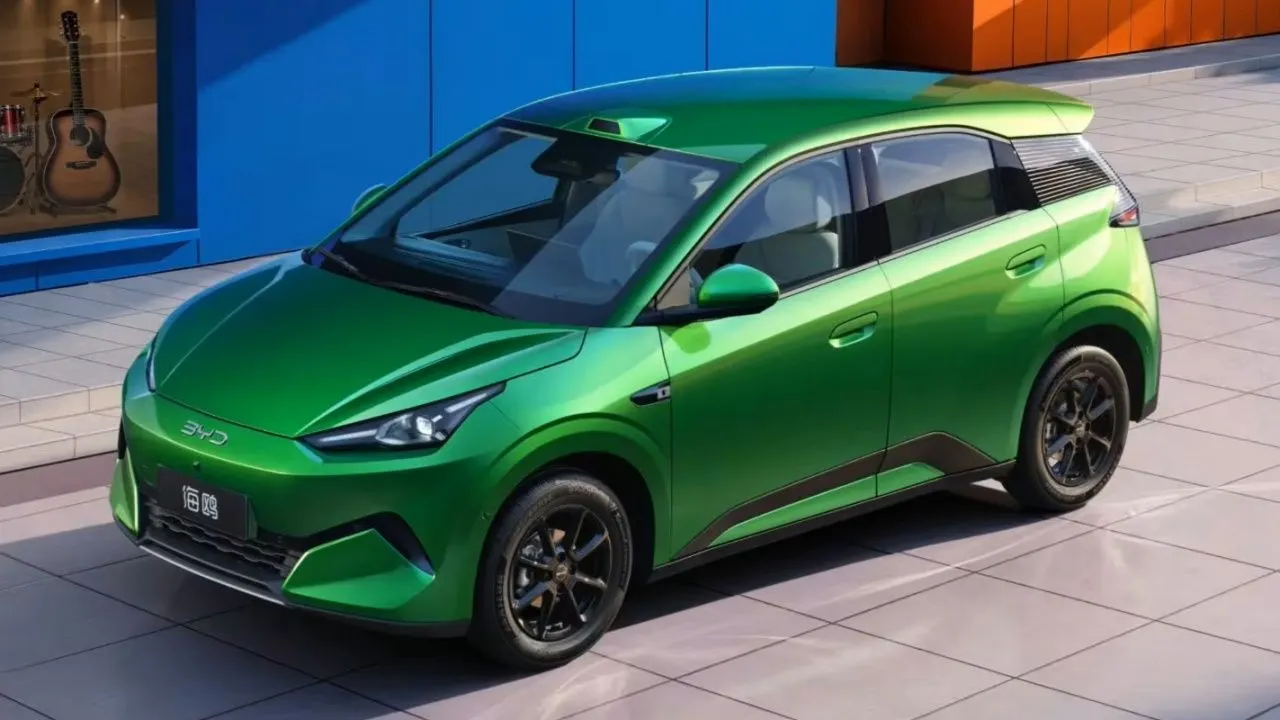
The future of electric cars lies in solving a complex equation: reducing manufacturing costs and resource consumption without forcing drivers to sacrifice the versatility they expect from their vehicles. Batteries play a crucial role in this challenge, both due to their cost and the weight they add to the overall vehicle. Reducing their size could be one of the keys to making electric cars more affordable, though there is a condition that should not be overlooked.
The proposal calls for rethinking one of the industry’s priorities, which for years has focused on racing to produce increasingly larger batteries in order to offer greater range. Instead of pursuing this path, France’s Agency for Ecological Transition (Ademe) suggests opting for lighter vehicles and smaller batteries. The problem is that less capacity means less range, so charging would have to play a much larger role.
The idea makes sense on paper. A smaller battery costs less, requires fewer materials, and helps reduce the vehicle’s weight. It can also help minimize tire wear and the structural demands on the chassis. However, convincing buyers to sacrifice some range won’t be easy, especially since electric car prices remain a barrier for many drivers. An alternative would be to compensate for the reduced capacity with much faster charging, but this introduces new technical and economic challenges.
A small battery that can be charged in minutes
To understand the impact of reducing battery size, one only needs to consider their weight. According to figures from Ademe’s analysis, a 60 kWh battery pack weighs around 340 kg, while a 90 kWh one reaches 510 kg. The difference is significant for a component that affects both the cost and efficiency of the vehicle. Additionally, the active materials used to store energy account for more than half of the carbon footprint of the reference battery studied by the French agency. The manufacturing of cells and the aluminum used in them, as well as modules and the overall battery assembly, also have a substantial impact.
Now, would a buyer accept a 30 kWh battery in a compact SUV if it meant only around 200 kilometers of range? For many drivers, this capacity may be sufficient for daily commutes, especially if they have a home charger. However, long trips would still be a problem if they need to stop to charge every hour and a half or two hours and wait for half an hour or more. Therefore, the solution isn’t just to install smaller batteries, but also to make charging stops shorter.
Rapid charging should become a tool capable of compensating for much of that loss in range. Instead of carrying a large amount of energy stored in the car’s underbody, drivers could rely on the grid when they need to restore range. In this way, a smaller battery could cover daily trips and maintain reasonable performance on the road, as long as charging stations are well distributed and provide high power consistently.
But there is a significant difference between announcing a high maximum charging power and maintaining it for a substantial portion of the charging session. Some electric cars achieve impressive figures for brief moments, but their power drops as the charge level increases or when the battery temperature is not optimal. For this strategy to work, it’s not enough to reach a striking power peak; it is necessary to maintain a very fast charge rate over a sufficiently long charging period.
That’s where the complications begin. A small battery capable of handling 300 to 400 kW needs to be designed to withstand extremely high power flows without premature degradation or excessive temperatures. This requires appropriate chemistry, advanced power electronics, and a cooling system capable of quickly removing heat. Some solutions, such as direct cell cooling using liquids, have so far been reserved mainly for high-performance vehicles and premium models.
All that equipment takes up space, adds weight, and increases manufacturing costs. This technology might fit in an expensive family SUV, but adapting it to a budget urban car is much more complicated. In small vehicles, every kilogram and every centimeter counts, and a sophisticated thermal system could eat into the savings achieved by reducing battery capacity. Simpler cooling solutions, on the other hand, may limit charging power during long trips.
The cost of an ultra-fast charging network
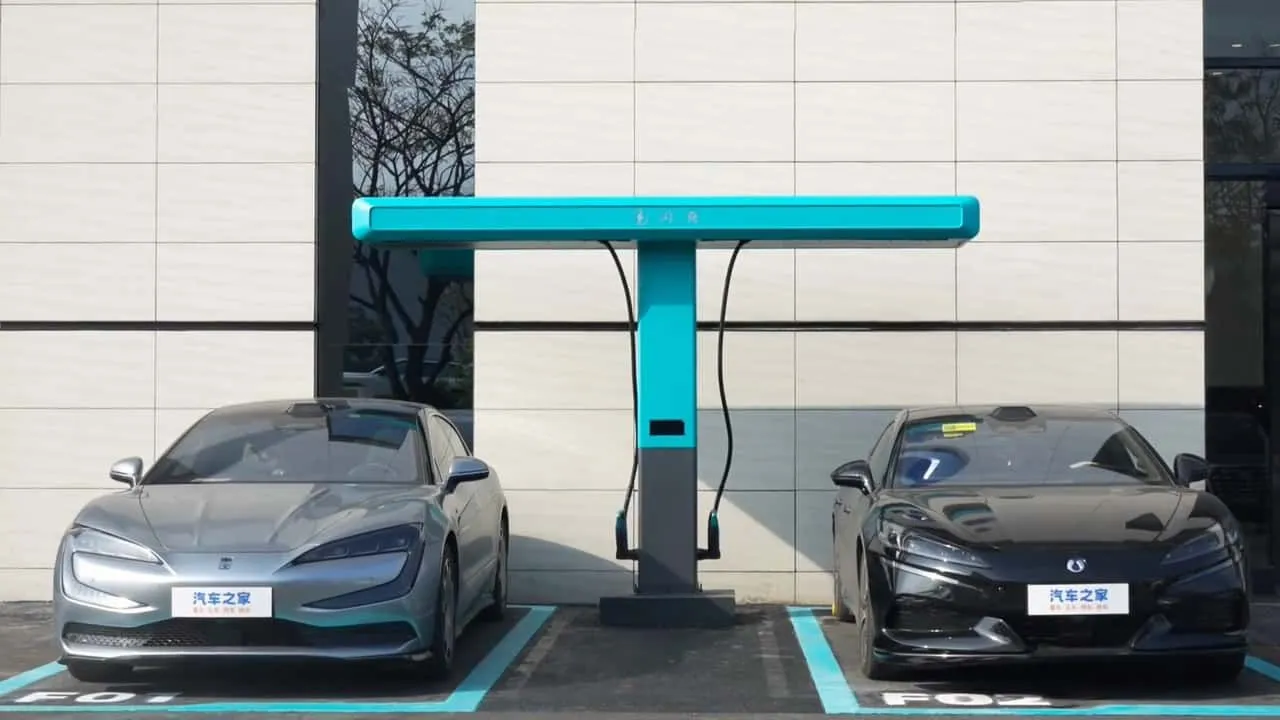
The ideal scenario envisioned by this strategy would be an electric car with a battery of around 50 kWh, offering a real-world range of about 250 km on the highway. This is more than sufficient for everyday use. For traveling, ultra-fast charging stations would allow drivers to regain the necessary energy during short stops. In this way, the industry could reduce battery size without forcing drivers to accept a much more limited driving experience.
However, for this approach to work, infrastructure is needed that is not yet available everywhere. Charging stations capable of supplying 400 kW or more remain less common than those with lower power levels and require electrical installations prepared to handle significant demand. The problem doesn’t end with purchasing the chargers: one must also consider network connectivity, electrical transformation needs, and the available capacity at each location.
The analysis published in France suggests that a station with about six high-power charging points can generate nearly one million euros before taxes if the electricity connection is included. The investment may increase when the location lacks an appropriate connection and a specialized transformer must be installed. Additionally, there are maintenance costs and those related to the contracted power capacity, which can be particularly high in facilities designed to serve multiple vehicles simultaneously.
The challenge is that these infrastructures must be profitable. If stations receive an insufficient number of users, recovering the investment will be difficult. And if the construction and operation costs are high, operators will have to find ways to pass those costs on to their customers. In that scenario, the savings from buying an electric car with a smaller battery could be offset by the cost of each charge, especially during long trips and at high-power DC charging stations.
The Ademe proposal thus sparks a debate that goes beyond battery capacity. Manufacturing lighter and more affordable electric cars could be a good way to reduce material consumption and make them accessible to more drivers. However, it seems unreasonable to assume that a fast-charging network can simply replace high-capacity batteries. For the change to be worthwhile, it will be necessary to balance the vehicle’s price, its actual range, charging speed, and infrastructure costs.
In short, the future doesn’t have to be divided between electric cars with enormous batteries and models with overly limited capabilities. The key will lie in finding a middle ground that allows cost reduction without turning every long trip into a ordeal of long waits at each charging station, and that provides cars capable of meeting our daily needs while still enabling us to travel without relying on hundreds of kWh.