
Audi A2 e-tron: the most efficient Audi with 12.8 kWh/100 km
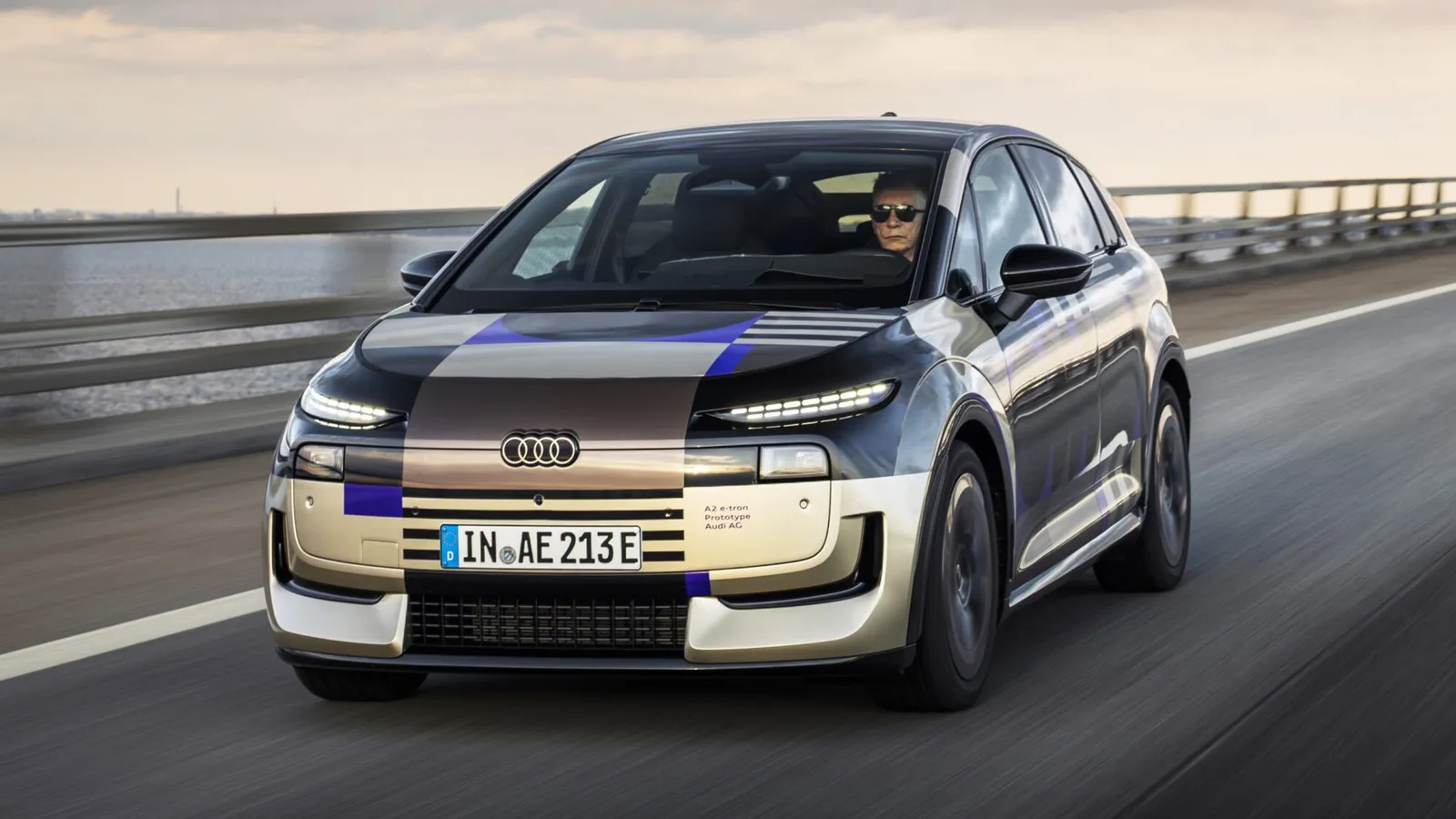
Audi has released the first details on the A2 e-tron: 12.8 kWh/100 km according to WLTP for the 140-kW version with efficiency package, a drag coefficient of 0.24, and a 61-kWh LFP battery. Fast charging is available at up to 105 kW, with it taking 26 minutes to charge from 0 to 80 percent — range and price remain undisclosed.
Advertisement
Audi has released the first technical details for the A2 e-tron, the brand’s upcoming entry model in the electric compact class. At the center of the announcement is an energy consumption figure: 12.8 kilowatt-hours per 100 kilometers according to WLTP, measured on the version with 140 kW (190 hp) and an optional efficiency package. This figure is provisional, as the homologation process has not yet been completed. The official energy consumption range for the model is 15.6 to 12.8 kWh/100 km — meaning the best value applies to a specific configuration, not the entire model series.
Audi still hasn’t disclosed any information regarding range or price, with both details likely to be revealed only at the launch in autumn 2026. We first saw a preview of this vehicle in March 2026 following an announcement by CEO Gernot Döllner, and again in May 2026 when Audi released images from testing in Lapland, the wind tunnel in Ingolstadt, and the Altmühltal region. The A2 e-tron will be produced at Audi’s main plant in Ingolstadt.
Powertrain: two performance levels at the rear axle
The A2 e-tron uses a permanently excited synchronous motor at the rear axle. Audi employs two drive units: the newly developed APP350 with a maximum of 170 kW (231 hp) and 350 Nm for lower performance levels, and the APP550 with up to 240 kW (326 hp) and 545 Nm for higher performance levels. Both units combine the electric motor, transmission, and power electronics. The 140-kW variant described here belongs to the APP350 family. The names of the drives and the internal project designation suggest the company’s modular electric drive platform; Audi does not explicitly name the platform in the documents.
Audi estimates efficiency gains in the drive system to be up to ten percent. Three key approaches are mentioned: In power electronics, silicon carbide semiconductors replace the existing silicon technology, reducing switching losses especially at part-load conditions. A variable switching frequency cuts losses by up to 20 watts, while alternative modulation methods reduce switching losses by up to 33 percent compared to conventional methods. In the electric motor, thinner laminations at 0.2 instead of 0.3 millimeters are used, and the stator winding is changed from star configuration to delta configuration. In the transmission, a new low-friction oil reduces friction, and the long gear ratio of 10.2:1 lowers engine speed at higher velocities.
Advertisement
Battery: 61 kWh LFP in Cell-to-Pack design
The 140-kW version features a lithium-iron-phosphate battery with 61 kWh gross and 58 kWh net capacity. The cells are directly glued into the chassis, using a cell-to-pack configuration without a separate module layer. This increases the packaging density and reduces the height, which Audi says improves headroom inside the cabin.
LFP cells do not contain rare earths, nickel, or cobalt, and according to manufacturers, they age more slowly than comparable alternatives. As a result, Audi does not recommend charging to 80 percent; instead, it states that the battery can be fully charged regularly in everyday use. The flat voltage profile of the cell chemistry also ensures more consistent performance as the charge level decreases—a well-known advantage of LFP, though it makes it difficult to determine the exact charge level. Audi mentions a specially tuned algorithm that evaluates both the charge level and aging status.
Charging: 26 minutes from 10 to 80 percent
The A2 e-tron can draw up to 105 kW at a fast charging station. It takes 26 minutes to go from 10 percent to 80 percent charge. For a vehicle with a usable energy capacity of 58 kWh, this corresponds to an average charging rate of around 94 kW during this period — a solid but not outstanding figure in today’s competitive landscape. Other compact models with LFP batteries now achieve higher rates.
Audi claims an efficiency of 89.6 percent for AC charging, achieved through an optimized cooling strategy. This represents an improvement of 1.3 percentage points compared to the previous model. Mathematically, an efficiency of 89.6 percent means that about ten percent of the energy drawn from the wall charger does not reach the battery during charging.
In addition, there is two-way charging. Vehicle-to-Load supplies external devices through a socket in the trunk or an adapter on the charging port, requiring a charge level of at least 20 percent. Vehicle-to-Home feeds energy back into the home electrical grid and only functions when the charge level is between 20 and 80 percent: below 20 percent, it only charges; above 80 percent, it only discharges. An Audi-approved charging box is required, and additional hardware might be needed depending on the home’s electrical setup. Vehicle-to-Home will initially be available in Germany, Austria, and Switzerland.
Advertising
Aerodynamics and rolling resistance
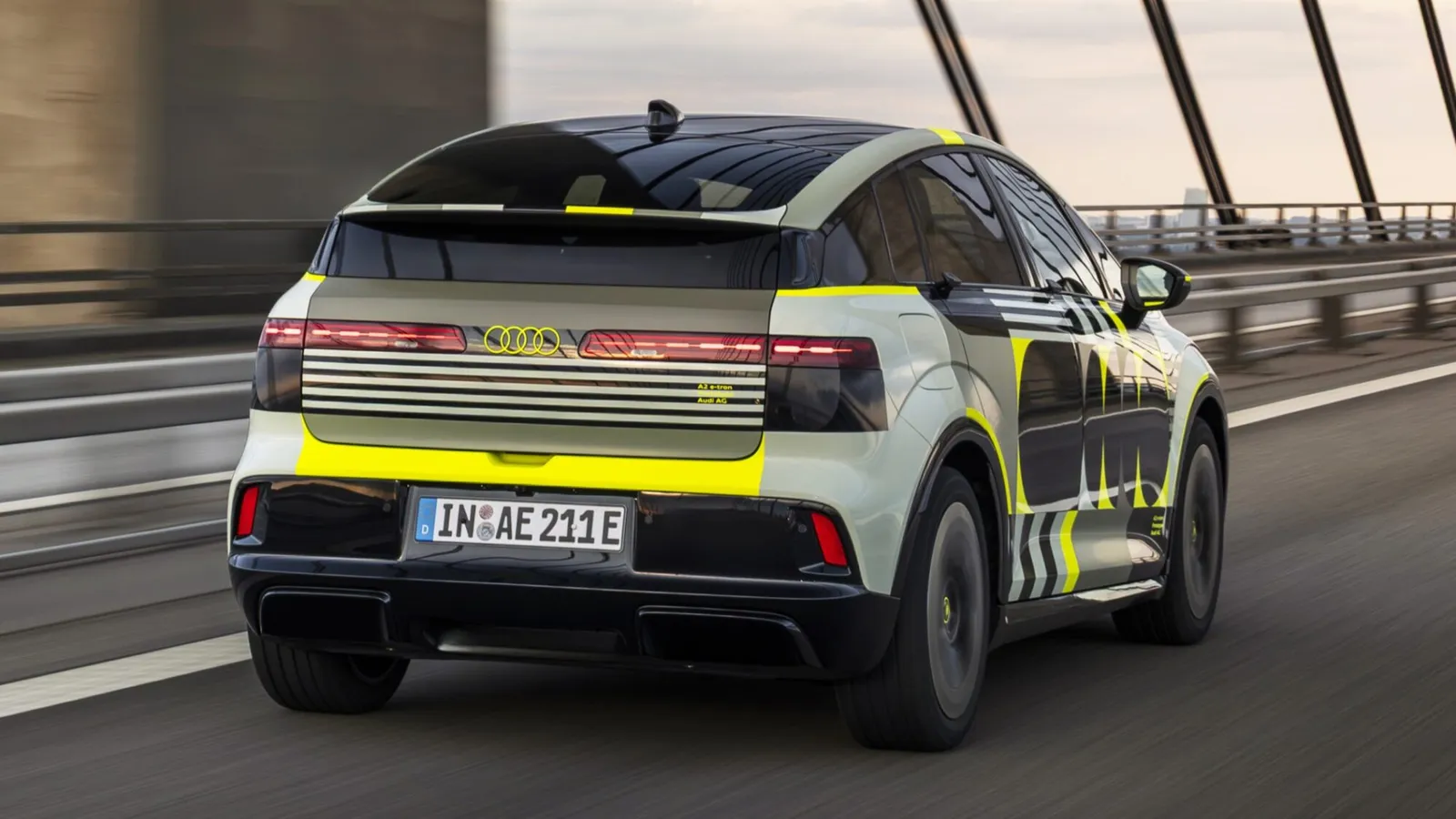
Audi lists the cw value at 0.24, applicable to the 140-kW version with the efficiency package. This is the best value in Audi’s compact segment. The body features a streamlined shape with a rounded front, sloping roofline, and sharply defined rear; the edge on the spoiler and the contour of the C-pillar are designed to ensure controlled airflow separation.
At the front of the vehicle, vertical air channels—known as air curtains—direct airflow around the front wheels. These are supplemented by the Gap Reducer, a component in the wheel arch flaps that reduces the gap between the wheels and the fender, as well as the Gap Breather to vent air from the fender. The controllable cooling air inlet remains closed under normal operation and at higher speeds, opening only during charging, when accelerating strongly, or in high external temperatures. The underbody is largely covered, and for selected wheel options, there are aerodynamic wheels with a high proportion of enclosed surfaces. Regarding rolling resistance, Audi mentions a specially developed tire that provides benefits especially in urban driving conditions.
In total, according to the manufacturer, the aerodynamic measures reduce WLTP fuel consumption by up to 0.9 kWh/100 km compared to an identical vehicle without these adjustments. For comparison, Audi cites the 1999 A2: its 12.8-kWh value corresponds to a diesel equivalent of around 1.3 liters per 100 kilometers, while the A2 1.2 TDI required three liters under NEFZ standards at that time.
The A2 e-tron is scheduled to be unveiled in the fall of 2026, after which the model will be available for ordering. Audi plans to begin deliveries in 2026 as well.