
Currently: Tesla is introducing V2H via Powerwall for all new Model 3 and Model Y vehicles in the US.
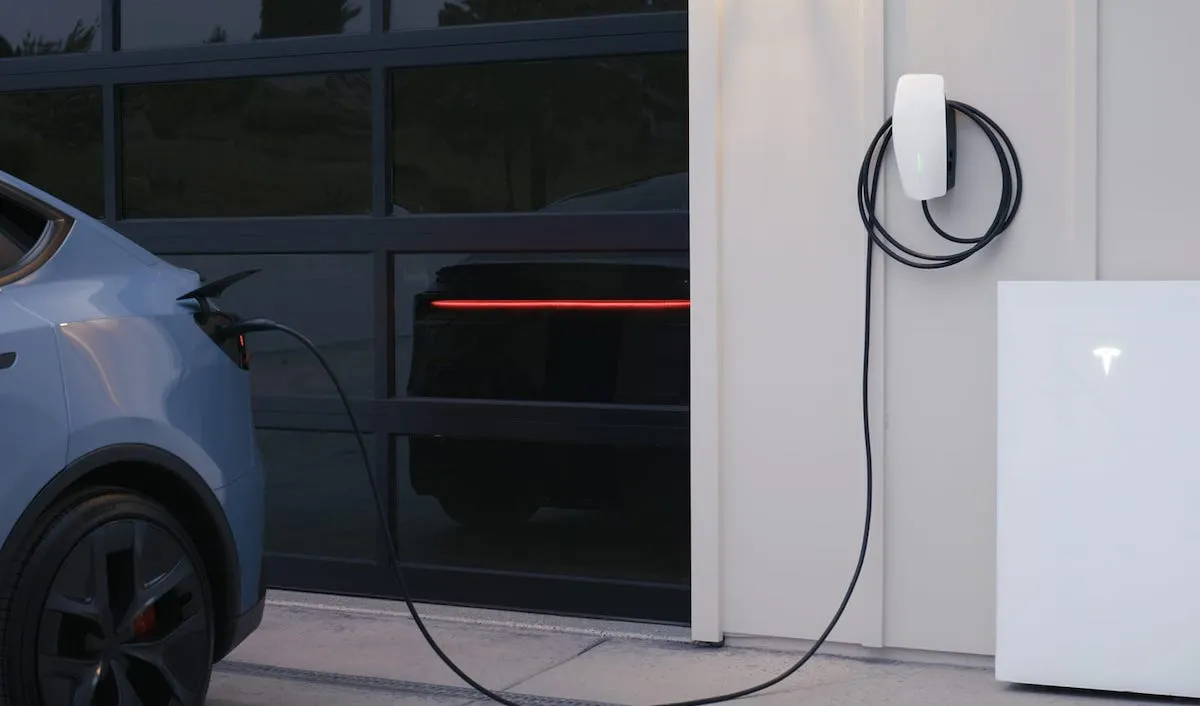
Image: Tesla
The idea of using an electric car’s battery to power one’s own home when needed (vehicle-to-home, V2H) is appealing — but it remains a rare reality to date. Tesla is now taking a major step forward in this area, though initially only in the US: All Model 3 and Model Y vehicles ordered since October support V2H, referred to by Tesla as Powershare Home Backup. This feature requires a latest-generation stationary Powerwall. Meanwhile, in Europe, Tesla still lacks basic V2L (Vehicle-to-Load) functionality.
V2H with Tesla Model 3 & Model Y
Tesla’s Energy account highlighted the new V2H feature for Model 3 and Model Y on Tuesday with a short video on X. That it is currently available only for electric vehicles in the North American market can be determined only by visiting the webpage for the Powershare function — firstly because it states so there, and secondly because switching to other country versions such as Germany results in an error message.
Powershare Home Backup is now available for new Model 3 & Model Y with Powerwall 3
Extend your home backup by over 2 days with your vehicle pic.twitter.com/a0codvZ2yH
— Tesla Energy (@teslaenergy) October 6, 2026
As Tesla states in the X announcement, using V2H with Model 3 and Model Y requires an additional Powerwall 3, which is a permanently installed home battery in the latest version. Moreover, Powershare needs another Tesla component, namely the Wall Connector charger, to serve as a connection between the electric vehicle and the home (see photo above). According to the FAQ, to use a Model 3 or Model Y as a backup during power outages, a certified technician must visit and possibly install additional equipment.
Powerwall and Wall Connector required
It sounds expensive and complicated, but according to Canary Media, it’s not when compared to other V2H solutions for the U.S. market. While a Powerwall 3 costs $8,200 there plus taxes and installation fees, and a Wall Connector costs $595, these together already form a complete system for home backup power. The Model 3 or Model Y acts as an additional battery extension, providing capacity for several days. GM currently offers a V2H bundle for $6,748, but it does not include its own home battery.
Tesla also refers to simple power delivery to external devices through an adapter (V2L), without home backup, as Powershare. This feature was previously introduced in the U.S. for some versions of the Model Y. It has now been expanded to all versions as well as the Model 3, along with V2H using Powerwall. According to Tesla, earlier-produced electric vehicles may also be suitable for Powershare. Users can check this in the vehicle menu under “Software” and then “Additional Vehicle Info.”
When will Tesla bring V2L and V2H to Europe?
As reported when V2L was introduced in the U.S., there is another method as well. This feature requires the latest version of the Power Conversion System component, abbreviated PCS2. To determine whether it is installed in one’s Model 3 or Model Y, users can sign in to Tesla’s account and then search for the adapter in the shop.
To date, German and other European customers have hopelessly tried to get it displayed as proof of PCS2’s existence. At least V2L is expected in Europe soon, as Tesla also announced at the beginning of October that the Model 3 and Model Y now have this feature, with the Model 3 receiving it along with other upgrades. This electric car is already produced in China for the European market. And Germany’s Gigafactory for the Model Y is likely to install the new PCS sooner or later.