
It is now called the ID. Tiguan. The new king of Volkswagen electric cars
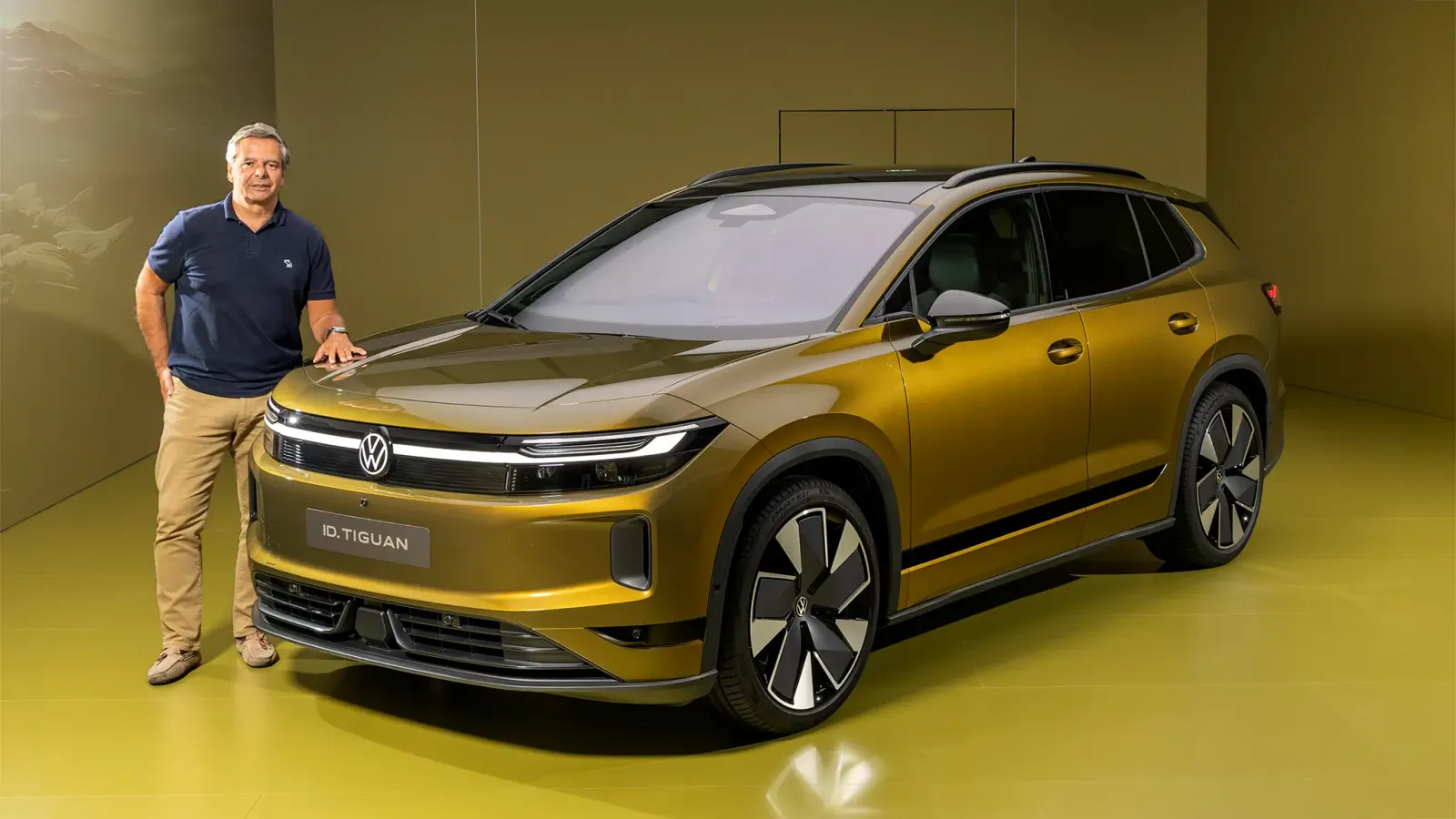
With the new Volkswagen ID. Tiguan, the brand aims to leverage the strengths of its traditional models in the electric segment as well. All the details.
Volkswagen’s first electric vehicles did not receive the expected reception in the market. Their aesthetics and performance failed to excite consumers, and the use of alphanumeric names instead of familiar ones meant wasting a brand recognition built over many millions of euros.
Now, Volkswagen has realized that the shift to electric vehicles does not require abandoning this heritage. The new strategy involves bringing back well-known names and combining them with the “ID” prefix, aiming to give electric cars the familiarity and recognition that were lacking in their earlier offerings.
The ID. Polo was the first model to adopt this new approach, followed by the ID. Cross. In a few years, the long-awaited ID. Golf will also arrive, but there’s another important model set to return under this strategy: the Tiguan.
The new Volkswagen ID. Tiguan will replace the ID.4 and ID.5, two models that are being phased out to make way for a name with much deeper history. Launched in 2007, the Tiguan has already sold 8.7 million units and is currently Volkswagen’s best-selling model worldwide.
The introduction of the ID. Tiguan does not mean the end for gasoline, diesel, and plug-in hybrid versions of the Tiguan. On the contrary, all three will be offered simultaneously, giving customers the choice to select the option that best meets their needs.
Three versions and up to 600 km of range
At launch in spring 2027, the ID Tiguan will be available in three versions: the Pure version with rear-wheel drive, a 140 kW (190 hp) engine, a 58 kWh LFP battery (usable capacity), and a range of up to 450 km in combined WLTP cycle, offering an acceleration from 0 to 100 km/h in 8.5 seconds and a top speed of 160 km/h.
The Pro trim level increases the power to 210 kW (286 hp), enabling acceleration from 0 to 100 km/h in 6.6 seconds and a top speed of 180 km/h. It is powered by a 77 kWh NMC battery and claims a range of up to 600 km.
Above that is the ID. Tiguan Pro 4Motion, which features all-wheel drive provided by two motors—one per axle—for a combined maximum power of 220 kW (299 hp). It is expected to achieve an acceleration from 0 to 100 km/h in 6.3 seconds and reach the same top speed of 180 km/h, while the range slightly decreases to 560 km.
Towards the end of 2027, the ID. Tiguan lineup will expand with a GTI version, expected to deliver 250 kW (340 hp), replacing the GTX versions of the ID.4 and ID.5. On top of that, an “R” version with over 400 hp is also set to appear.
Evolved MEB platform
The new Volkswagen ID. Tiguan is built on the MEB+ platform, an upgrade from the original design, featuring independent suspension across all four wheels while retaining the controversial drum brakes instead of disc brakes on the rear wheels. The ID. Polo, for example, comes equipped with disc brakes.
The top-tier versions will feature variable electronic damping (DCC) with 14 different levels, ranging from the most comfortable to the most sporty, prioritizing stability in corners in this case.
It’s worth noting that the rear-wheel-drive version will be more agile in urban driving and easier to park thanks to its turning radius of 10.2 meters, which is 1.4 meters shorter than that of the ID.4.
Friendly appearance and horizontal lines
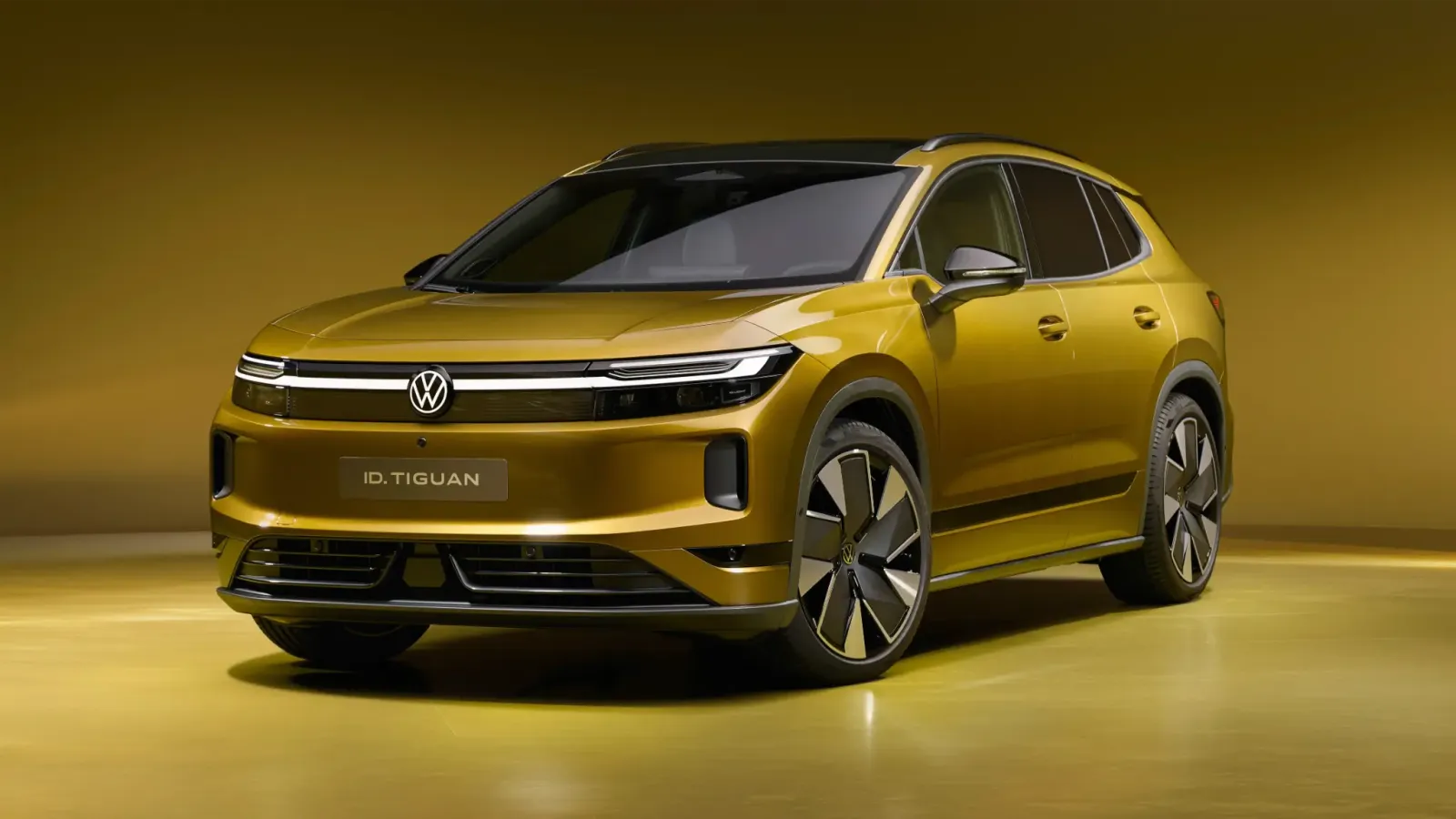
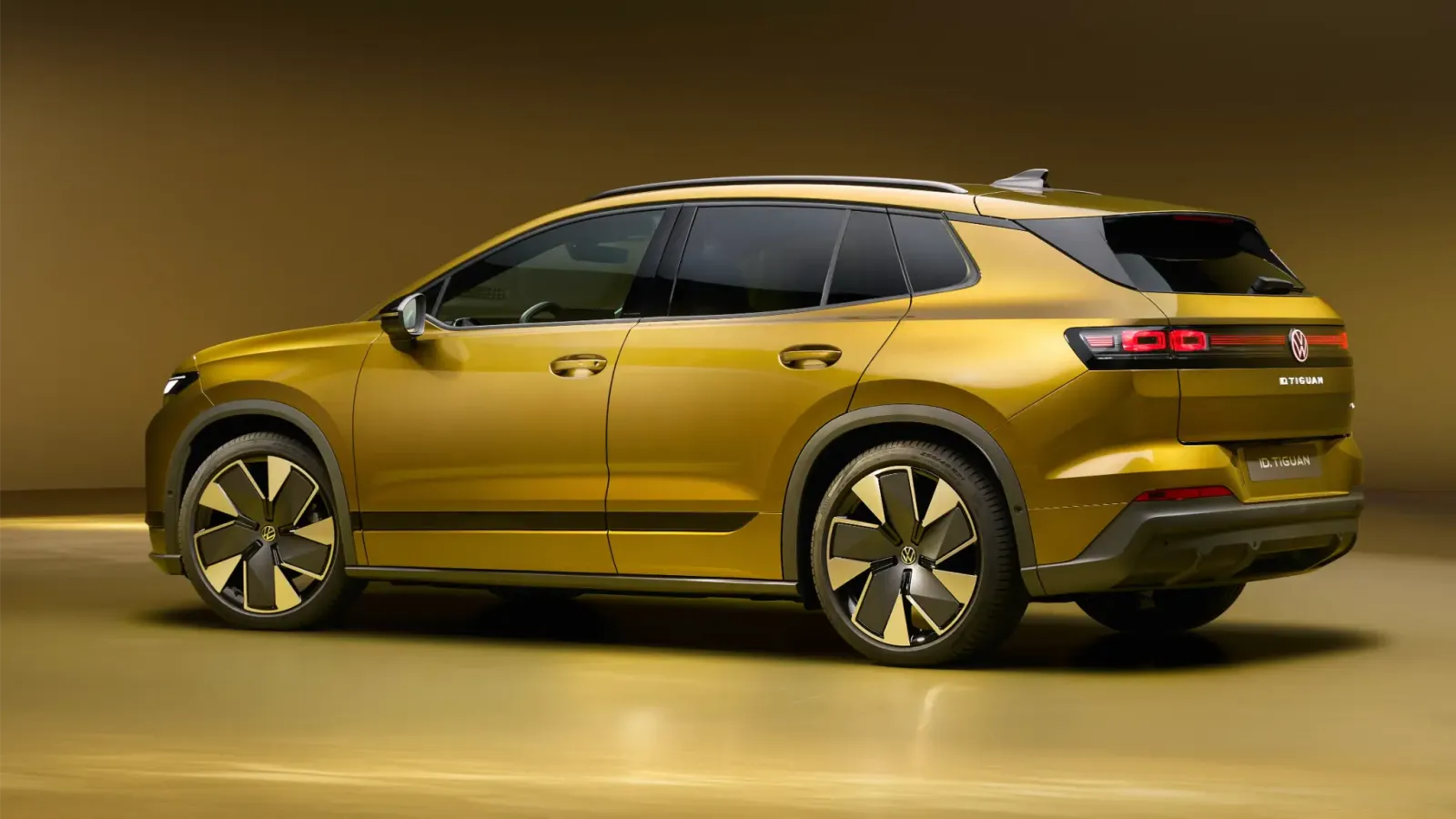
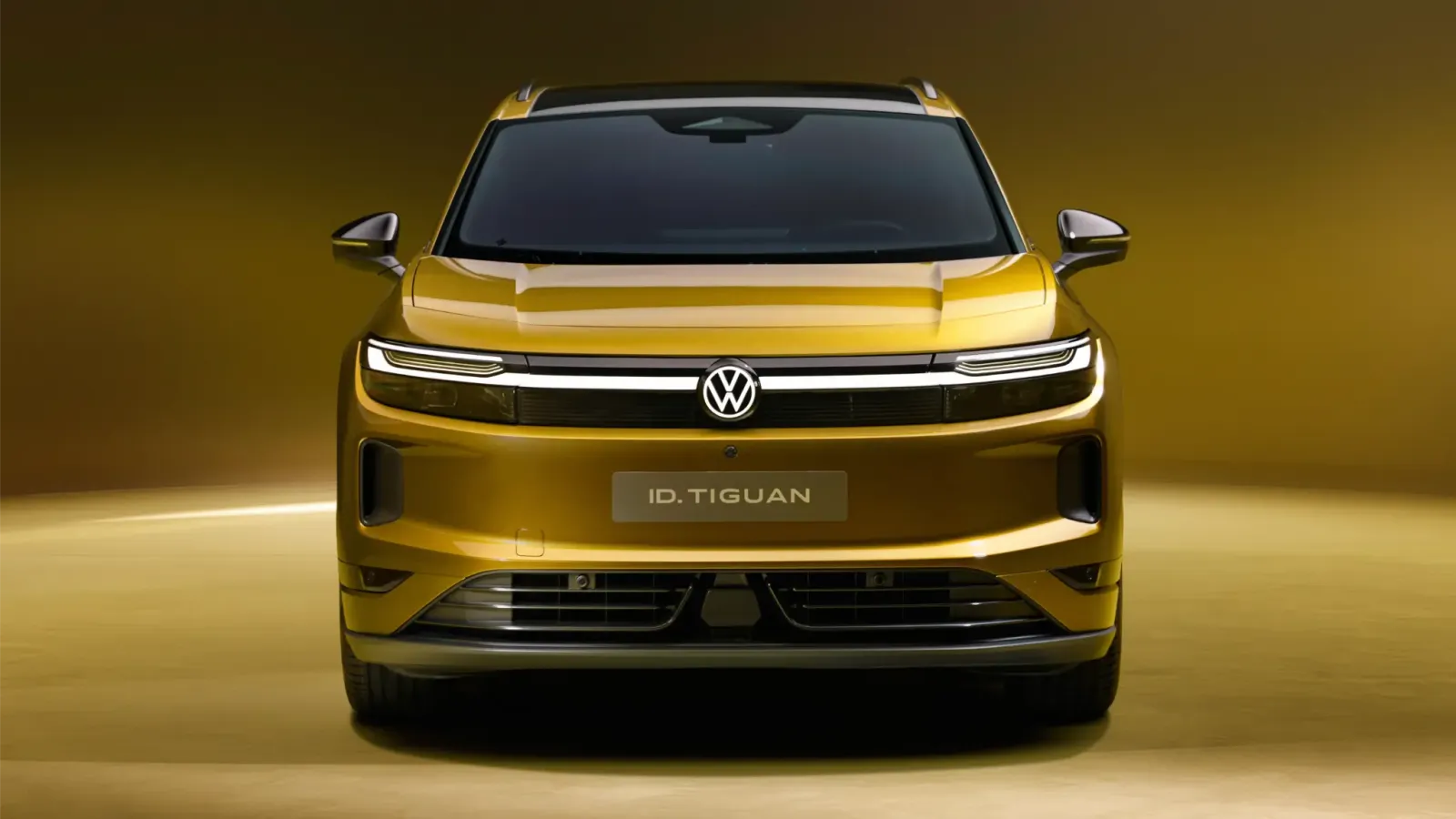
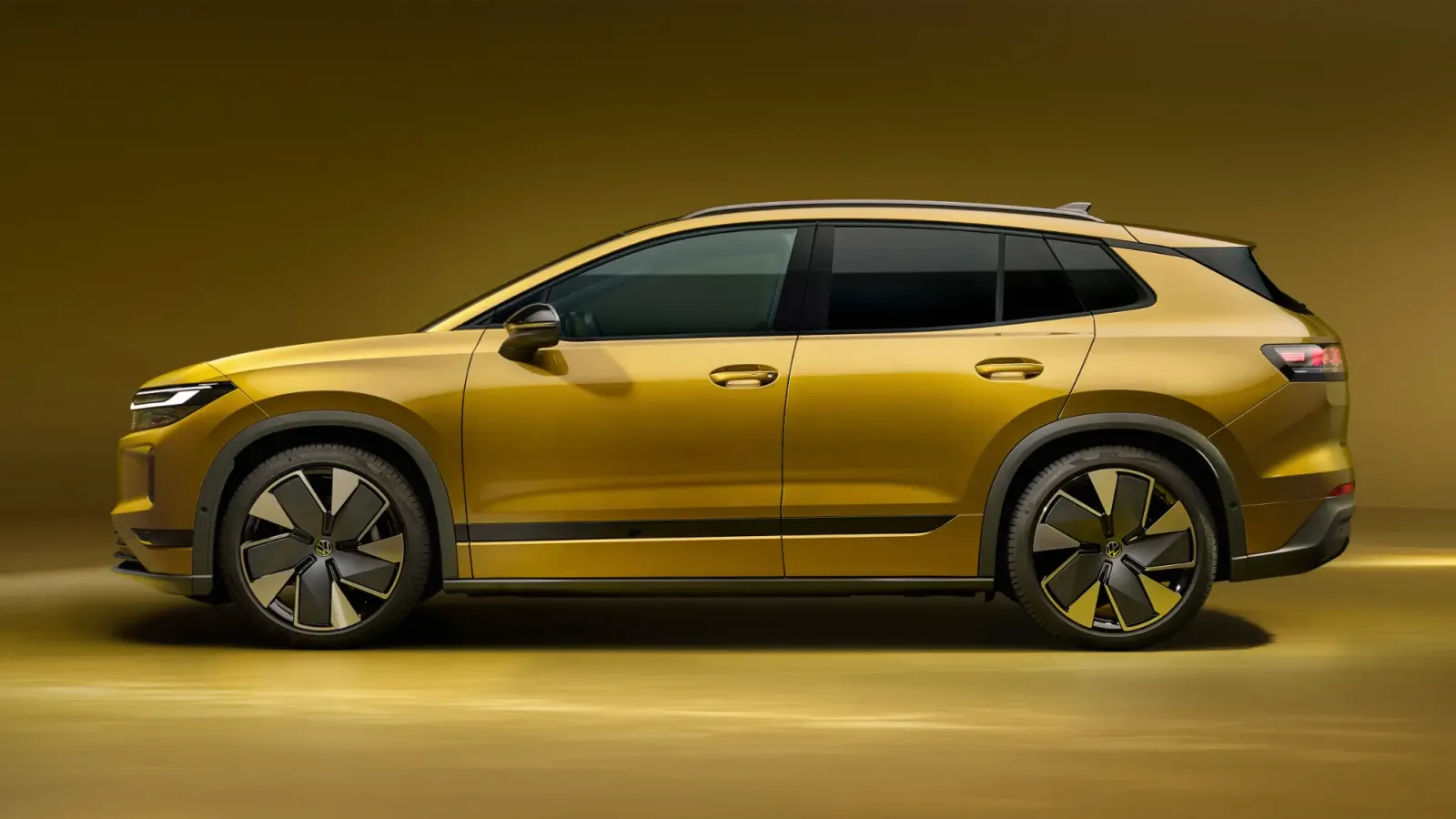
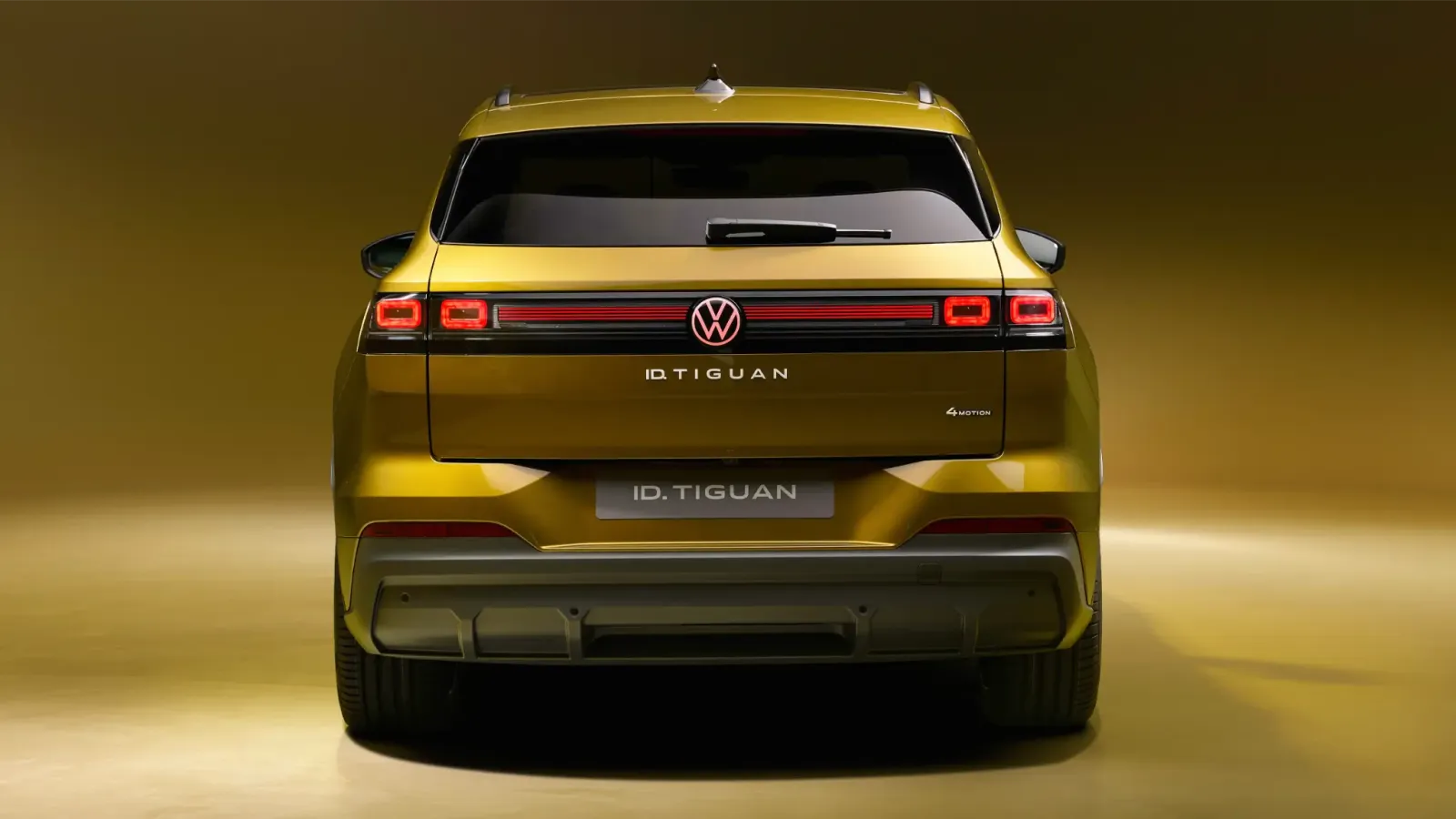
The “Pure Positive” design language, first introduced on the ID. Polo, features illuminated horizontal strips along the front and rear of the ID. Tiguan, giving it a more elegant look that differs from the aggressiveness of other models.
Elements such as the rear air diffuser, roof spoiler, air curtains in the front grille area, and the lower body panels allow the drag coefficient (Cx) to reach 0.26 in versions equipped with 19″ wheels.
A low aerodynamic resistance is crucial for an electric vehicle, and the ID. Tiguan achieves a very good value considering it is an SUV.
4 images
Comfortable ride for five
The interior offers ample space, enhanced further by an 8.4 cm increase in wheelbase length. Additionally, the floor in the second row is completely flat, making it easy for the rear middle passenger to board without hesitation.
The front seats come with electric adjustment starting from the mid-level trims, and may also include ventilation and heating as optional features.
4 images
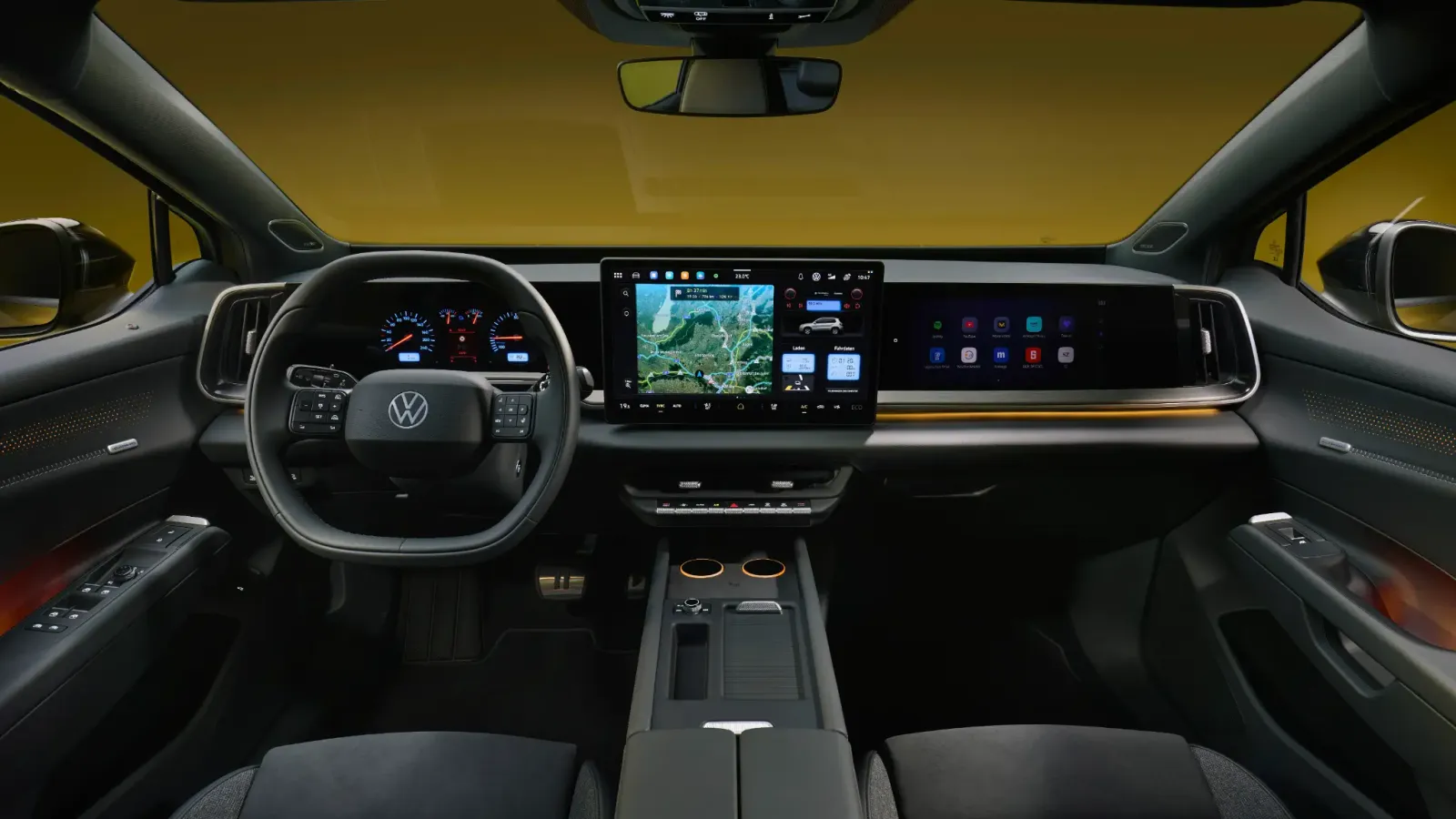
There are physical buttons for climate control between the center console and the central screen, along with an audio volume button on the center console, next to the two wireless charging ports for phones.
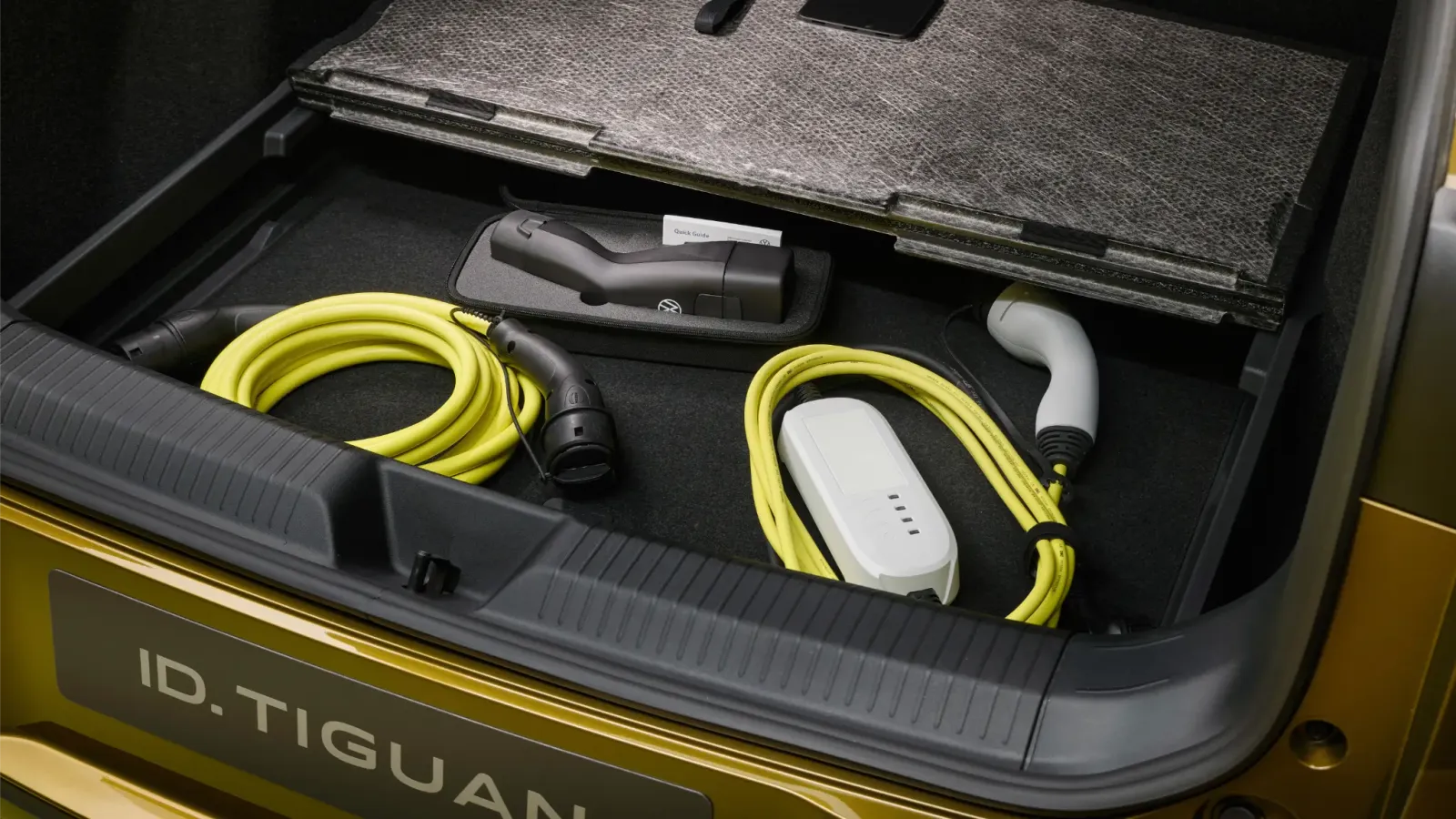
The trunk has a capacity of 534 liters, four liters more than the fuel-powered Tiguan. However, it is 9 liters and 15 liters smaller respectively compared to the ID.4 and ID.5 — though these differences are minimal.
The construction is solid and the finishes are convincing. However, the dashboard only has a thin layer of soft-touch coating; it isn’t structurally made of rubber, which would provide a more pleasant feel and reduce the risk of parasitic noise over time.
There is a screen strip that runs across the entire dashboard, consisting of three elements: a 10” digital instrument cluster, a 15” central touch screen, and for the first time in a European Volkswagen, a third 12” screen in front of the front passenger.
2 images
It’s also worth mentioning the retro graphics that can be chosen for the infotainment and instrument displays, inspired by those in the 1997 Golf 4. The head-up display can also project information onto the windshield using augmented reality features.
Discover your next car:
How much will it cost?
The prices for Portugal haven’t been fully finalized yet, but the entry-level version (Pure) will start at around 46,000 euros.
The next tier (Pro) is likely to cost around 50,000 euros, while the top-of-the-line model at launch (Pro 4Motion) will be around 54,000 euros (these two versions have the same higher-capacity battery).