
Goodbye to charging stops: Honda develops a road capable of delivering energy to the car while it’s moving
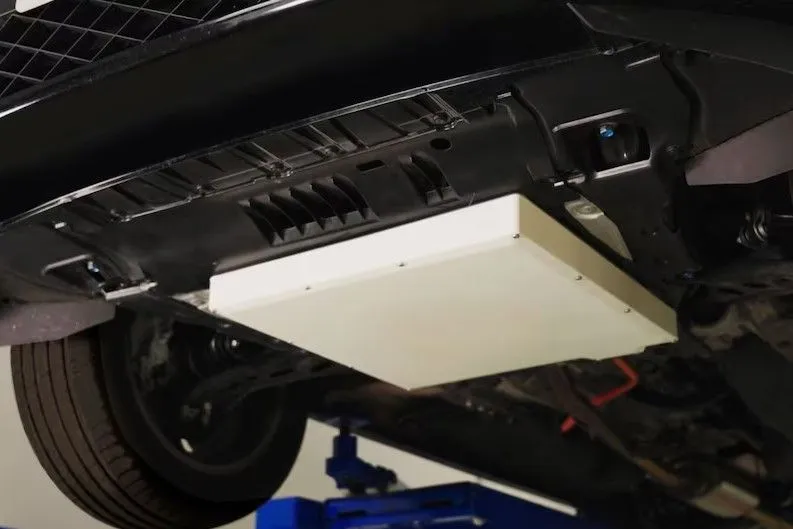
Honda has been exploring a much more ambitious alternative for several years. The idea is to integrate the charging system directly into the road so that the car can receive energy while moving, without needing to stop or physically connect any cables. Now, the Japanese manufacturer has taken another step forward and is preparing the first tests on public roads.
The technology is known as Dynamic Wireless Power Transfer (DWPT), and Honda has been working on it since 2021. To develop it, the company has partnered with Taisei Corporation and Taisei Rotec, two Japanese firms specialized in areas such as infrastructure and road construction. The goal is to transfer energy from the asphalt itself to vehicles through a wireless power transfer system based on magnetic fields.
In theory, its operation is relatively simple. The road contains transmission units called GA, which are integrated into the pavement. The vehicle, on the other hand, needs to have a receiving unit VA installed at its bottom. When both systems are properly aligned, energy can be transferred from the road to the vehicle without the need for a physical connection.
The difference from conventional wireless charging is that the vehicle doesn’t need to be parked here. Units installed on the road can supply energy as the car drives over them, thereby covering part of the vehicle’s energy consumption directly while it is in motion.
Honda isn’t focusing only on passenger cars. In fact, one of the main goals of this project is to enable the use of this technology with large commercial vehicles, where demands for range and operating hours are much higher. The pavement-integrated units are being developed to handle vehicles with a weight of approximately 20 tons.
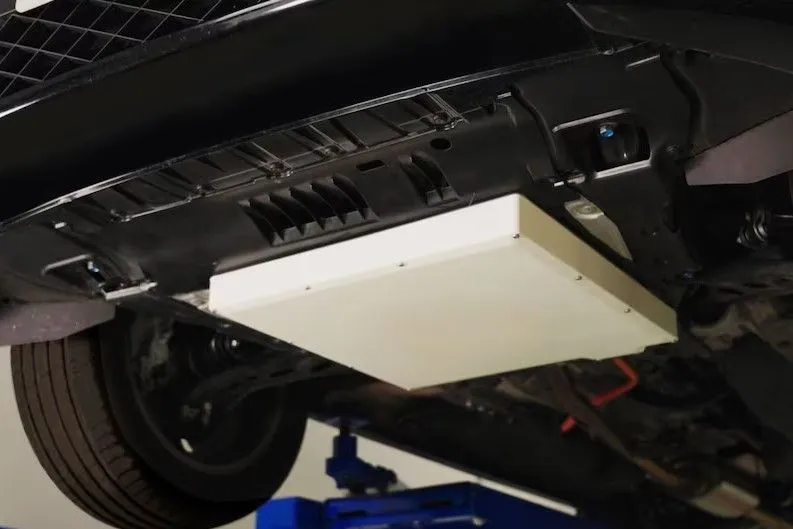
This capability is particularly interesting for freight transportation. Electric trucks require large amounts of energy, and charging stops reduce their operational time. A road that can supply energy while the vehicle is in motion might allow for smaller batteries or maintain a high charge level for longer periods, though much work remains before it’s clear to what extent this will be feasible.
Honda and its partners are also working to increase the power that the system can deliver. The development goal is to reach up to 150 kW (204 HP), a figure that would allow for a substantial amount of energy to be supplied while the vehicle keeps moving. However, this remains a development target rather than a power level that Honda has demonstrated on public roads.
Technology also presents one of the major challenges for this concept: it’s not enough to simply get electricity from the road to the car. The system must function reliably at different speeds, withstand continuous traffic of heavy vehicles for years, and do so without compromising safety. That’s why an important part of Honda’s program is dedicated to testing the durability of the installations buried in the pavement.
A new testing track is planned to be built at Taisei’s T-FIELD/TAMURA facilities by the end of 2026. There, tests for functionality and energy transfer will be conducted, as well as trials to examine potential electromagnetic field leaks. The road will also undergo a durability test equivalent to one million wheelloads using actual vehicles, to assess how well the units installed beneath the asphalt handle continuous traffic flow.
Next comes the most important step. Honda, Taisei, and Taisei Rotec plan to participate in the so-called Tateyama Project, a demonstration of this technology on a public highway in Chiba Prefecture. The tests are scheduled to begin in the 2027 Japanese fiscal year, which starts in April of next year.
It will then be possible to determine whether an idea that has for years seemed to belong only to a distant future can actually work outside of a test track. The road will need to transfer energy to vehicles traveling at high speeds, maintain a stable power supply, and do so under conditions far more demanding than those in a laboratory.
Honda’s approach also changes the way we understand the range of an electric car. Instead of trying to install increasingly larger batteries to cover more distance between charges, part of the energy needed could be obtained directly during driving. On certain routes, this could reduce the need for stops and potentially allow the use of smaller batteries.
But there is still one fundamental issue to resolve: who will pay for and maintain a road converted into a charging infrastructure. Installing thousands of transmission units beneath the asphalt would be costly, and it would be necessary to determine which roads should be equipped first, how energy would be billed, and how to ensure that compatible vehicles can use the system.
Therefore, although the idea of a road that charges a car while it is moving sounds amazing, we are still dealing with a developing technology rather than a solution that will replace conventional chargers in the short term. Honda intends to start with those sectors where its advantages can be most evident, especially transportation and logistics.
If the tests in 2027 are successful, we could be witnessing one of the most interesting changes to electric vehicle infrastructure. Instead of having to search for a charging station every few hundred kilometers, part of the road itself could become the charger.
