
4 engines, 625 kW, advanced regenerative braking: This is how BMW’s first electric M3 drives
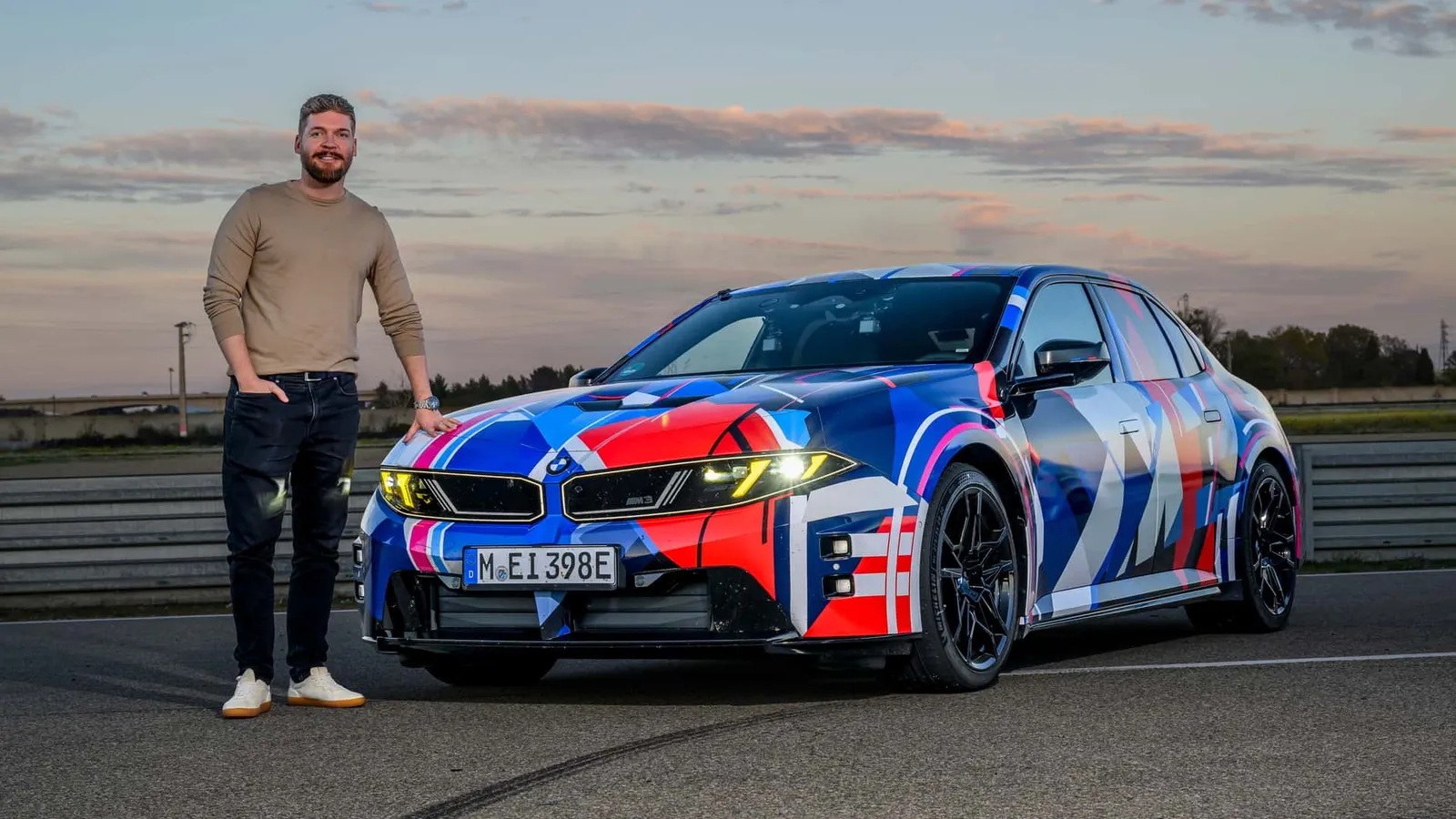
To make a good first impression, the guys at M GmbH start by causing me physical pain. Klaus Huber, the M3 dynamics manager, asks me to move to the passenger seat and immediately activates the launch control. For a moment that feels longer than it actually is, my stomach ends up about 13 meters behind my rest of the body, and a muffled, twisted “Rrrrrggggghhhh” escapes from my stunned insides. It’s somewhat reminiscent of the dreaded launch in Voltron (roller coaster fans know what I mean).
The first electric M3 is clearly accelerating quickly. Of course, it wasn’t a huge surprise that it would be able to do this. And it really doesn’t matter that much. The fact that it accelerates from 0-100 km/h in just over 2.7 seconds (officially, it’s said to be “significantly under 3 seconds”) is irrelevant. Other cars can do that too—such as a Tesla Model X. I don’t think I need to say more about it.
Image Gallery: BMW M3 (2027) PreDrive
Foreign yet familiar
A much more crucial question is this: Can the first M3 without an internal combustion engine deliver enough driving pleasure and excitement to genuinely win over the most demanding enthusiasts and hardcore M fans, or is it ultimately nothing more than a damn fast but soulless technological marvel?
To find out, I traveled to southern France last week, where one of Bayern’s most important testing facilities has been located in Miramas near Marseille for over 40 years. Fortunately, it features a superbly designed racetrack. There, the fast drivers from Garching generously allowed me to drive 14–15 laps in the most important and highly debated sports car of the coming year.
Such a long testing period is far from typical, especially for a car that is still in prototype stage. Of course, it helped to gain quite good and reasonably solid insights into the most controversial M3 of all time. Suffice to say at this point: In some ways, this unusual vehicle feels surprisingly familiar, yet at the same time utterly different. It is overwhelmingly impressive in many aspects, but there will still be certain aspects that hardcore fans won’t like at all.
But before we delve into the (hopefully) emotional aspect of driving dynamics, we first need to understand what kind of monster M GmbH has actually created. I really like to imagine the creation process involving crazy scientists, flashing lightning (how fitting) and thunder in a secret workshop in Garching, but in reality, it was probably just a lot of hard work by a whole bunch of extremely smart people.
4 Engines, 850 HP, Steel Brakes Almost Just for Show
What’s crucial is that the M3 also uses next-generation technology, relying on BMW’s new Heart of Joy system as the foundation for superior driving performance. The Heart of Joy integrates the engine, brakes, charging, regenerative braking, and some steering functions into a single unit, processing information up to ten times faster than previous generations of control units. This certainly can’t hurt the company’s most important performance vehicle.
Just like a battery that releases energy much faster and, more importantly, recharges it faster than usual. Although the basic layout of this battery, with a capacity of around 100 kWh, matches that of the i3, the M3 uses more high-performance cells along with improved, now dual-sided cooling for them. BMW M promises a WLTP range of up to 650 kilometers, charging speeds of up to 420 kW, and the ability to add 350 kilometers of range in just 10 minutes.
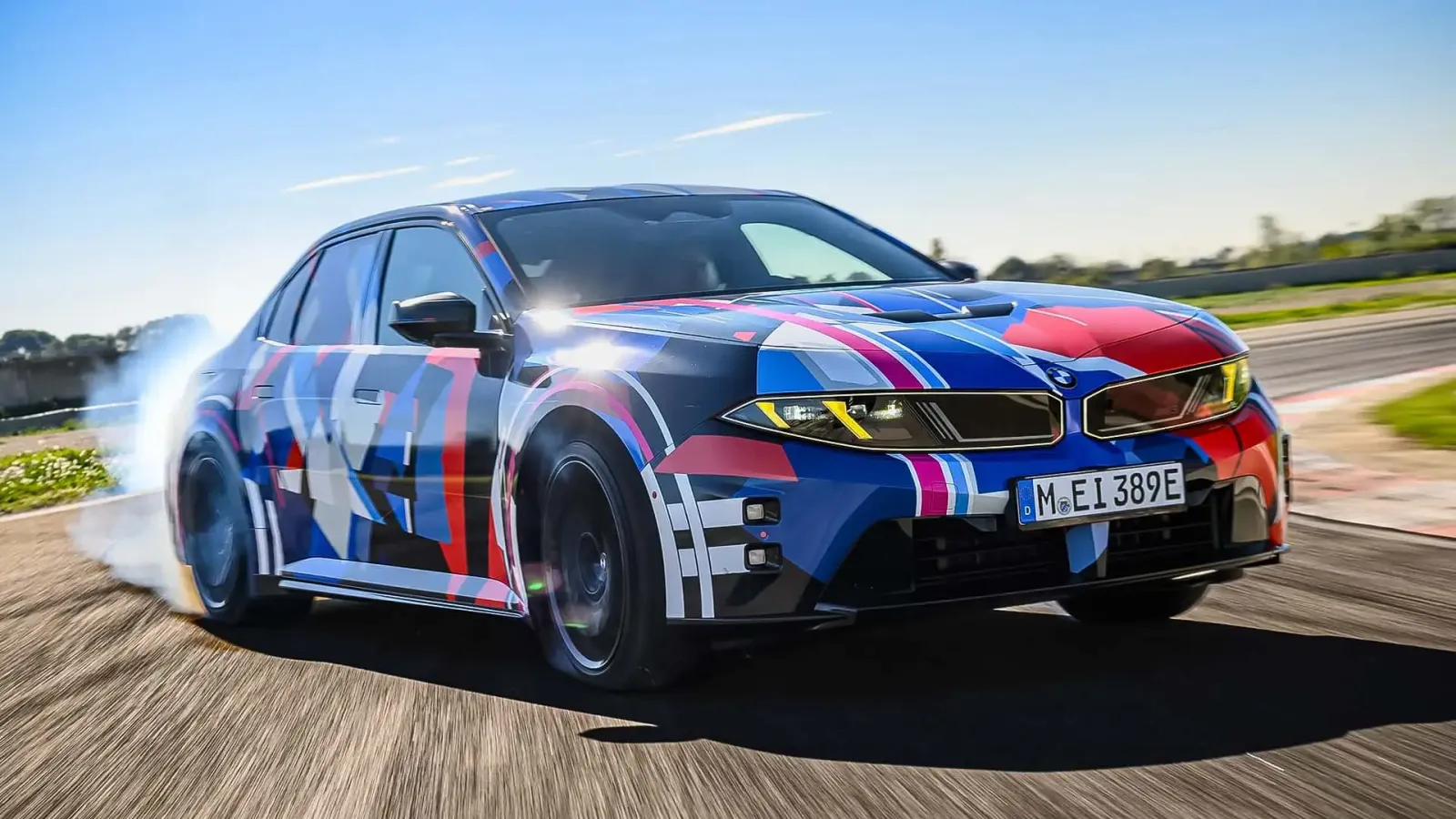
Image by: BMW
The key to the success of a purely electric sports car lies in its ability to recover energy as if the survival of humanity depended on it. If that were truly the case, the M3 would easily save us all. Its maximum regenerative braking power is 540 kW. For comparison, a current Porsche Taycan achieves 400 kW. Although the traditional friction brakes are still present in the first electric M3 in their familiar luxurious form, they are hardly used anymore.
If you don’t need to make a full brake stop from a high speed on the highway, the steel brake discs remain cool. After about ten quick laps on the aforementioned racetrack, Huber placed a thermometer against the discs. 90 degrees at the front, 60 degrees at the back — the normal temperature after such use is around 500 degrees or more. Huber tells me, “If you drive three laps on the racetrack, you get the fourth lap for free thanks to regenerative braking. During tests at the Sachsenring, we consumed a total of about 250 kWh in one day and recovered only 150 kWh through regenerative braking.”
The key factor in this energy carousel are the electric motors. You may have noticed that the M3 has four of them. Each wheel is individually controlled by one of these motors. Naturally, they can not only push forward with great force but also backward. This is why such massive energy recovery is possible. Central gearboxes or traditional differentials are no longer needed either. A system like this currently exists only in the Ferrari Luce.
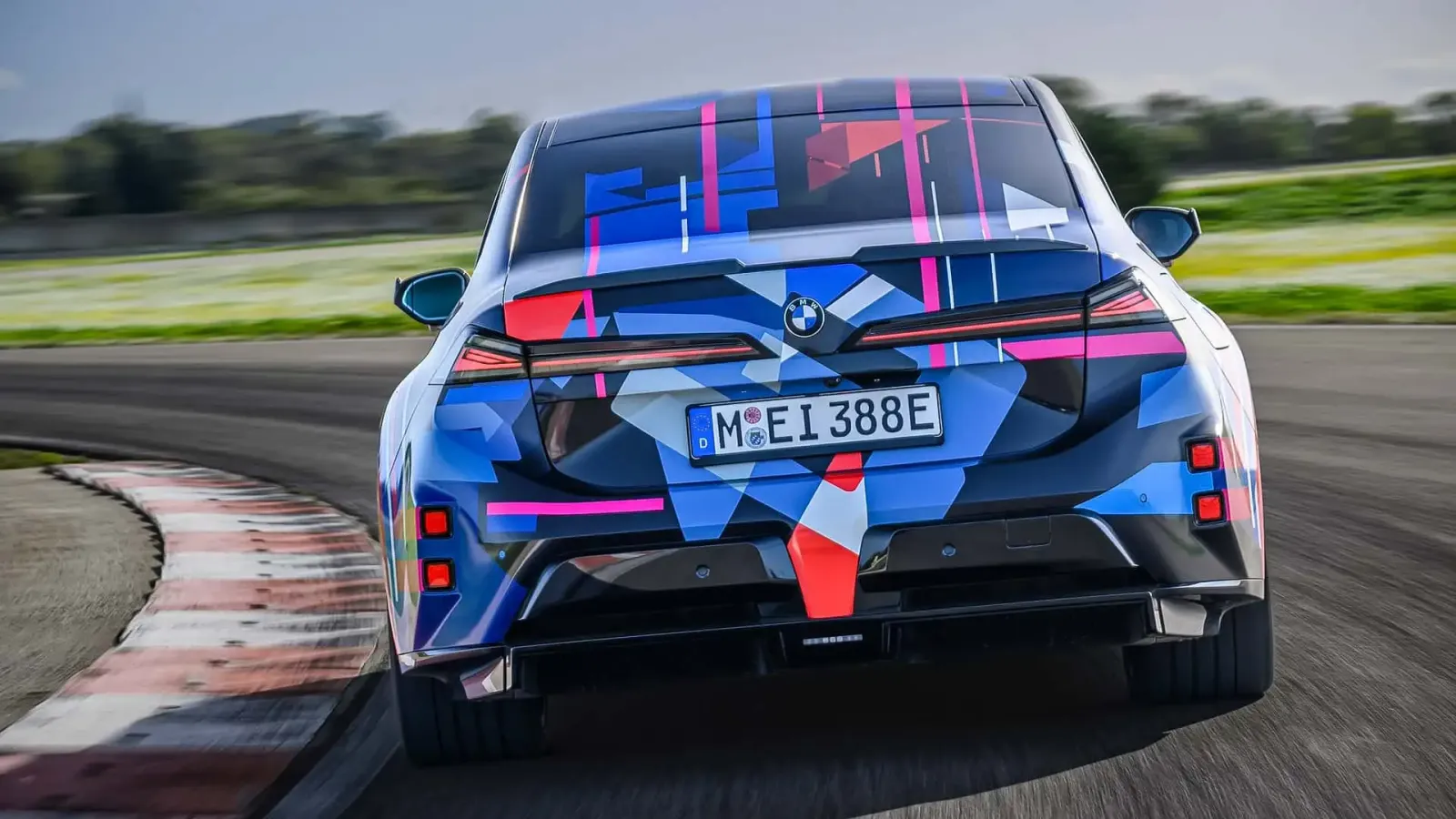
Images by: BMW
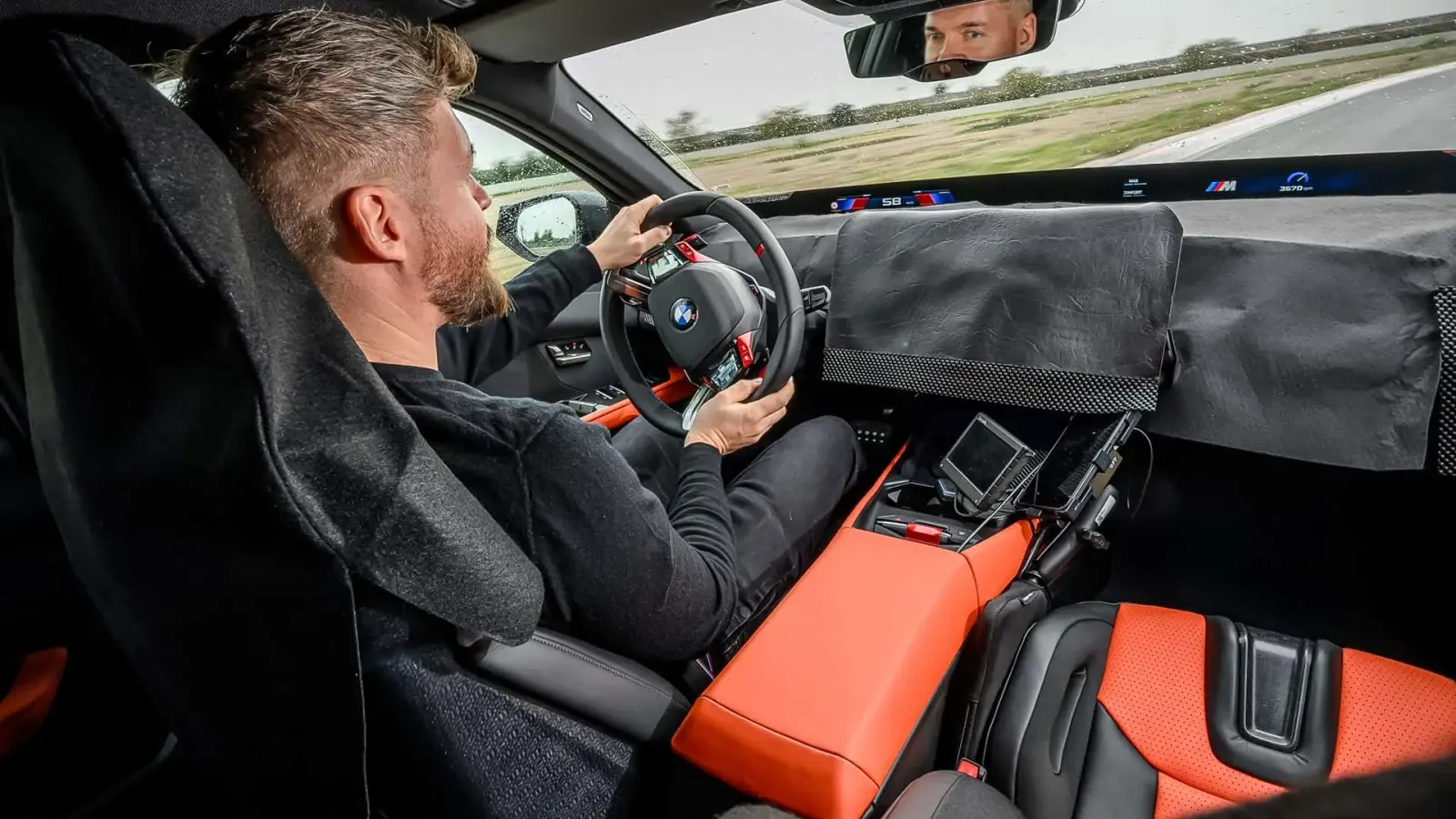
Images by: BMW
All is well and good — but what fans have been eagerly curious about for months is: just how much power do all those electric motors deliver? Well, the front axle delivers 480 kW/540 Nm, while the rear axle provides 560 kW/1,000 Nm. The system output is 625 kW (850 horsepower) with a maximum torque of 1,200 Nm. That’s 300 horsepower and 550 Nm more than the current M3 CS.
More news from Munich
It sounds completely absurd, but of course this M3 also has to carry a significantly different weight. Officially, they haven’t commented at this stage, but unofficially, the combat weight is said to be around 2,400 kilograms. Depending on the version, that’s about 500-600 kilograms more than the previous G80 generation.
Between the familiar M3 feel and a video game
On the road, you hardly notice it — as you might have guessed — there’s very little of it. The overall feel of the M3 Revolution — seat position, initial steering response, general handling feel, support in corners, and so on — is remarkably M3-like. Even skeptics will likely feel at home here sooner than they’d like....
For a detailed driving review of the new M3, along with initial impressions of the artificial sound and simulated gear shifts plus an emotional summary, please visit our sister site Motor1.com Deutschland.