
BMW M3 Electric: First Drive of the 625-kW Prototype
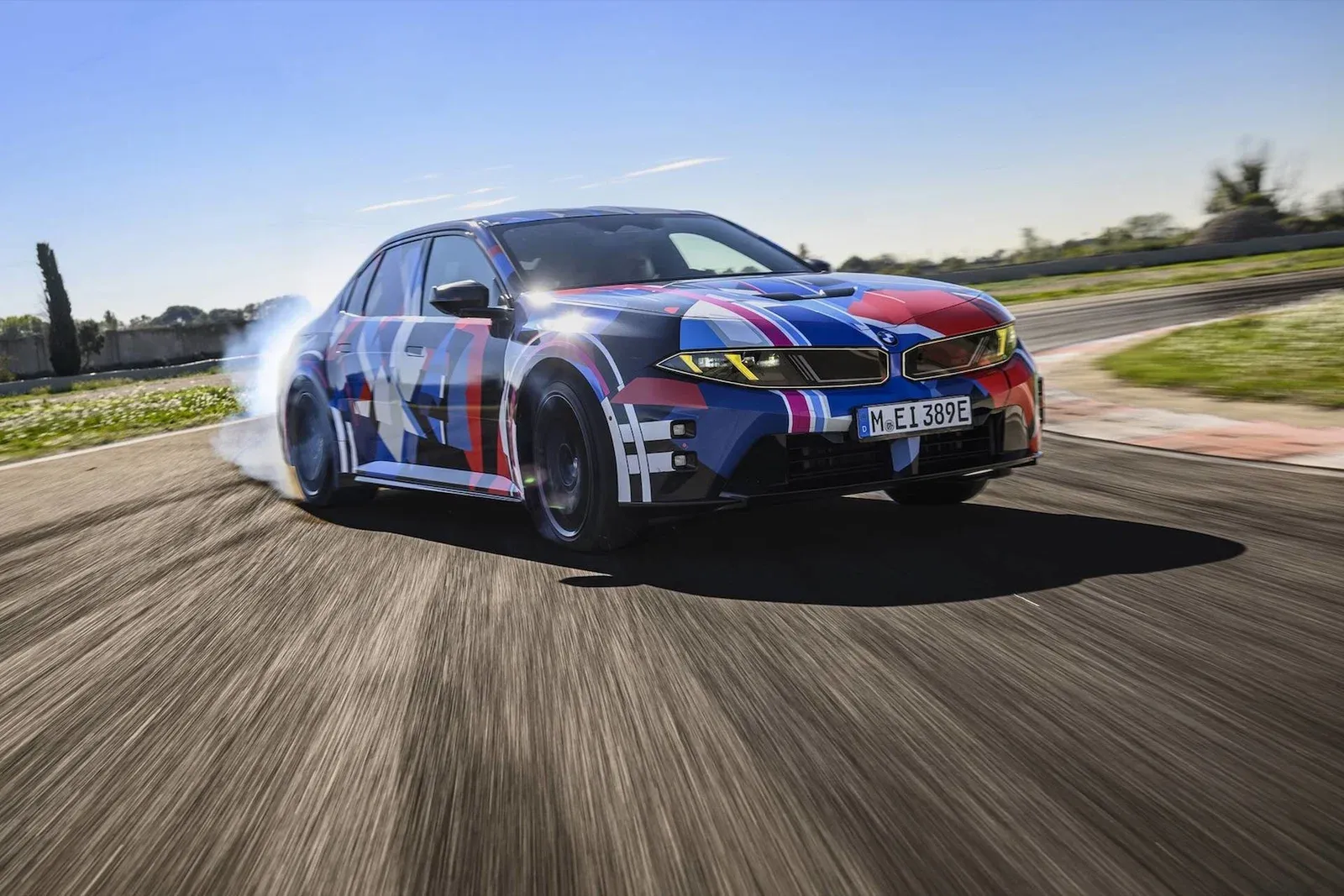
The BMW M3 is a legendary speedster not only in the sports mid-class segment. What began with the E30 generation in the mid-1980s featuring a striking sport badge reaches its electric pinnacle with the new i3 NA0 generation. For the first time, the sportiest model in this lineup is available as an electric version for performance-driven customers, without the expected name of BMW i3 M. Officials in Garching and Munich aim to strengthen the M3 brand using the established naming convention. Once, decision-makers were hesitant about using the M4 name — but that didn’t affect customer enthusiasm at all.
A Thrust That Takes Your Breath Away
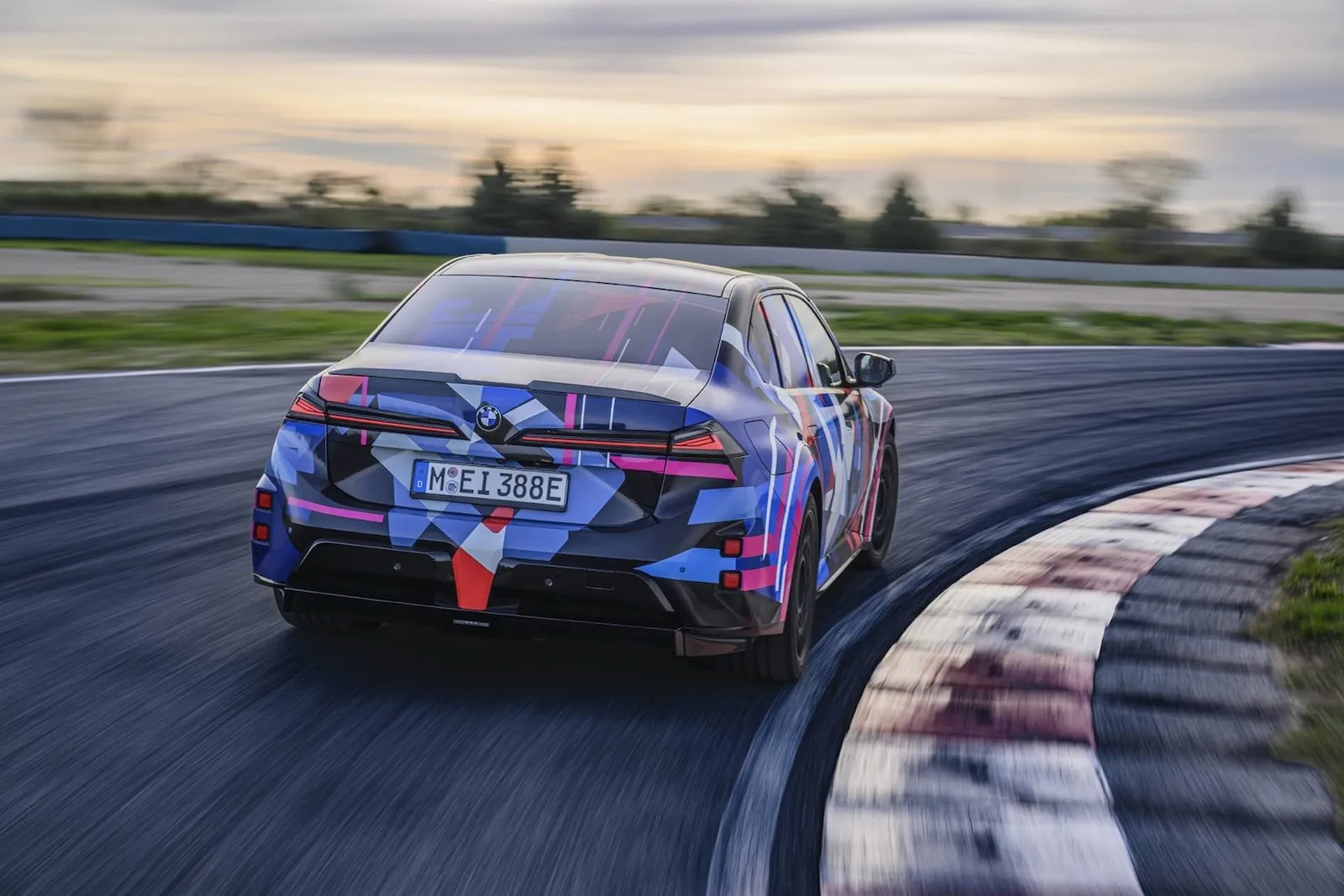
Sure, the thick packages and large wheels have already been admired in the stand, but now it’s time to head to BMW’s own test track in Miramas — starting from the passenger seat. The car exits the pit lane smoothly, but then the Launch Control delivers a massive surge of power at the press of a button, pressing the driver firmly into the seat. The prototype of this powerful electric three-wheeler rockets across the smoothly drivable test track near Marseille. First impression: damn, what acceleration! Second impression: what a sound! It’s a mix of an V8 DTM race car, a robust inline six-cylinder engine, and a spaceship. Despite all the cornering dynamics, the driver still operates the gear shift levers on the steering wheel as if in a daze — why on earth?
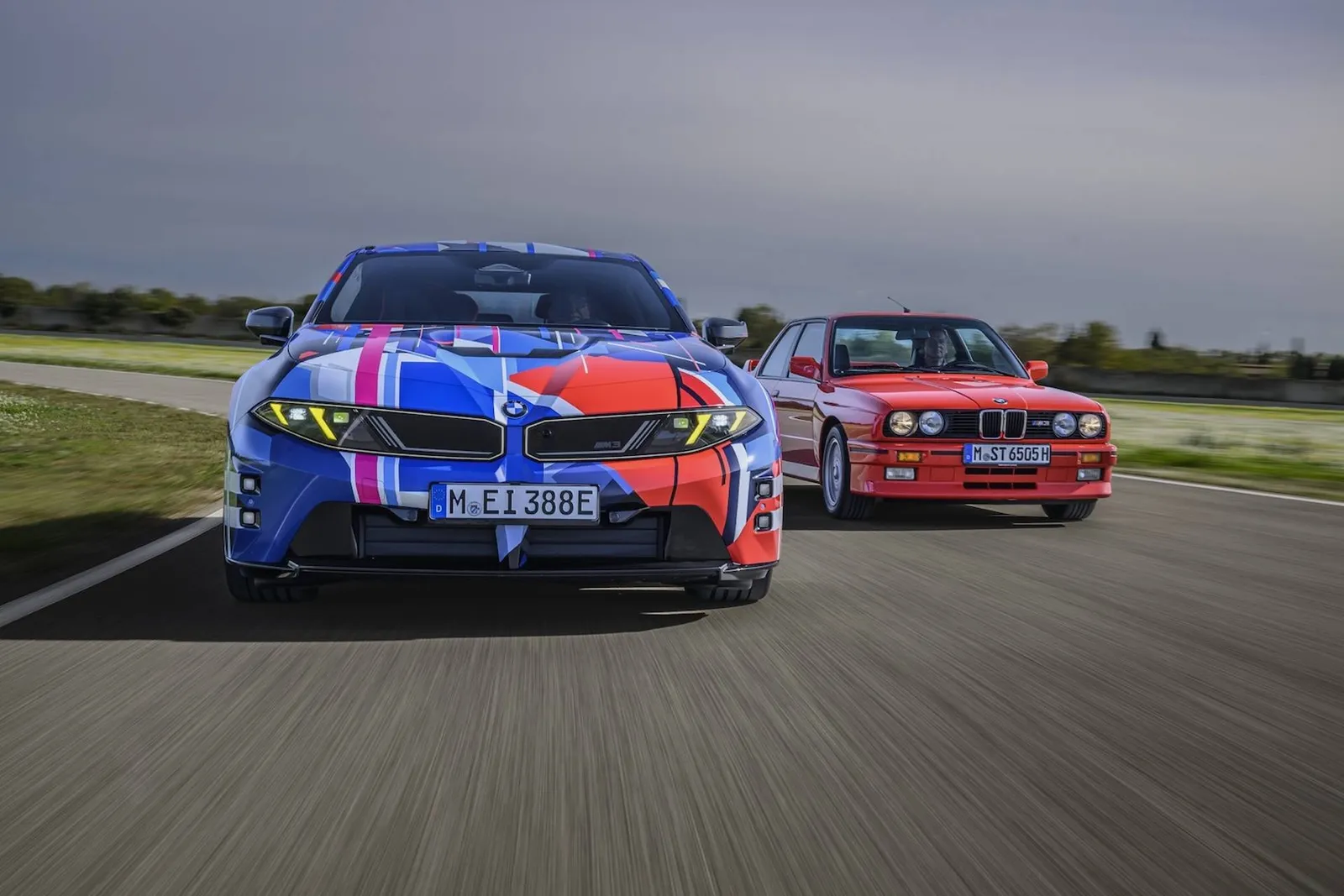
BMW remains vague about most of the technical details of the concept car, but it’s clear that the electric M3 will be the fastest and most powerful M3 ever built. The current target power output is around 625 kW, which equals 838 horsepower and over 1200 Nm of torque — with even higher figures possible through short-term boosts via Launch Control. The front axle can deliver up to 480 kW and 540 Nm, while the rear axle is designed for 560 kW and 1000 Nm — it’s truly breathtaking.
Unlike the standard BMW i3 50 xDrive model, the disguised i3 M is equipped with four electric motors, each of which drives a single wheel with great precision. Combined with BMW’s visually striking “Heart of Joy” architecture and the so-called “M Dynamic Performance Control,” this enables precise control of torque at each individual wheel, both during acceleration and braking.
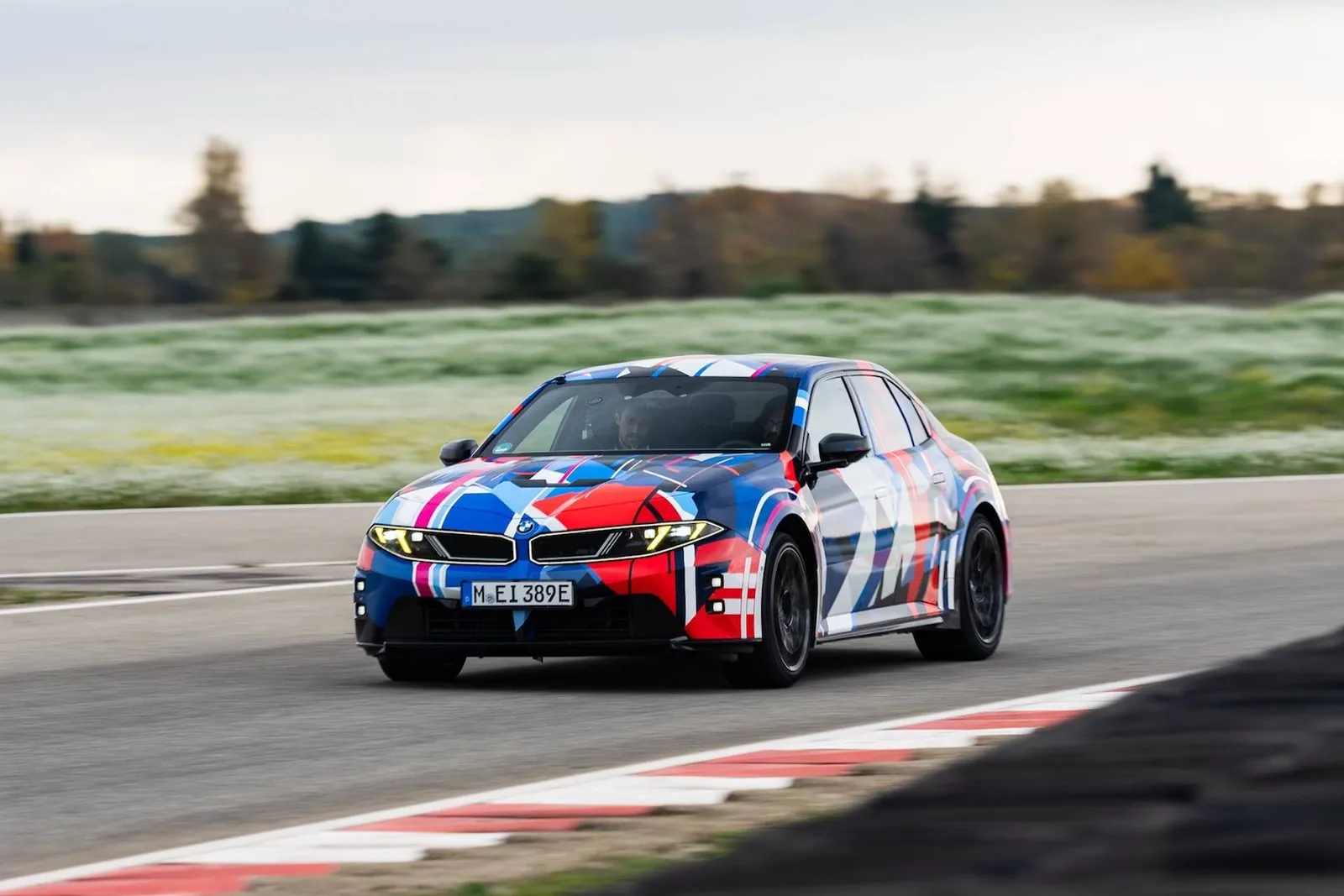
That is precisely what should matter more than any pure performance figure. Making an electric car extremely fast is relatively simple. However, developing it into a truly interesting sports car seems noticeably more difficult. Even once seated behind the wheel, one thing stands out above all: the predictability of its highly responsive dynamics. The new E-M3 grips the road extremely well and immediately gives a strong sense of confidence. When turning the steering wheel and applying torque, the car follows every command precisely. Even if the driver corrects his line mid-corner, the vehicle remains remarkably composed.
BMW has not disclosed the final weight, but acknowledges that a high-performance electric vehicle inherently carries more weight. The two axles are likely to bear nearly 2.5 tons. Therefore, significant investment was made in stiffness—through components such as auxiliary frames, stiffening plates at the front and rear, struts at the A-pillars, and a battery housing that is structurally integrated into the suspension and chassis.
Drifting, shifting gears, awe—and sometimes too much show
When the driver activates Dynamic Mode, the all-wheel drive system with four motors not only ensures maximum grip but also allows the driver to deliberately lose it. Power slides are incredibly fun. The rear end drifts in a gentle and predictable manner; after just a few laps, one feels confident enough to let the tires lose traction. An experienced driver can play with the car without it ever giving the impression of working against them. It is in such moments—more than during pure acceleration—that it feels like a true M model.
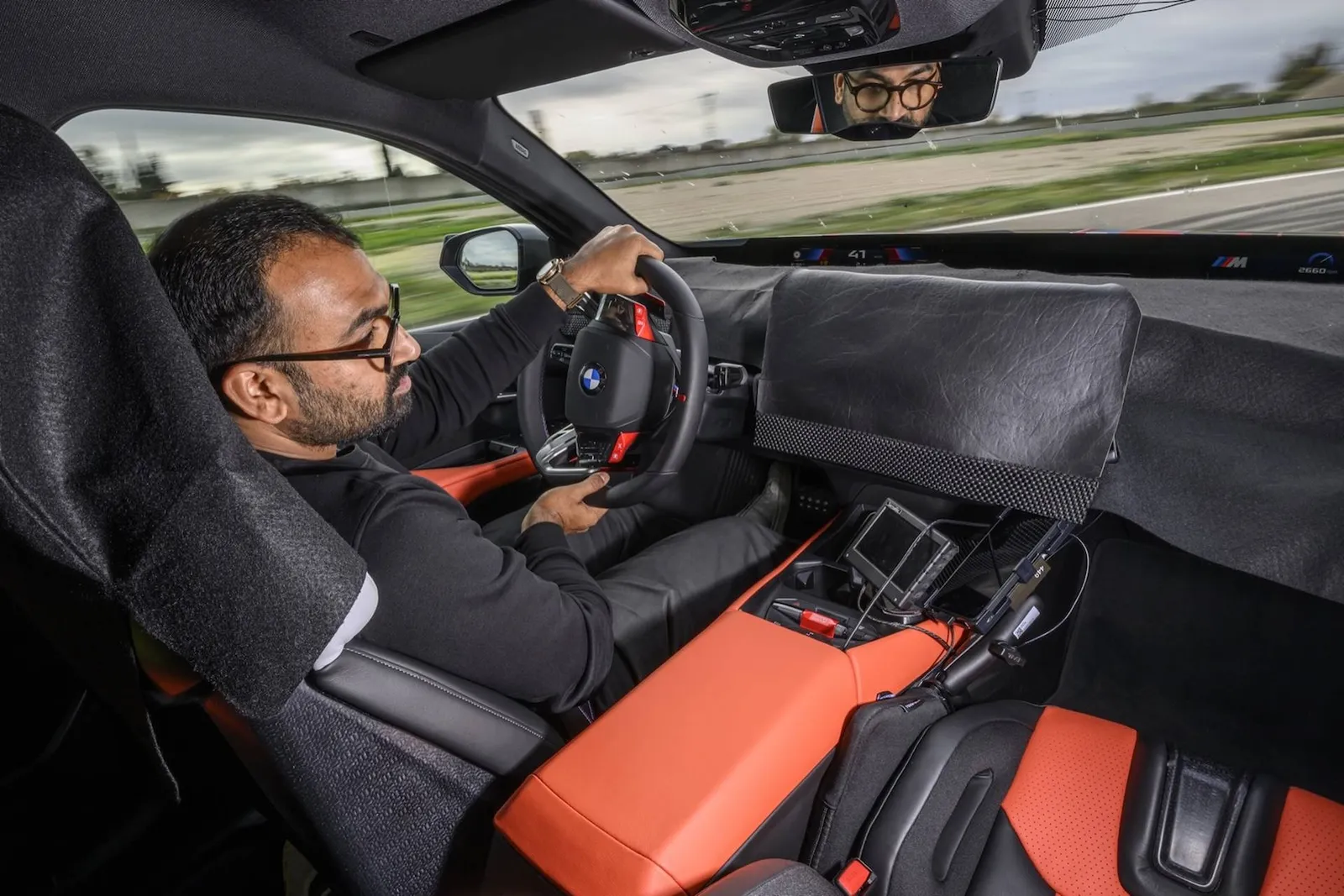
And then there are the shift levers. The “M eDrive” system can be driven like a conventional electric car with a single gear, but it can also automatically go through six virtual gears. Alternatively, the driver can manually control these gears using the shift levers — including a gear indicator and a speed limiter.
No physical gear shifts occur here. Instead, the gears alter the interaction between speed, torque delivery, regeneration, and sound. Lower gears appear more aggressive, while higher gears adjust torque delivery differently. It’s possible to reach the limit and, just as the muscle memory trained by decades of internal combustion engines would dictate, press the next shift lever. This works far better than expected, though the accompanying electric sound is a matter of personal preference. In its most aggressive setting, it’s extremely loud and sounds completely artificial. The simulated sound when shifting down also seems a bit overdone. When the left switch is activated, the artificial feedback sounds very much like that of a racing simulator – it goes beyond useful feedback and feels more like a staged show.
Fortunately, this can be reduced or completely turned off. BMW has also taken the matter of regenerative braking seriously. The maximum regenerative power is around 540 kW, with the four motors able to distribute braking energy individually to each wheel. According to BMW, under sporty driving conditions, approximately 30 percent of the energy consumed can be recovered, depending on the circumstances.
Cool Brakes After Hot Rounds on the Track
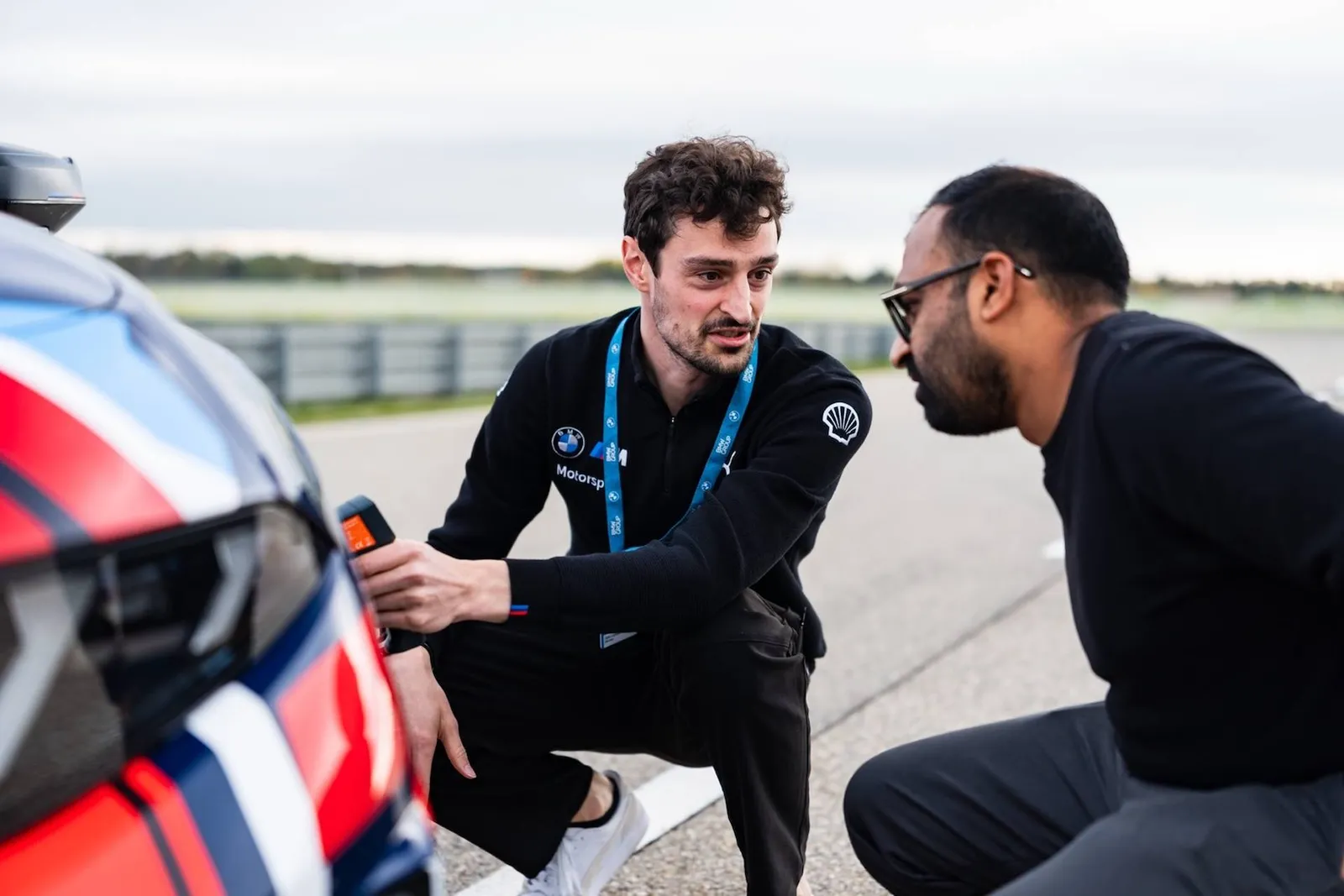
The integration of the carbon-ceramic braking system is particularly impressive: after several fast laps, the brake discs were only 55 degrees Celsius warm — evidence of how strongly the engines assist during braking. Race track use was also taken into account: with the “Stint Control” function, the driver can choose between a two-minute “Hot Lap,” an eight-minute “Short Run,” or a 15-minute “Long Run” — the vehicle then adjusts its temperatures and available power accordingly. It even brings the gaming console vibe inside as well.
The 108 kWh battery is also specifically developed for the M-models, featuring a performance-oriented cell chemistry and cooling system. BMW currently claims a WLTP range of around 650 kilometers. The charging capacity reaches up to 420 kW, which allows for an increase in range of up to 350 km in just ten minutes under ideal conditions.
It was more difficult to assess the steering than the stiff suspension. On the mirror-smooth asphalt in Miramas, it felt sluggish in the sportiest setting, though not particularly lacking in feedback. However, a thorough judgment can only be made once a production vehicle is tested on much rougher roads. Yet the first test drive proves that this electric M3 is absurdly fast despite its extra weight. What’s especially impressive is how quickly trust was built between the driver and the vehicle, how well the brakes can be modulated, and how much driving pleasure the Bavarians have extracted from four electric motors and a large battery.