
The perfect illusion: our first test drive of the AMG GT 4-Door and SUV
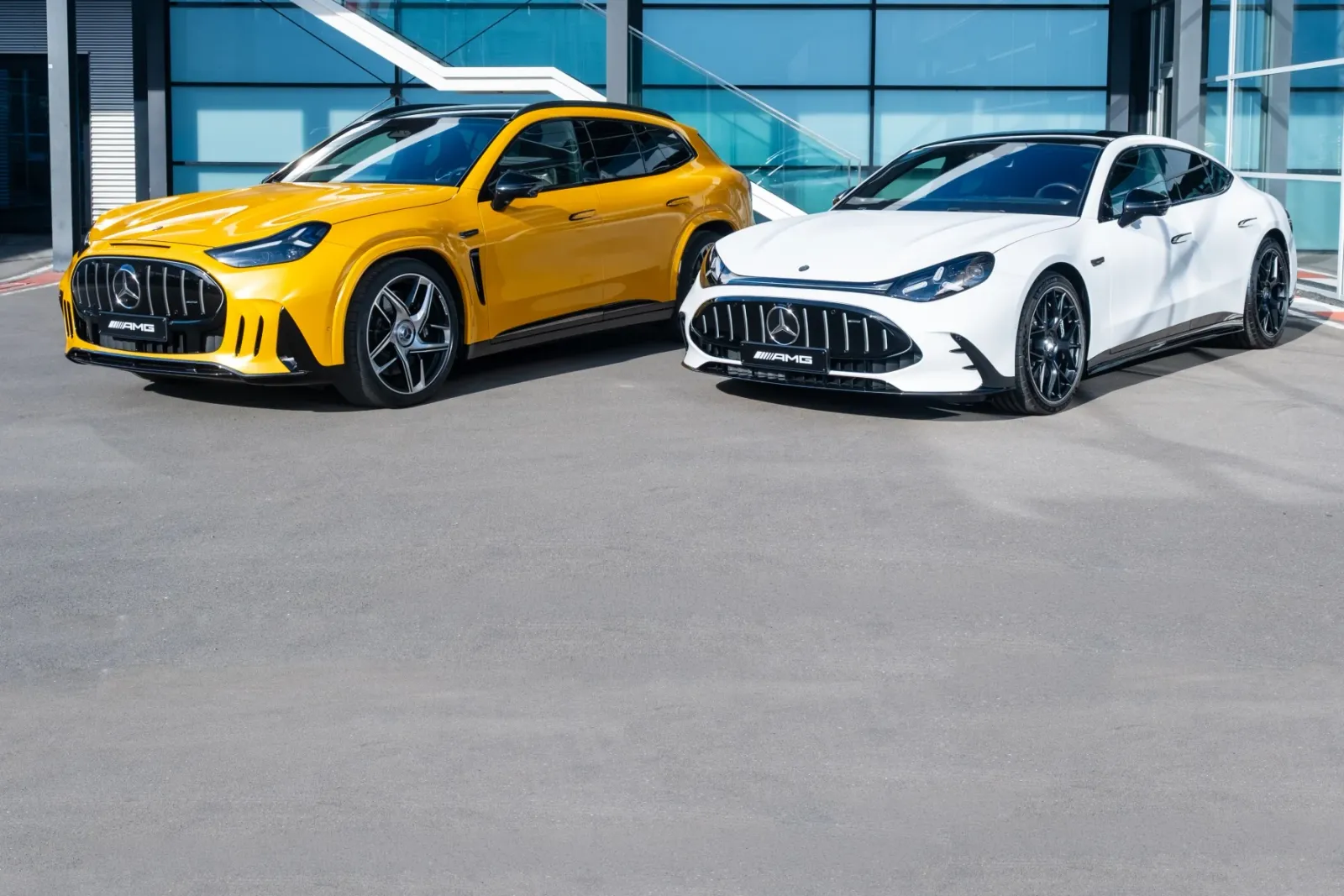
For years, they bided their time in Affalterbach. While Porsche, Lucid, and, of course, the performance divisions of the Chinese manufacturers had long since embraced electrification, AMG observed the world of electromobility from a safe distance, fine-tuning the battery-electric cars of its parent company. But now, as they finally enter the game with their new GT 4-Door from €115,430 and up, they’re doing so with Launch Control.
The GT 4-Door roars with V8 sound
One foot on the brake, the other on the accelerator, then lift off the brake – and, in the best-case scenario, the electric debutant shoots to 100 km/h in 2.4 seconds, leaving even the AMG One behind. Your back slams into the seat, your head into the headrest, while an eight-cylinder engine roars from the speakers, and the seat vibrates as if a crankshaft were actually spinning up front, sending its power to the rear via a carbon driveshaft. Except there isn’t a V8 at all – just up to three electric motors. Welcome to the electric future of Affalterbach. It may have arrived late – but it has landed with a bang.
“This is the electric car for people who hate electric cars,” says model series manager Oliver Wiech about the first EV that AMG has built on its AMG.EA platform. The message is as confident as it is contradictory: an electric car, of all things, is supposed to convert those who love internal combustion engines for their sound, mechanics, and perceived irrationality. And since the Swabians seemingly don’t entirely trust their own creation, the GT arrives as a double act. The four-door coupé leads the way, with the SUV to follow in spring 2027. Two body styles, one drivetrain concept – and one question that weighs heavier in Affalterbach than any torque: how much artificial emotion can an AMG handle?
The scepticism is justified. In the luxury league, the battery struggles. Electric hypercars like the Rimac Nevera sell as sluggishly as luxury models such as the Rolls-Royce Spectre. Bentley does one without abandoning the other, Ferrari is showered with praise for the Purosangue, and Lamborghini fitted its electric Lanzador with a plug-in hybrid drivetrain at the last minute.
Anyone who buys a car costing over €100,000 doesn’t just want to be faster than everyone else. They want sound, character, and provocation – and often a car that will one day be worth more than it was on delivery day. Electric cars, on the other hand, have so far often lost value faster than the ink dries on the purchase contract. With the farewell to the V8, AMG is also becoming politically correct. While this makes the brand acceptable to some for the first time, it could be a deal-breaker for some loyal customers.
Technically in a league of its own
Whether it’s overdue or unnecessary – technically, the GT is a masterpiece. Its axial flux motors come from AMG subsidiary Yasa; they are lighter and more compact than conventional electric motors, yet still deliver immense power. The 800-volt battery uses slim round cells, each individually cooled. This is said to enable not only record-breaking sprints but also sustained high performance: more than 500 kW should remain constantly available, whereas other EVs would have long since throttled back to protect the battery. In Affalterbach, they call this “autobahn-proofed” – a promise to those who buy an AMG not just for traffic light starts but for high-speed cruising in the fast lane.
The GT also aims to lead the pack when it comes to charging. Up to 600 kW are available at the right charging station, and for the SUV with its XXL battery, it’s even 710 kW. In the best case, this means ten minutes for 462 km of range. Project leader Wiech celebrates the fact that now, the driver no longer has to wait for the car – instead, it’s the other way around at AMG. Add to that up to 400 kW of regenerative braking power, which not only extends the range but also makes one-pedal driving a genuine experience.
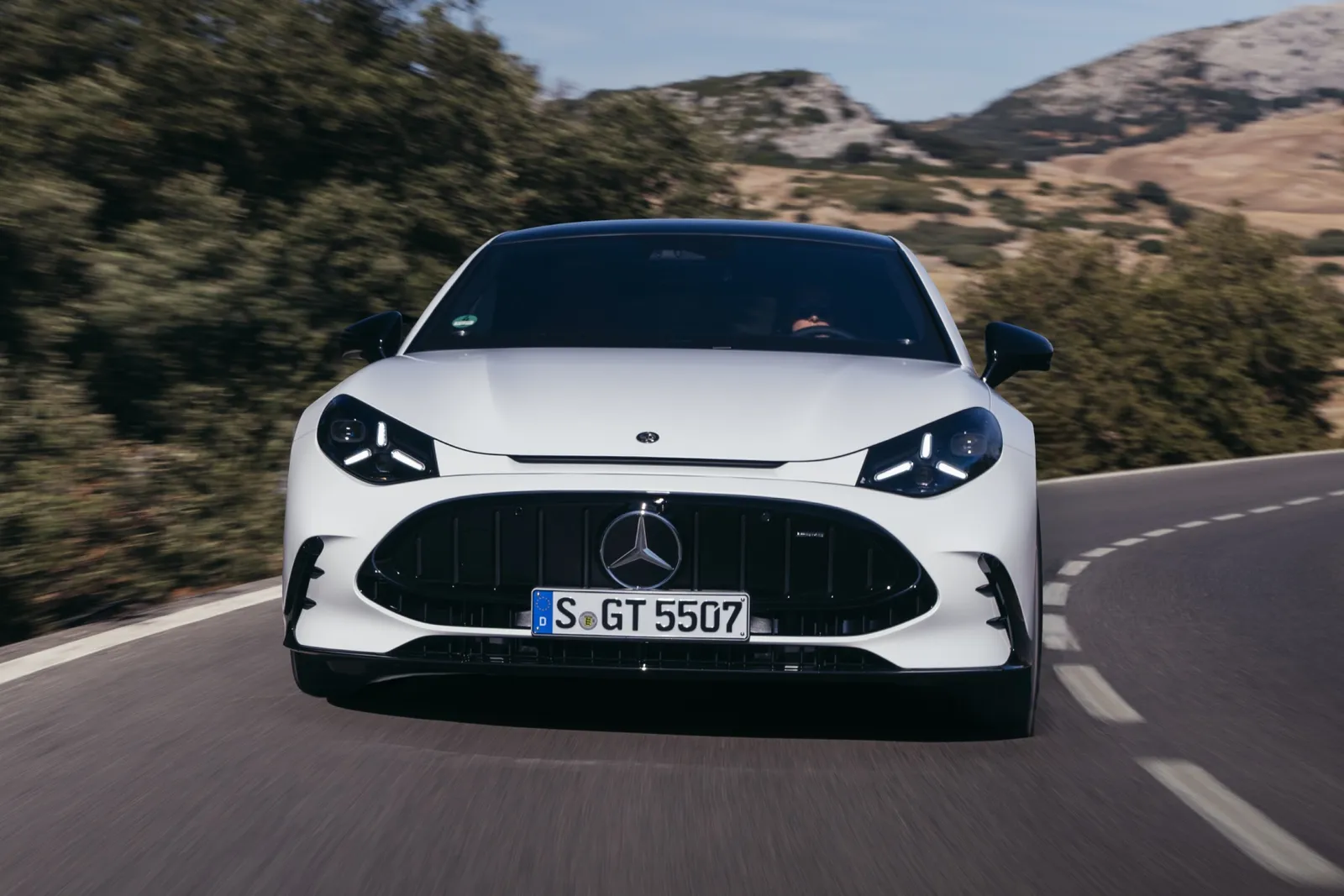
Image: Mercedes-Benz
- 1/4
- 2/4
- 3/4
- 4/4
Even passionate petrolheads can’t help but grin
And then there’s the matter of emotions. The sound was recorded from the last GT Black Series, and the virtual gearshift with a rev limiter is already familiar from other sporty electric cars. What’s new are the shakers in the seats, which make the V8 soundstorm not just audible but also tangible. Add to that digital displays in an analogue style and a whole arsenal of customisation options. The driver isn’t just supposed to go fast – they’re supposed to experience as much as possible along the way.
And it works. Even passionate petrolheads catch themselves grinning on country roads as they step through the fictional gears, let the seat vibrations tickle their backs, and feel a shiver run down their spines. Of course, the critical part of the brain immediately sounds a “fake!” alarm. Because no matter how perfect the staging is: a real V8 isn’t just about its sound – it’s about its mechanics, its vibrations, and its unique character. None of that can simply be replicated with software. It feels a bit like being in a theatre: the passion is professionally staged, but it’s not real. Sure, simulated passion is better than no passion at all. But an original doesn’t become real just because of the illusion.
A car that doesn’t need gimmicks
That said, AMG has at least got the overall package right. Compared to some high-performance electric cars from China, the GT doesn’t just feel fast – it feels cohesive. The chassis, steering, and brakes harmonise with the drivetrain. In Comfort mode, the GT drives quietly and calmly, almost like an S-Class. Switch to Sport mode, and you get a theatrical performance so well executed that you almost forget it’s just a show. Almost.
All the more unnecessary, then, is the flirtation with the PlayStation generation. On the centre console sit three rotary controls for throttle response, power distribution, and traction control. Play with these, and the electronics will help you drift – to the delight of the tyre dealer. This might be fun on a closed test track and could even become a TikTok trend. But in everyday life, it’s just gimmicky nonsense that reduces a serious sports car to a toy. A car that drives this well doesn’t need such tricks.
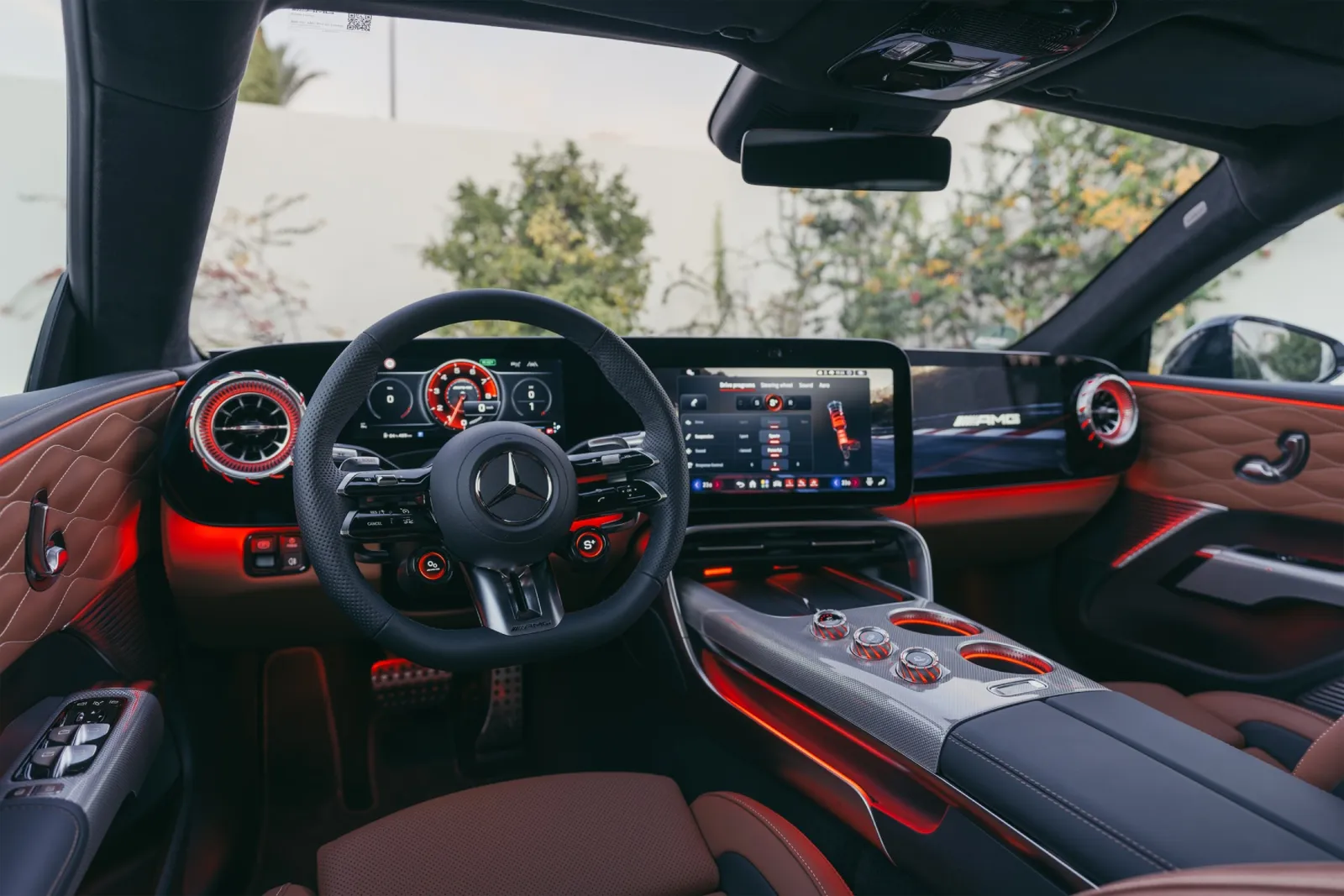
Image: Mercedes-Benz
- 1/3
- 2/3
- 3/3
The four-door is offered in three variants, all with all-wheel drive and a 106-kWh battery. The GT 53 starts at €115,430, delivers 400 kW, and achieves up to 794 km (WLTP). Above that is the GT 55, with 600 kW and up to 700 km of WLTP range, priced at €154,700. At the top is the GT 63, costing €196,350: 860 kW, up to 2,000 Nm of torque, and a 0-100 km/h sprint time of 2.4 seconds – better than any other road-legal AMG, although the top speed is capped at 300 km/h. That’s impressive, of course, but compared to the acceleration and the old AMG world, it almost feels modest again.
The 4-Door is thus the flagship of the new AMG world: a technological tour de force, a statement against the supposed boredom of electric cars, and a challenge to the Porsche Taycan Turbo GT and Lucid Air Sapphire. Yet it finds itself measured against the very past it has technologically left behind. The more AMG strives to imitate the V8, the clearer it becomes that it’s missing.
Test drive in the AMG GT SUV
The AMG GT SUV has it easier. The proportions alone look more balanced. The body is taller, the front end more muscular, and the car stands confidently on the road. At around 5.09 metres long with a 3.04-metre wheelbase, the GT on stilts is neither a discreet family car nor one that pretends to be a classic sports car. And that’s precisely why it doesn’t constantly have to prove that its electric drivetrain is emotional enough – even if it does play the same emotional keyboard.
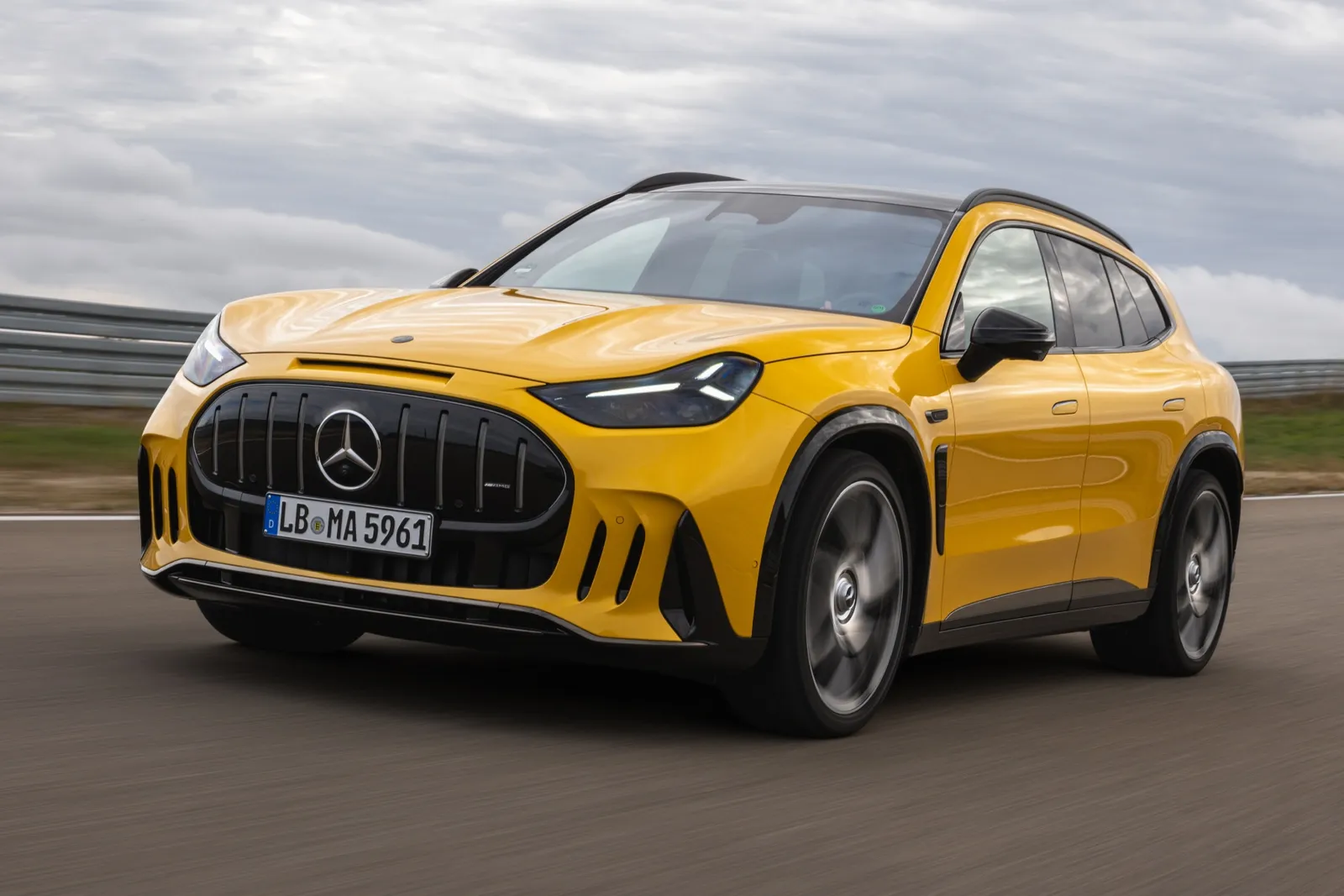
Image: Mercedes-Benz
- 1/6
- 2/6
- 3/6
- 4/6
- 5/6
- 6/6
Up front, you sit unusually low for an SUV, the suspension remains firm and precise, yet the air suspension still ensures comfort. The rear-wheel steering makes the large car easy to manoeuvre when parking, agile in tight corners, and stable on the motorway. Activate Sport mode and then call up the Boost, and you’ll feel the same abrupt kick in the back here. The artificial V8 roars, the shakers vibrate, and the digital rev needle jumps through the simulated gears. It’s the same perfect forgery—but you’re less likely to hold it against the SUV, because the expectations are different.
Anyone buying an electric sports car craves an experience that can stand up to an internal combustion engine. With an SUV, however, space, comfort, prestige, and a grand entrance count just as much. No one here has to defend a V8 as part of the brand’s DNA. The sound is a nice extra, not a matter of faith. While the 4-Door is supposed to convert petrolheads, the SUV mainly needs to convince those who simply want a high-performance luxury car with extra space – and don’t always want to justify themselves to the neighbours.
Real-world practicality
In everyday life, too, the high-riding model is the more convincing choice. The rear seat isn’t just suitable for children – it comfortably seats two adults, even three in a pinch, though legroom is tight. The boot holds 607 to 1,740 litres, plus 78 litres under the front bonnet. The flat GT offers 415 litres of luggage space and a 41-litre frunk. So the SUV not only has more metal over the battery but also delivers tangible practicality that you can actually use. And with a starting price of €113,050, it’s also €2,380 cheaper.
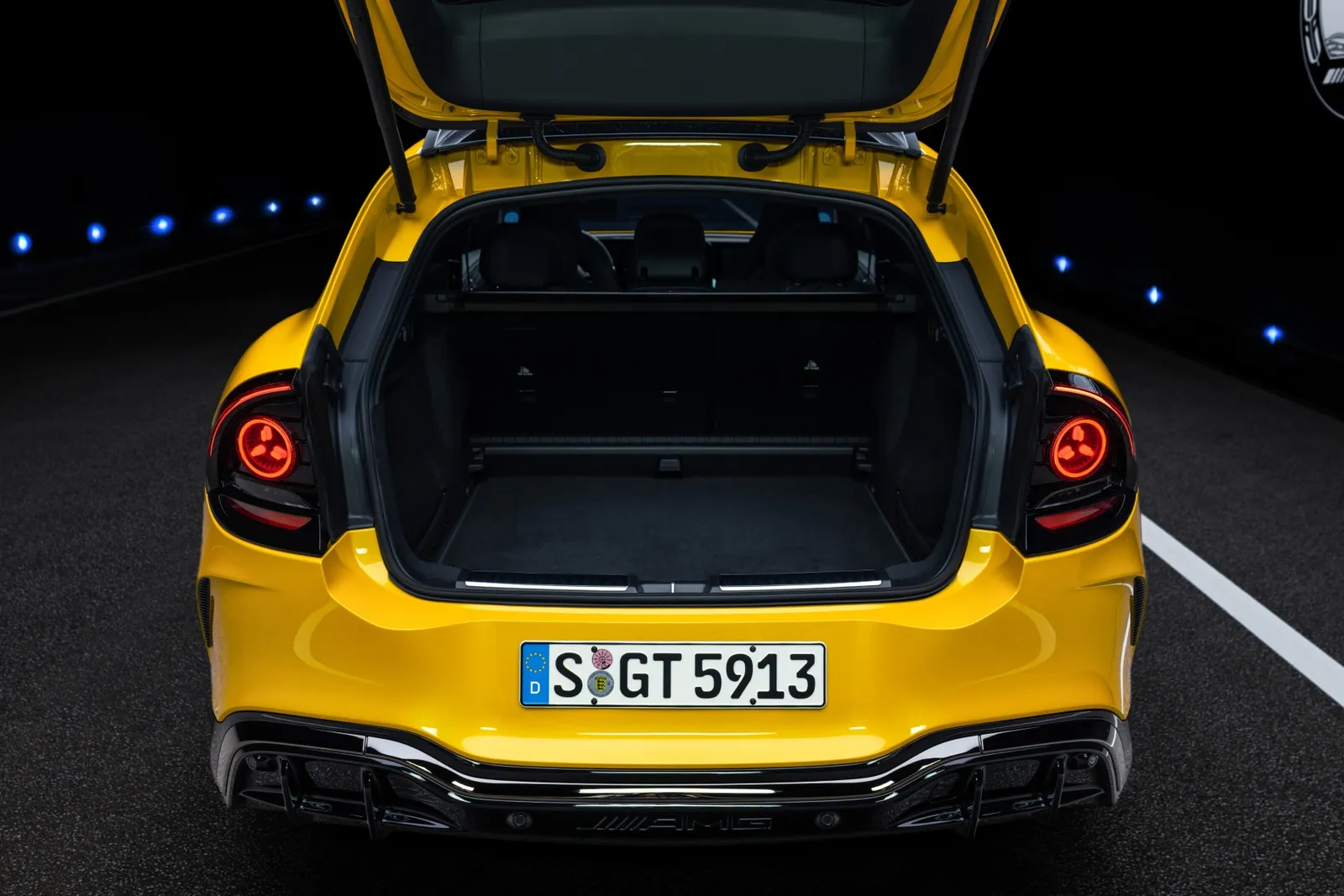
Image: Mercedes-Benz
- 1/2
- 2/2
The specs are almost identical: up to 860 kW and a hefty 2,000 Nm make the approximately 2.6-tonne GT 63 SUV a catapult on stilts. It reaches 100 km/h in 2.5 seconds, with a top speed of 270 km/h. For a car of this size, that’s absurdly fast – and more than enough for most roads. Those who prefer a more sensible approach can opt for the GT 53 with two motors and 400 kW, or the GT 55 with three motors and 600 kW. There’s also flexibility with the battery. The standard capacity is 106 kWh, while the more powerful variants optionally increase the battery to 128 kWh. This boosts the maximum charging power to up to 710 kW. With up to 700 km of WLTP range and the prospect of charging enough for around 454 km in ten minutes, the SUV is no less impressive.
Of course, the SUV has to hold its own against the Porsche Cayenne, Lucid Gravity, and other luxury high-riders. But that’s also where its opportunity lies: the market is larger, the customer base broader, and the practical benefits easier to explain. The SUV doesn’t have to deliver the one big emotion that everything hinges on. It just has to do many things very well – and, above all, better than the competition.
Conclusion
In the end, the electric AMG GT remains a technical masterpiece trying to solve a problem that can’t be fixed with technology alone. The 4-Door has to prove that an electric car can replace the soul of a V8. That might be its downfall. The SUV doesn’t have to do that. It’s allowed to be fast, luxurious, practical, and a little crazy. The fake V8 isn’t a matter of faith here – it’s just an entertaining trick. And perhaps that’s the more honest path into AMG’s electric future.