
Building charging hubs for Tesla, IONNA and EVgo: Inside Osborne’s work
Posted October 16, 2026 by Charles Morris & filed under Features, Fleets and Infrastructure, Fleets and Infrastructure Features, Infrastructure Features, Newswire, The Infrastructure.
EV charging infrastructure installation is a big part of Osborne’s commercial construction business.
Over the years, Charged has interviewed execs and engineers from companies covering almost every layer of the charging stack: hardware manufacturers, software developers, security specialists, utilities, standards bodies, and of course, charge point operators (CPOs) and charging-as-a-service (CaaS) providers. However, until now we haven’t heard from a provider of one of the most important parts of the stack—a company that actually builds the charging sites.
Yes, general contractors are still required, even in this new age of vertical integration. CaaS providers offer a turnkey package to EV fleet operators, but this doesn’t mean that their own employees handle every aspect of the complex process of building and operating charging infrastructure. A CaaS provider designs infrastructure, coordinates and oversees the process of installing it, chooses quality subcontractors, provides a single point of contact to the customer, and takes responsibility if things go wrong.
Likewise, CPOs may have a high degree of vertical integration, but they don’t do everything in-house. CPOs and turnkey charging providers use contractors to handle construction, and many of them turn to Kansas-based Osborne, which has been building commercial structures since 1976. Osborne has worked for all the biggies: Electrify America, IONNA, EVgo, Tesla and more. Charged spoke with CEO Stephen Osborne.
Charged: Osborne does all kinds of commercial construction, not just EV-related. How long have you been in the EV charging field?
Stephen Osborne: We’ve been in the EV space for about 10 years now. We’ve put in something like a thousand locations in the last 10 years. We were in on a lot of the early stuff, building Tesla and Electrify America sites.
We’ve put in something like a thousand locations in the last 10 years.
Charged: You must have seen a lot of changes in the industry.
Stephen Osborne: We’ve seen more changes in the last 18 months than we saw in the prior 7 or 8 years. It’s fascinating what’s coming. Higher charging speeds, battery backup systems. Charge port compatibility across cars, that’s been a big issue, and we’re starting to see a lot of conversions.
The efficiency of chargers is increasing. When the CPO is paying for $10,000 worth of energy, but they’re losing 20% of it in the old legacy systems, that’s money going out the door. The newer systems are reporting as much as 98% efficiency.
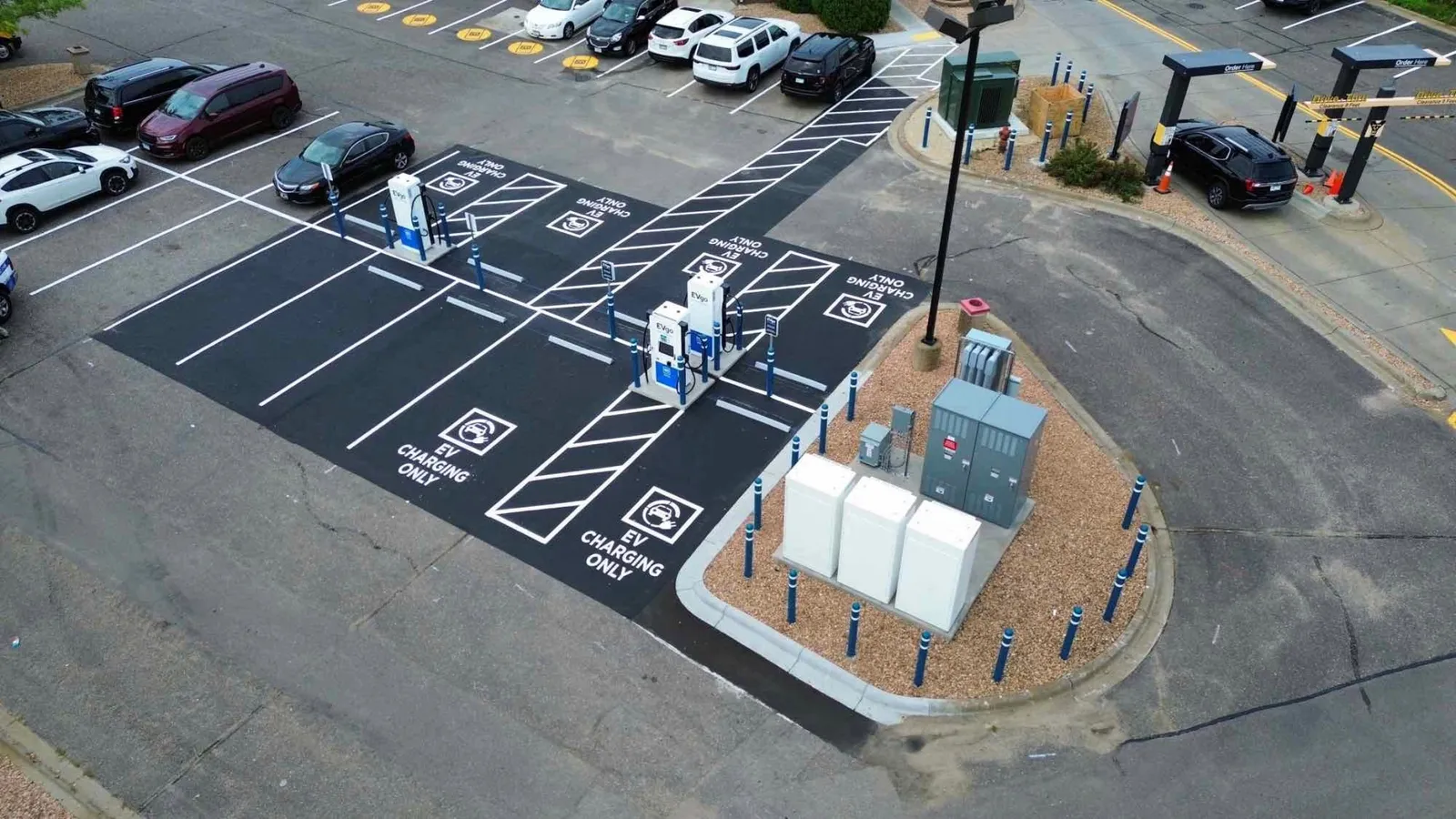
One of the big challenges we deal with is the amount of equipment that is put on site. In recent years the new all in-one systems have helped a lot because you can pack charging sites into much smaller locations. One charging site in Georgia had 12 chargers, but it took up almost an acre of space, because there was equipment spread all over the place. Now that same site would probably be around 2,000 square feet.
Charged: So, using all in-one chargers as opposed to a distributed system results in a smaller overall site footprint?
Stephen Osborne: Not always, but typically that helps keep a smaller footprint, so it allows people to get a lot more creative in where they put the locations. Less equipment on site is also easier to install and less costly. There’s typically less copper wire underground.
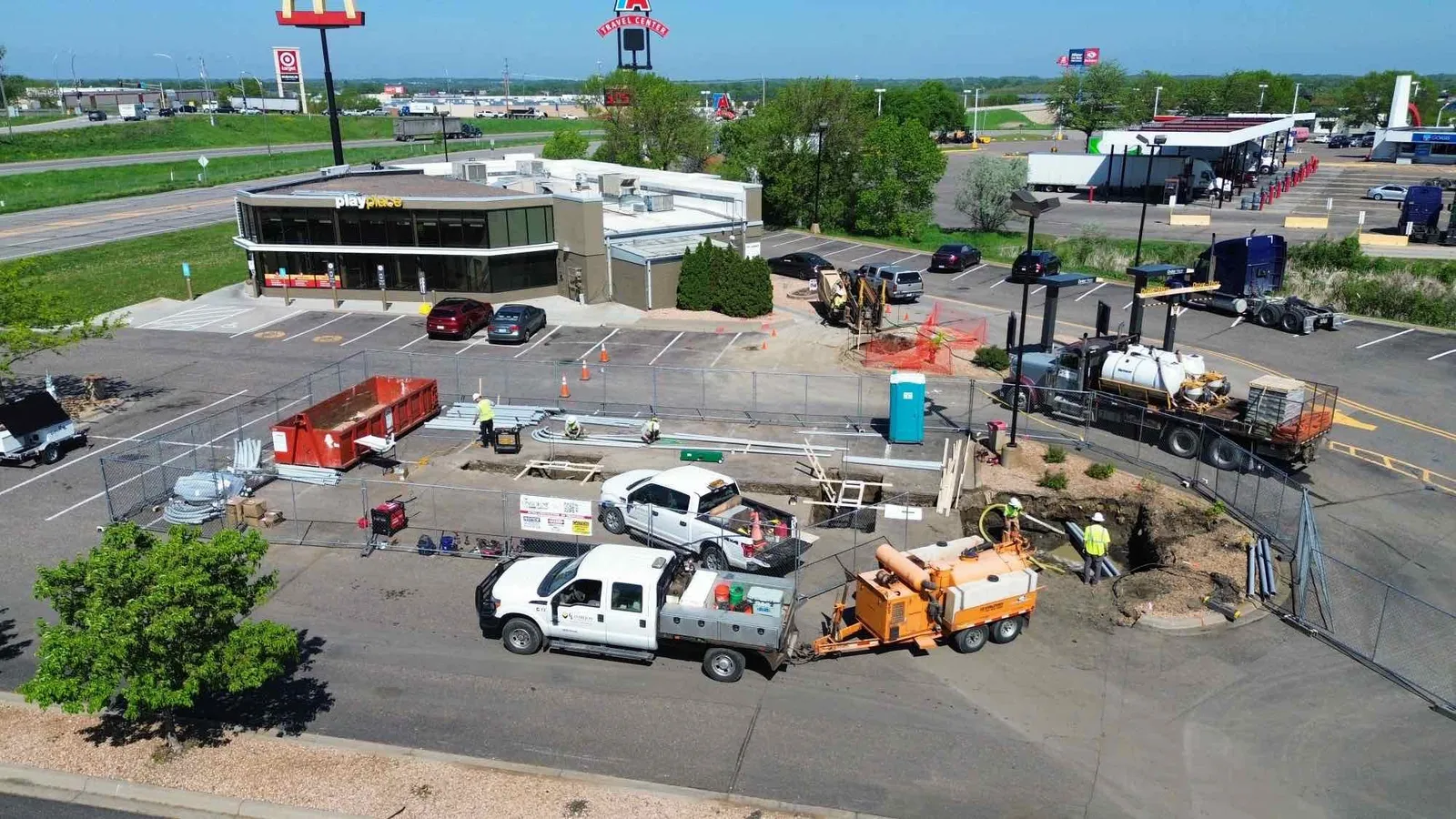
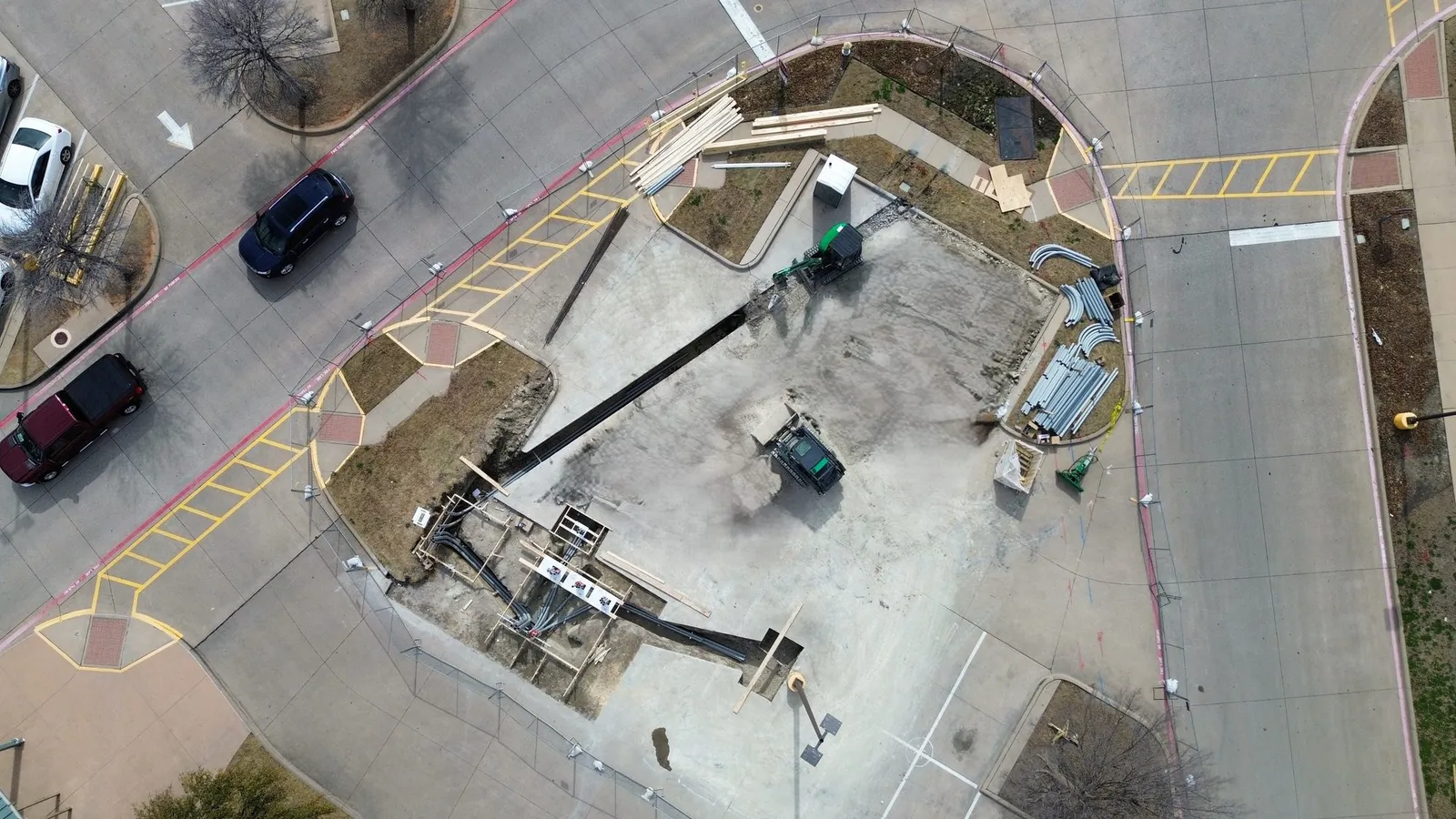
Smaller footprints can cause challenges—we still need a basic amount of space to work, have a skid loader or excavator on the site—but instead of working on an acre, I can now work on a 2,000- or 3,000-square-foot spot, and I’m not taking parking stalls away from paying customers.
Charged: Would you say the trend is towards all in-one chargers and away from distributed charging? I’ve heard a number of people telling me the opposite.
Stephen Osborne: I’m not sure I’m qualified to say it’s a trend. It’s definitely something we see a lot more of. It depends where it’s at and what the end use is.
Charged: Are most of your customers CPOs, fleets, or both?
Stephen Osborne: Both. We’ve built for Tesla, Electrify, EVgo, IONNA, Francis Energy, ABB. We’re the preferred contractor for several of them. Our company focuses on enterprise clients where we can handle large program roll-outs. If they have a hundred projects, our typical goal is to take about 30 to 50% of those.
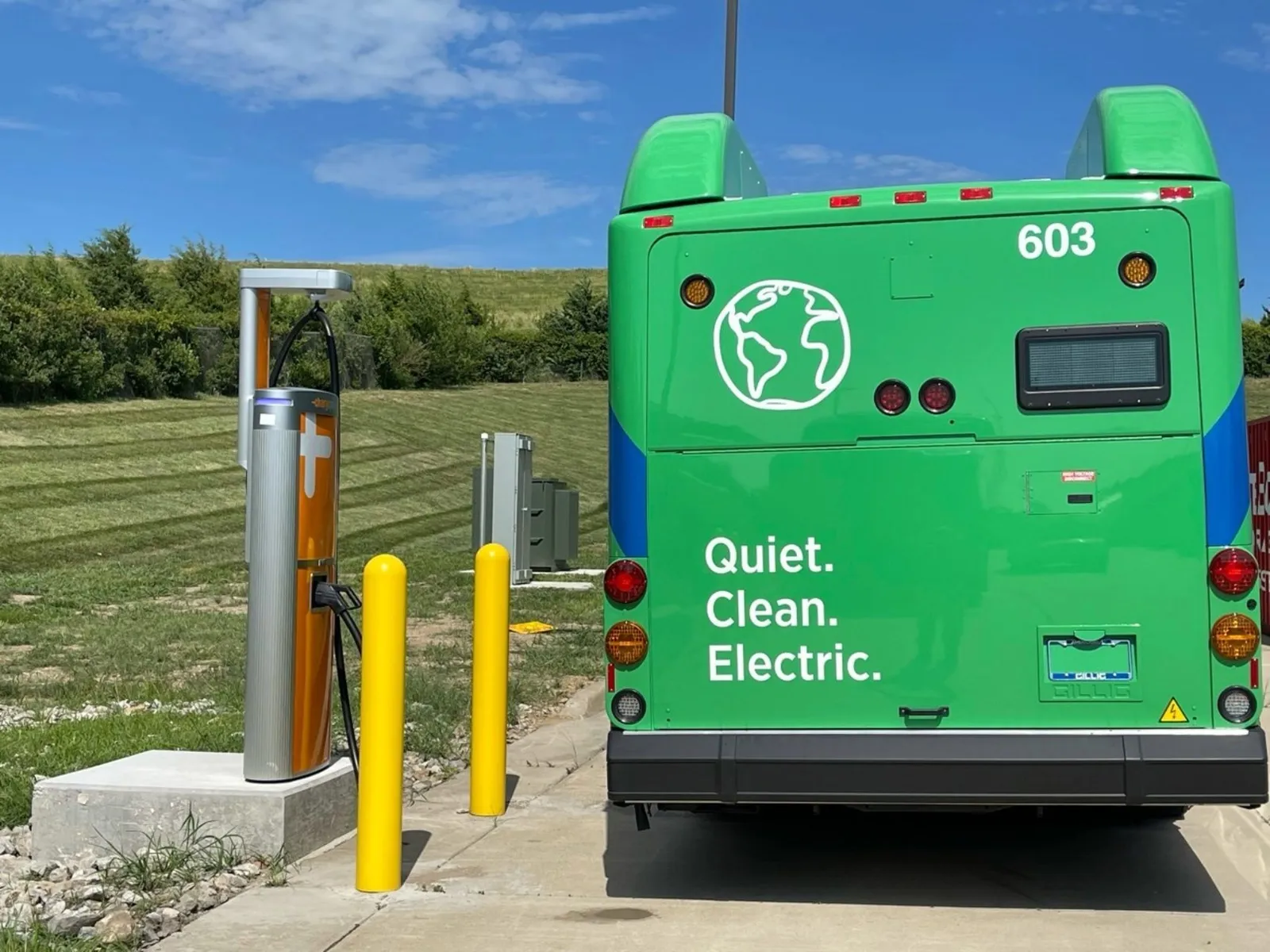
We also have some bus charging depots that we work on. Just a couple days ago, we turned on a bus charging depot for the Transit Authority of River City [which serves the Louisville, Kentucky metro area]. We renovated their depot, made a lot of structural repairs to a hundred-year-old building. Rather than tearing it down, we were able to stabilize the building and put in ChargePoint charging systems.
Charged: That sounds like a good differentiator for your company—you do all kinds of commercial construction, which your competitors don’t necessarily do.
Stephen Osborne: That’s correct. A lot of CPOs, they’re trying to go with just the local electrician, but they still need to hire a general contractor to do the civil scope. Then when you run into a problem, it’s a pointing game of who’s to blame, change orders are flying and everybody’s upset. Our company, on the other hand, is the general contractor. We’re licensed all across the US and we stay compliant with all state and local licensing regulations. We’re not doing the rent-a-contractor thing. There’s a lot of people out there that pay a $2,000 or $3,000 fee to get a contractor’s license, which is illegal.
One thing we’re doing with IONNA right now—they’re building out convenience stores, so they hire us to do the electrical install, the site work, and our crews build out the convenience store for them at the same time. It’s more of a turnkey operation than your electrician just installing some chargers. Our differentiator is a vertically integrated one-stop shop.
Charged: Are you doing some projects where you’re building a whole new store?
Stephen Osborne: Yes, we have a few. Most of them are renovations. For example, three years ago, I was driving through Colorado with my family and we saw an old ice cream shop and some crummy EV chargers sitting there. And I thought, that would be a cool spot for an EV charging space and convenience store. About a year later, IONNA sent us a set of plans for Lyman, Colorado and it was that exact spot! It was a full gut and remodel—we put in a whole bunch of chargers and canopies.
We’re seeing a lot more amenities at charging stations. Drivers want to get out and stretch their legs, maybe use a dog park, use the restroom, grab some coffee, hop back in the car and off you go. I think that’s going to be a big trend going forward, and we’re loving it because we can do the whole thing.
We put somebody out on the location who built these before and they look at it and say, “Good idea, but if we can just move this one parking stall one aisle over, we’re going to save a ton of money.”
Charged: Can you walk me through the steps of a typical project? Is it always the CPO that hires you, or are there some projects where perhaps a municipality or utility is taking the lead?
Stephen Osborne: That’s a good question. Generally, these companies will go to an engineering firm to do feasibility studies on the site. A lot of the big CPOs have site developers in-house that will go out and meet with the site host. Maybe it’s a store manager, maybe it’s a real estate handler. They’ll find a location that looks like it fits, then from there, they’ve got a pretty robust amount of due diligence. Can they get power there? What’s it going to cost?
We had one location several years ago, we found out there was no power in the area. The utility company would bring us a thousand feet of conduit, but it was almost a million dollars. And the customer said, “No, that location is not feasible.” But we were able to move it one parcel over and it was only $15,000 for the upgrades.
Most of the time, by the time it gets to us, all that site development is already done. We look at the plans and we might recommend modifications.
With most of our clients, we have a design feedback loop. When they try to build a charging site on the side of a cliff, we put somebody out on the location who built these before and they look at it and say, “Good idea, but if we can just move this one parking stall one aisle over, we’re going to save a ton of money.”
We have that design feedback loop with IONNA and Francis. They do a lot of that site development work, but they still call us up and say, “What do you think about this before we finalize the design?”
It’s an intelligent way of doing things to get that contractor-level design feedback. And then taking that feedback and pulling it back in is really helpful. Early stuff with leases, site development, geotechnical reports—there’s a ton of vendors out there who can provide that. There’s very few who do it all in-house.
Probably 90% of our stuff, the client has already done most of that and just hands us a set of drawings and says, “Price it and build it.” But that other 10% where we have that design feedback loop going, they’re usually change order-free jobs—the sites get built faster and it’s smooth sailing.
It’s an intelligent way of doing things to get that contractor-level design feedback. And then taking that feedback and pulling it back in is really helpful.
Charged: Do you usually procure the hardware, or do you work from what the client wants?
Stephen Osborne: On small projects or one-off projects, sometimes public entities, we’ll procure hardware, but typically the CPOs are buying tens of millions of equipment at a time and they usually procure that. A lot of them will send the equipment directly to us. Our company warehouses the equipment. We put it on a truck and send it to the site so we have just-in-time delivery. That has helped a lot with cost on these projects—we had a systemic problem for years where the equipment would not show up, or the wrong equipment would show up. Once we started centralizing that, we stopped having problems almost instantly.
Charged: Once the site is up and running, do you provide ongoing maintenance and customer support?
Stephen Osborne: Not on the equipment. Most of the CPOs have their own support network. It’s not a service we offer currently, although we will very soon, probably by the end of this year.
However, a component that nearly everyone misses is that we provide support for the physical real estate location. If somebody wants their site looking pretty, we can come in and clean it up and reseal-coat it, do all the striping work. We make sure the landscaping is set up for the spring and looking good, make sure that light poles are up and functional. It’s like the broken window theory—if a site is not being mowed or taken care of, a driver says, “Maybe I’ll go down the street to the one that looks nice.”
Charged: Reliability was a huge scandal for a long time, and I always suspected that one source of the problems was the number of companies involved in an install—CPO, contractor, hardware, software, blah, blah, blah. Are there things that can happen in the construction phase of the project that will lead to better reliability?
Stephen Osborne: Absolutely. Electronics, they’re going to fail. It’s just a matter of when and how you handle it. Do they go into a fail-safe mode where it prevents someone from being hurt? I’ve seen a lot of equipment failures. I’ve seen switchgear that catches fire. We’ve seen chargers that just stop working.
We’ve installed almost 4,000 DC fast chargers, and we’ve developed a simple quality-control checklist that has been developed with input from every single one of the CPOs we work for. We have onsite supervision, and before our project managers close the job and leave the site, they’re going through every little thing, and inevitably somebody missed something, which is why we do the checklist.
Commonly, it’s little things like not having the proper torque setting on a lug, or Megger testing the wires [using a megohmmeter to measure the insulation quality of cables] to make sure that when you pulled them through the conduit, you didn’t burn through the shielding and damage your wire.
We can fix that before we leave. And we’re there while they commission it, so if there’s a problem in commissioning, we fix it then and there. I’ve seen too many people cut corners on those things, and equipment will fail prematurely because of it. It’s unfair to the CPOs.
We’ve installed almost 4,000 DC fast chargers, and we’ve developed a simple quality-control checklist that has been developed with input from every single one of the CPOs we work for.
Charged: So the CPOs get blamed for problems that might’ve been caused by a subcontractor cutting some corners?
Stephen Osborne: Well, yes. If they have a contractor that doesn’t do what they’re supposed to, it’s not them that’s in the national news getting beat up. But at the same time, they need to be selecting good equipment and they need to spend the money to service that equipment. Most charging equipment needs to be checked over for loose connections or software updates, annually at the minimum. It’s just good maintenance practice, and that’s something we’re involved in. We go out to the sites and make sure everything’s up and running well. It starts at the parking lot stripes and the landscaping and it goes to the electronics.
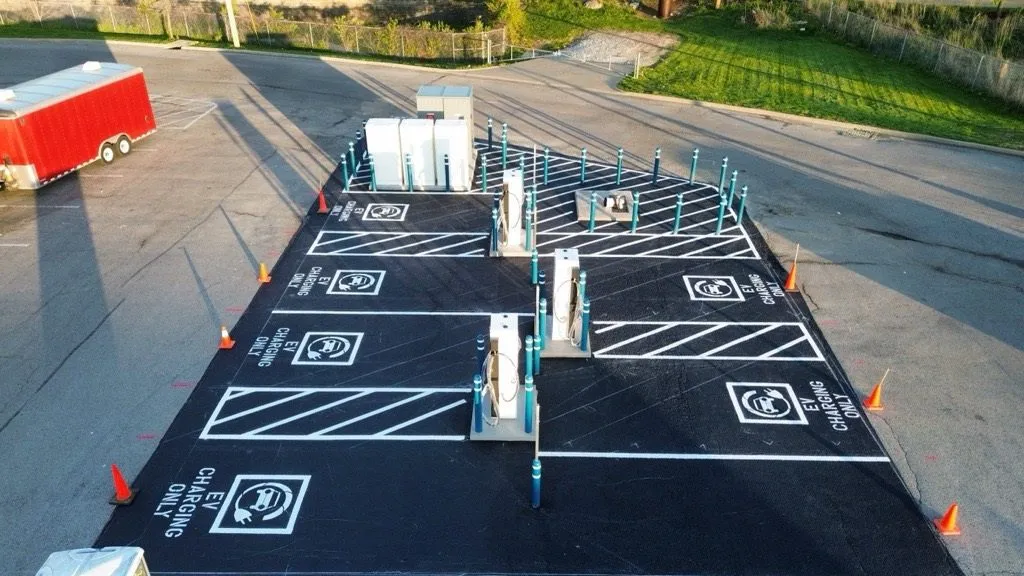
Charged: I’ve been talking to companies that provide various types of portable charging, and they’re telling me that their customers don’t necessarily want portable charging so much as they want a quick install. DC-America makes a prefab charging setup on a skid. No trenching, no construction. Is that a threat to what you do, or is that something that your company also offers?
Stephen Osborne: A little of both. There are huge advantages to using the skid method as long as they’re built right. In 2021, we built a charging system for EVgo in Union Station’s parking garage in Washington, DC. We manufactured the skid system in-house—we designed it, engineered it, did the load studies, built the skid system and installed everything in 30 days. It was a very fast install—that company asked us to come back and put in a couple more.
On exterior projects there’s not necessarily a lot of time savings with the skid systems because you still have to prep the site, you still have to get some conduit in the ground. It is an option to save some time on site. If there’s a prevailing wage situation, typically the labor that’s being done in a warehouse would not fall under those prevailing wage rates, so an owner could save a little bit of money that way. It’s just very situation-dependent.
Now, when you look at the Tesla platform, it’s all big concrete skids—those things weigh about 16,000 pounds, and you have to bring in a big crane. There’s no one situation that works for all CPOs. Skids work in some scenarios. Physical, regular civil construction works in others.
Charged: Another issue I hear a lot about is utility interconnects. Delays, paperwork, hundreds of different jurisdictions with different rules. Is that something you get involved with?
Stephen Osborne: We do. We have a team of in-house utility coordinators that handles all permitting and utility connection. It’s a huge challenge, and one that is really unpredictable. Some jurisdictions may not have availability for a transformer for a year, and you’re stuck. Then another jurisdiction may say, “We’ll bring you a transformer next week and we’re not going to charge you for it.” You never know.
We’ve built good relationships with dozens of utility companies. Almost every day one of our clients will call us and ask for help with a utility, and our team’s able to push it across the line and take that burden off their back. That’s part of the service we provide.
Charged: Do you do exclusively DC fast charging sites or are there some Level 2 sites getting built?
Stephen Osborne: We’ve built a number of Level 2 sites. Not a lot though. They’re generally simpler—usually it’s a single-trade install, just an electrical contractor. There’s not as much value add on Level 2 charging, unless it’s 200 of them. DC fast involves a lot more than just electrical construction. It’s the civil construction, landscaping, design and engineering issues that have a lot of ramifications.
Charged: Before we go, tell me a horror story or two—a weird situation where you were able to solve a difficult problem for a customer.
Stephen Osborne: I bet about one out of every ten projects has a nightmare situation happen. Nine out of ten are going to go smoothly, but I do remember the ones where there were problems.
The biggest thing that we’re rolling out this year is our ongoing maintenance programs. We’re offering service and maintenance every year, to make sure that our client’s sites look beautiful.
On one job in New Jersey, we found out we were two feet above an old capped landfill from 10 years ago. We started digging and we’re thinking, “This smells really bad.” Dealing with the remediation was a unique opportunity to excel because we had to find out how to deal with environmental issues. When you start adding all those extra elements, that’s where our company sets ourselves apart. We have our utility coordinators and our environmental team all in-house. We make sure that the problem stops with our company and doesn’t radiate to our client.
A lot of times it starts with missing tiny details, like perhaps not getting a geotechnical report. We had a site recently where they dug the site out and you could see water flowing. It was below the water table. A typical DC fast charging station sits on a 5,000-pound cube of concrete, and it’ll just sink right down through that kind of soil—gone! Our team was able to come up with a concrete pier solution that got us down to bedrock, stabilized the site, and everybody’s happy. When you get into a situation like that and everyone’s pointing fingers, you start to have cost impacts hit quickly and it can become really bad.
Charged: Any new products or services in the pipeline?
Stephen Osborne: The biggest thing that we’re rolling out this year is our ongoing maintenance programs. We’re offering service and maintenance every year, to make sure that our client’s sites look beautiful. If it looks beautiful, that may be the first impression somebody has of that entire brand.
This article first appeared in Issue 76 – Subscribe now.
Create Account. Already Registered? Log In
Virtual Conference on EV Engineering: Free to Attend
Don't miss our next Virtual Conference on September 14-17, 2026.
Register for the free webinar sessions below to reserve your spot and watch them live or on demand.
LOAD MORE SESSIONS