
ZF develops <30,000 RPM electric drive
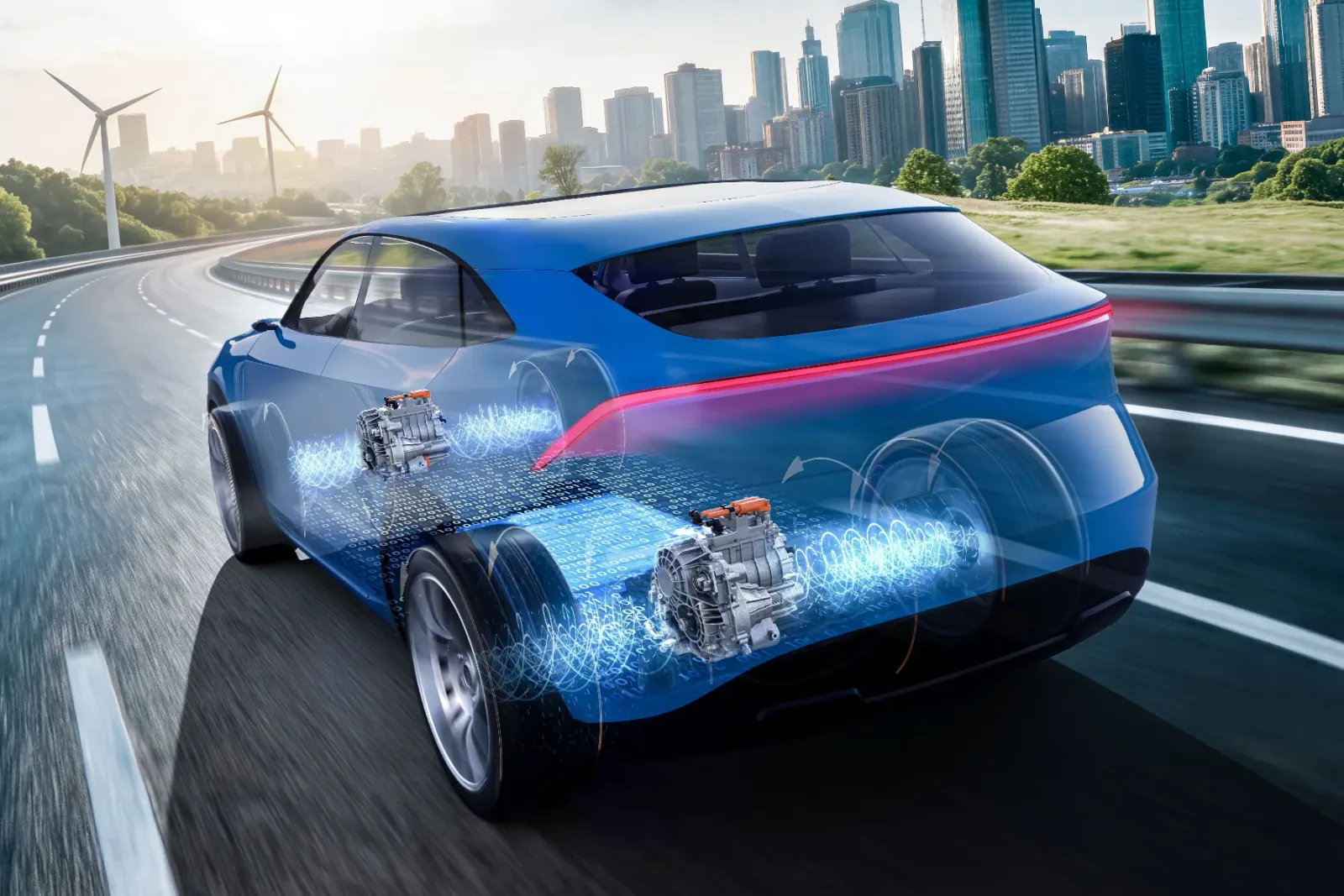
ZF has developed the High Revolution Drive, a particularly compact electric drive with up to 30,000 RPM. The supplier promises reduced installation space and weight, as well as a significantly lower magnet requirement.
The architecture is designed for 400- and 800-volt systems.
Image: ZF
At the same power output, increasing the rotational speed reduces the torque requirement of the electric motor. According to ZF, this allows the electric machine to be designed more compactly and with less weight. To ensure the necessary torque is still delivered at the wheel, the Swabian supplier combines the motor with a two-stage spur gear transmission featuring a gear ratio of approximately 18:1.
The electric machine, inverter, and transmission are integrated into a 3-in-1 system. ZF states that the newly presented design achieves a peak power of 200 kW and a peak torque of 3,500 Nm at the wheel. Compared to a SELECT drive with the same 200 kW power output and a maximum of 18,000 rpm, the High Revolution Drive requires approximately 25 per cent less installation space and is around 25 per cent lighter. ZF even aims to reduce the magnet requirement by 50 per cent.
The latter is likely to be particularly interesting for vehicle manufacturers, as less magnet material can reduce both costs and dependence on specific raw materials and supply chains. Despite the higher rotational speed and greater gear reduction, ZF states that efficiency remains at the level of the comparative drive. However, the supplier does not provide specific efficiency values.
ZF aims to halve magnet requirement
A particular challenge of high rotational speeds is noise and vibration. Here, ZF points to its expertise in transmission and gear development. For the new drive, the electric machine, gearing, bearings, and tooth geometry have been co-developed, among other things. The company describes the 30,000 rpm mark as a technical and economic ‘sweet spot’ for the presented configuration.
The focus is initially on the volume segment with drive outputs between approximately 150 and 200 kW. However, the architecture is designed to be scalable for other power levels and supports both 400- and 800-volt systems.
The High Revolution Drive is based on ZF’s modular SELECT platform. This means the supplier does not need to develop an entirely new modular system for the new drive variant but can continue using existing components and technologies.
However, the High Revolution Drive is still in the pre-series phase. According to ZF, the company is already in discussions with several automobile manufacturers about the concept and aims to start series production by 2030. The company has not yet named any specific customers or vehicle projects.
This year, ZF reorganised its e-mobility business. Following a make-or-buy review, the supplier decided in the spring to continue developing and producing electric motors and inverters in-house. At the same time, the e-drive division is under cost pressure due to lower utilisation than originally expected. With the High Revolution Drive, ZF is now demonstrating the technical differentiation it is focusing on for its future e-drives.