
Zeplug and ChargeGuru are gone: here’s Tohmo, their new brand for electric charging.
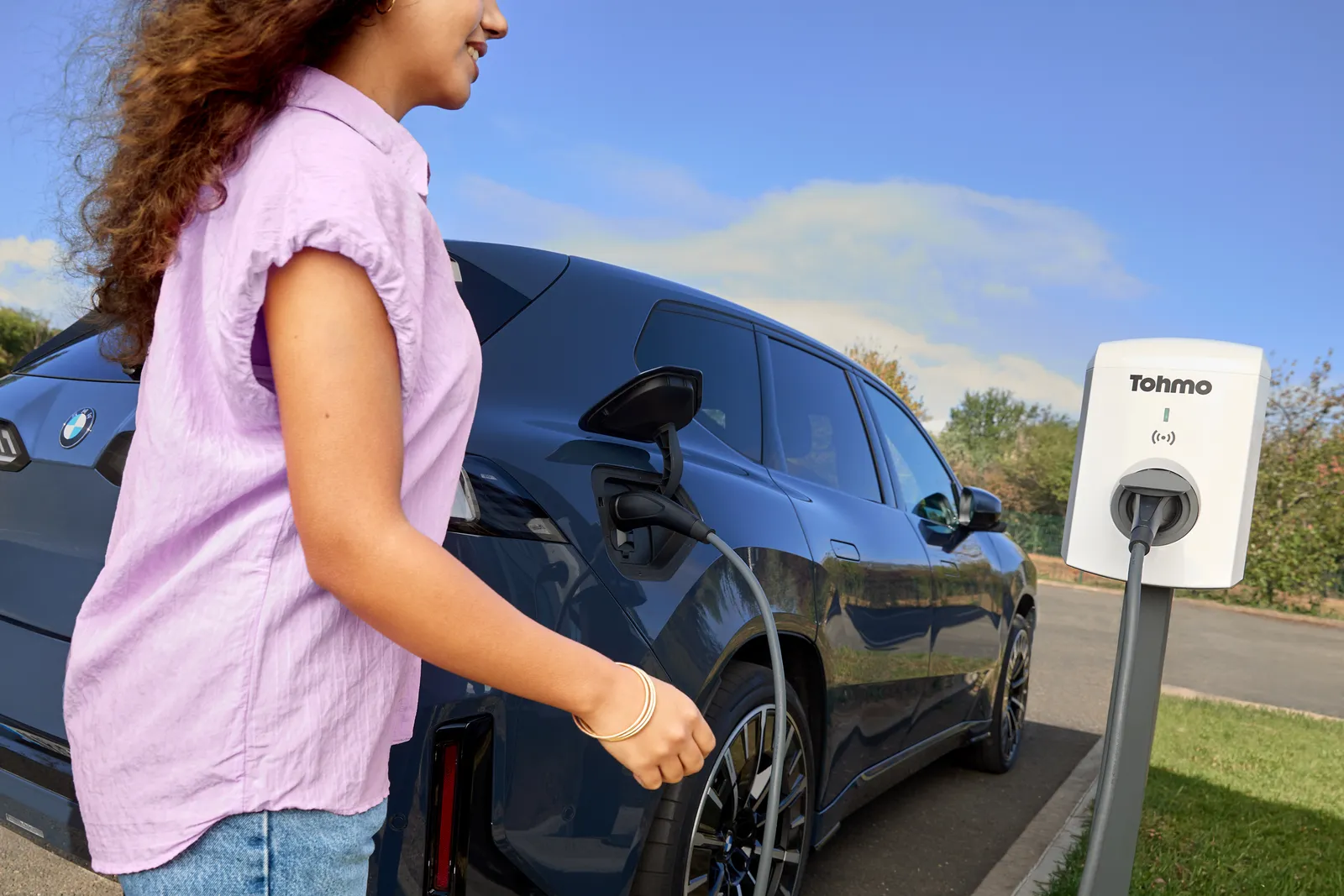
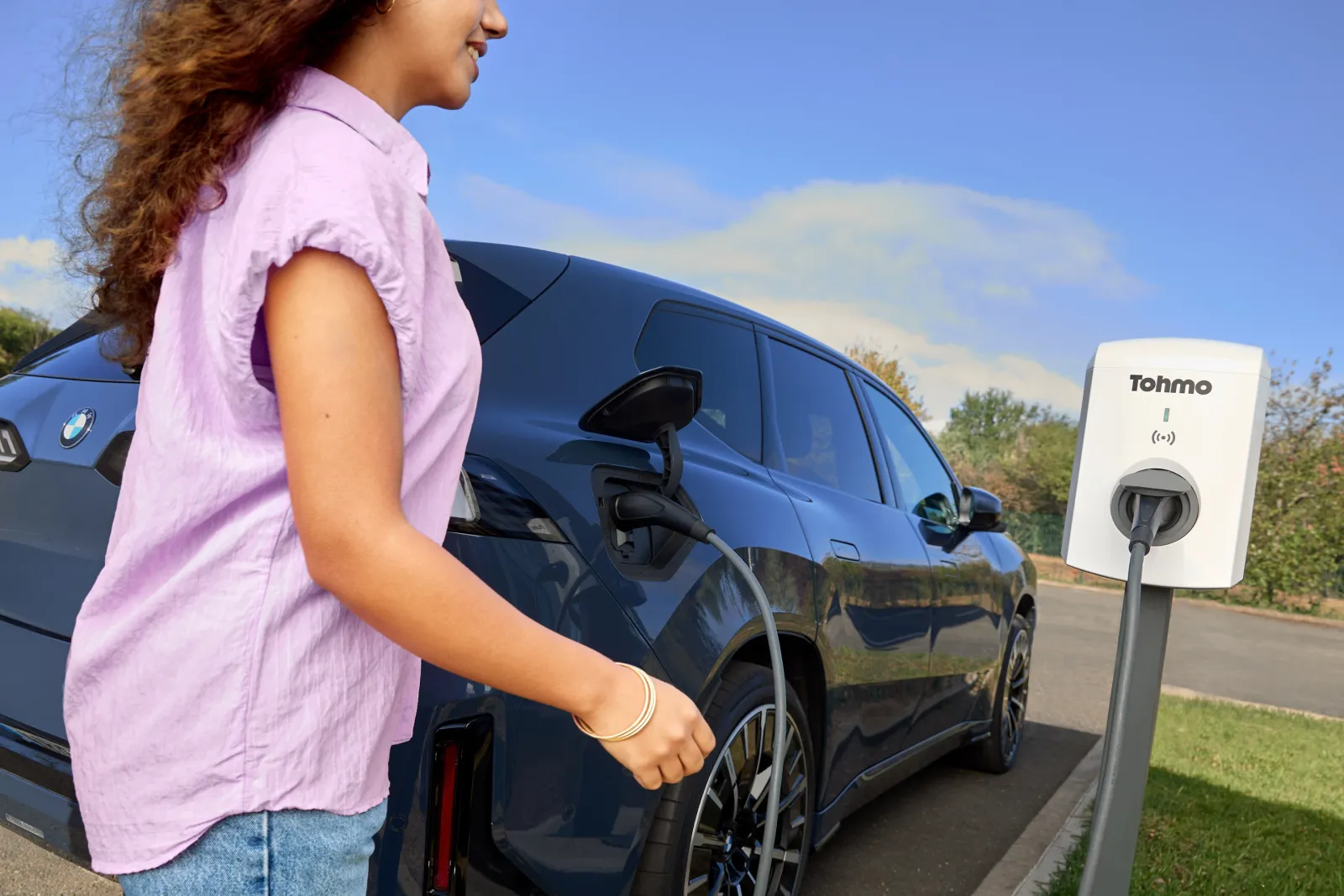
Three years after merging, Zeplug and ChargeGuru are accelerating their efforts. These two charging specialists are now operating under a single brand: Tohmo. Behind this name change lies a major European ambition, with shared ownership and fleet management serving as key drivers of growth. The company is already looking ahead, particularly toward V2G and energy storage. We spoke with Nicolas Banchet, co-founder of ChargeGuru, about the strategy of this new entity as well as the rapidly evolving private charging market.
Zeplug and ChargeGuru had already been operating under the same roof for several years. All that was missing was the same name on their mailboxes. After merging in 2023, the two companies finally decided to unite under one single brand: Tohmo, a name intended for use in the six countries where the group is present.
The change may seem primarily marketing-driven. Yet it comes at an interesting time for the industry. Electric car sales are surging in Europe, and consequently, the issue of home or workplace charging is gaining increasing importance. Nicolas Banchet took the time to answer our questions.
Why wait three years?
When asked why this new name is coming only now, ChargeGuru’s co-founder explains that they intentionally moved forward “step by step.”
Before addressing the name, they had to first “gather the services, computer tools, and teams.” These have actually been functioning as a single organization for several months now. The situation was particularly unique in France. Abroad, ChargeGuru already served as the common brand name. In contrast, in France, Zeplug and ChargeGuru continued to coexist, sometimes serving the same clients. This wasn’t ideal for clarifying roles or allocating marketing investments. The emergence of Tohmo is meant to simplify all of this.
But then, what will this rebranding change? For existing customers, no major changes are expected: “The offerings remain the same,” says Nicolas Banchet. However, new tools for managing charging, stations, and consumption data are set to be introduced simultaneously.
Condominiums become a strategic market
The group claims to have around 100,000 charging points installed to date, with 40% of activity related to condominiums, 40% to businesses, and 20% to single-family homes. But it is particularly condominiums that capture the focus of our interlocutor. The French market is truly starting to grow in scale.
In the second quarter of 2026, 18,289 buildings already had collective charging infrastructure, representing a 45% increase from the previous year. Additionally, over 43,600 buildings had approved the concept of such installations (+17% compared to last year). Of course, there is still vast potential in the market.
Also read
Unregulated wiring, cables lying on the sidewalk: what are the best practices and what does the law say?
Installing a charging station in one’s own garage is relatively simple. In a multi-unit building, the situation is much more complicated: general meetings, electrical capacity planning, financing for the infrastructure, property management, connections, and managing future users. It is precisely this complexity that specialized companies like Tohmo have built their business models around.
Goal: Increase from 30,000 to 100,000 property management companies
With Tohmo, the ambitions take on a larger scale. The company claims to currently serve 30,000 property management companies. It aims to reach 100,000 by 2030, along with 10 million connected parking spaces across Europe. To achieve this, the French firm does not plan a major acquisition campaign but relies primarily on organic growth. France will remain the main driver of growth, but the rest of the European continent is also being closely monitored.
Germany stands out as a particularly favorable market. In spring 2026, the German government allocated 500 million euros to develop charging infrastructure in multi-family buildings. The program can fund cabling, network connections, and charging stations, with subsidies reaching up to 2,000 euros per location in some cases. Italy is also pushing in this direction. The country covers 80% of the cost for purchasing and installing home charging infrastructure, up to 1,500 euros for individuals and 8,000 euros for condominiums.
This competition in Europe will therefore not depend solely on the quality of offers. National regulations, subsidies, and the ability to navigate highly diverse real estate systems will play a major role.
Fleet sizes are also becoming increasingly important
The other sector that is seeing growth according to Nicolas Banchet is that of businesses. More specifically, it’s the home charging sector for employees who own business vehicles. It’s a fairly logical market. A company that is electrifying its fleet doesn’t just need to buy cars; it also has to consider where they will be charged, how to reimburse the electricity used at employees’ homes, oversight, and sometimes on-site charging. In short, there’s a lot of potential!
This development could become an important driver for all private charging specialists, not just Tohmo.
Tohmo wants to capitalize on the surge in electric vehicle sales
The trend is indeed positive. In August 2026, electric vehicles accounted for 38.8% of new car registrations in France, a record according to Avere-France. In the first eight months of the year, electric car sales in France rose by 74.2% according to ACEA. Across the European Union, they now make up 21.7% of the market since January, up from 15.8% a year earlier.
When asked about the possibility of electric vehicles quickly accounting for 50% of the French market, our interlocutor was very optimistic. He believes that choosing an electric vehicle is increasingly “economic” rather than ideological, thanks to falling purchase prices and operating costs. It seems “a point of no return has been reached,” says the founder of ChargeGuru. Yet caution is needed with this scenario. A record-breaking month alone does not indicate a sustainable trend, and vehicle registrations are sensitive to government subsidies. But it is clear that things are moving in the right direction.
Also read
Stellantis to shut down several French factories due to a lack of batteries for its electric models
What about V2G next?
Tohmo clearly does not want to limit itself to installing charging stations. Nicolas Banchet confirmed that his company is working on V2G (or Vehicle-to-Grid), a technology that allows an electric vehicle to return some of the electricity stored in its battery to the public grid. Further announcements are planned in the future. In principle, this technology is attractive, but Tohmo’s CEO admits that the market is still in its infancy. An entire ecosystem needs to change first.
Also read
Corporate fleets: These Volkswagen ID.Buzz vehicles earn money by feeding their energy back into the grid
In fact, it is necessary to have a compatible vehicle, a bidirectional charging station, an appropriate software system, and an electricity supply that allows for energy reinjection. Interoperability issues remain numerous, although the widespread adoption of standards such as ISO 15118 should gradually make things easier. The economic benefits for individuals also need to be demonstrated on a large scale. Current savings may amount to just a few euros or dozens of euros per month depending on usage. True potential could emerge when several million cars can be controlled simultaneously as small batteries connected to the grid.
Batteries right next to charging stations?
Another approach being explored is stationary storage. Tohmo is already involved in several pilot projects that combine batteries with fast charging stations. The company does not supply the batteries itself but focuses on integrating the infrastructure.
This concept can be particularly useful in areas with limited electrical grids. Instead of installing a massive connection that is used at full capacity only for a few days a year, batteries can store energy during off-peak times and release it during high demand periods. There is still a gap between this idea and having batteries at every charging station. Tohmo also does not claim this solution will become widespread, but it is worth exploring further.
A new boost for the charging market
This is ultimately what makes the launch of the new brand interesting. It’s clear that the charging market is entering a second phase. It’s no longer just about installing as many chargers as possible, but also about financing them, managing them, connecting them to buildings, and perhaps one day, to the power grid.
With Tohmo, Zeplug, and ChargeGuru, they aim to take things to a new level. Now it’s time to turn their announced ambitions into actual installations. And in a market that’s booming, competition certainly won’t make things easier for them.
