
Zeekr is considering developing its own Mercedes Class G and hopes to have it ready in record time.
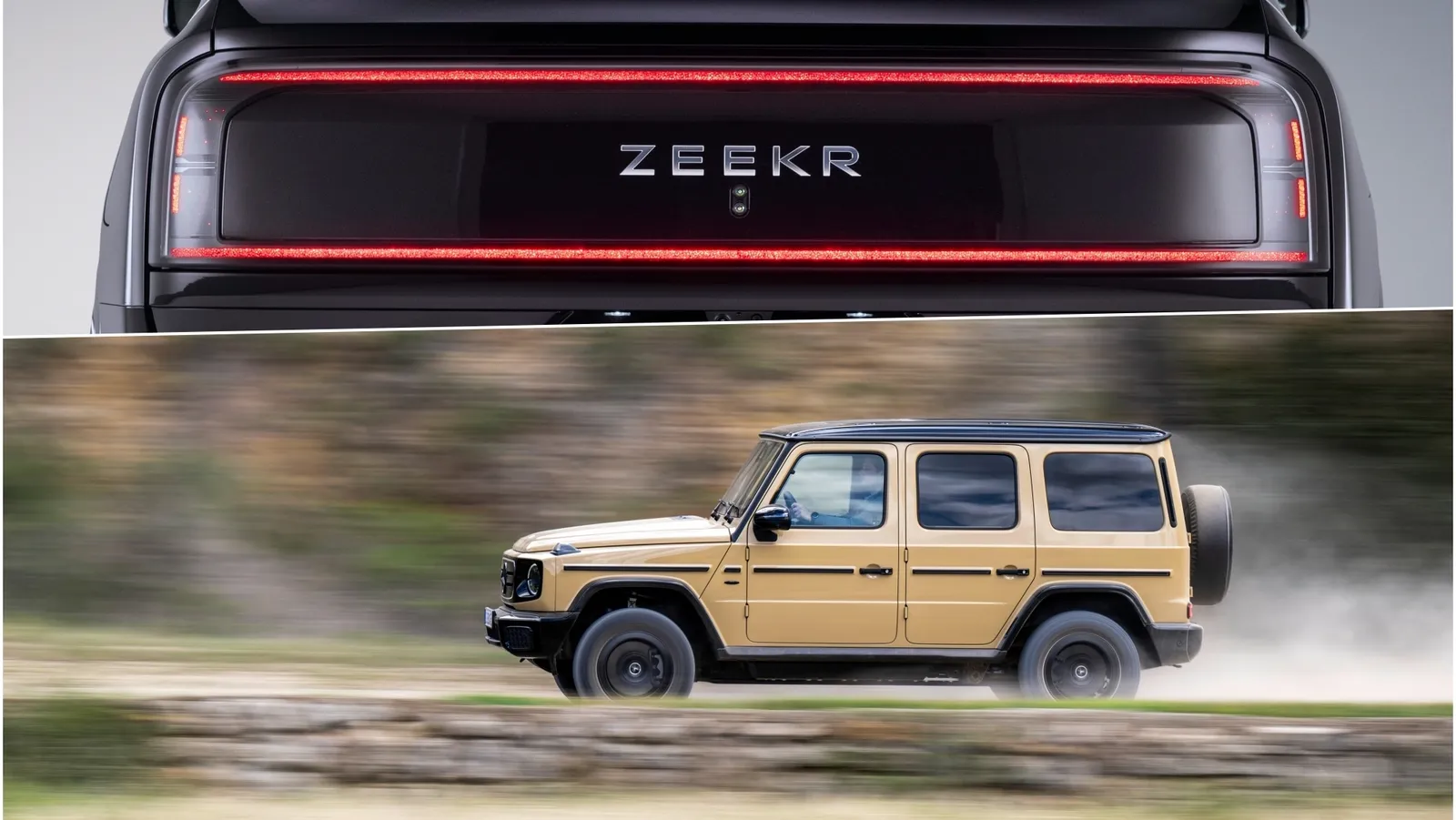
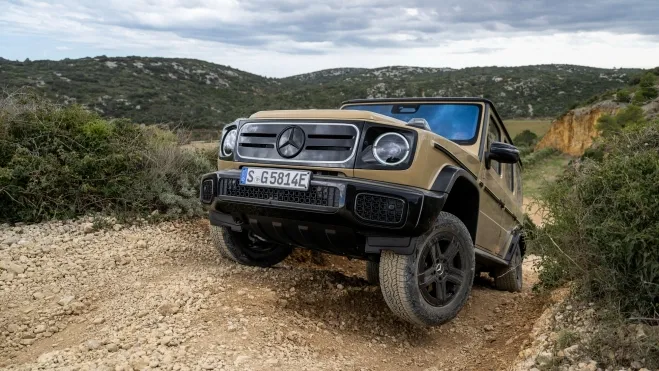
Like other categories and segments in motorsports, SUVs must also shift to electric power. This change actually benefits them. The formula for a true SUV has almost always been the same: a frame with crossmembers, a reduction gear, and differential locks. The Mercedes G-Class has been a benchmark in this segment for decades, having faced and surpassed many rivals. Now, Zeekr, Geely’s premium brand, is emerging as a contender.
The project is in a very early stage. It lacks formal internal approval or a codename, and the suppliers with whom the brand has already aligned technical requirements simply refer to it as Zeekr’s plan against the Mercedes-Benz G-Class. It would be the first pure off-road vehicle from a brand that has so far focused on luxury SUVs, minivans, and sports sedans. If development is ultimately approved, production could begin between 2028 and 2029.
Self-supporting body structure and electronically managed traction
Instead of mounting the body on a separate chassis, the Zeekr model would use a monocoque or semi-monocoque structure, similar to that of a sedan. Its off-road capability would rely on three elements: independently controlled electric motors, a long-travel air suspension, and software-managed specialized functions.
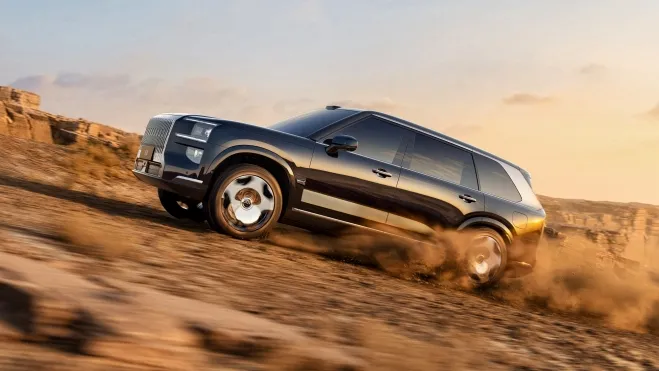
The approach of relying on electronics to handle the tough tasks echoes that of the BYD luxury SUV, the Yangwang U8. The challenge lies in creating a structure that can withstand torsional forces from rough terrain while protecting the battery and undercarriage. Zeekr has not clarified whether it will build on a Geely platform or develop a new one, though the group already has a precedent: the Geely Galaxy Battleship 700, launched in China in October, combines a monocoque body with an integrated chassis.
A technical foundation Zeekr already has
The brand knows what it’s like to drive each wheel with its own engine. The Zeekr 001 FR, the most extreme version of its sedan, is equipped with four silicon carbide (SiC) motors that together produce 1,264 horsepower, distributing power to each wheel, allowing it to turn on its axis like a tank. Of course, in real-world conditions, tuning would need to focus on low-speed traction and wheel control on uneven surfaces.
For mechanics, the logical starting point is their large plug-in hybrid SUVs. Both the Zeekr 9X and Zeekr 8X use a 900-volt electric architecture, with the most powerful version of the 8X delivering 1,400 horsepower. A plug-in hybrid would provide an advantage on long routes without charging stations, though the powertrain for the new model has not been confirmed. The 9X is already available in Spain for 121,500 euros.
A concept the brand had previously mentioned
In May 2026, Zeekr vice president Mars Chen already listed pure SUVs as one of the brand’s future directions in an interview with Australian media: “A rugged SUV is undoubtedly one direction. Sports-oriented sedans, and even a sports car, are another.” At that time he admitted he wasn’t sure whether it would be a boxy model in the style of the G-Class, and to this day the exterior design has yet to be finalized.
A price point above 65,000 euros
The target customer is someone who spends over 500,000 yuan, roughly 65,000 euros, and wants a comfortable car for daily use that can also handle off-road driving without issues. In China, this market segment is already occupied by Yangwang (U8), Fang Cheng Bao (Bao 8), and Mercedes-Benz (G 580 with EQ technology), the electric version of the G-Class. The numbers speak for themselves: the 9X exceeded 85,000 units delivered in its first year, with an average price of around 68,900 euros, and the brand delivered 32,000 cars in October, a 51.6% increase from the previous year. From January to October, the total reached 320,800 units, a 94.4% increase, already surpassing its annual target of 300,000 cars.