
The Zeekr Ojai is already operating in 14 cities in the U.S. with Waymo. Chinese chassis, American autonomy
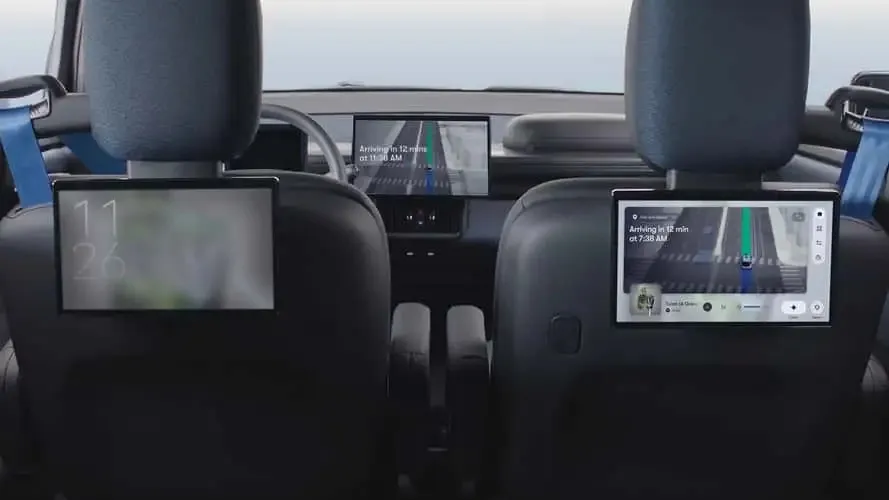
Waymo launched public, driverless services in Denver, San Diego, and Tampa on September 1, bringing its presence to 14 cities in the U.S. In Denver and San Diego, the exclusive platform is Zeekr Ojai, which are robotaxis built in China and equipped with autonomy features in Arizona.
For Zeekr, this represents a much larger role than just an interesting addition to its fleet. It also signals to competitors that Waymo is moving away from the Jaguar I-Pace faster than it might have seemed just recently.
3,200 chassis from China, with about 300 vehicles already transporting passengers
Zeekr Ojai, internally designated as CM1e, is manufactured in Ningbo, China. It then travels to Mesa, Arizona, where Waymo and Magna install the autonomous system, computers, sensors, and telematics. It enters the U.S. officially as an incomplete “rolling glider,” meaning a mechanical chassis without all the onboard intelligence.
By the end of August, over 3,200 such chassis had arrived through the port in Los Angeles, with more than 2,600 arriving in the first eight months of 2026. Meanwhile, only about 300 vehicles have been identified as those already carrying passengers commercially. The remaining approximately 2,900 units are still in the process of integration, calibration, stored, or reserved. The scale is impressive.
Waymo also states that it has exceeded 500,000 fully autonomous trips per week and aims to reach 1 million weekly by the end of 2026. The entire U.S. commercial fleet, including Jaguar I-Pace and Ojai vehicles, has now grown to over 4,000 cars.
The Sam Ojai uses Geely’s SEA-M architecture with redundant steer-by-wire and brake-by-wire systems. It features one rear engine producing 200 kW of power and 342 Nm of torque, along with a battery having a gross capacity of 93 kWh equipped with active liquid cooling. The vehicle’s length is 4,640 mm, the wheelbase is 3,000 mm, and it has a 2+3 seating arrangement, though four seats are actually available for passengers. The doors are sliding on both sides without a B-pillar. It’s typical fleet car material rather than something aimed at the consumer market.
Cheaper than the I-Pace, but still expensive and with political ties
The sixth generation of Waymo’s system uses 4 lidars, 6 radars, and 13 external cameras. For comparison, the fifth generation in the Jaguar I-Pace had 29 cameras and 5 lidars. The cameras in the Ojai model feature 17 Mpix sensors, and their housings are heated. There are also 10 miniature wipers less than 76 mm long to prevent snow, slush, and ice from covering the sensors. Denver represents a new testing environment for this vehicle due to its high elevation and harsh winter conditions.
Tariffs are extremely high. The declared base price of the chassis is around $38,000–$39,000, but the total import cost is expected to be 102.5–127.5% of that value, including standard tariffs, an additional Section 301 fee for Chinese BEVs, and other port and customs fees. This raises the cost of the chassis alone to approximately $78,000–$86,500.
After installing the autonomous hardware, the estimated cost of the finished vehicle is $103,000–$110,000. The historical cost of a Jaguar I-Pace with Waymo’s system was around $200,000. The difference is enormous, though these are still industry estimates rather than official Waymo purchase prices.
Add to this the political and regulatory factors. The U.S. BIS is preparing restrictions on connected car software and hardware from China, and NHTSA has previously required corrective actions for the CM1e regarding aspects such as the passenger seat track, C-pillar components, and safety system software. Such issues had to be fixed before it could be used for passenger transport. rightfully so.
Waymo is also working on a second platform with Hyundai, based on the IONIQ 5, planned for deployment in Georgia. Public road tests are set to begin in 2026, but so far there are no signs that Hyundai will enter a commercial service with a scale comparable to Zeekr’s program.
As of now, it is the Chinese chassis that helps Waymo achieve the scale Tesla is still striving for in its robotaxi efforts. What do you think — will U.S. policies slow Zeekr down faster, or will Waymo manage to establish a new fleet standard using it?
LovEV Newsletter
Want more content like this?
Sign up — we’ll send you a weekly summary once the newsletter starts.