
Xpeng had revenue of 19.74 billion yuan in Q2 2026. Dogotix’s robots received 900 million dollars along with their own valuation.
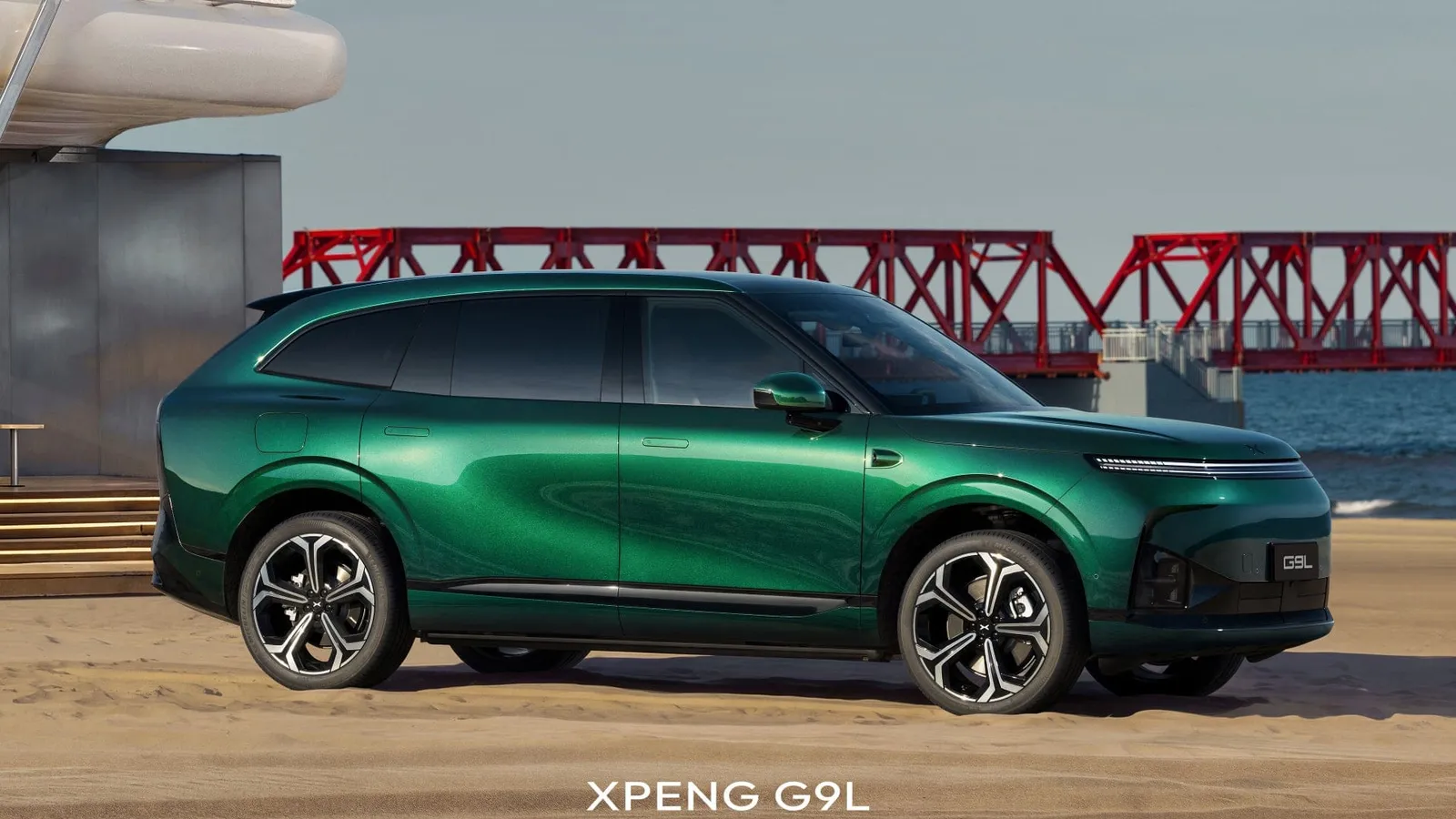
Xpeng closed the second quarter of 2026 with revenue of 1.974 billion yuan, which is approximately 2.5–2.9 billion euros/dollars depending on the exchange rate and conversion method. Meanwhile, the company is spinning off its robotics business, Dogotix, which raised over 900 million dollars at a valuation of up to 6.3 billion dollars in its funding round.
Table of Contents
Show
Hide
For an electric vehicle manufacturer, this is a more significant development than just the quarterly results. On paper, Xpeng increasingly resembles not a typical EV maker but rather a group aiming to generate profits from cars, software, and robots simultaneously. However, the cost of this transformation is already evident.
Xpeng’s results: Revenue rising, losses rising too
In the second quarter of 2026, Xpeng delivered 103,295 vehicles. This is roughly the same as the previous year when 103,181 units were delivered, but significantly higher than the weaker first quarter of 2026, which ended with 62,682 vehicles delivered.
The sharp increase looks promising, but it’s important to maintain perspective. The first quarter in China tends to be weaker due to the New Year, and at the start of the year the market was also hit by cuts to subsidies for electric vehicles. A recovery from Q1 alone doesn’t yet indicate that Xpeng has returned to a path of strong growth.
The group’s revenue reached 19.74 billion yuan, representing an 8.0% year-on-year increase and a 51.5% quarter-on-quarter rise. Of this, car sales generated 17.05 billion yuan, which is only a 1.0% increase from the previous year. Here lies the problem: deliveries have stalled year-on-year, and so has revenue from cars.
The situation becomes even more interesting when looking at margins. The group’s gross margin rose to 20.7% from 17.3% the previous year. That sounds good. However, the margin on cars alone dropped from 14.3% to 12.1%. Xpeng attributes this to generational changes in models and higher costs associated with updating its product lineup. This is plausible, but for shareholders it still means that cars are not driving profitability as strongly as they should.
On a net basis, the company is still in the red. The net loss for the quarter was 1.34 billion yuan, compared to 480 million yuan a year earlier. On a non-GAAP basis, it was 1.24 billion yuan. There is no improvement in overall results. Marketing costs, sales network development costs, and dealer commissions are all rising. Additionally, there are ongoing R&D expenses.
Expenditures on R&D rose by 32.1% to 2.91 billion yuan, while sales, general, and administrative costs increased by 15.2% to 2.50 billion yuan. These are not small figures. Xpeng is simultaneously funding new vehicles, its own AI systems, autonomy technologies, and humanoid robots. It’s ambitious, but it won’t be cheap.
As of the end of June, the company had 4.048 billion yuan in cash, equivalents, deposits, and short-term investments. This provides a cushion, though not an unlimited one.
Volkswagen Boosted Profits More Than Car Sales
The strongest part of the report has nothing to do with cars at all. Revenue from services and other operations rose by 93.9% year-on-year to 2.70 billion yuan. The margin for this segment reached 75.1%, up from 53.6% the previous year.
This success is largely due to technological cooperation with Volkswagen. The Germans hold about 5% of shares in Xpeng and use its technologies for vehicles developed for the Chinese market. This includes the Volkswagen ID.UNYX 08, based on Xpeng’s Edward platform, as well as other models that utilize the jointly developed CEA electronic architecture.
In short, Xpeng now earns money not only from selling its own vehicles but also by selling its expertise to a larger partner. This has boosted the profits of the entire group. For Xpeng, it’s good news as it shows that its technology has real value. For drivers in Europe, it also signals that the Chinese manufacturer is no longer just a brand offering cheap alternatives to Tesla or Volkswagen. It is beginning to become a technology supplier for Volkswagen itself.
In the background, the company is preparing additional models. One of the most important ones is expected to be the Mona L03, positioned as an electric vehicle for the European mass market. The announced starting price is 35,600 euros. That sounds reasonable for today’s Europe, but it will be the arrival in dealerships and actual specifications that determine whether it is truly a competitor to the Model Y and China’s BYD push or just another car with an “optimistically priced” slide presentation.
Dogotix and the IRON robot. Xpeng wants to repeat its car strategy, but in humanoid form
Alongside its financial results, Xpeng announced a large funding round for its robotics business. Dogotix raised over 900 million dollars, with its valuation reaching 6.3 billion dollars after the round. This is said to be a record-breaking single private funding round in China’s embodied AI sector.
The structure of the transaction is quite specific. Approximately $600 million comes from external capital, including IDG Capital and Gaorong Ventures, as well as Tencent and Alibaba on a strategic level. Another $200 million is contributed by Xpeng’s subsidiary, while around $100 million is invested by entities controlled by the management team, including He Xiaopeng and Brian Gu.
After the transaction, Xpeng will retain approximately 81.97% of shares in Dogotix, and with full dilution and the exercise of additional options, this shareholding could drop to around 68.41%. Thus, control will be maintained, and Dogotix’s results will continue to be consolidated in the group’s financial reports.
The plan is simple. Give the robotics unit its own valuation and separate funding channel so it doesn’t strain the company’s automotive division’s balance sheet more than necessary. However, investors have received strong safeguards. If Dogotix does not conduct a qualified IPO within 7 years of closing its first round, they will be able to demand the repurchase of their shares. The repurchase price is set to be the higher of two values: the cost of investment plus 8% annual interest, or 120% of the cost of investment plus any outstanding dividends. This is no longer just a tech demo. Someone here will have to account for the results.
IRON is set to go into production as early as 2026
The name of this robot, IRON, sounds ambitious. Xpeng claims 76 degrees of freedom for the entire body and 21 degrees of freedom in each hand. The calculations are handled by three proprietary Turing AI systems that together provide 2250 TOPS of computing power. The robot is designed to operate using a local Physical AI model and perform complex tasks without remote control.
This last point is particularly important because in the humanoid robot industry, many demos impress mainly because someone is controlling everything off-screen. Xpeng emphasizes the autonomy of operating “on-device” very clearly. rightfully so. And it will only be possible to verify this once IRON moves beyond stages and showrooms.
Dogotix is currently in a critical pre-production phase. IRON has already entered pilot mass production at the factory in Canton, with the full-scale production line set to be launched soon. The goal remains unchanged: mass production by the end of 2026.
The first deployments are planned for Xpeng’s own stores and campuses, with the robot set to go on sale in China and overseas markets starting in 2027. Its intended uses include sales support, product demonstrations, and service tasks. The company also mentions a production capacity of over 1,000 units per month, and in more optimistic projections, even several thousand units per month, depending on demand.
This is still a very early market. Even if Xpeng is closer to actual commercialization today than some competitors, including Tesla with its Optimus, it doesn’t mean the humanoid business will start making money right away. Dogotix reported an unaudited net loss of 369 million yuan in 2025, up from 87 million yuan the previous year. The capital intensity is brutal.
What’s next for Xpeng?
The company forecasts deliveries of 115,000–121,000 vehicles and revenue of 21.70–23.40 billion yuan for the third quarter of 2026. After delivering 38,027 vehicles in July, this means maintaining a monthly delivery rate of around 38,487–41,487 vehicles in August and September.
This is achievable, but without much headroom. Xpeng now needs to deliver three things simultaneously: steady growth in car sales, a viable monetization strategy for its partnership with Volkswagen, and the first real step toward commercializing IRON. One of these aspects is already functioning, another is gaining momentum, while the third remains a costly endeavor.
So far, the most concrete part of this story is quite ironic. Xpeng improved its margins not because it makes strong profits from cars, but because it sells technology and convinces investors in robotics. My question to you: would you buy shares of a company that promises more future business in humanoid robots rather than showing profits from cars?