
XPeng begins manufacturing its humanoid robot IRON: it steps out of the production line on foot
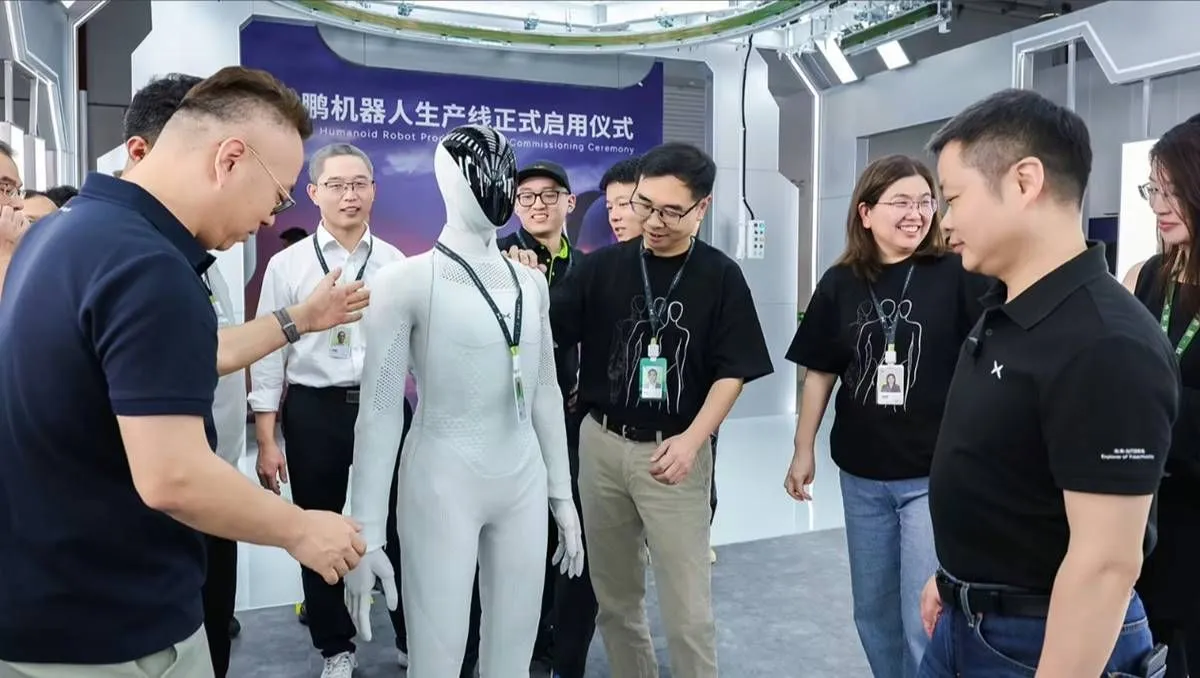
XPeng has just taken a step that goes far beyond a simple new technological demonstration. The Chinese company has officially launched a dedicated production line for its IRON humanoid robot, and the first unit has already emerged from it, literally walking on its own. This development is particularly noteworthy because XPeng aims to apply some of the experience gained over years of manufacturing electric cars to the field of robotics.
The company claims that over 80% of the key processes in the new production line are automated, using manufacturing and quality control systems inherited from its automotive industry. The goal is clear: to move away from practically artisanal prototype manufacturing and pave the way for producing IRON on a much larger scale. That said, we are not yet at full-scale production, as XPeng aims to begin mass manufacturing before the end of 2026.
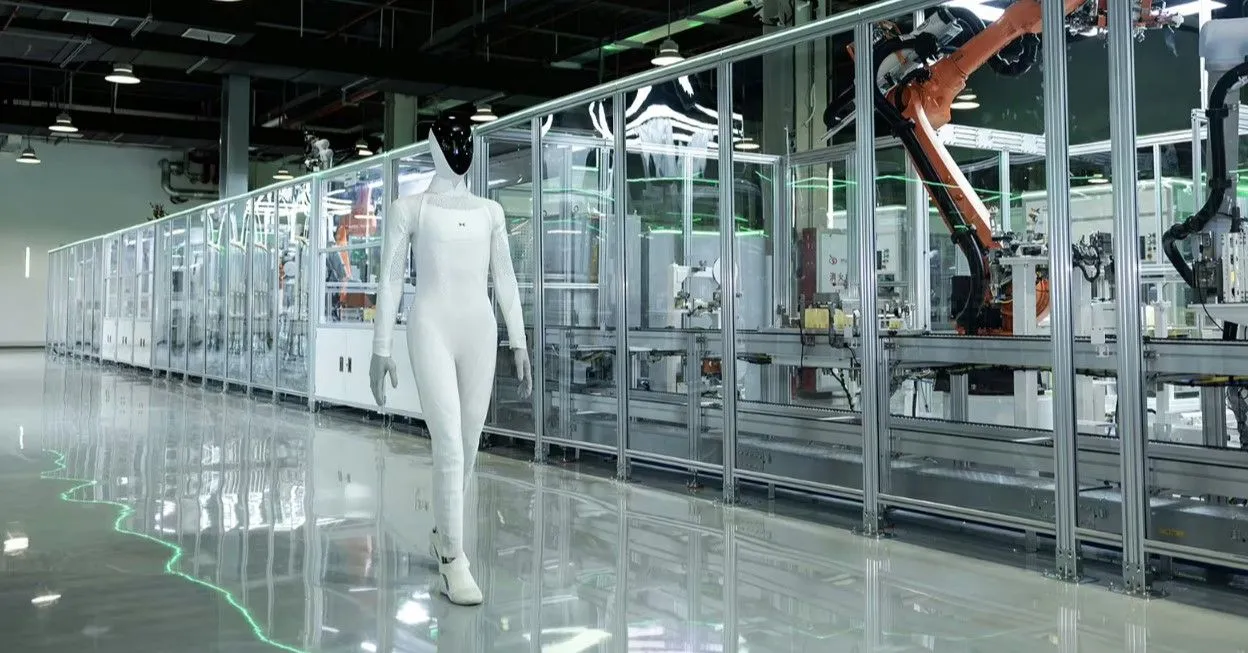
The first unit manufactured at this facility completed the assembly process and, once finished, walked autonomously off the production line without any remote control. For XPeng, this moment marks IRON’s transition from the research and development phase to industrial manufacturing that is much closer to that of a commercial product.
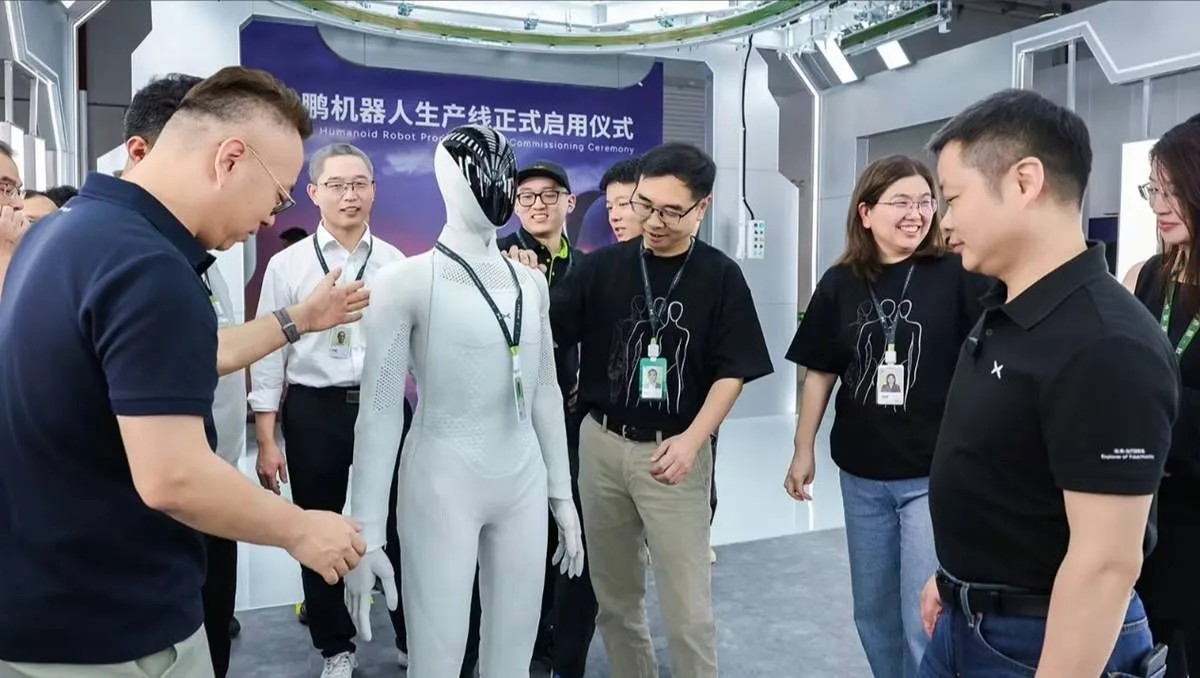
The Chinese company describes this facility as the world’s first automated line designed for advanced humanoid robots. To achieve this, it has combined its production systems with quality standards from electric vehicle manufacturing and precision manufacturing techniques specific to robotics.
The key point is that XPeng does not want to limit itself to producing just a few units for demonstrations. The production line was designed from the start with the aim of rapidly increasing manufacturing capacity. Automating the most critical processes ensures greater consistency among units while also enabling production to scale up as demand grows.
Xiaopeng He, XPeng’s president and CEO, acknowledges that the company had to build these production lines almost from scratch, as there was no existing model to rely on. The current goal is to continue reducing production times and gradually expand the scale of operations.
The timeline is also becoming increasingly clear. XPeng remains committed to starting mass production of IRON by the end of 2026, though the launch of this factory does not mean the robot has already entered large-scale production. The first units will primarily be used within XPeng’s own facilities, including its stores and workplaces, where they will be tested for their capabilities in real-world scenarios.
The next step is set for 2027, when XPeng plans to launch IRON commercially and begin deliveries in both China and international markets. So far, the company has not disclosed either the price of the robot or the specific production capacity of this new facility.
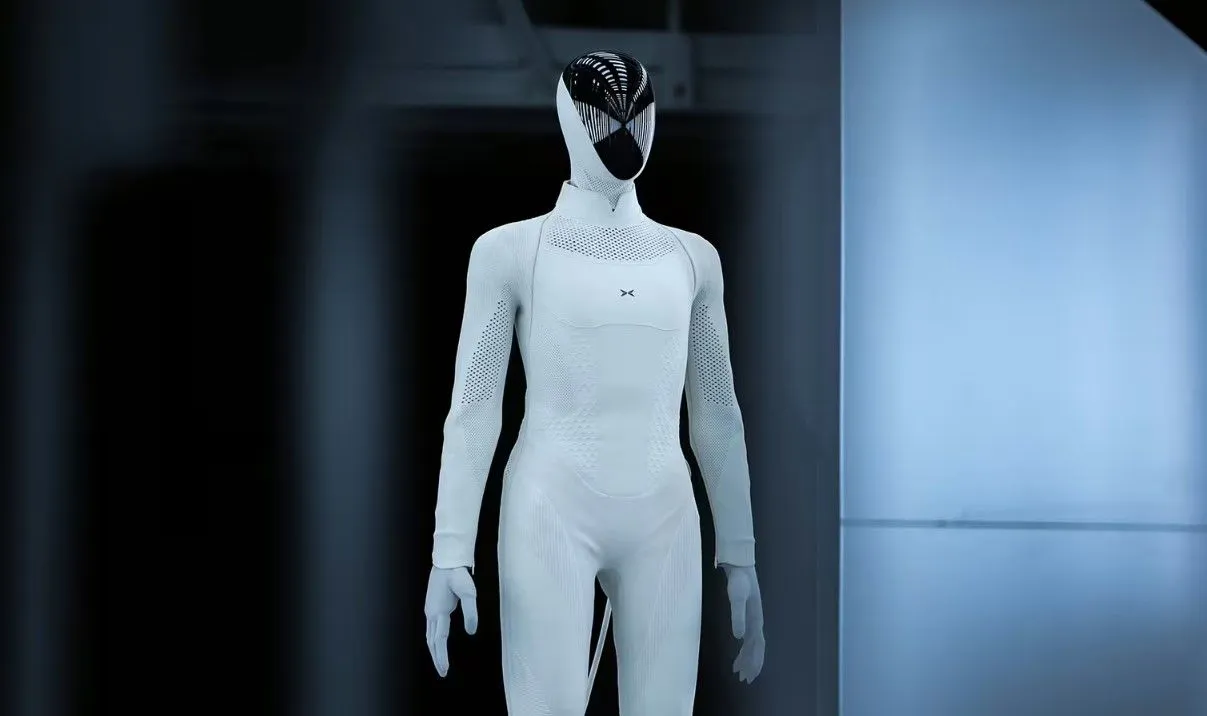
IRON was first introduced in November 2025 and has since become one of XPeng’s most ambitious projects outside of automobiles. The robot boasts 76 degrees of freedom across its entire body and 21 degrees of freedom in each hand, figures that enable much greater mobility and manipulation capabilities than those of a conventional robot.
Its design also aims to closely mimic human proportions and movements as much as possible. XPeng uses an internally developed, fully enclosed flexible structure, aiming to combine a more human-like appearance with a safety level suitable for operating in shared environments with people.
But the most important aspect lies in the intelligence system behind its movements. IRON utilizes three Turing chips developed by XPeng, capable of achieving up to 2,250 TOPS of effective computing power. This strength enables the company’s physical AI model to be executed directly on the robot itself.
XPeng’s goal is to enable IRON to perform complex tasks without relying on a person controlling it remotely. The company believes processing information directly within the robot reduces latency and enhances data security. The ultimate aim is to turn it into a general-purpose humanoid platform that can adapt to various tasks and continue improving as it gains experience in real-world situations.
This is one of the factors that make the project particularly interesting for XPeng. The company aims to leverage the knowledge gained from developing its electric vehicles, spanning manufacturing to artificial intelligence, electronics, and supply chains, in order to enter a completely different market.
The financial stakes are also rising rapidly. At the end of August, XPeng announced that its robotics division had secured investment deals worth over $900 million, pushing its post-investment valuation above $6.3 billion. The round was led by IDG Capital, with participation from Gaorong Ventures and strategic support from Alibaba and Tencent.
XPeng will retain control of this division, which will remain part of the group’s accounts. The funds generated will be primarily used for hardware and software development, training its physical AI models, data generation, and specifically for building the facilities needed to manufacture humanoid robots on a large scale.
The company expects robotics to eventually become a second major growth driver alongside its automotive business. In fact, XPeng believes that the characteristics of the advanced humanoid robot market—with a still very limited supply and high technological barriers—could allow for higher unit margins than those of electric cars.
For now, the focus is on proving that IRON can move beyond the prototype stage permanently. The new factory represents the first step, and the fact that one unit has been assembled and is now able to walk on its own holds more significance than it might seem. XPeng is no longer just showcasing a robot; it is striving to turn it into a mass-produced product.
If the schedule holds, we will begin to see the first units produced in series by the end of this year, with IRON expected to reach stores and customers in China and other markets by 2027. The race to move humanoid robots from demonstrations to large-scale production has just entered a new phase, and XPeng aims to be among the first.