
XPeng wants to sell ADAS and chips outside of China. Volkswagen is meant to be a showcase of its effectiveness.
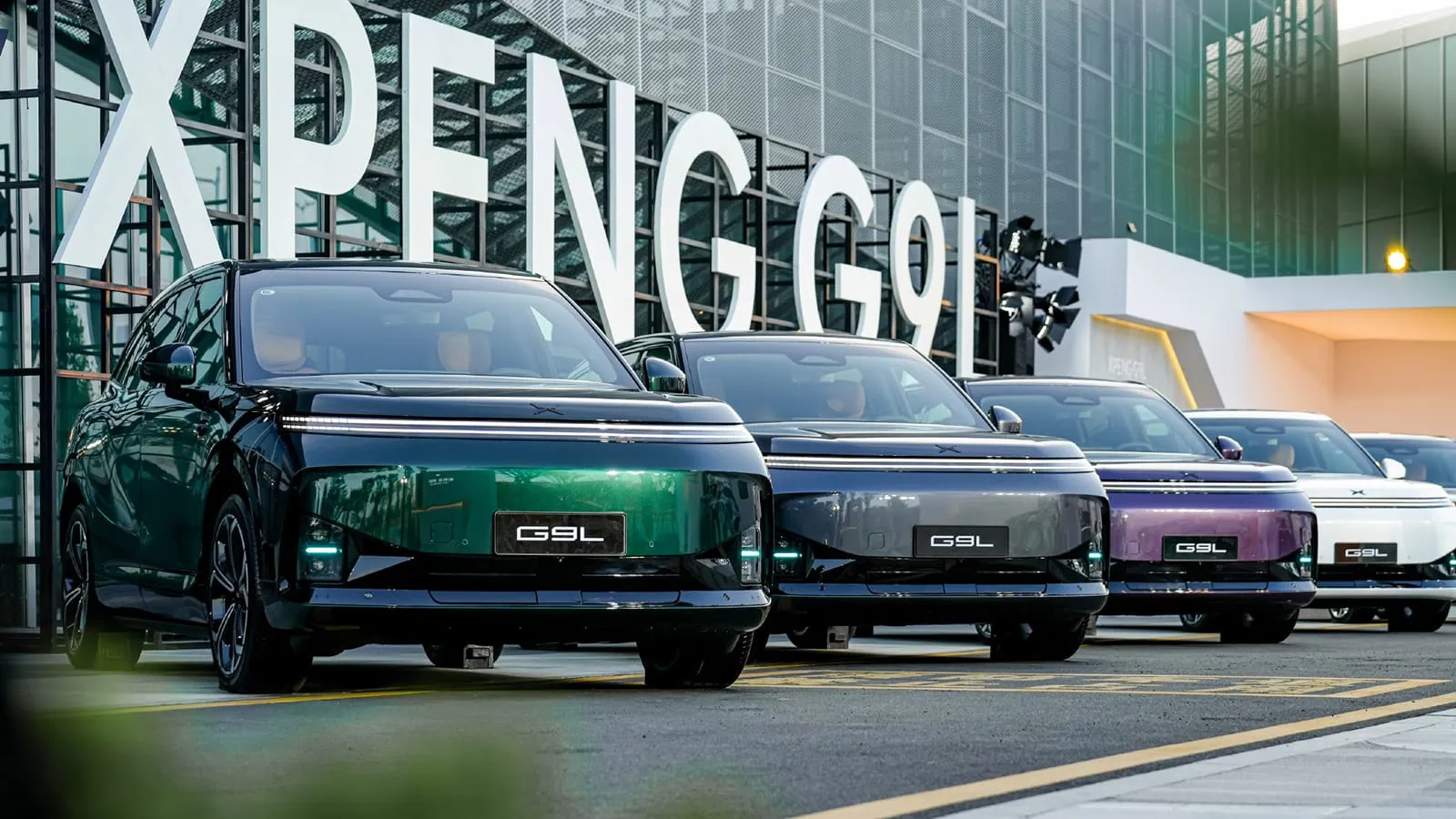
XPeng is planning to expand the export of its technology to foreign automakers, suppliers, and software companies. Reuters reported that the Chinese brand is already in talks with several partners, some of whom are said to be interested in its E/E architecture, cockpit design, Turing chip, and ADAS software. For drivers in Europe, this signals that XPeng aims to be more than just another electric vehicle brand—it also seeks to serve as a technological backbone for others.
The company’s founder, He Xiaopeng, said during the G9L launch on September 17 that discussions are not limited to Volkswagen. Entities from outside the automotive industry are also involved, and some new partnerships could be announced on October 12 at a show in Paris.
Volkswagen Has Already Paved the Way
XPeng’s strongest advantage today is its partnership with the Volkswagen Group. It began in July 2023 when the Germans invested around $700 million in the Chinese company. The scope was broad: EV platforms, software, and electro-electronic architecture.
The first joint model, the Volkswagen ID.UNYX 08, went into mass production in March 2026, 24 months after the partnership started. The vehicle features an XPeng cockpit, intelligent driving systems, and a Turing AI chip. This is no longer a PowerPoint presentation but a fully developed product. And that’s exactly what matters.
This is also evident in the financials. In Q2 2026, the services and other operations segment generated RMB 2.70 billion for XPeng, equivalent to approximately $403.1 million in revenue. This represents a year-over-year increase of 93.9 percent. Even more interesting is the gross margin: 75.1 percent, significantly higher than that of its automotive business. Selling technology turns out to be a better business venture than selling cars.
Europe as a testing ground and robots as the second front
XPeng also states that its second-generation VLA system has undergone extensive road testing in Germany. It is designed to recognize local traffic signs, priority rules, and driving styles common on European roads. On paper, this seems logical, but as with ADAS systems, the real challenges lie in calibration and legal responsibilities.
The company aims to go beyond cars. It is expanding its licensing business and partner-specific solutions into what’s known as physical AI, including Robotaxi, humanoid robots, and flying cars.
The most concrete project in this area is the IRON robot. The development has entered the pre-production phase, with mass production set to begin by the end of 2026. XPeng plans to deploy these robots first in its own showrooms and industrial parks, with wider deliveries in China and abroad starting in 2027.
If XPeng unveils new contracts in Paris, we will stop referring to it as a brand that merely chases Tesla or NIO and start seeing it as a technology provider for the entire industry. Who do you think could be next after Volkswagen?
LovEV Newsletter
Want more content like this?
Sign up — we’ll send you a weekly summary once the newsletter goes live.