
XL1 Reloaded: VW Unveils the “Mission Efficiency” Concept Car
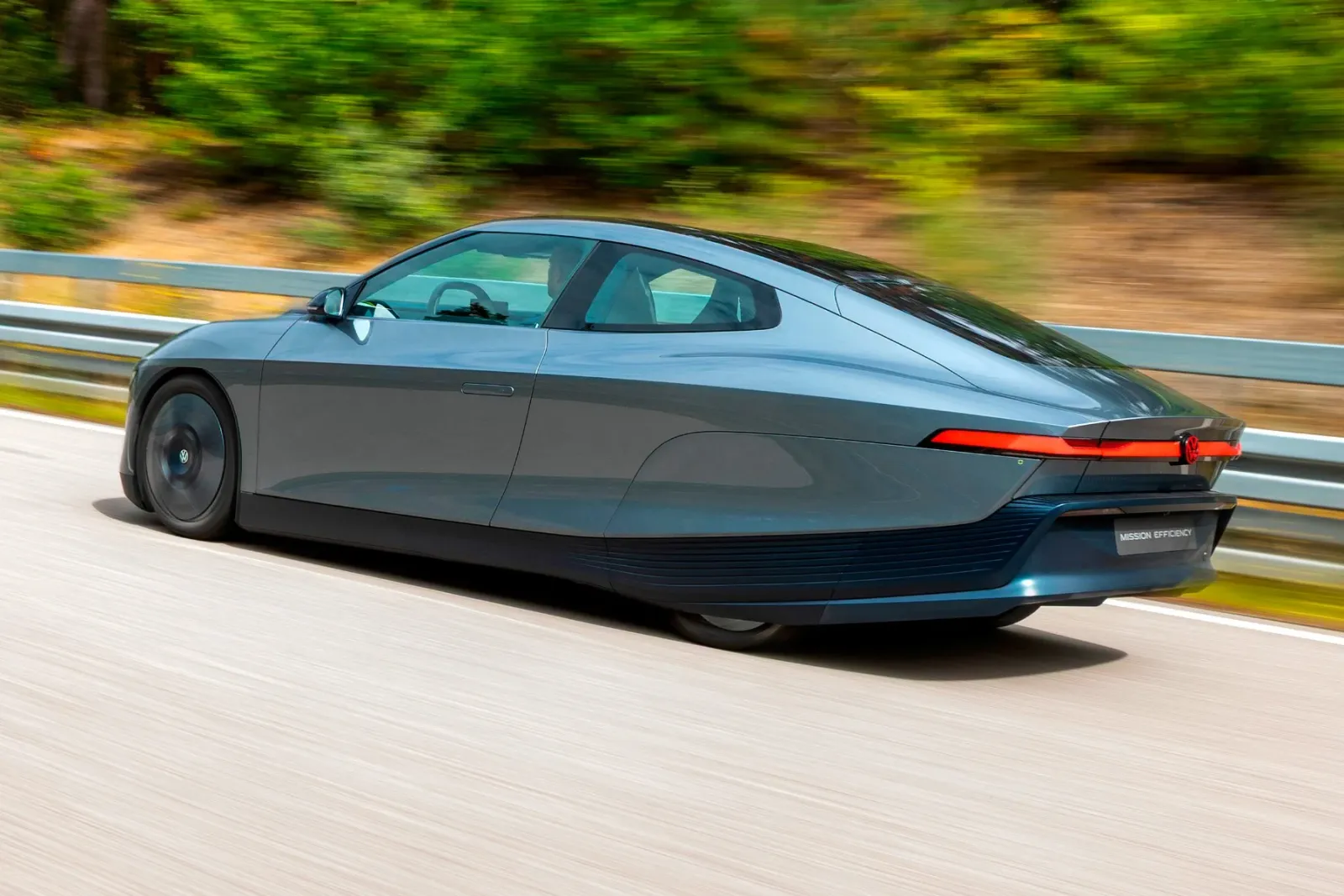
Volkswagen has unveiled the concept vehicle “Mission Efficiency,” aiming to set new standards in electric mobility. This near-production electric car combines affordable mass-produced technology with radical lightweight design and cutting-edge aerodynamics. Thus, the “Mission Efficiency” is a legitimate successor to the limited-production VW XL1 model.
Volkswagen’s Electric Concept Vehicle Mission Efficiency
Image: VW
Volkswagen presents the Mission Efficiency, an electric vehicle that demonstrates how efficient and forward-thinking emission-free driving can be. For those who associate modern cars with heavy batteries and high electricity bills at public chargers, this vehicle offers a completely new perspective. By showcasing this near-production concept car, Volkswagen proves that clever design and advanced engineering can drastically reduce energy consumption — without astronomical production costs.
The focus of the development is a particularly streamlined shape that offers as little target area as possible to wind resistance. The design resembles a droplet shape, combined with a flat front, fully enclosed rear fenders, and a covered underbody. Once the car travels faster than 80 km/h, this well-thought-out concept becomes significantly evident: energy consumption is then more than 30 percent lower compared to conventional electric cars.
Mission Efficiency with series-production technology from the ID. Polo
Beneath the sleek exterior lies no advanced special technology, but rather proven mass-production technology from Volkswagen’s MEB+ platform, which is also used in the new ID. Polo and ID. Cross. This includes their standard front-wheel drive system APP290 with 99 kW of power, along with a 54.9-kWh high-voltage battery (net weight), which is also employed in other modern models of the brand. The setup is further enhanced by specially developed tires from Continental that significantly reduce rolling resistance, as well as solar cells on the glass roof and trunk lid that provide additional free electricity for the vehicle’s electrical system in everyday use.
Historically, the Mission Efficiency is connected to the legendary VW XL1, which was produced between 2014 and 2016 in a strictly limited run of just 200 units in Osnabrück. This vehicle entered automotive history as a “one-liter car,” but it did not have a fully electric drive system—it was a plug-in hybrid.
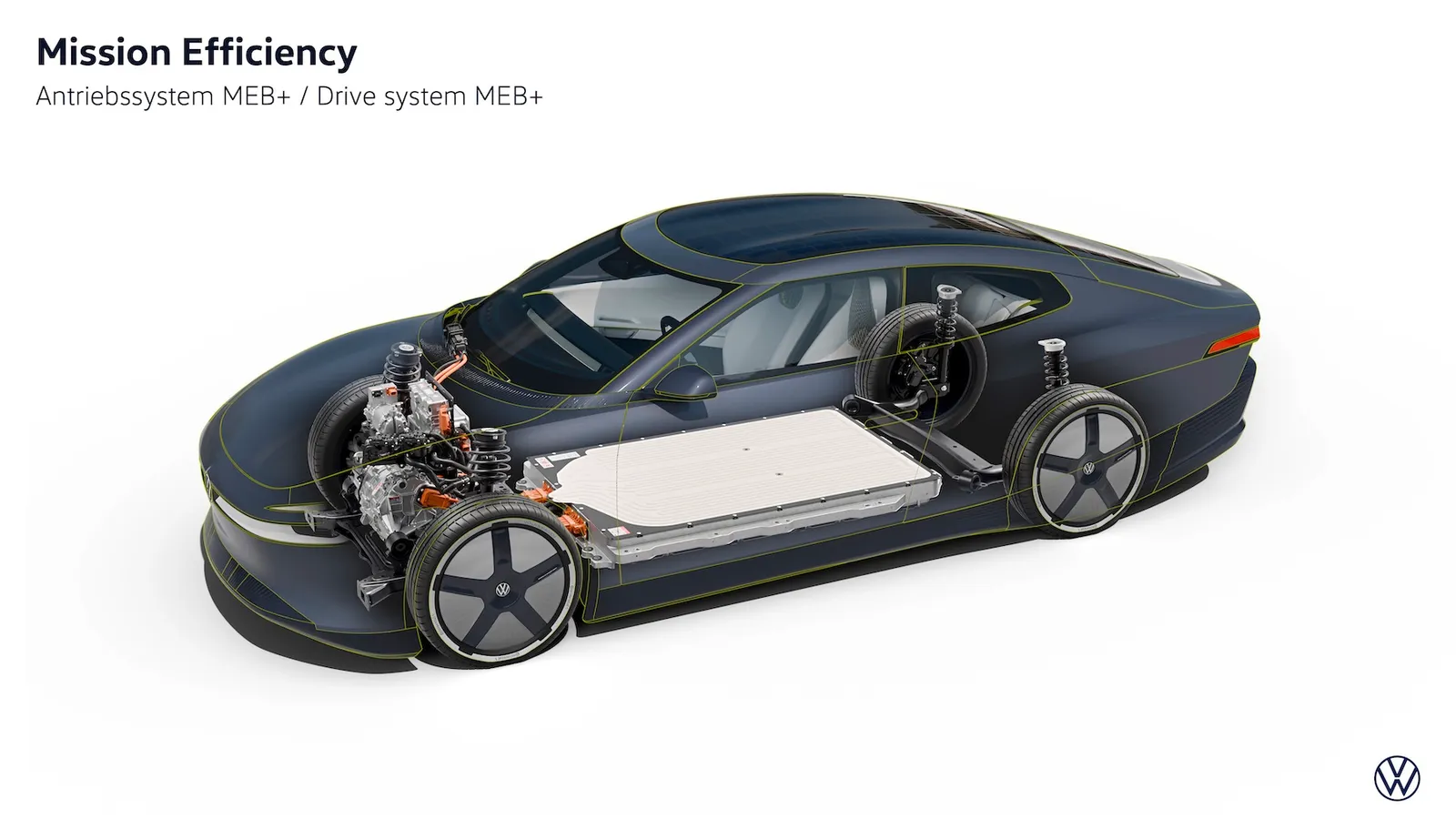
While the XL1 was designed at the time as an expensive technology lab with a complex carbon fiber body, the Mission Efficiency aims for mass-market viability. This nearly 4.80-meter-long coupe offers four seats in a minimalist interior and an unexpectedly large trunk with a volume of 481 liters.
Records for Consumption and cW Value
The vehicle demonstrated its exceptional performance during an officially documented long-distance drive of over 1,278 kilometers from Wolfsburg to Vienna. Throughout the entire journey, the battery with a usable energy capacity of 54.9 kWh needed to be charged only once. The drive was crowned with new official world records: in addition to an extremely low actual consumption of 6.89 kWh/100 km, a cW value of 0.158 set a new record for road-legal vehicles.
Volkswagen brand chairman Thomas Schäfer said, “Mission Efficiency is the best answer to the question of what sets Volkswagen apart in the electric age: technology for everyone—not just a few.” Technical Development Chairman Kai Grünitz also emphasized the performance of the mass-produced components used: “The system developed for all front-wheel-drive MEB+ models is extremely lightweight, highly efficient, and thus the ideal powertrain for this record-breaking vehicle.”