
The Xiaomi SU7 with CATL cells taken apart. BYD came out lighter and more energy-dense.
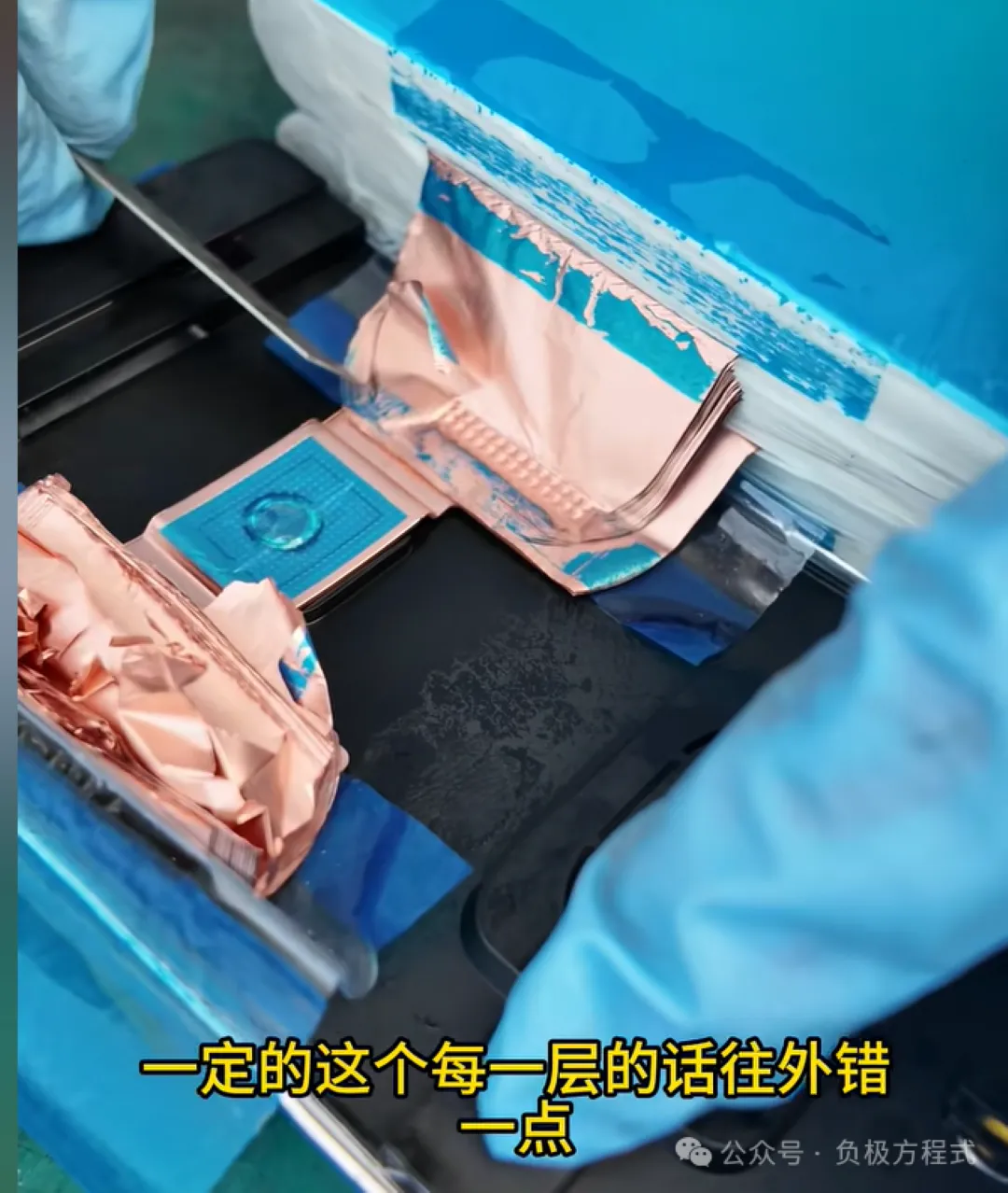
The disassembly of the CATL Shenxing LFP 186.7 Ah cell used in the Xiaomi SU7 Standard revealed significant differences compared to the BYD FinDreams cell of the same capacity. The CATL sample weighed 3.4 kg, while the BYD cell weighed 3.2 kg, and measurements showed it had a lower energy density, both by weight and by volume.
This is an interesting detail for EV enthusiasts, but we’re still talking about a single cell, not an entire battery pack, nor any certified safety test.
CATL heavier than BYD at the same capacity
Both cells were rated at 186.7 Ah, but they were constructed very differently. The CATL cell had dimensions of 213 x 80 x 95 mm and weighed 3.4 kg. The BYD FinDreams cell had dimensions of 620 x 24 x 103 mm and weighed 3.2 kg.
Based on these dimensions and mass, the calculated energy density was 175.7 Wh/kg for CATL and 186.7 Wh/kg for BYD. The difference is 6.3 percent in CATL’s favor. The volumetric density was also lower: 369.0 Wh/l compared to 389.8 Wh/l.
On paper, BYD has the advantage. It’s important to remember that this is a comparison of individual cells, not finished batteries with cooling systems, casings, and electronics.
Four cores in CATL, layered design in BYD
Upon opening the casing, it was found that CATL uses a design with four wound cores placed inside a single aluminum can. BYD employs a laminated arrangement of electrode and separator layers in its long Blade cell.
In the tested CATL cell, the positive current collector had an aluminum foil thickness of over 20 micrometers, the negative collector was made of copper at 11 micrometers, and the separator had a thickness of around 12 micrometers with a double-sided ceramic-polymer coating. This level of detail is usually not provided in manufacturer presentations.
Fun fact: according to disassembly, the cell is installed in the pack upside down, so that the vent valve faces downward toward the bottom of the pack.
The nail test produced smoke but didn’t reveal anything about the entire vehicle
The most dramatic part involved driving over 20 steel nails into a fully charged cell. During the test, the voltage was supposed to be 3.392 V. The cell emitted smoke and discharged electrically, but there was no open flame or explosion.
The ignition occurred only later, when the aluminum casing was removed and the internal layers of the cell were mechanically separated. This is not the same scenario as the nail test, and no simple conclusion such as “the cell passed” or “it failed” can be drawn from this.
And most importantly: this was not a laboratory test in accordance with GB 38031-2025. Such disassembly does not tell us how the entire pack will perform during a collision, heat propagation, or in a vehicle ready for driving.
For now, the two most interesting findings are: BYD extracted more energy from the same capacity, while CATL demonstrated a different philosophy in cell design. Which approach do you think makes more sense: the long Blade cell or a shorter, wider design with four cores?
LovEV Newsletter
Want more content like this?
Sign up — we’ll send you a weekly summary once the newsletter starts.