
The Xiaomi SU7 reached 500,000 units delivered in 28.5 months. The growth rate is impressive, but the 2026 target is slipping away.
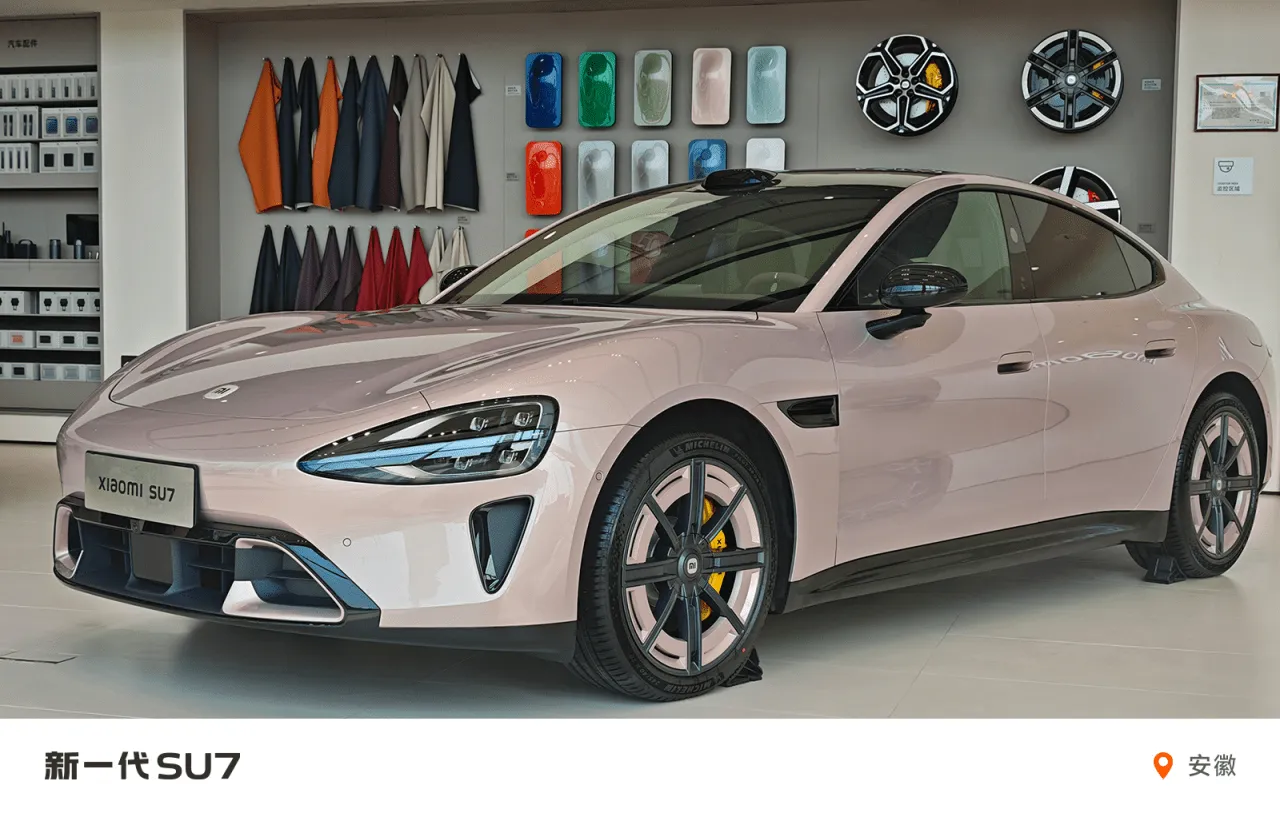
Xiaomi announced on August 17 that the SU7 series had exceeded 500,000 cumulative deliveries 28.5 months after its market launch. This is a strong result for the brand’s first car, but it also shows that the company’s growth has significantly slowed in 2026, making its annual sales target very ambitious.
Table of Contents
Show
Hide
For readers in Europe, two things are most interesting today. First, Xiaomi is capable of scaling production quickly. Second, the success of the SU7 alone does not yet mean the company will deliver everything it promised for this year.
500,000 SU7s and 760,000 Xiaomi cars in total
The first Xiaomi SU7 was unveiled on March 28, 2024, with deliveries starting on April 3, 2024. Since then, the lineup has been expanded with the SU7 Ultra shown on February 27, 2025, as well as a new generation of SU7 launched on March 19, 2026.
It is the SU7 series that has now reached 500,000 deliveries. Including the SUV YU7, Xiaomi EV has delivered over 760,000 vehicles so far, and according to Lei Jun at a tech event in July, the total for the entire lineup was already over 700,000 vehicles. The difference between these figures stems simply from several weeks of sales.
The SU7’s performance is also strong when considered against its market position. In July, 21,044 units were sold, making it the leader among sedans in China priced above 200,000 yuan for four consecutive months. In July’s ranking of electric sedans in China, the SU7 was second, and it was also the most expensive model in the top 10. This is an important detail as it shows that Xiaomi relies not solely on its “cheap” label.
SU7 still drives volume, but not as strongly as before
In July 2026, Xiaomi delivered a total of 31,267 vehicles. Of these, 21,044 were SU7 models, accounting for about 67.3% of the monthly total. That’s still a large number, though the company no longer relies solely on one model.
The problem lies elsewhere. Xiaomi grew very rapidly in 2025, but 2026 saw a significant slowdown. The brand’s deliveries in July were only 2.68% higher year-on-year and 9.99% lower than in June.
From January to July 2026, Xiaomi delivered 216,322 vehicles, a 14.83% increase year-on-year. This sounds good, but it represents only 39% of the annual target of 550,000 vehicles. To meet its goal, the company would need to maintain an average of nearly 67,000 deliveries per month for the remaining five months of the year.
In short, it’s not adding up at this rate.
YU7 took some of the burden, while SU7 saw a slight decline
From January to July 2026 alone, the SU7 series saw 101,540 units delivered, representing a year-on-year drop of 43.62%. Meanwhile, the YU7 series delivered 114,782 units and took on a significant portion of the brand’s growth.
This isn’t necessarily bad news. It’s more of a sign that Xiaomi is moving from a “one-hit” approach to a more balanced product lineup. However, such transitions often bring challenges, and that’s evident here.
The monthly data for SU7 also show that after a strong 2025, the model entered a weaker 2026. This year’s figures were as follows: 1,133 units in January, 218 in February, 7,882 in March, 26,826 in April, 24,023 in May, 20,414 in June, and 21,044 in July. There’s a rebound after the March launch of the new generation, but it hasn’t yet returned to last year’s best levels.
Xiaomi Attempts to Enter a New Market Segment, This Time with EREV Vehicles
At the end of July, the company unveiled the Sky Nomad series, marking Xiaomi’s first foray into the EREV segment—electric vehicles equipped with a range extender. Two models were put up for pre-sale: the N70 Max and the 7-seater N90 Max.
The starting prices were set at 259,900 yuan for the N70 Max and 299,900 yuan for the N90 Max. Official sales and first deliveries are scheduled to begin in September 2026.
This is a clear strategic move. Xiaomi is entering a market dominated by Li Auto and Aito, which are backed by Huawei. Meanwhile, the company has set prices lower than those of Tesla’s Model Y L, which starts at 339,000 yuan in China.
It sounds strategic, but EREV also indicates that pure BEV vehicles alone cannot meet all needs in China today. Especially when customers want large family cars and are unwilling to compromise on charging outside major cities.
Production, supply chain, and forecasts. Here, Xiaomi still looks formidable
Goldman Sachs predicts that Xiaomi EV will deliver 500,000 vehicles in 2026, 770,000 in 2027, and over 1.036 million in 2028. The SU7 alone is expected to account for around 223,000 units in 2026, nearly half of the brand’s annual volume.
This remains an aggressive scenario, but the bank highlights an important point. Since the launch of the SU7, Xiaomi has relatively quickly expanded its production capacity and streamlined its supply chain, with one of the fastest ramp-up speeds in the industry.
In other words, the company knows how to build a solid manufacturing foundation behind its marketing hype. This is not the norm in China’s automotive sector.
The SU7 also holds its own outside sales figures
Sales alone don’t tell the whole story, so it’s worth looking at two qualitative indicators. According to CADA and Jingzhen Appraisal, the Xiaomi SU7 retained 75.3% of its value after one year, placing it 4th among battery electric vehicles. For a young brand, this is a strong result, as the secondary market usually quickly exposes those who only made noise in advertisements.
The second indicator is customer satisfaction. In the Net Promoter Score ranking for the first half of 2026 prepared by Jielanlu, the SU7 ranked number 1 among midsize and large sedans. Clearly, NPS isn’t a crystal ball, but it’s hard to dismiss this easily.
For Europe and Poland, this isn’t yet a guarantee of an easy debut. Rather, it’s evidence that Xiaomi goes beyond a high-profile launch and a few viral videos. The company has created a model that sells in hundreds of thousands of units and retains its value better than many expected.
Xiaomi already has scale, but the coming months will show whether it also has the ability to maintain this pace without inflating expectations beyond its actual capabilities. What do you think? Will Xiaomi manage to deliver at least around 500,000 vehicles by 2026, or will it be very difficult without the Sky Nomad?