
Xiaomi Auto has launched a global website. Its entry into Europe is confirmed for 2027.
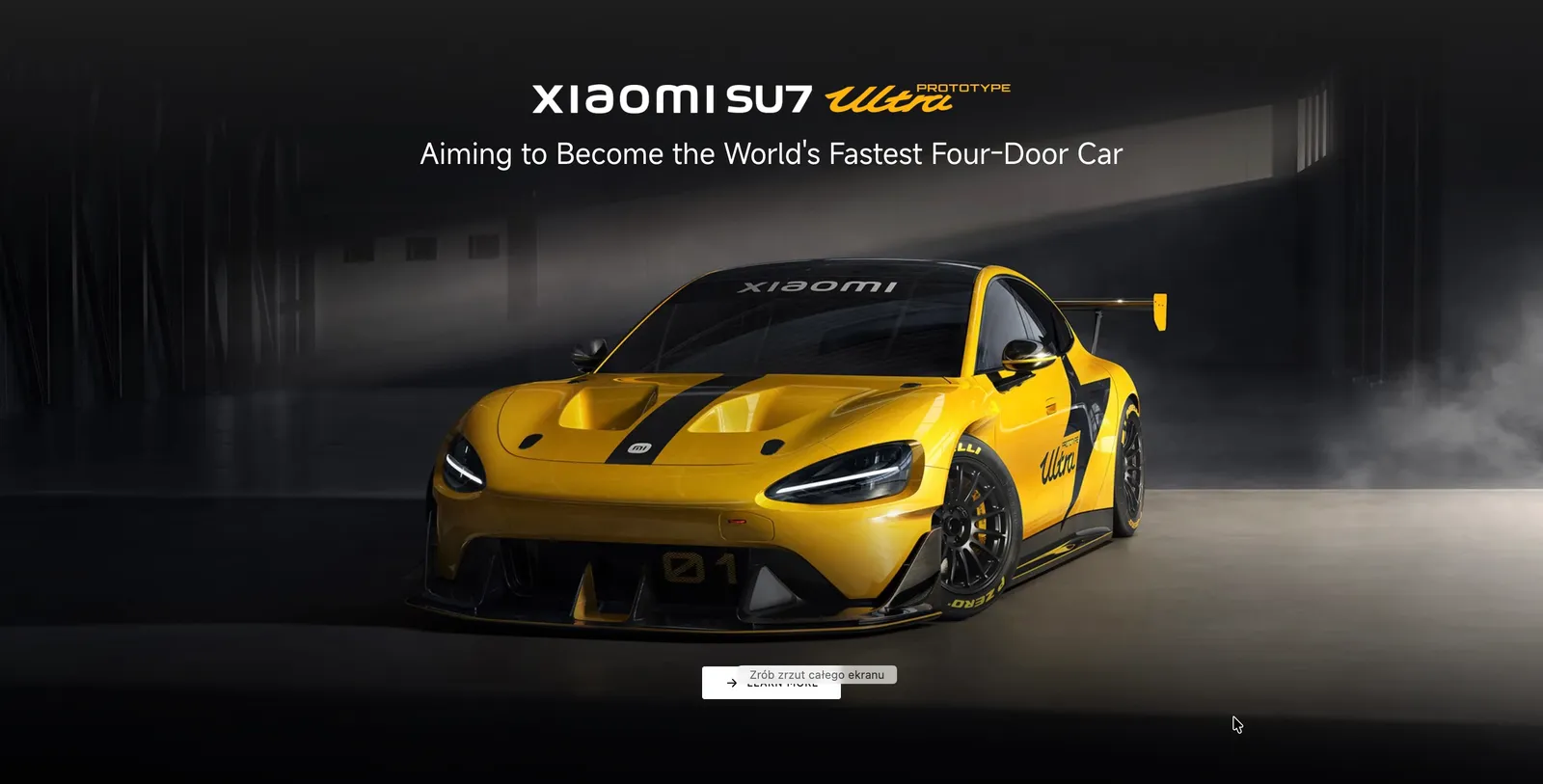
Xiaomi has launched an international website at xiaomiauto.com and foreign social media profiles for its automotive division. The site explicitly states that Xiaomi Auto will officially enter Europe in 2027, and meanwhile the company has begun collecting inquiries from dealers and distribution partners.
For drivers in Poland, this is not yet the start of sales. It’s more like setting up strategic moves ahead of entering the EU.
The website is already live, but there’s still no configurator or prices
The new site primarily showcases Xiaomi’s brand, technology, and projects. It features models such as the Xiaomi SU7, SU7 Ultra, YU7 GT, Sky Nomad, and Vision Gran Turismo, along with sections for Newsroom, Innovation, and Core Technology.
The most important detail is simple: there’s no configurator, local prices, or shopping portal. That says a lot. Xiaomi hasn’t started sales yet; it’s merely building awareness and entry points, somewhat similar to what other Chinese brands did before debuting in Europe.
The website also features a Dealer and Distribution Inquiries form. In other words, Xiaomi is already looking for trading and distribution partners. This is a stronger signal than just having a profile on X or Instagram, as it shows that preparations for sales are underway alongside marketing efforts.
The company still hasn’t specified which European countries will receive the cars first, nor in which quarter of 2027 we’ll see actual sales begin. All that’s known is that Europe will be the first stop in its international expansion.
A plan for 2027 exists, but domestic performance is becoming a concern
In May, Xiaomi President William Lu said that the official launch of the company’s overseas automotive expansion would take place in the third or fourth quarter of 2027. The strategy is quite clear: first developed markets, then emerging markets; first the mid-to-high-end segment, then more mass-market segments; and right-hand drive markets before left-hand drive ones.
There’s a small issue here. Europe is primarily made up of left-hand drive markets, so either Xiaomi will make an exception or it will launch in phases. We don’t know for sure yet.
The website lists Munich as one of the global R&D centers, alongside Beijing, Shanghai, Nanjing, and Wuhan. This means Xiaomi already has a R&D presence in Europe. In May, Yu Liguo, vice president of the automotive division, was given additional responsibility for leading preparations for the overseas expansion and reports directly to Lei Jun and William Lu.
The second metric is less favorable for the company. In July, Xiaomi delivered 31,267 vehicles, a 2.68% increase year-over-year but a 9.99% decrease month-over-month. From January to July, it accumulated 216,322 deliveries, accounting for 39% of its annual target of 550,000 vehicles.
To meet this goal, Xiaomi would need to sell an average of around 66,700 vehicles per month in the final 5 months of the year. This is no longer just a formality. And that’s probably why the international side is taking action now, even though actual exports are not set to begin for several months.
What’s most interesting at the moment isn’t just that Xiaomi is “entering Europe,” but that it has finally started doing so publicly with the infrastructure in place for sales. Which model should reach Europe first, the SU7 or the YU7?
LovEV Newsletter
Want more content like this?
Sign up — we’ll send you a weekly preview once the newsletter launches.