
XD Thermal is developing new battery cooling for electric buses
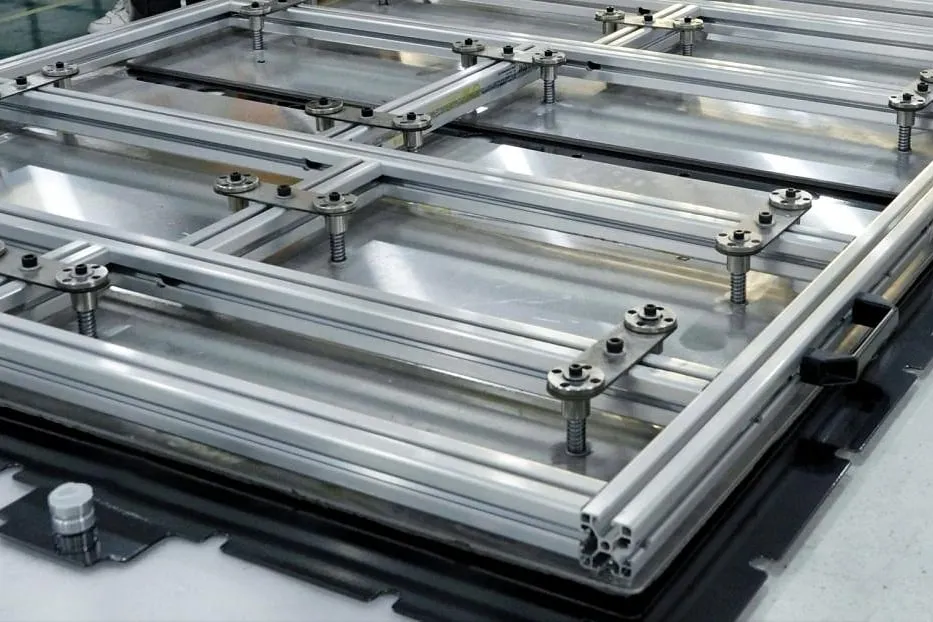
XD Thermal has developed a new cooling architecture for the batteries of a European electric bus platform. The integrated system is designed to require fewer components and can be adapted to different battery sizes.
The Chinese thermal management specialist XD Thermal claims to have developed a new battery cooling system for an unspecified European electric bus platform. It is known that the platform uses battery modules with a capacity of 35.3 kWh – and XD Thermal contributes liquid-cooled battery enclosures with stamped covers to help dissipate heat from both sides of the battery modules.
Unlike solutions with separate cooling plates, parts of the thermal management system are directly integrated into the chassis structure. According to XD Thermal, this approach reduced the number of components required for cooling by around 25 percent. It also eliminates several assembly steps.
The configuration with multiple thermal interfaces is designed to ensure more even heat distribution within the battery system, thereby contributing to the lifespan of lithium-ion batteries. However, XD Thermal does not provide specific figures regarding cooling performance, temperature distribution, or battery life. Independent tests that could verify these claimed advantages also do not exist yet.
Integrated cooling increases requirements for sealing
The integration of cooling into the battery housing brings additional requirements for design and manufacturing, according to the manufacturer. A key challenge was ensuring the integrity of the entire system. Due to various interfaces, seams, and sealing points, these had to be tested not only individually but also in their combined operation.
XD Thermal developed its own testing equipment for this purpose and gradually introduced air and helium leak tests. These were intended to detect even minor leaks before the system was approved for use. Another challenge involved coating different surfaces. Various insulation and heat barrier materials are used depending on the area. To address this, the company developed special hanging and masking techniques to apply these different coatings on more complex geometries.
"Once cooling becomes part of the housing, the design constraints change," says Xu, Technical Director at XD Thermal. What matters now is not just optimizing a single cooling plate, but rather the thermal performance of the entire structure while ensuring it is suitable for mass production.
Ready for series production per XD Thermal after two months
The first prototype was delivered within about six weeks, and the design reached series readiness already after roughly two months. According to the company, teams working on thermodynamics, design, processes, quality, and manufacturing operated in parallel, allowing insights from prototyping to be directly applied to further development.
The architecture is also designed to adapt to different vehicle platforms, battery sizes, and capacities without requiring a redesign of the core cooling concept. Since early 2025, XD Thermal has built additional production capacity for large-format battery cooling components, which are now also being used for other electric bus and heavy-duty projects.
For electric commercial vehicles, the integration of batteries and thermal management is becoming increasingly important as space and weight must be utilized as efficiently as possible. Other suppliers are also adopting modular or integrated approaches for components in electric commercial vehicles. Mitsubishi Heavy Industries recently introduced a new electric truck cooling system that allows individual components to be arranged flexibly to accommodate the limited space imposed by the traction battery.