
Hydrogen takes off from Ławica. Poznań is testing a technology that could transform Polish airports
In short:
The first airport research and implementation center for hydrogen technology was launched in Ławica.
Green hydrogen is already powering equipment used for cargo handling at the Poznań airport.
This is the first project of its kind in Poland.
Other Polish airports are also implementing zero-emission airport transportation and charging infrastructure for electric vehicles.
The energy transition is reaching another sector of transportation. After electric airport buses, ground support vehicles, and expanded charging infrastructure, it’s now time for hydrogen. Poznań-Ławica Airport has begun testing green hydrogen in daily aircraft cargo handling, becoming the first airport in Poland to carry out such a project.
According to the airport, the first airport-based research and implementation center for hydrogen technologies in the country, H2@Ławica, is operating at Ławica. As part of this project, hydrogen is produced using energy from the airport’s solar power installation, then stored and used to power equipment used in cargo handling.
"It is here that we are testing how green hydrogen can be produced, stored, and used to power equipment in cargo logistics," says Poznań-Ławica Airport.
Hydrogen-powered forklifts
The initial tests involve two forklifts operating in the cargo warehouse. They are equipped with hydrogen-powered fuel cells. The airport emphasizes that a key advantage of this technology over traditional batteries is the time required to recharge them. “Hydrogen refueling takes only two to three minutes, while charging standard batteries can take several hours. This means shorter downtime and greater availability of equipment for work,” say the port’s representatives.
The project is being carried out as part of the international BSR HyAirport program, co-funded by Interreg Baltic Sea Region funds. The test results are set to be summarized in a report that will serve as a knowledge base for other airports interested in implementing hydrogen technologies. In the long term, building a complete hydrogen hub at Ławica is being considered, including production, storage, and distribution of green hydrogen, as well as a publicly accessible refueling station.
Others Are Also Testing
Of course, the Poznan project is pioneering in the field of hydrogen—it didn’t emerge out of nowhere. Polish airports have been investing heavily in electromobility for several years, gradually electrifying equipment used to serve aircraft and passengers. We have already written on Elektromobilni.pl that electric vehicles are becoming an increasingly important part of modern airports’ operations. This applies not only to buses transporting passengers between the terminal and the aircraft but also to tugs, baggage tractors, catering vehicles, and equipment used for handling cargo—electrification helps reduce emissions and noise, which is particularly important for airports located near urban areas.
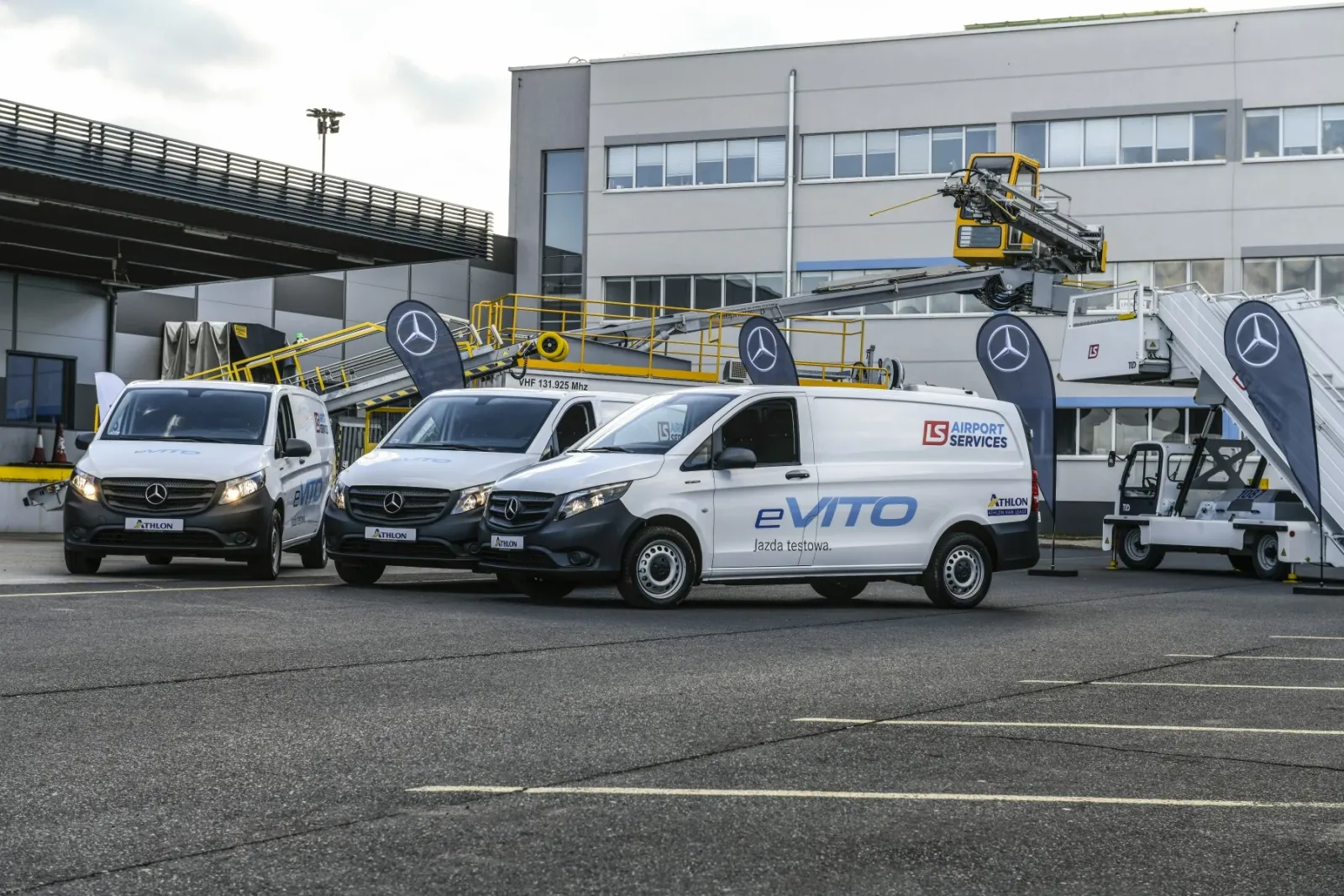
Among Polish airports, Gdańsk is particularly active. It was there that Welcome Airport Services became the first in the country to introduce the zero-emission Solaris Urbino electric airport bus. Gdańsk Airport also uses electric Mercedes EQV, EQA, and EQS SUV vehicles for operational tasks and VIP transportation. Handling companies, including LS Airport Services, are also conducting tests with electric vehicles.
You can charge your devices at Polish airports
Electromobility is also advancing in terms of the infrastructure available for travelers. According to a report prepared by the website loveV.pl, electric vehicle charging stations are now available at most of Poland’s major airports.

For example, in Wrocław, drivers have access to a two-slot DC charger with a capacity of 60 kW. In Łódź, there is a fast charging station with 120 kW capacity that allows two vehicles to be charged simultaneously. Katowice Airport provides a DC charger with 50 kW capacity in its Premium parking lot, while Chopin Airport in Warsaw is developing both public charging infrastructure and vehicle charging services through Valet Parking.
Currently, Gdańsk Airport has the most extensive network, with charging stations located in several of its airport parking lots. Travelers departing from Kraków can also use these chargers, though it’s advisable to check the availability of slots each time before traveling.
Conclusions
The development of electromobility at airports aligns with a global trend, as we have also reported on our platform — airports such as those in Vienna, Frankfurt, Oslo, and Beijing are investing in electric buses, tugs, and ground support vehicles, with some simultaneously testing hydrogen propulsion systems. Oslo-Gardermoen has particularly ambitious plans; it already operates a large fleet of electric ground support vehicles and has set itself the goal of achieving net-zero emissions.
Oskar Włostowski