
WeBus is designed to simplify the planning of electric bus fleets.
The Berliner Verkehrsbetriebe (BVG), TU Berlin, and the Reiner Lemoine Institute have developed WeBus, a web-based open-source tool for planning electric bus fleets. It allows users to compare factors such as battery sizes, charging concepts, and the development of charging infrastructure.
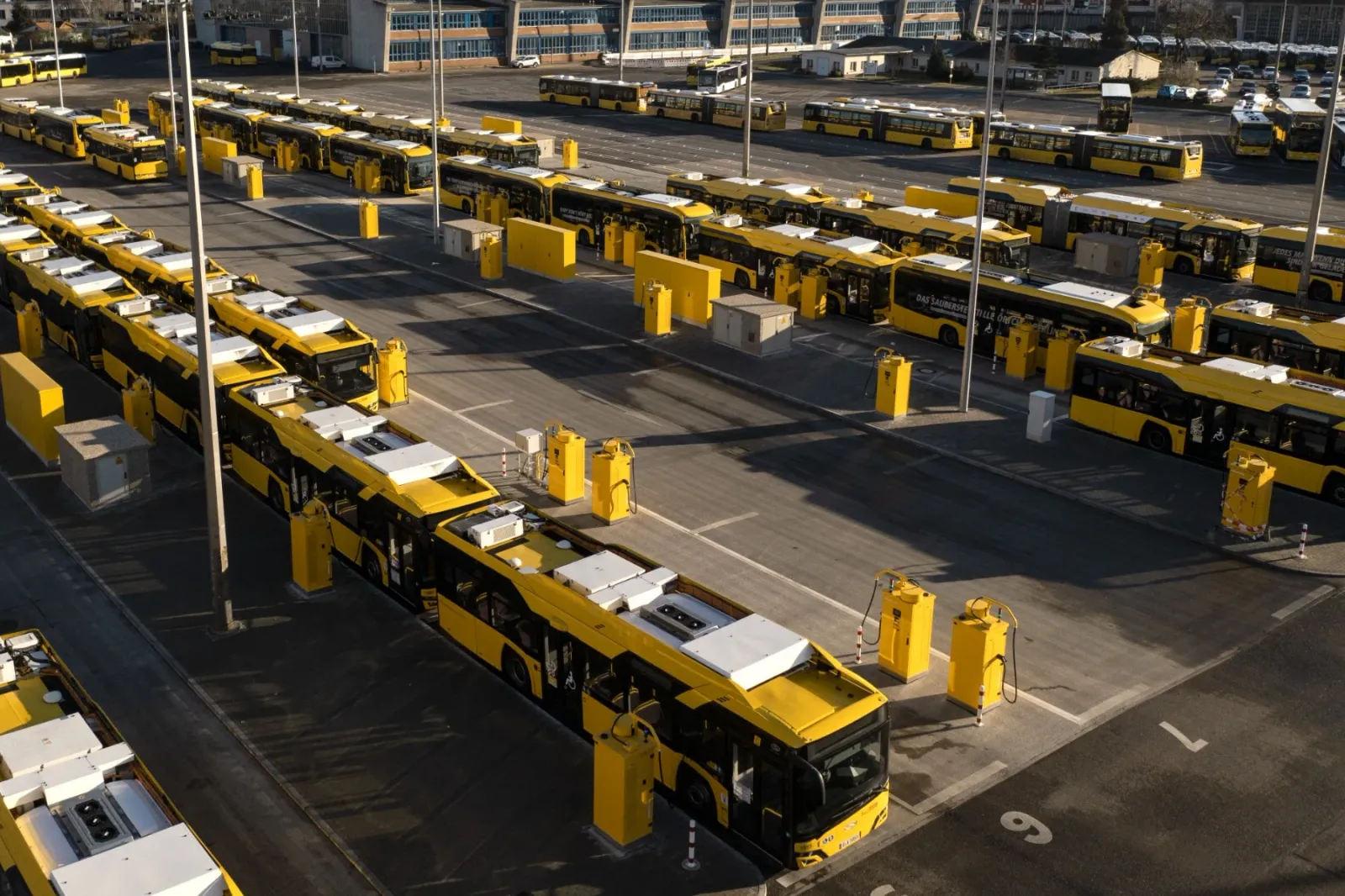
BVG’s Electric Bus Depot with Charging Stations
Image: BVG/Oliver Lang
The transition of bus fleets to electric power requires coordinated planning for vehicles, batteries, charging infrastructure, and depots. WeBus enables transportation companies to simulate various electrification scenarios and compare their impacts on vehicle needs, energy consumption, and costs.
This tool is aimed particularly at small and medium-sized transportation companies, but it is also available as an open-source solution for municipalities and other interested parties. Unlike approaches that consider vehicles and charging infrastructure separately, WeBus models operations as a whole system. This allows, for example, early identification of interactions between battery size, charging strategy, and additional vehicle requirements.
Users can simulate various battery capacities and charging concepts, as well as compare different levels of development in charging infrastructure at depots and end stops. The results are intended to provide a basis for the technical and economic planning of fleet conversion.
BVG Simulation Highlights Potential of Full Electrification
WeBus was developed as part of the research project E-Bus 2030+, in which, in addition to BVG, the Department of Product Development Methods and Mechatronics from TU Berlin and the Reiner Lemoine Institute were involved. The German Federal Ministry of Transport funded the project with around 1.26 million euros.
As part of the project, the tool was also applied to BVG’s fleet. According to the results, a complete electrification of bus operations using current technology is fundamentally possible. Project partners estimate that this could result in annual savings of around 108,000 tons of CO2 compared to operating diesel buses.
With the completion of the research project, WeBus is now available as a freely accessible web-based tool. It aims to enable other transportation companies to use the methods developed in the project for planning their fleet and charging infrastructure.