
Battle over bus terminals. Warsaw and Łomianki in fierce dispute
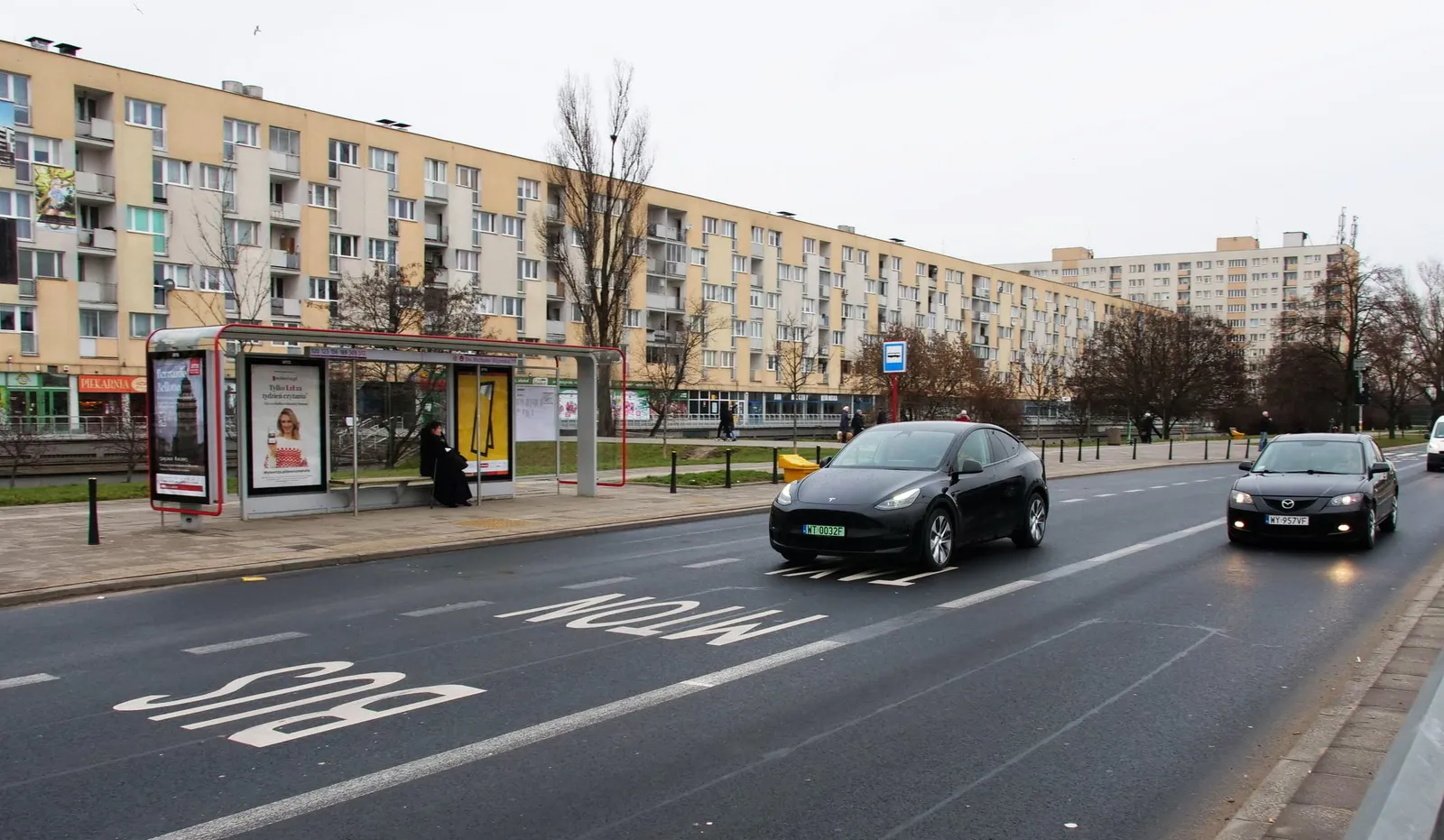
The bypass road, intended to shorten the journey from Łomianki to Warsaw, has become a point of dispute between local authorities. Łomianki claim that the capital’s road construction team has backed out of previous agreements regarding one section of the route. Warsaw responds that it is not giving up on building the bypass, but first needs to determine who will construct the missing link and cover the costs.
In the article
Warsaw still plans to build a nearly one-kilometer bypass from the border of Łomianki to Wóycickiego Street.
The dispute mainly concerns the connection in the area of Stara Cegielni Street and Pułkowa Street.
The ultimate solution is supposed to be the S7 highway, but its construction on the Kiełpin-Warsaw section has not yet begun.
This problem is well known to drivers entering Warsaw from the Łomianki direction. Kolejowa Street, which becomes Pułkową, regularly gets congested during peak hours, with city buses stuck there along with cars due to the lack of a bus lane.
The new northern exit on highway S7 is intended to resolve this issue, but further delays are expected for this project. As a temporary solution, Warsaw and Łomianki agreed at the end of 2025 to create a bus lane that allows buses to bypass much of the traffic jam.
Following a meeting between officials from both municipalities on December 15, 2025, Warsaw stated that a bus lane about one kilometer long could be established from the border with Łomianki to Wóycickiego Street. It was planned to be built using the existing paved shoulder, without taking away driving lanes from cars.
The plan originally assumed cooperation between both parties. Warsaw was to handle the section of Pułkowa Street within the city limits, while Łomianki was to prepare its own section that would allow buses to avoid traffic jams even before entering Warsaw’s bus lane.
And this is where the dispute begins
On October 22, the Łomianki City Council adopted a position regarding the section between Stara Cegielni Street and Pułkowa Street. The council members believed that Warsaw’s Urban Roads Administration (ZDM) had abandoned part of the previously agreed solution and demanded that it be reinstated in the project along with a specific schedule for the work. Official documents from the council meeting confirm this position.
From Łomianek’s perspective, it’s not about adding more asphalt. This section is meant to ensure continuity along the entire bus route. If buses first have to sit in traffic before they can reach the bus lane, part of the benefits of this investment will simply vanish. The same goes the other way—if buses have to quickly get stuck in traffic, the investment also loses its meaning.
Warsaw presents the issue differently. ZDM emphasizes that it remains ready to build a bus lane about one kilometer long from the city border to Wóycickiego, and it has already prepared traffic management plans for its section. Meanwhile, Warsaw’s road engineers point out that the effectiveness of the entire solution depends on creating a local connection that allows buses to bypass the most congested area earlier. In other words, there is no dispute today about whether a bus lane should be built at Pułkowa at all. The disagreement concerns exactly where Łomianek’s responsibility ends and Warsaw’s begins.
Łomianek is also designing its section
The tender documents show that Łomianki is simultaneously carrying out its own design work. The municipality commissioned documentation for the project “Design and construction of a bus lane in the Łomianki municipality.” The scope includes, among other things, using Glinianka Street, changing traffic organization up to the Warsaw border, and reconstructing the geometry of the entrance and exit at Stara Cegielni Street. One of the earlier alternatives also provided for about 300 meters of new lane space and the use of about 450 meters of the existing road layout.
This is important because it shows that the project was not initially limited to painting a single lane on Pułkowa Street. The buses are supposed to be routed through the local road network to bypass traffic jams and then smoothly enter the Warsaw section of the bus lane. An earlier concept prepared for Łomianki included a route from Buraków to Wóycickiego Street and analyzed several options for designing the bus lane.
What was promised in December?
It is these earlier declarations that are now Łomianek’s main argument. In December 2025, after a meeting between Rafał Trzaskowski and Mayor Tomasz Dąbrowski, it was announced that both sides agreed on the need to build a bus lane.
Warsaw explicitly mentioned the section “from the border of Łomianki to Wóycickiego Street” at that time, stating the route would be about one kilometer long. Already then it was noted that Łomianki should build their own connection to bypass the bottleneck before entering Pułkową Street.
The current dispute stems largely from differing interpretations of which elements of this connection should fall under Warsaw’s responsibility and which under Łomianki’s.
So far, there is no agreement that would finally resolve this division. ZDM declares readiness to carry out its part once funding is secured and cooperation terms are agreed upon, while the Łomianki council members demand a return to the scope they believe was previously accepted.
What about S7? That still has to wait.
Buspas was initially considered a temporary solution until the rapid S7 route could be built. However, that road is still in the preparation stage.
On September 30, 2026, the General Directorate of National Roads and Highways submitted an application for a decision on granting permission to carry out the road construction project (ZRID) for the 12.9-kilometer section from Kiełpin to Warsaw. Only after obtaining this approval will the requirements for the work and the tender for the contractor be prepared.
The new S7 will have two lanes, five interchanges, and two tunnels—one approximately one kilometer long in Bielany and another about 1.28 kilometers long in Bemowo. It is one of the most complex road construction projects being planned in Warsaw.
It’s not the case that the bus lane will soon become unnecessary, as its role will be taken over by the expressway. Construction on the S7 section leading to Warsaw has not yet begun, and road builders still need to make administrative decisions, conduct tenders, and carry out the actual work.
For now, buses are still stuck in traffic jams
The situation is quite paradoxical. Both sides agree that a bus lane is needed, both have prepared or are preparing their projects, and both claim to want it built. Yet there is still no complete schedule or final agreement regarding the entire route today.
Until Warsaw and Łomianki agree on who is responsible for the disputed section and how the two sections should be connected, the investment will remain divided not only by the administrative boundary between the two municipalities. And bus passengers will still cross this border just like drivers, stuck in the same traffic jams.
The bus lane also benefits electric vehicles
The new bus lane would be beneficial not only for public transportation. By the end of 2027, fully electric cars will also be able to use it, giving their drivers another option to avoid traffic jams when entering Warsaw.
The issue remains the enforcement of regulations. Driving in bus lanes without permission has been a common phenomenon in Warsaw for years, with inspections being sporadic and any fines low (100 zł). The city police have limited capabilities in this regard, so the main responsibility for monitoring bus lanes falls on the police. As a result, even a well-designed bus lane may lose part of its advantage if it is regularly used by drivers who do not have the right to do so.
Piotr Sobczyk