
VW and Skoda are considering a joint venture with JSW in India.
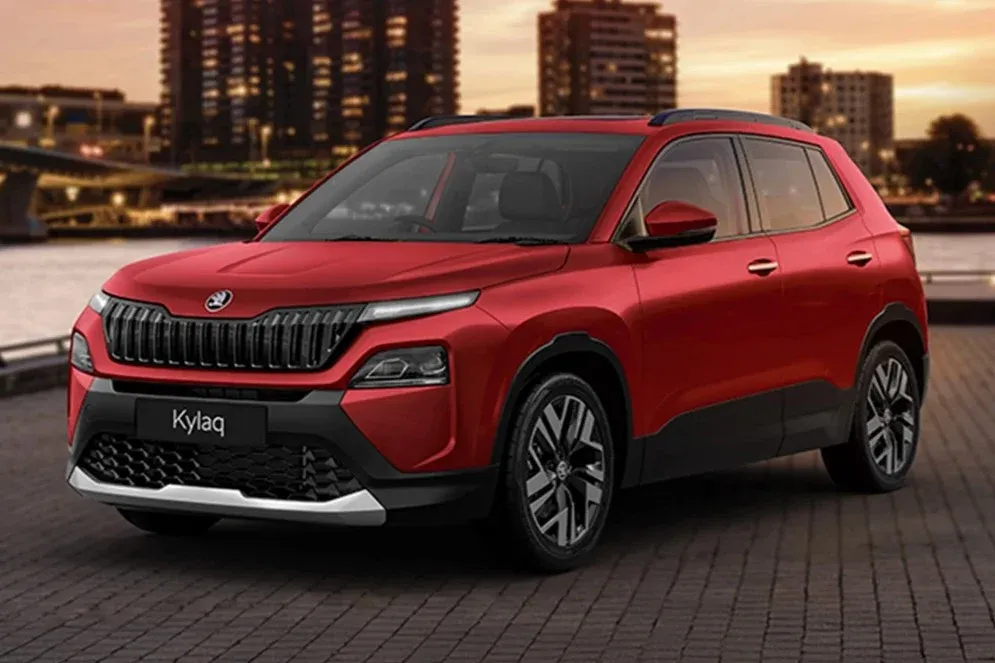
Volkswagen Group is exploring a joint venture with conglomerate JSW for its Indian brands Skoda and VW. The planned electric vehicle platform for India by Skoda/VW is also likely to benefit from this — for now, both brands rely solely on internal combustion engines in that market.
Indian internal combustion engine model Skoda Kylaq
Image: Skoda
In Volkswagen Group’s operations in India, the Czech brand Skoda is “in the lead,” bearing primary responsibility. This is because Skoda has been in the Indian market for six years longer than VW — since 2001, while VW entered in 2007.
In an interview with T-Online, Skoda CEO Klaus Zellmer spoke at length about Skoda’s and VW Group’s business in India. This area is set to see significant expansion. Skoda doubled its sales in India by 2025, achieving the highest year-on-year growth rate among all of its markets. Together, VW and Skoda managed to increase their sales in India by 36 percent to 117,000 vehicles.
Skoda hopes for investment from new partners
For the partnership option, the company has therefore signed a Memorandum of Understanding (MoU) with the multinational JSW Group, an intent statement “to explore the key principles of a strategic partnership. The planned collaboration aims to enhance competitiveness through an expanded product range, greater localization, and the development of production and R&D capabilities,” said Zellmer in the interview. He added, “I am convinced that we can become better with an Indian partner: having local roots, local networks, and cultural connections to understand what truly matters in India.”
The partnership could also play a significant role in VW and Skoda’s electric vehicle strategy for India. According to the Indian magazine “Autocar Professional,” a potential investment from JSW could fund products based on the planned India Main Platform (IMP). This is an electric vehicle architecture designed for India by the Volkswagen Group, derived from the China Main Platform and intended to be adapted to Indian regulations, local supply chains, and a higher degree of localization. Last year, it was reported that VW/Skoda might not be able to invest as much money in the platform as originally planned. Currently, neither Skoda nor VW offers electric vehicles in the Indian market; only internal combustion engines are available. This is set to change by 2028.
India as an Alternative to China
Zellmer views India as a good alternative to the Chinese market from which Skoda has withdrawn: “The Indian market is just as dynamic today as China was a few years ago. We have two factories in India, a well-established dealer network, and very high quality products. With a market share of just under three percent, we are relatively small players, but Skoda remains the most successful European brand in India. That’s something we can build on.” Additionally, Chinese automakers have so far struggled to invest in India—a chance that Skoda now aims to take advantage of.
According to the “Handelsblatt,” Volkswagen appears even willing to give up a majority stake in JSW for the planned joint venture. As several Indian media outlets report, it could result in a partnership where JSW holds 51 percent and VW holds 49 percent. Rumors about such a joint venture emerged as early as August.
Partnerships in India Have So Far Been Unsuccessful
Volkswagen has previously had partnerships in India with Suzuki and Tata, the owner of JLR, but talks with Mahindra later failed. There were also reportedly discussions with JSW in 2024, which did not lead to any cooperation at that time.
JSW has already been operating a joint venture with the Chinese SAIC group since 2023, focusing on the MG Motor brand that is also active in Europe. Additionally, JSW plans to establish its own electric vehicle brand under the name JSW Motors, using technology from Chinese manufacturer Chery for this purpose.