
VW subsidiary Elli exits hardware business, opens doors to investors
Volkswagen Group Charging GmbH, better known under the brand Elli, is undergoing a comprehensive strategic realignment and will in future focus primarily on digital services related to charging and energy management. This was confirmed by Elli CEO Giovanni Palazzo during an exclusive background discussion with electrive.
“We will significantly scale back our hardware business in the future,” states Palazzo. Instead, Elli intends to focus on business models that generate recurring revenue and are scalable, such as fleet management, charging cards, and charging apps. The previous hardware business had served as a means to an end: Elli first needed to establish a sufficiently strong revenue base in the digital sector before it could now dispense with significant hardware activities, explains Palazzo.
The new strategy envisages only two core business areas: Mobility and Energy. “We are focusing on transaction-based, digital, and scalable business models that are also as capital-efficient as possible,” explains Palazzo. According to the CEO, the decision is driven by an increasingly competitive market environment. While electromobility continues to grow, many providers of charging infrastructure and related services are under considerable economic pressure. Palazzo expects further consolidation in the industry in the coming years.
For Elli, the strategic shift is also a response to the differing economic characteristics of its business segments: while digital services can be relatively easily expanded to new customers and markets through standardised processes and platforms, hardware, installation, and infrastructure projects require significant personnel and financial resources. The crisis at parent company Volkswagen is also likely to have played a role.
AC wallbox production to be discontinued
The realignment has concrete consequences, particularly for the hardware business. Not only is Elli abandoning production of its Flexpole battery-buffered fast-charging stations in Hanover, but it is also phasing out its own AC wallbox. Existing stock will be sold off, after which no further orders will be accepted.
However, existing customers will not be affected: “There will be no impact whatsoever on the use or application of the devices already sold. Customer service and maintenance will also remain completely unchanged,” Palazzo assures electrive.
Palazzo emphasises that the decision is not due to a lack of sales success or technical issues. Rather, the business with unidirectional wallboxes no longer aligns with the desired scalability.
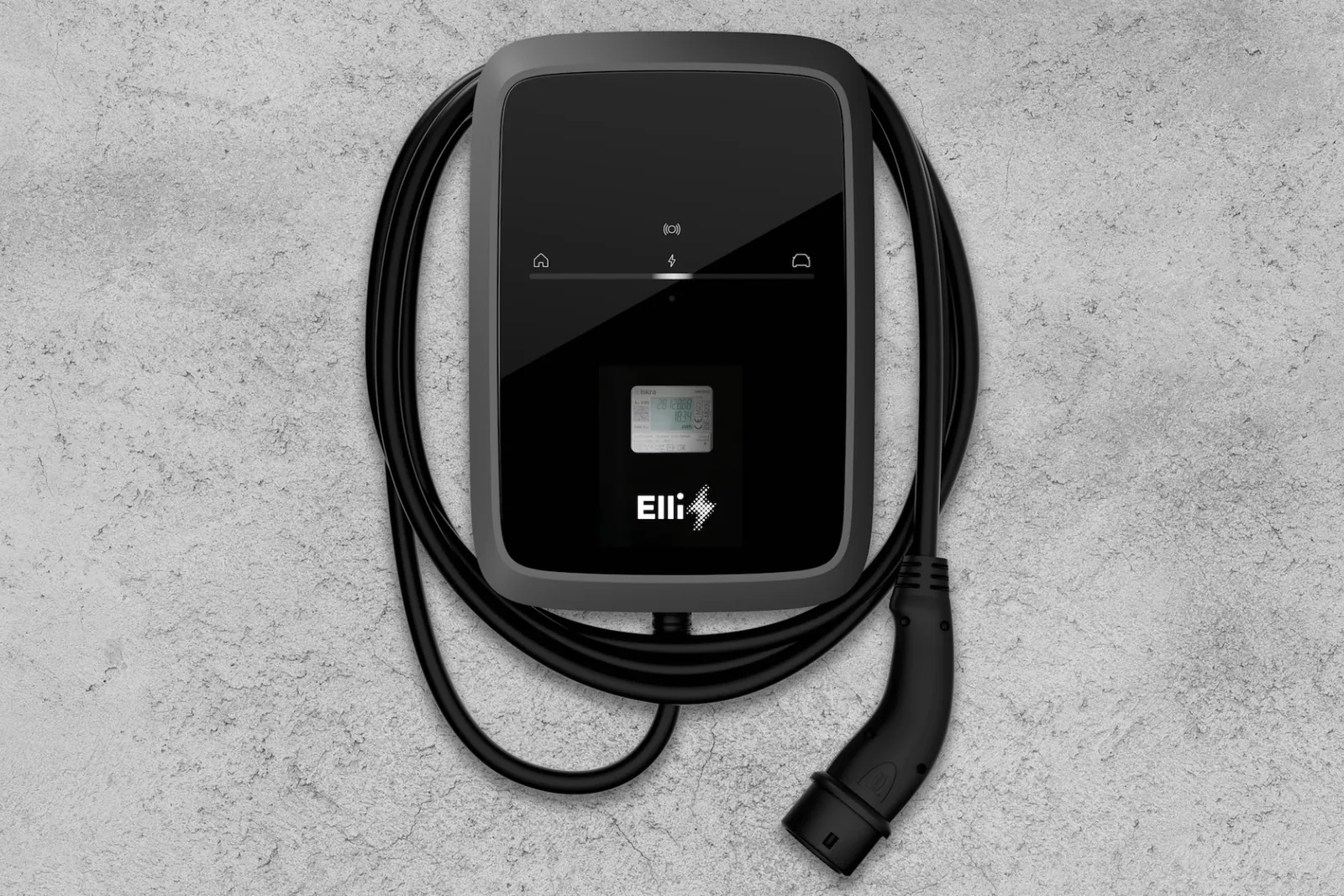
At the same time, Elli does not intend to completely abandon the topic of home charging. “Home charging is naturally important,” stresses Palazzo. However, Elli will deprioritise unidirectional charging and no longer sell its own AC wallboxes. Instead, Palazzo sees the future in the private sector lying in bidirectional applications such as Vehicle-to-Grid (V2G) and Vehicle-to-Home (V2H). More on this below.
Fleet hardware installation to end
The brand’s withdrawal from the hardware business extends beyond private wallboxes. Elli also plans to change its role in the construction and operation of charging infrastructure for business customers and the Volkswagen Group. To date, the company has partially implemented such projects itself. In the future, more specialised partners will take over the planning, construction, and maintenance of the physical infrastructure.
Elli, on the other hand, wants to focus on the parts of the value chain that can be scaled digitally. These include, in particular, connecting charging points to backend systems, as well as charging, energy, and billing services.
What will happen to existing infrastructure activities for fleet customers is currently under internal review. According to Palazzo, various solutions are possible, including handing over activities to external partners. The implementation is to take place gradually and be completed by the end of 2027.
Digital charging and fleet services to expand
As already mentioned, Elli’s future strategy is based on two pillars: Mobility and Energy. Looking deeper into the details: in the Mobility business area, the company wants to further expand its Mobility Service Provider (MSP) business with fuel and charging cards, as well as fleet management.
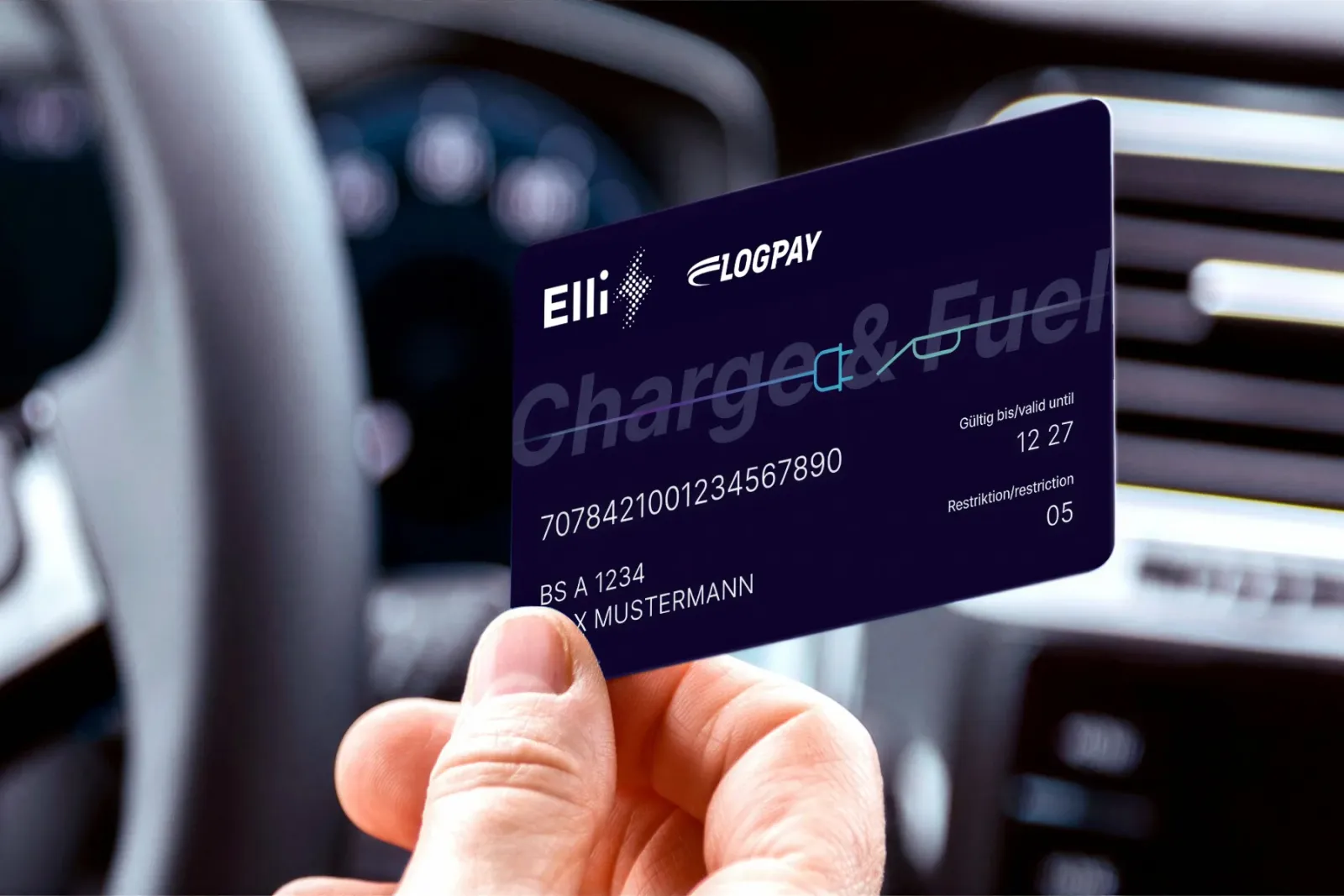
The integration of LogPay’s fuel card business plays an important role here. This enables Elli to serve not only pure electric fleets but also companies whose fleets continue to consist of mixed fleets of internal combustion engine vehicles and EVs. “We can thus build a bridge between combustion-engine fuel and electric charging. That’s exactly what we need in this market,” Palazzo states.

The company sees significant growth potential in this segment. Commercial customers have more complex requirements for billing and managing their vehicles, while large transaction volumes can be processed via central platforms.
Palazzo also points out that margins in the commercial charging customer business tend to be higher than in the private customer segment. Elli therefore wants to strengthen its position as a Mobility Service Provider (MSP) not only for private customers but, in particular, the B2B segment. In the MSP business, the focus is ultimately on enabling access to as many charging stations from various operators as possible via roaming and billing the charging processes for private and fleet customers.
Elli’s MSP solution used by Sixt
In addition, there is the business of digital charging services for other brands and companies such as Sixt. The car rental company integrated Elli’s MSP solution into its app at the beginning of 2024. These systems are now to be opened up to further customers, with a first deal soon to be closed.
The second pillar is the energy business. Here, the Elli Naturstrom electricity tariff remains a central anchor product. However, the company wants to expand its existing offering with dynamic tariffs and new services related to bidirectional charging.
Bidirectional charging as a new growth area
Above all, V2G could become a significant new business area. The Elli CEO sees it as an opportunity to integrate electric cars not just as electricity consumers but also as flexible energy storage systems into the power grid.
Elli is preparing for the market launch of a corresponding V2G offering announced in June, together with The Mobility House, for November. The hardware will no longer come from in-house development but will be provided by external partners. The company itself wants to focus, among other things, on energy market integration (keyword: trading), electricity tariffs, and further digital services.
According to Palazzo, Elli has tested various hardware solutions over the past 18 months. The product launch was also delayed because no sufficiently reliable solution for commercial use was initially available. Elli has now opted for a bidirectional DC wallbox from the Chinese manufacturer EV-Tech.
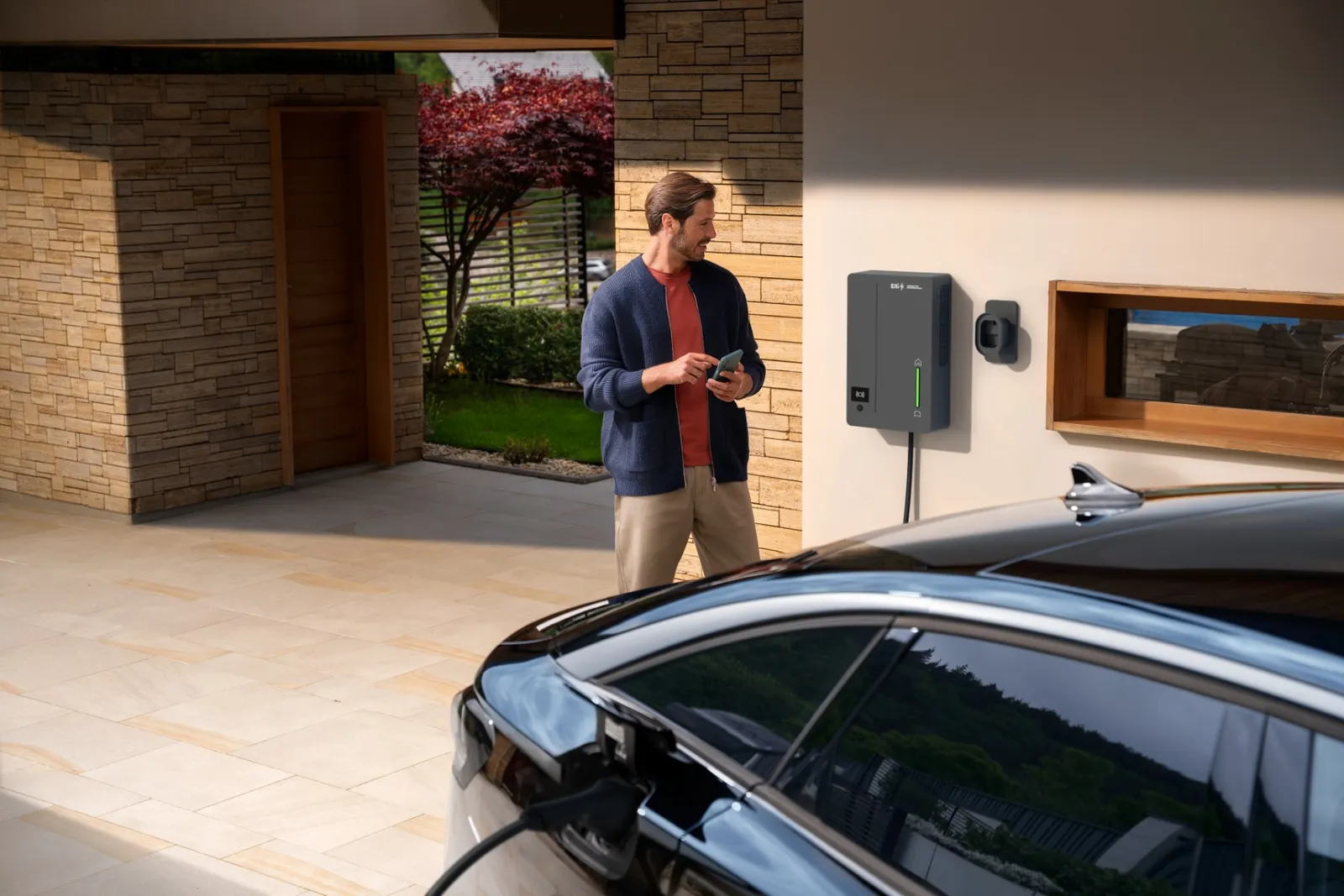
“We believe that V2G could be a real game-changer. For the first time in the history of the automotive industry, we can enable customers to generate their own income,” says Palazzo. What he means: customers can receive a credit of up to €720 euros per year on their electricity bill if they use V2G diligently. Elli calls this an added bonus for vehicles that spend a certain amount of time per month connected to the wallbox in V2G mode.
However, the economic success of V2G depends not only on functioning technical systems but also on suitable regulatory frameworks. In September, Elli signed a joint open letter to the Bundesnetzagentur (DE) demanding simpler rules for bidirectional charging. The waves have since calmed somewhat due to last-minute changes to the so-called MiSpeL regulation (DE) by the authority.
V2H – i.e., supplying a household with electricity from the vehicle battery – also remains part of the strategy. Palazzo sees great potential here too but points to the technical complexity of installing and integrating different components.
Volkswagen remains committed to the strategic business field
According to Palazzo, the withdrawal from hardware by no means signifies that Volkswagen intends to scale back its charging and energy business as a whole. On the contrary: given the growing sales of electric vehicles, such services remain an essential part of the Group’s strategy. For this year, Palazzo expects revenue in the high three-digit million range.
At the same time, Elli is now doing what other VW subsidiaries outside the core business are currently doing: seeking external partners or investors, as is also the case with MOIA or with PowerCo. Palazzo confirms that several companies have expressed interest in discussions about possible participations or closer strategic cooperation. However, nothing has been finalised yet. In any case, the focus is on the possibility of scaling the business internationally more quickly and opening up additional markets, says Giovanni Palazzo.
Some of the 400 employees must go
Now for the unpleasant part: the restructuring will also affect employees. Elli currently has just under 400 employees on its payroll. The roles most likely to be affected are those directly related to the hardware and infrastructure business, as well as parts of the central administration. Palazzo is not yet willing to specify a concrete number of potential job cuts. It is also unclear whether redundancies will be necessary.
However, negotiations with the works council regarding job cuts are already underway. Palazzo acknowledges that the restructuring presents a difficult situation for employees but considers the changes necessary to secure Elli’s long-term competitiveness.