
VW Mission Efficiency: 6.89 kWh per 100 kilometers
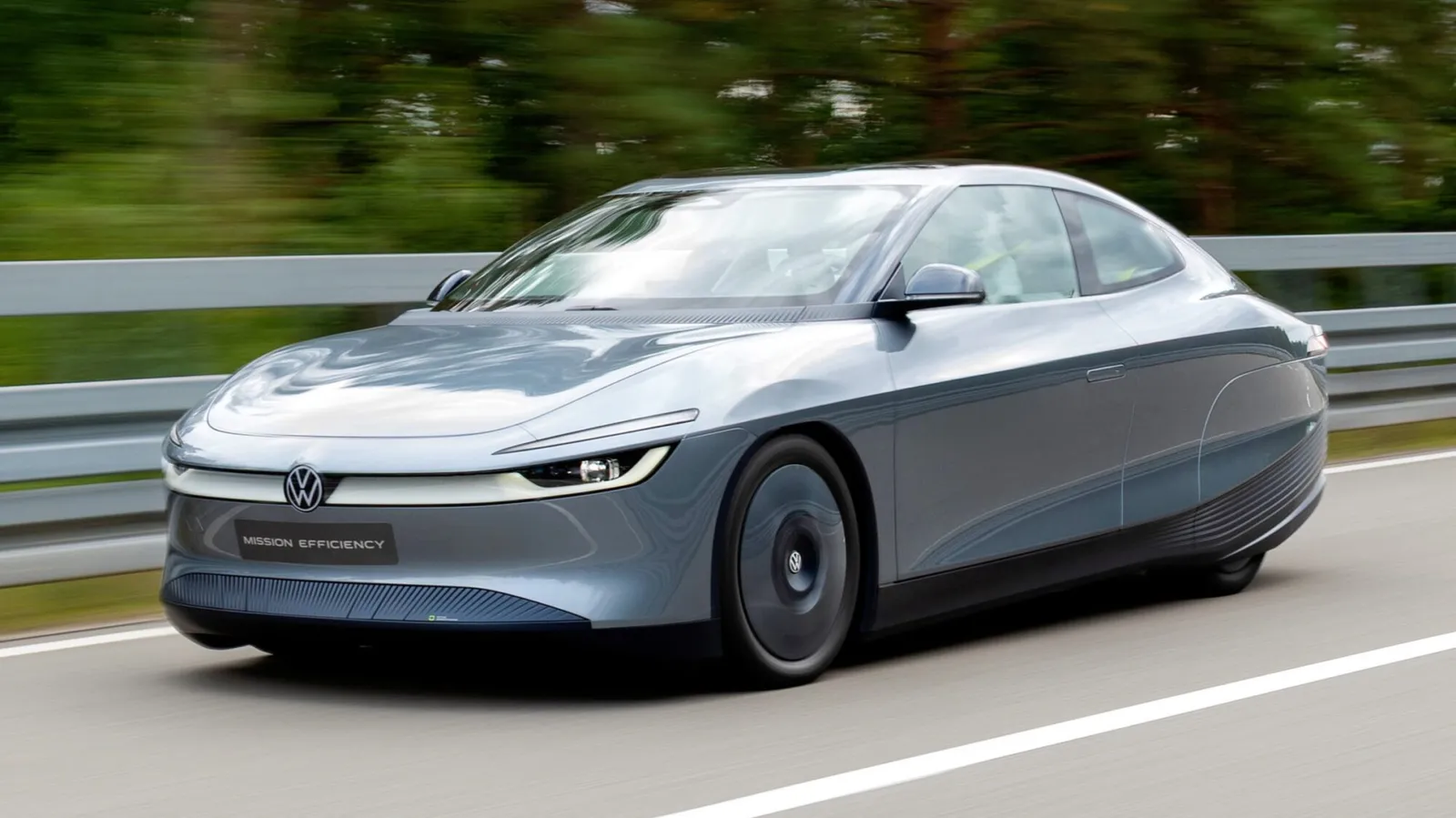
Volkswagen presents the Mission Efficiency, a concept vehicle based on the ID. Polo that achieves a cW value of 0.158. Over a distance of 1,278 kilometers from Wolfsburg to Vienna, the energy consumption was 7.51 kWh/100 km including charging losses — with only one stop for charging.
Advertisement
Volkswagen unveiled a concept vehicle in Wolfsburg designed solely for low energy consumption. The Mission Efficiency is not intended for sale, but it is technically based on the front-wheel-drive version of MEB+, which is also used in the ID. Polo and ID. Cross models. The Rekord-Institut für Deutschland (RID) has certified three records in the category of “production-ready, practical four-seater electric vehicle.”
Driving Test over 1,278 Kilometers
The most meaningful figure comes from a documented long-distance drive: Starting from the development center in Wolfsburg, the route went via Poznań and Olmütz to Vienna, covering a total distance of 1,278.36 kilometers. The actual fuel consumption was 7.51 kWh/100 km including charging losses; without these losses, Volkswagen reports 6.89 kWh/100 km. The average speed was 67.72 km/h, with a top speed of 138 km/h. The vehicle was charged only once during the entire trip, and upon arriving in Vienna, it still had 164 kilometers of range left.
Under ideal conditions—constant speed of 68 km/h, no gradients, and all auxiliary systems turned off—the figure dropped to 6.48 kWh/100 km. Neither of these figures is comparable to WLTP values; Volkswagen does not provide an official range figure for this study. Based on the battery size and actual consumption, the calculated range is around 790 kilometers.
Powertrain, Battery, and Charging
The powertrain remains unchanged from the ID. Polo: an electric motor with 99 kW (135 hp) that drives the front axle. The high-voltage battery is also standard technology, though modified via software. Instead of the 52.0 kWh available in the standard model, the concept vehicle’s system provides 54.9 kWh net. Volkswagen explains this by saying that the standard version intentionally retains capacity for battery cell longevity, while a concept vehicle not intended for long-term use does not need to accommodate such considerations.
Volkswagen does not provide data on charging power or charging times for the Mission Efficiency. Based solely on the test drive, it can be inferred that a single charging stop was sufficient for the distance covered.
Advertisement
Aerodynamics as a key factor
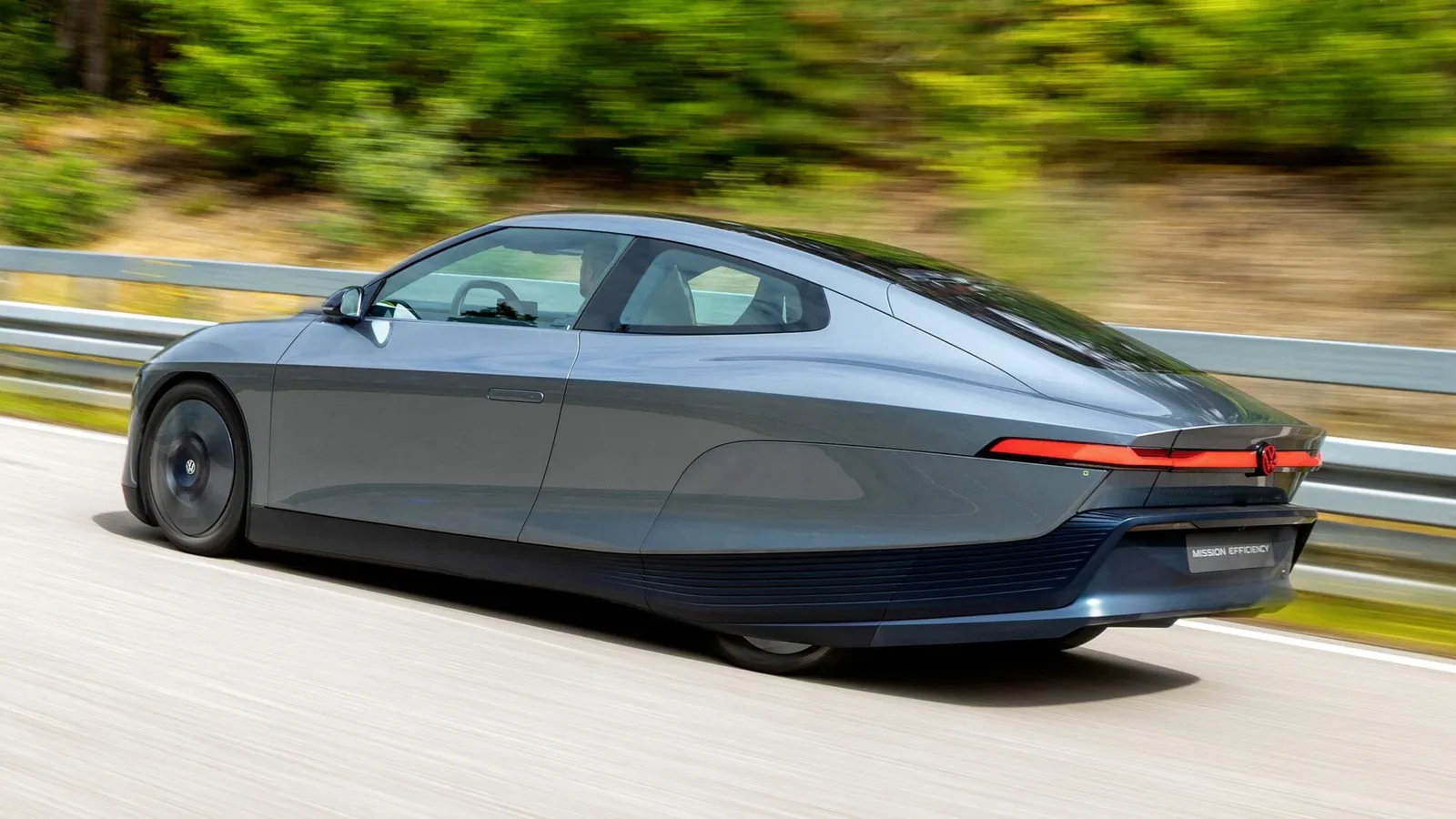
Volkswagen states that the cW value of 0.158 is the lowest among road-legal cars. Combined with a frontal area of 2.08 square meters, this results in extremely low air resistance. This is achieved through a droplet-shaped design, active cooling vents, covered rear wheels, and a completely sealed underbody. The doors feature frameless windows, while the handles are integrated into the outer surface.
This advantage is most evident at higher speeds: according to the manufacturer, fuel consumption starts at 80 km/h is more than 30 percent lower than that of the standard ID. Polo. At 140 km/h, the concept car requires roughly the same amount of energy as the ID. Polo at 100 km/h.
Wheels, tires, and electromechanical brakes
According to the developers, wheels account for 25 to 30 percent of the aerodynamic resistance. The wheel rim at the front is therefore fitted tightly around the tire to reduce turbulence inside the wheel housing. Patent-pending rim deflectors are installed on all four wheels on the inside to prevent air from entering the rim. On the outside, flat, flow-optimized wheel covers are used.
In collaboration with Continental, a concept tire based on the EcoContact 7 was developed, featuring a rolling resistance of 4.9 kilograms per tonne — about 25 percent below the limit set by the top EU tire rating class A. The sidewall and tread compound were particularly optimized. For the rear axle, an electromechanical brake developed jointly by Volkswagen and AUMOVIO is used for the first time. It aims to reduce friction losses, save on wiring and brake fluid, and distribute braking force more variably, which also benefits regenerative braking. At the front, the MacPherson strut axle and hydraulic brake from the ID. Polo remain unchanged. The prototype has EU road approval.
Solar Roof, Body, and Interior
The glass roof and trunk lid are equipped with a photovoltaic system rated at 370 watts, which powers the vehicle’s electrical systems. Depending on the season, region, and weather conditions, it is said to increase the actual range by up to 30 kilometers per day. The coupe measures 4,775 millimeters in length and 1,392 millimeters in height, offering 2+2 seating arrangements and a trunk volume of 481 liters. The two rear seats are designed for passengers up to about 1.60 meters in height. Additional compartments under the rear seats and along the side of the body serve to store charging cables and everyday items.
The structure combines components from the ID. Polo with a self-supporting aluminum frame and parts made from a high-strength CFK aramid composite. Inside, lightweight panels help reduce weight, the speaker system is omitted in favor of a portable Bluetooth speaker, and instead of a permanently installed infotainment display, a brought-in smartphone or tablet is used. Design chief Andreas Mindt refers to the XL1 introduced in 2013, which was the most fuel-efficient production car in the world as a plug-in hybrid, and whose design principles reappear in the Mission Efficiency concept.
Advertisement