
VW ID.3 Neo (2026) with 79-kWh battery in long-distance test: A second spring
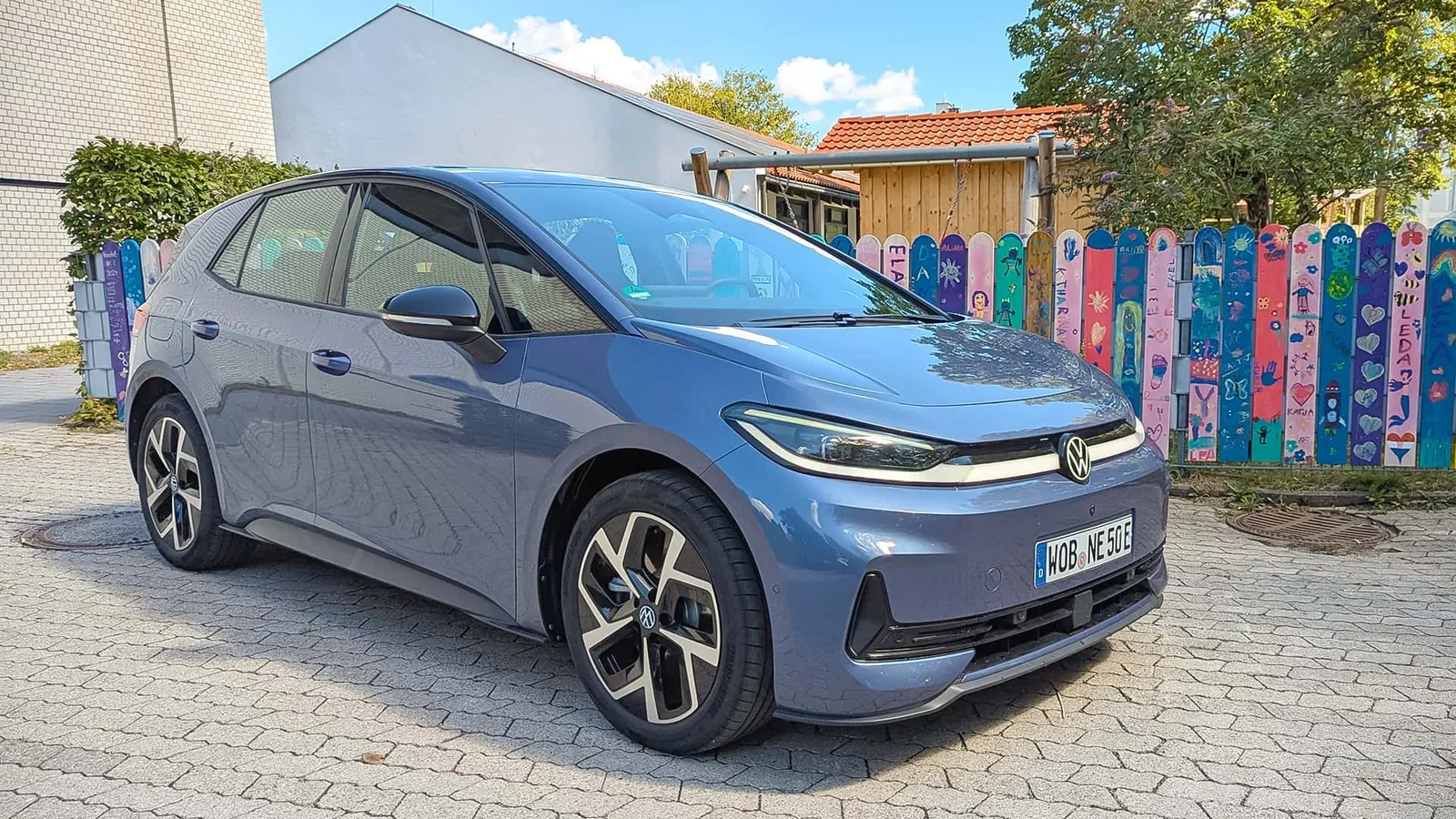
The VW brand is often accused of missing the opportunity in electric mobility. In fact, the alarm went off in Wolfsburg quite early after the diesel scandal. In 2019, the ID.3 was introduced in a Golf-like format, and over half a million units have been sold since then.
Yet many regular customers found the ID.3 unfamiliar. Its design was too unconventional, and its interiors seemed too cheap. Especially considering the prices, which started with a 3 and often ranged around 40,000 euros. When I tested an ID.3 for the first time in 2020, it was a big topic of discussion. I addressed this directly to VW’s then-brand chief: the knob for adjusting the outside mirrors looked like it might break at any moment, there were only two window lift switches, and the plastics lacked any charm, resembling those of Playmobil.
Image gallery: VW ID.3 Neo (2026) in test
This was something one wasn’t used to seeing in a Golf 7. Not to mention the touch surfaces on the steering wheel and the initially unstable software of the ID.3. But VW followed the Beetle principle of continuous improvement.
As early as 2023, VW significantly upgraded the interior of its electric car, with a major model refresh following in 2026. It was such a significant update that it resulted in the ID.3 Neo. However, unlike the ID. Tiguan, people haven’t yet been willing to switch to an ID. Golf version, which won’t arrive until 2028 with the new Golf.
Regardless, the interior quality is what matters most. We were able to test drive the Neo briefly in June, and now we went on a long-distance trip during the holidays. Can the version with a 79-kWh battery impress on such a journey? Is the ID.3 Neo experiencing a second spring in an era of rising fuel prices?
Quick Facts
VW ID.3 Neo Style (79 kWh)
Powertrain
APP350 Electric Motor, 1-speed automatic
0 - 100 km/h
7.1 seconds
Range (WLTP)
574 - 629 km
Consumption (WLTP)
14.3 - 15.8 kWh/100 km (WLTP)
Charging capacity (DC)
up to 183 kW
Base price
47,595 Euros
Body/Design | Interior | Drive/Driving experience | Consumption/Price | Conclusion
Body/Design
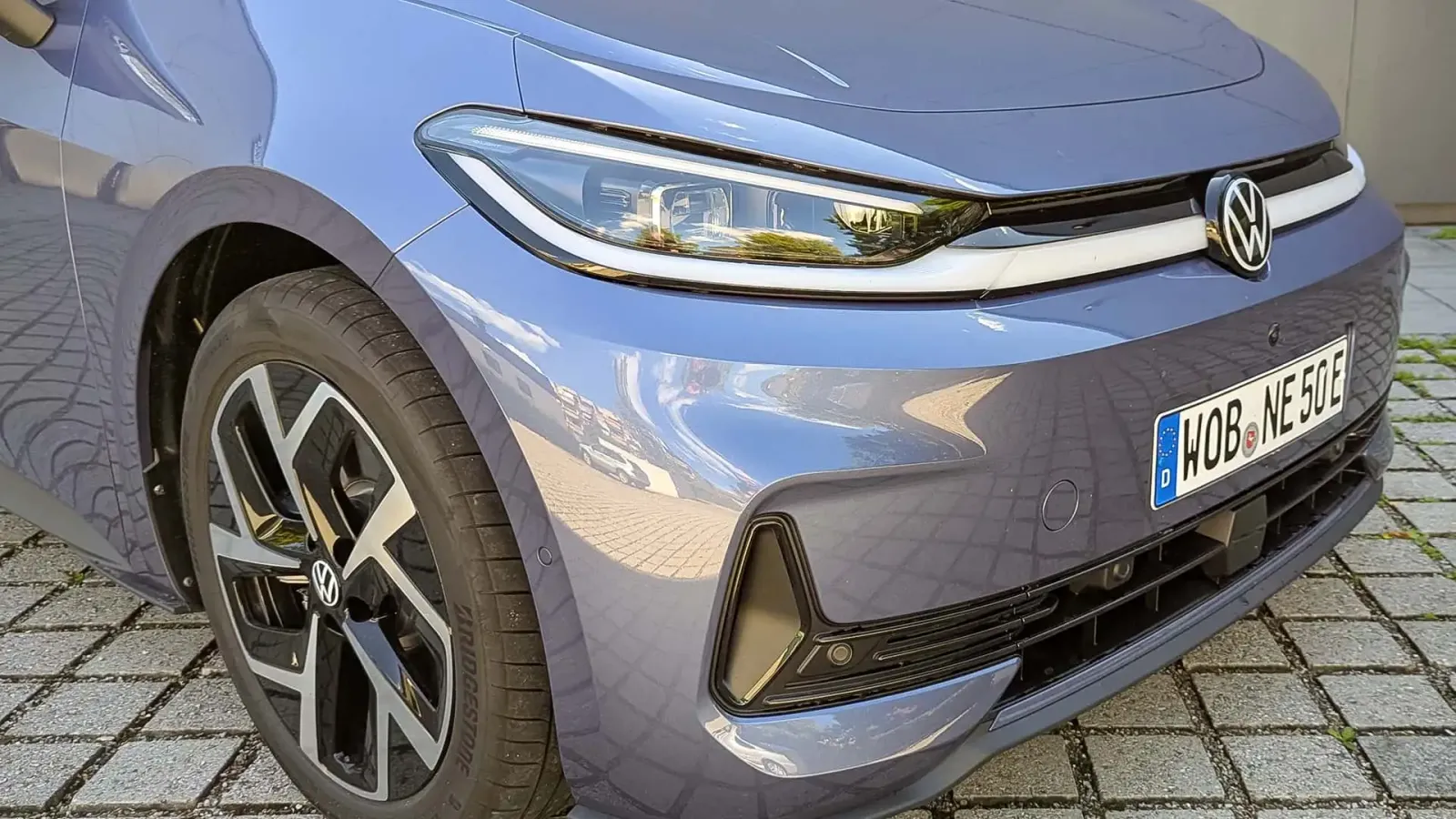
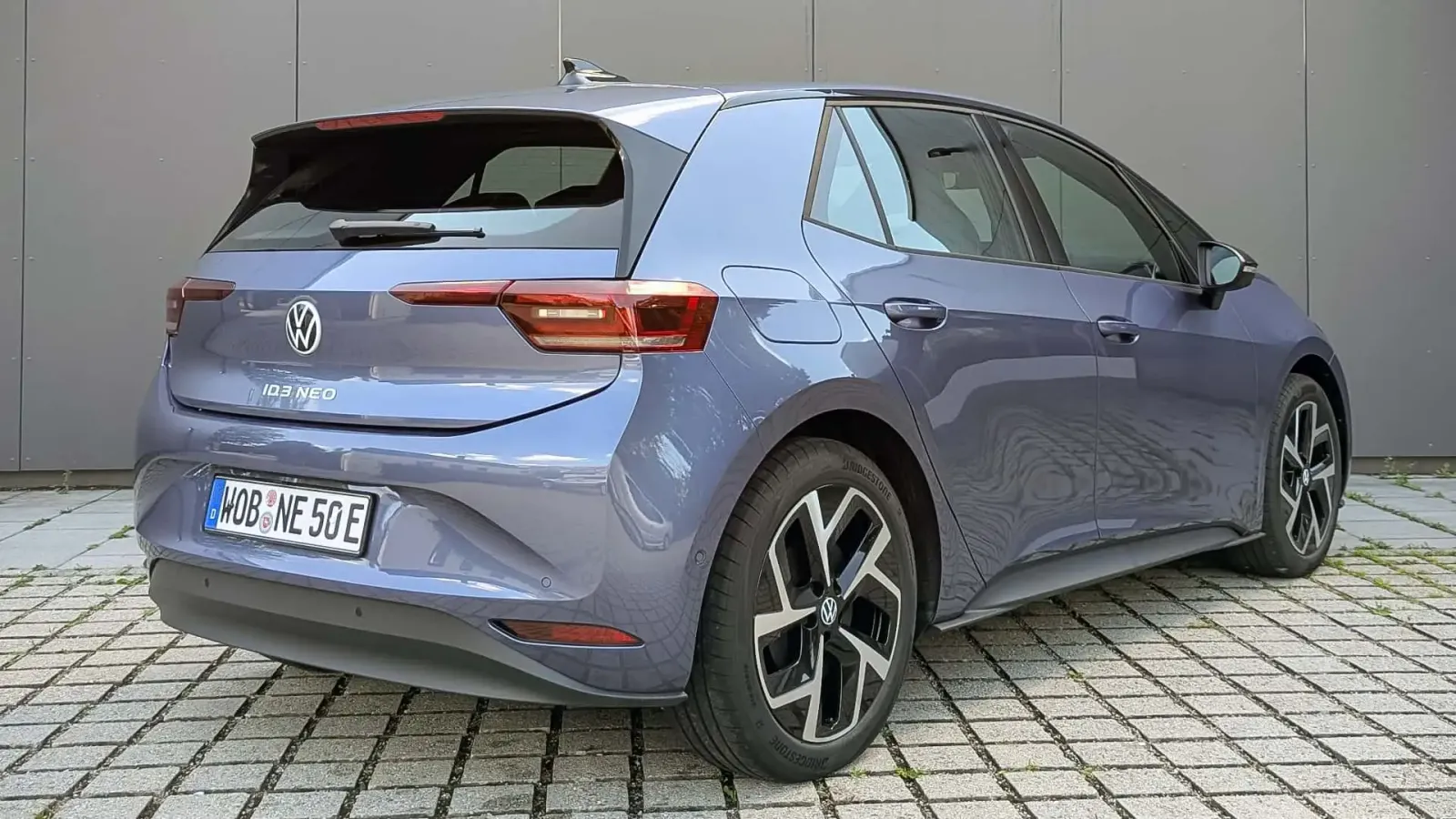
Unmistakably, the front end of the ID.3 Neo now resembles the ID. Polo closely, while the rear remains largely unchanged. VW calls this new design direction “Pure Positive.” The newly developed LED headlights, which are narrower, are a prominent feature in the upper third. They are connected by a wide, glass-covered crossbeam that is fully illuminated in the lower half depending on the trim level.
Images from: InsideEVs.de
Images from: InsideEVs.de
In this case, the VW logo integrated in the center is also illuminated now. The headlights themselves are bordered above by narrow LED strips that function like eyebrows. The middle and lower sections of the front end have also been redesigned. Of course, appearance is always a matter of taste. We find that the ID.3 in its Neo version no longer appears so lifeless. The days of it being called a “Heide-Tesla” are over. In terms of size, the name ID. Golf would be quite fitting, as the dimensions show:
Dimensions
VW ID.3 Neo Style (79 kWh)
Length / Width / Height (in mm)
4,265 / 1,809 / 1,561
Wheelbase
2,769 mm
Turning circle
10.2 m
Trunk space
383 - 1,336 liters
Empty weight
1,966 kg
Towing capacity
-
Roof load / load capacity
- / 75 to 80 kg
Interior
Here too, the new ID. Polo plays a role. The question is: Is an ID.3 Neo still needed? Quick answer: If you prefer a spacious and airy interior, definitely. The extra space is evident at the front, back, and in the trunk. The triangular windows at the front are a good feature. Those who often carry more than one passenger should opt for the Neo. Interestingly, with roughly the same battery size, the prices of the two models aren’t that different. However, the ID. Polo is 30 kW more powerful in this regard.
The most important advantage of the Neo over the previous ID.3 is its numerous real switches, some of which are finished in metal. The cockpit and its controls also resemble those of the ID. Polo closely, but the Neo appears slightly more premium. Finally, it features four buttons for the window lifters. There’s also a decent 10.25-inch display in front of the driver. Alongside this is a 12.9-inch touchscreen, on which the most important functions are displayed in large format for easy tapping.
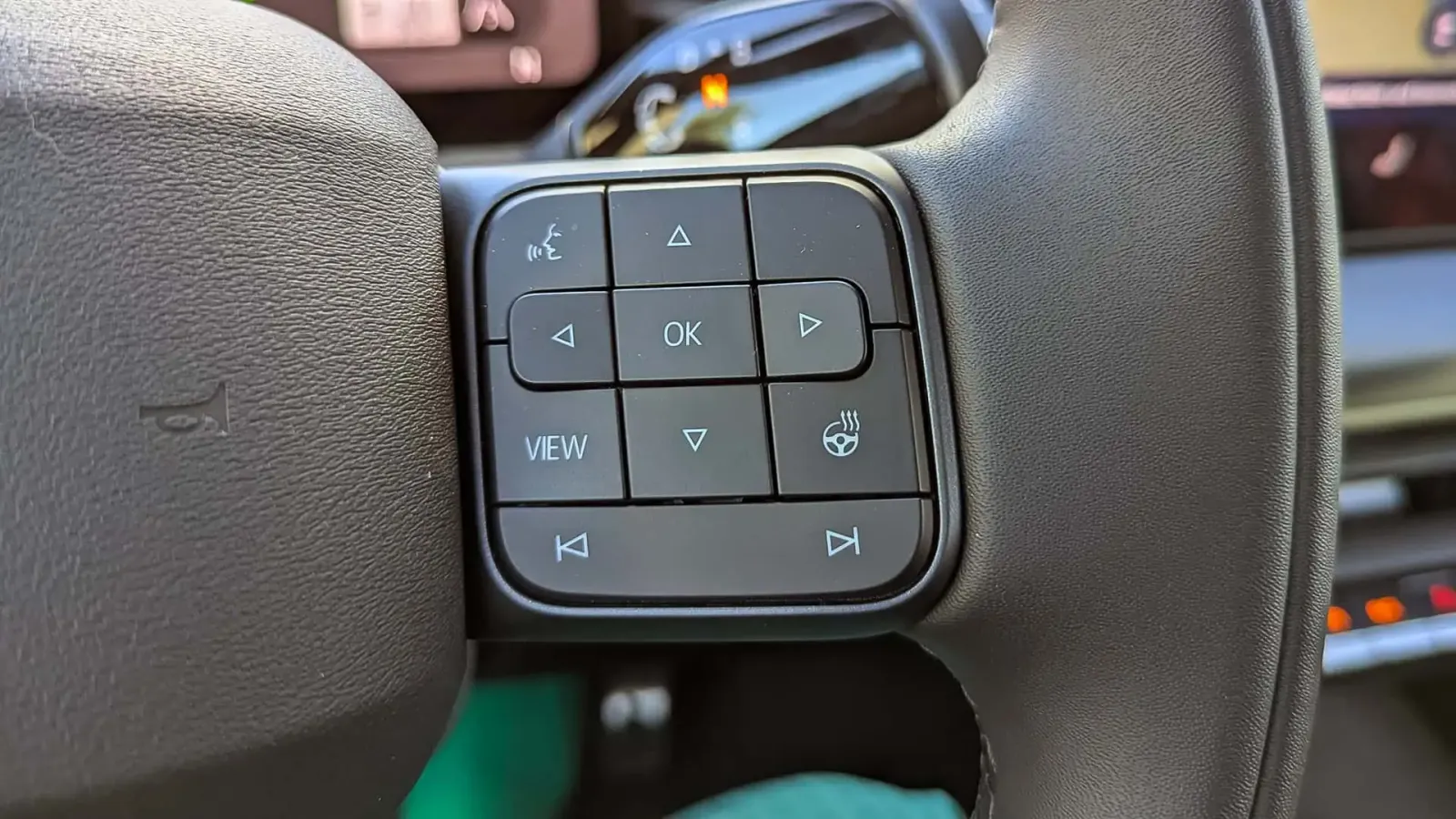
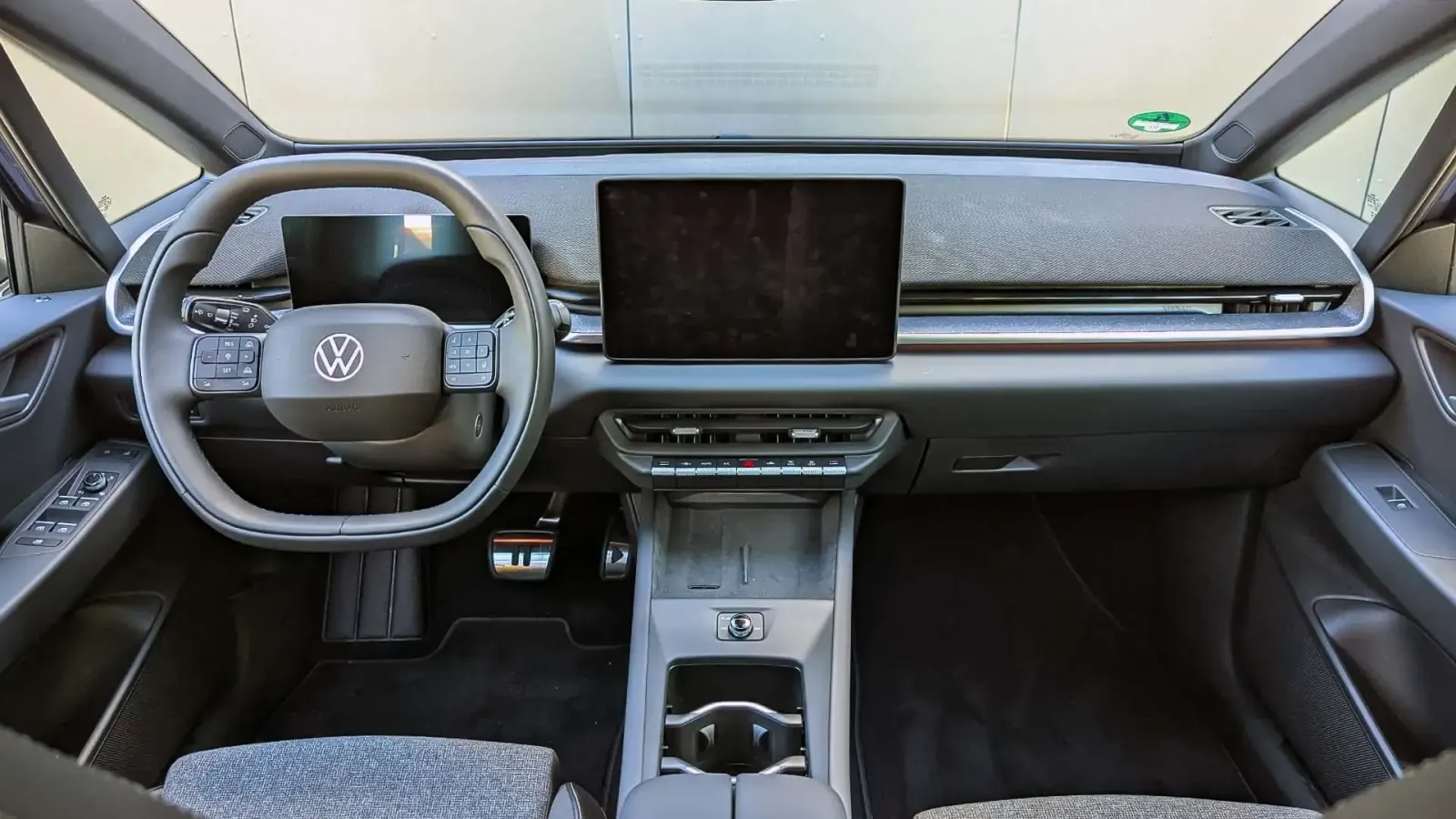
VW ID.3 Neo (2026) in Testing
Images from: InsideEVs.de
Images from: InsideEVs.de
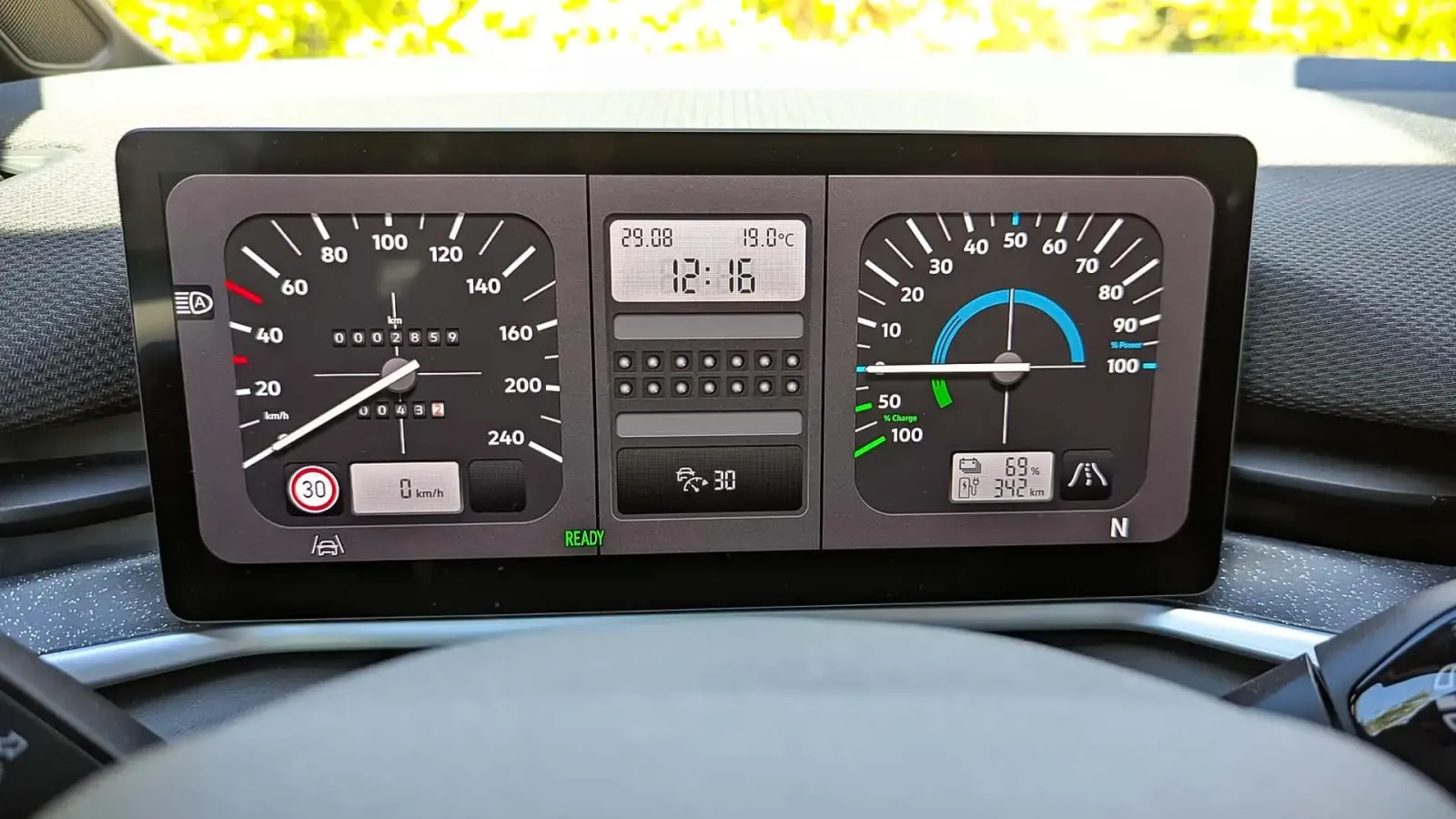
Speaking of design: Older drivers or nostalgia lovers like the author of these lines will appreciate the retro mode. Classic round dials with pointers in the style of the first Golf, and a cassette that spins when music files are played. The only downside is that the needle-style turn signals from the 1970s weren’t included. After spending many days at the Neo’s steering wheel, one also gets tired of the “everything was better in the past” theme. The idea is certainly charming.
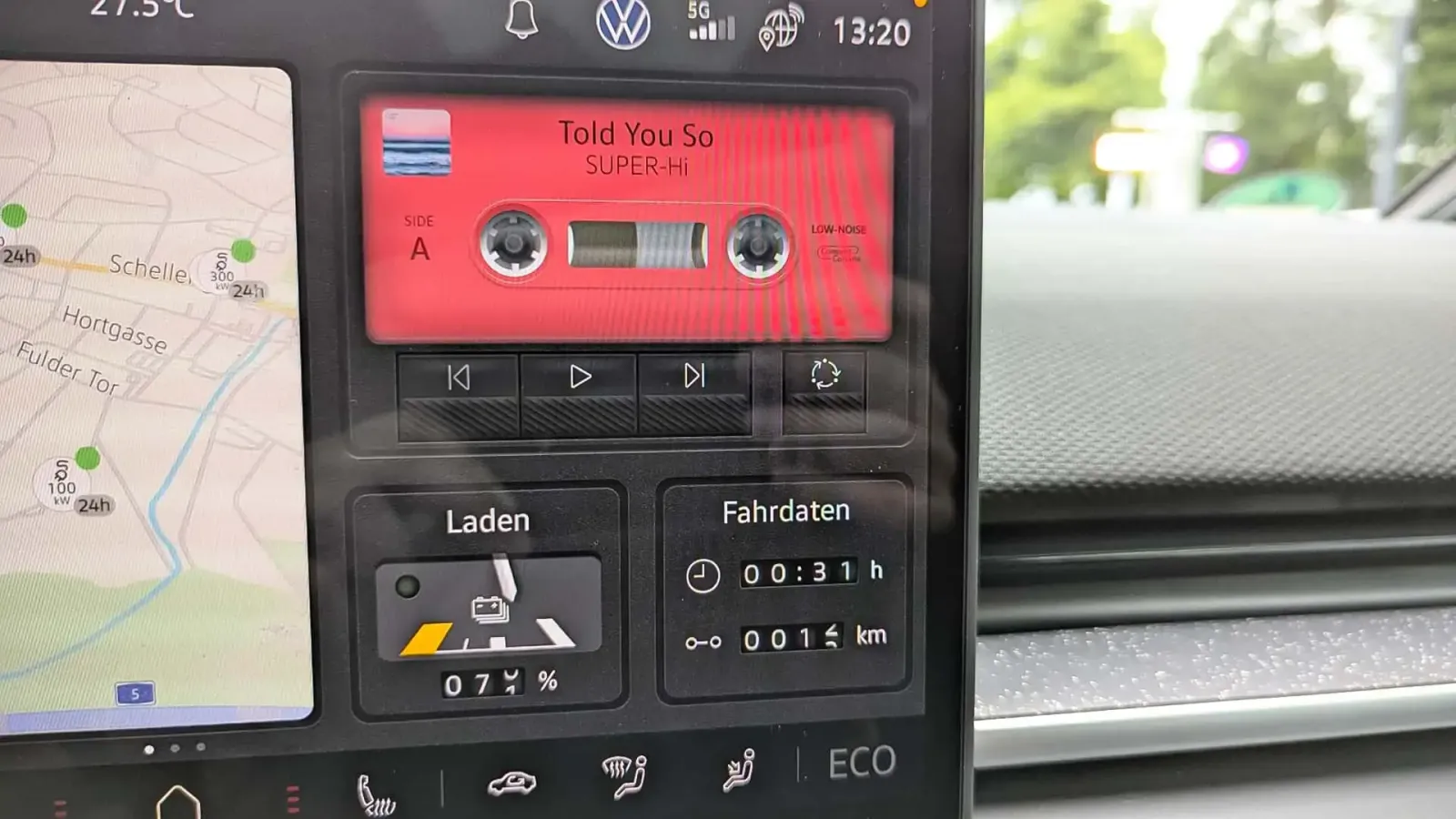
Image from: InsideEVs.de
Overall, it’s easy to get used to. The large storage compartment in the middle is nice, as it can hold two 0.5-liter bottles. There’s also a wireless charging option for smartphones that works even with a phone case. The downside is the factory-installed navigation without real-time traffic updates; I prefer Renault’s solution using Google. So I connect Google Maps to the touchscreen to avoid traffic jams.
The ID.3 Neo now also has a camera that continuously monitors the driver. This has been mandatory since summer 2026, and VW cleverly hides it in the interior mirror. It blends well with the assist systems, as they operate discreetly without constant, intrusive alerts.
Powertrain/Driving Experience
Unlike the front-wheel-drive models ID. Polo and ID. Cross, the ID.3 Neo features the rear-wheel-drive version of the MEB+ platform. The powertrain of the ID.3 Neo is a new development, designated APP350. According to VW, the APP350 is “highly efficient” and replaces the previously used APP310 powertrain in the ID.3 Neo up to a power output of 170 kW. This sounds more spectacular than it actually is—rather unexciting and unremarkable. Just as a VW should be.
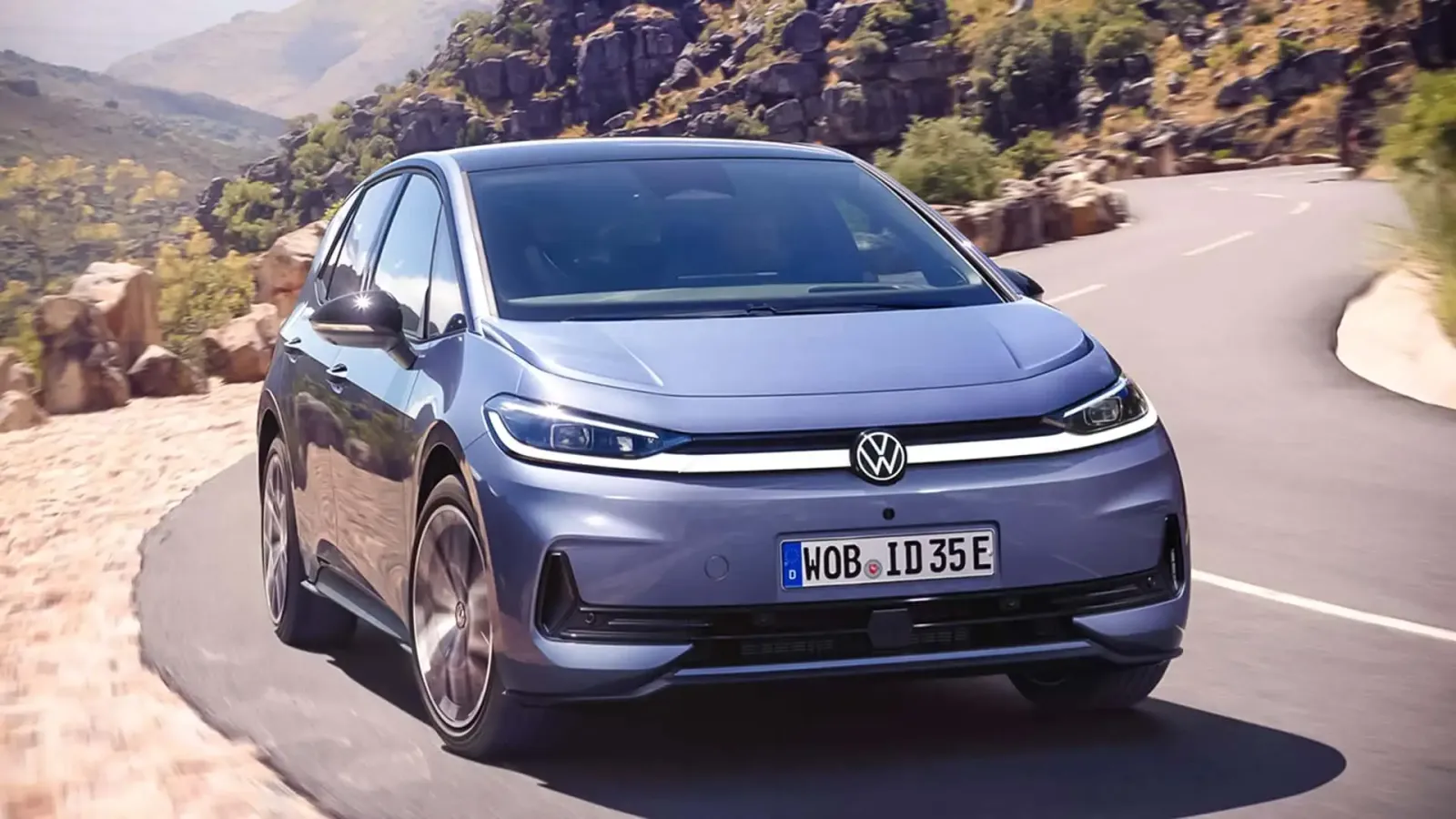
VW ID.3 Neo (2026)
Image by: Volkswagen
In 7.1 seconds, the most powerful Neo model, excluding the GTI version, can reach 100 km/h. It’s not an astonishing figure, but with its 79-kWh NMC battery, the car also weighs just under two tons. This aspect reveals the age of its design. It functions more like a glider than a sports car, with its top speed limited to 160 km/h. For long distances, I settle for a maximum speed of 130 km/h, as speed limits of 120 km/h are often in effect.
Incidentally, the highway assist feature of the adaptive cruise control takes over this automatically; you only need to actively override it. Other cars require driver confirmation instead. More regen braking levels would be desirable, as true one-pedal driving isn’t possible. Interestingly, the ID.3 Neo cannot pull a trailer—officially at least. However, there are aftermarket trailer hitch kits with special certifications that allow towing up to 1,500 kg.
Technical Specifications
VW ID.3 Neo Style (79 kWh)
Engine
APP350
Power / Torque
170 kW (231 HP) / 350 Nm
0-100 km/h / Top Speed
7.1 seconds / 160 km/h
Battery / Gross Capacity
Lithium-ion cells (Li-Ni-Co-Mn) / 84 kWh
Range / Consumption (WLTP)
574 - 629 km / 14.3 - 15.8 kWh (WLTP)
Architecture / Charging Port
400 volts / CCS2
AC / DC Maximum
11 kW / 183 kW
DC charging time from 10% to 80%
29 minutes (manufacturer’s figure)
Consumption/Price
According to the manufacturer: The 79 kWh version can be charged via DC fast charging at up to 183 kW. The maximum WLTP range is between 574 and 629 km. Charging from 10% to 80% via DC takes approximately 26 to 29 minutes, depending on the battery version. VW states a combined consumption of 14.3 to 15.3 kWh per WLTP cycle.
This is achievable at a constant speed of 120 km/h; I achieved between 14.0 and 15.3 kWh at temperatures around 20 degrees. The highest value was 16.6 kWh. This is quite impressive considering the high curb weight of the ID.3 Neo. With a fully charged battery, the car reported a range of between 512 and 526 kilometers.
VW ID.3 Neo (2026) in Test
Image from: InsideEVs.de
What about charging times in real life? It took 26 minutes to go from 29% to 74%, while it took a good hour to reach 100%. What was the peak charging power? 181 kW, after which the charging rate steadily decreased to an average of 83 kW. I saw this pattern at many charging stations during my trip—sometimes the rate dropped more gradually, other times more steeply.
The tested top version of the ID.3 Neo, without extras, costs 47,595 euros. The metallic color “Nordmeerblau” shown in the images costs 860 euros, while the 1,090 euro extra charge for a heat pump remains unclear — it should be included. And of course, it’s worth mentioning that a larger Tesla Model 3 is available for around 37,000 euros. The recently updated Renault Megane E-Tech Electric is also cheaper than the Neo but has a shorter range.
Audi A2 e-tron (2027)
Image by: Audi
Slightly more expensive than its sibling, the ID.3 Neo, is the new Audi A2 e-tron, which aims to excel in terms of efficiency. However, hardly any new electric car is paid for in cash. Advances in technology are happening too quickly and too significantly. That’s why we would recommend leasing, perhaps even with the government’s electric vehicle subsidy. After all, the future ID. Golf will be even more capable, hopefully including 800V charging.
More from VW:
Conclusion
Back to the future: VW has successfully updated the ID.3 in the right areas. Finally, the handling and construction are as they should have been from the start. Even though the new ID. Polo is currently in the spotlight, opting for the ID.3 Neo can still be worthwhile. An electric car built in Germany as a contrast to the inflated, ever-identical mass-produced vehicles from China. Of course, it comes at a price.
So, what do you prefer? Protecting German jobs along with over 600 VW dealerships in Germany? Or a longer drive to a Chinese dealer’s shop because the leasing rate was so low?
Good space availability
Comfortable
Relatively fuel-efficient
Poor factory-installed navigation
Average charging speed
Expensive, but no heat pump as standard