
VW ID.3, ID.4, ID.7, ID. Buzz, and Cupra Born: Battery Recall
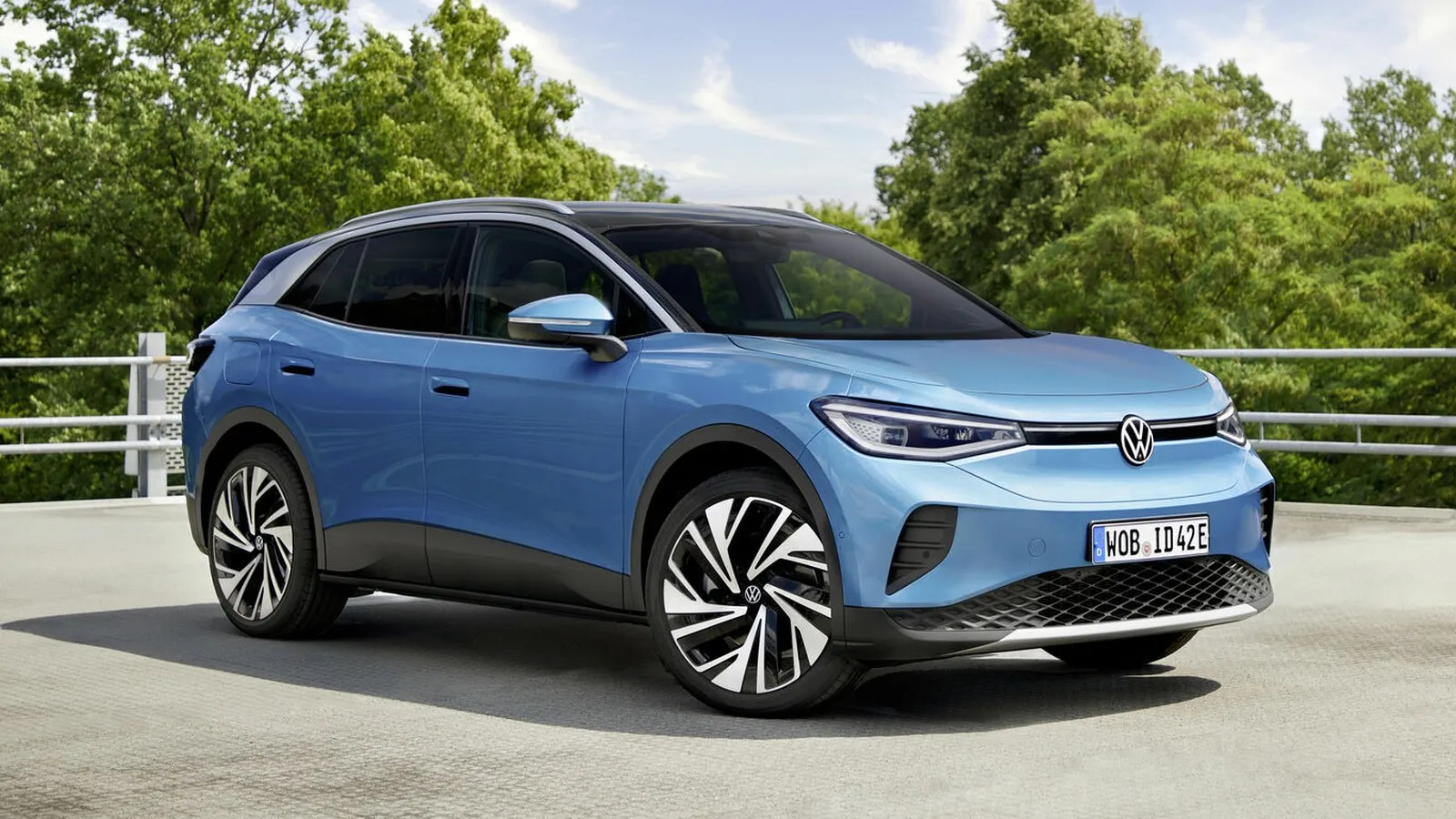
Volkswagen and Cupra are recalling 72,668 electric vehicles worldwide due to potentially defective high-voltage batteries, 9,881 of which are in Germany. The models affected include the ID.3, ID.4, ID.7, ID. Buzz, and Cupra Born; owners should temporarily charge their vehicles to no more than 80 percent.
Advertisement
This is not Volkswagen’s first battery recall this year. In March 2026, the German Federal Motor Transport Authority (KBA) issued a recall for the ID.3, ID.4, ID.5, and ID. Buzz models, affecting 74,579 vehicles worldwide, including 22,182 in Germany. Additionally, there was a recall for the Cupra Born involving 19,450 vehicles, of which 5,971 were in Germany. At that time, the issue was non-compliant modules in the high-voltage battery that could reduce range and cause a yellow warning light to appear. The KBA also mentioned a fire risk back then. On October 19, 2026, three more actions were added to the KBA’s recall database, this time with the defect description that the high-voltage batteries did not meet specifications.
According to the KBA, these batteries can overheat and cause fires. Volkswagen states that internal quality checks have revealed that certain high-voltage battery cells in specific vehicles do not meet quality standards. The company attributes this to manufacturing defects on the part of suppliers, without naming any specific companies. In rare cases, this can lead to increased thermal stress on the batteries, and in extreme situations, to fires, according to Volkswagen.
These vehicles are affected
In total, the three recalls cover 72,668 vehicles worldwide, of which 9,881 are in Germany. The KBA’s data is distributed as follows:
VW ID.3, ID.4, ID.7, and ID. Buzz, manufactured from July 13, 2022, to June 6, 2025: 62,927 vehicles worldwide, 7,112 in Germany (KBA reference number 17137R, recall code 93MF)
VW ID.4 and ID.7, produced from September 18, 2023, to June 27, 2025: 5,050 vehicles worldwide, 1,538 in Germany (17101R, recall code 93MV)
Cupra Born, produced from September 2022 to May 2024: 4,691 vehicles worldwide, 1,231 in Germany (17103R, recall code 93W4)
Not every vehicle from these periods is affected. According to the KBA, it applies to vehicles with high-voltage batteries from the relevant batch. Affected owners will be notified by Volkswagen via letter. Those who do not receive such a letter are not affected, according to a VW spokesperson as of October 15. To determine whether one’s own car is involved, one can check in advance by providing the vehicle identification number at the manufacturer’s service hotline or at an authorized workshop. The KBA provides VW’s number as 0800 8655792436 and Cupra’s number as 06150 1079991.
The KBA’s recall database shows no known incidents involving property or personal injury related to the two VW recalls, while information is missing for the Cupra Born. On its British recall page for the same recalls, 93MF and 93MV, Volkswagen states that there were individual cases of property damage, but no confirmed cases of personal injury.
Ad
Charge only up to 80 percent for now
According to the KBA, the fix will be implemented in two steps. First, all affected vehicle owners will receive a recall letter containing stickers that must be placed on the charging port and in the vehicle display as a warning. There is also an instruction not to charge the vehicle to more than 80 percent for safety reasons. Volkswagen states that the system limits the charging capacity where technically possible. The company says it will take some vehicles to service centers to have their high-voltage batteries inspected. Only once a battery is deemed to be in good condition can the restriction be lifted. In other cases, a purely software solution may suffice, according to Volkswagen’s UK website.
In the second step, the vehicles receive an updated software once it becomes available. This software is designed to detect and indicate issues with the battery modules at an early stage in the future. If necessary, individual battery modules or the entire high-voltage battery will then be replaced. Neither the KBA nor Volkswagen has specified a date for the software update.
On its British website, Volkswagen explains that the limit is in place because temperatures can rise too high when the battery is charged to over 80 percent. For owners there, the manufacturer also explains how to adjust the charging limit manually: through the “Battery Care Mode” in the app or the infotainment system. If the charging limit cannot be raised above 80 percent, Volkswagen states that the restriction is already active.
The vehicle can continue to be used, and fast charging via direct current is still possible. If a yellow warning light comes on, owners should contact a dealer immediately. If the vehicle needs to go to a workshop, the battery inspection takes about an hour according to the British website and can only be scheduled. All services are free for owners according to Volkswagen. Once the work is completed, the charging capacity and thus the range should return to their original values.
Audi Q4 e-tron also affected
On October 28, 2026, the KBA also issued a recall for the Audi Q4 e-tron (17222R). The defect description is identical: high-voltage batteries that do not meet specifications can overheat and cause a fire. Vehicles affected are those produced between November 30, 2023, and June 26, 2025. Worldwide, the KBA identifies 12,734 vehicles as affected, with just one vehicle in Germany. Here as well, the KBA advises against charging above 80 percent, and the vehicle must first be inspected at an Audi workshop. The KBA provides the hotline number 0800 28347378423.
Have you, as owners of an ID model or a Cupra Born, received any correspondence, and how do you manage the 80 percent charging limit in your daily use?
Advertisement