
VW ID. Polo 2026: The 85-kW version is now available in the Life trim as well
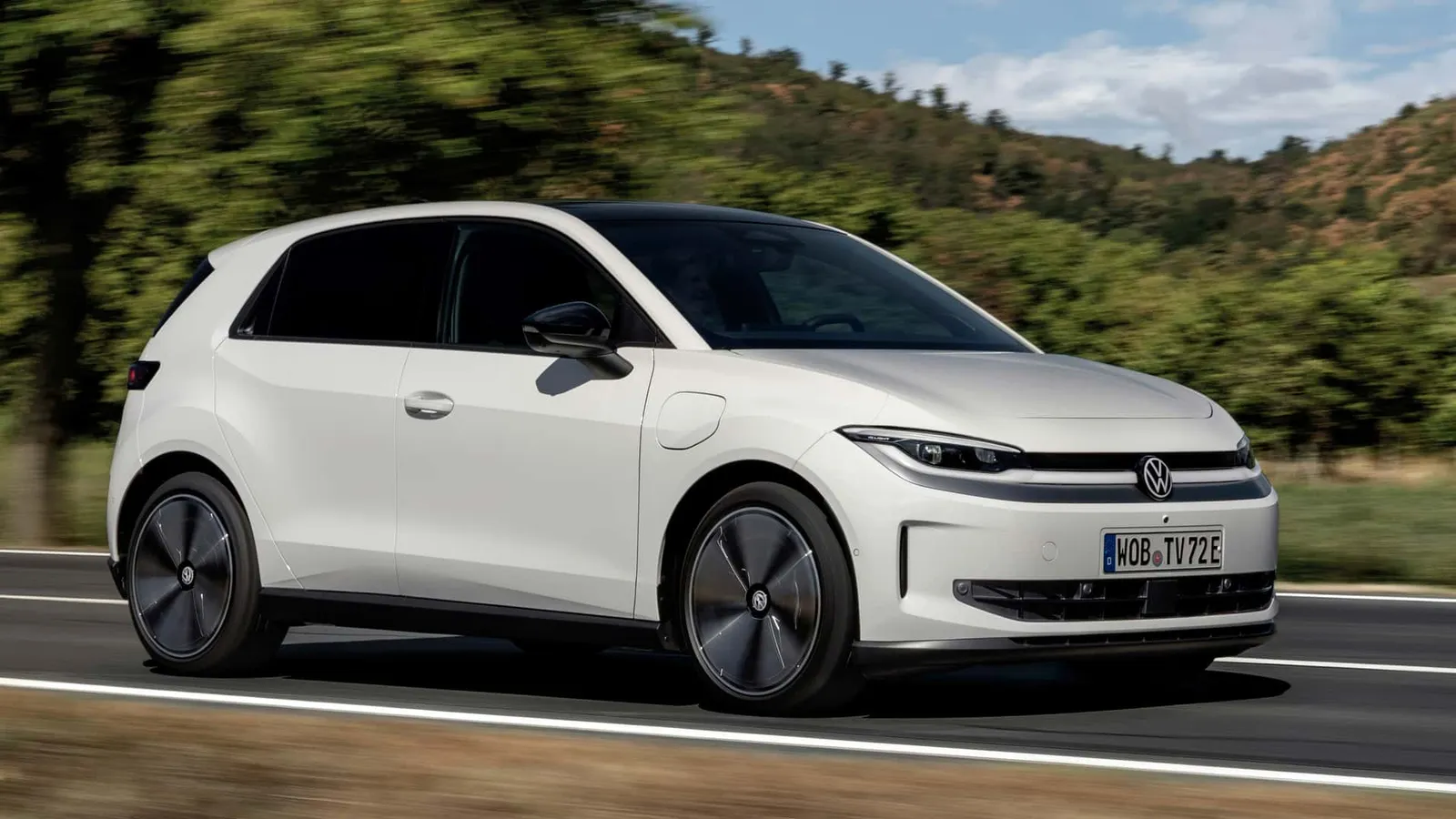
A new version of the VW ID. Polo: The base engine option with 85 kW and a smaller battery was previously available only in the basic Trend trim. Now it can also be configured as the Life trim. This makes the car cost 27,995 euros. After deducting the 1,500 euro “ID. Purchase Bonus,” the price comes to 26,495 euros. This is 1,500 euros more than the entry-level model, which does not come with any discount.
The first units of the VW ID. Polo were registered as early as May 2026, but the numbers were so low that they were likely test and demonstration vehicles. Mass production began in Martorell, Spain, near Barcelona, in June. By the end of September, just under 1,500 new registrations were recorded in Germany.
At the launch in May 2026, only the 155-kW version with the large 52-kWh battery was available for configuration in the Life and Style trims. Now all versions are orderable, including the ID. Polo GTI. The technical foundation for the ID. Polo is the upgraded MEB+ electric platform with front-wheel drive, which is also used in the ID. Cross, Skoda Epiq, and Cupra Raval. We have compiled all information about this series.
Exterior | Interior | Powertrains/Batteries | Prices/Trim Levels
Image gallery: VW ID. Polo Trend (2026)
Exterior
The VW ID. Polo showcases the new “Pure Positive” design for the first time. It appears quite minimalist and traditional compared to the original ID.3. The front lights and the chrome line beneath them resemble a friendly smile. There is also a light strip and an illuminated VW logo in the center. Further down, there is a wide air intake and side airflow openings, likely serving as air curtains. At the rear, a continuous black strip dominates, with rectangular elements on either side. The top version features continuous red light lines between them.

The Trend and Life versions have a black strip at the rear with rectangular elements on either side.
Images by: Volkswagen

In the top Style version, the rectangular elements are connected by a red light strip
Images by: Volkswagen
Compared to the ID.3 Neo, the ID. Polo is over 20 cm shorter, with a wheelbase that is also about 17 cm smaller. Additionally, this compact car is three centimeters lower than the subcompact model.
Length
Width
Height
Wheelbase
Trunk Space
VW ID. Polo
4,053 mm
1,816 mm
1,530 mm
2,592 mm
441–1,240 liters
VW ID.3 Neo
4,265 mm
1,809 mm
1,561 mm
2,769 mm
383–1,336 liters
The trunk space with the rear seats upright is even larger in the ID. Polo. This is likely due to the particularly deep compartment under the load floor. Neither model features a frunk.

The ID. Polo is a front-wheel-drive vehicle with only a multi-link rear axle. As a result, it has a huge underfloor compartment.
Image by: Volkswagen
In May, only five colors (blue, black, dark gray, silver, and pythongelb metallic) could be ordered. Since then, white and red have been added. The yellowish shade remains the only paint option available at no extra cost. 17-inch wheels are standard, while 18- and 19-inch wheels are available as options.
Interior
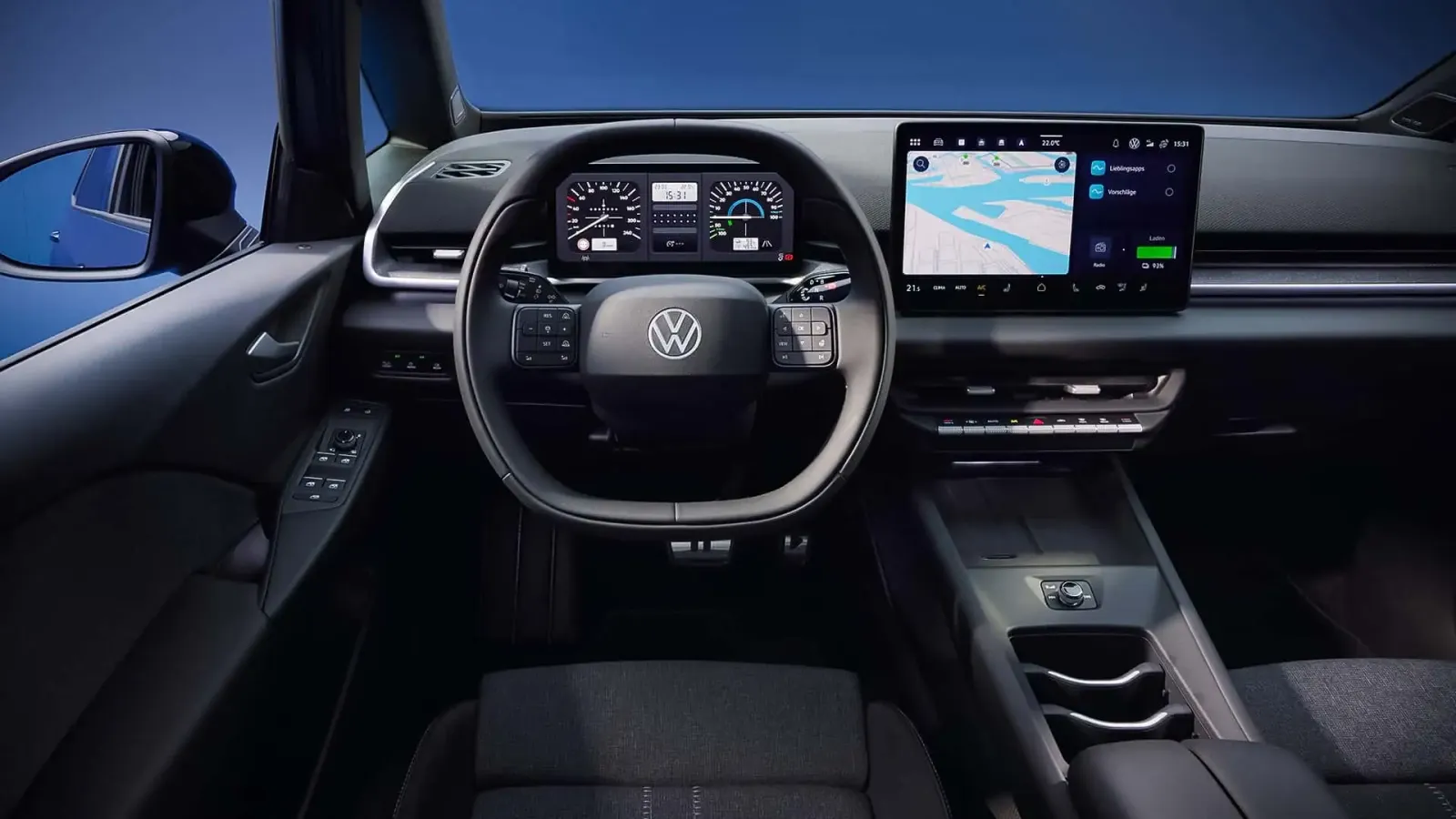
Like the VW ID.3 Neo, the ID. Polo also features a 10-inch instrument cluster and a 12.9-inch touchscreen. The steering wheel with physical buttons on the left and right is identical, and the interior design is at least very similar.

VW ID. Polo
Images by: Volkswagen
VW ID.3 Neo
Images by: Volkswagen
The exterior mirrors are adjusted using the joystick button familiar from VW, and there are four buttons for the four window lifters. Physical buttons for climate control and more are also located beneath the touchscreen. Both models feature a volume knob on the center console. The P, N, R, D, and B modes are activated via a lever on the right side of the steering wheel. A rocker switch for adjusting regenerative braking is only available on the VW ID. Polo GTI. In B mode, one-pedal driving is enabled, meaning the car comes to a stop on its own by releasing the accelerator pedal.
Powertrains and Batteries
VW has announced a total of four powertrains for the ID. Polo, ranging from the 85-kW base model to the 166 kW powerful ID. Polo GTI. All versions will feature the new electric motor designated APP290, with the number referring to a maximum torque of 290 Nm. As a result, the torque remains identical across all versions. To the best of our knowledge, a silicon carbide inverter is used; however, this has not been officially confirmed.

Image by: Volkswagen
The two weaker versions will come equipped with an LFP battery, while the more powerful ones will have a 52 kWh net capacity NMC battery. Here are the key specifications:
VW ID. Polo
85 kW
VW ID. Polo
99 kW
VW ID. Polo
155 kW
VW ID. Polo
GTI
Powertrain
FWD 85 kW,
290 Nm
FWD 99 kW,
290 Nm
FWD 155 kW,
290 Nm
FWD 166 kW,
290 Nm
0–100 km/h / Top Speed
10.6 seconds /
160 km/h
9.5 seconds /
160 km/h
7.1 seconds /
160 km/h
6.8 seconds /
175 km/h
WLTP Fuel Consumption
13.3–14.0
kWh/100 km
13.6–14.9
kWh/100 km
13.3–14.7
kWh/100 km
14.2–15.7
kWh/100 km
Highway Fuel Consumption
17.9–20.1
kWh/100 km
18.2–19.4
kWh/100 km
17.5–19.0
kWh/100 km
18.3–19.9
kWh/100 km
Net Battery Capacity
37 kWh (LFP)
37 kWh (LFP)
52 kWh (NMC)
52 kWh (NMC)
WLTP Range
301–334 km
308–331 km
416–454 km
390–431 km
The charging capacity is 11 kW on AC by default, and up to 88 or 105 kW on DC depending on the battery. The DC charging time is one minute longer with the larger battery. However, due to its higher net capacity, this version charges more efficiently, as shown by our calculated charging speed of 52 kWh × 0.7 / 24 minutes = 1.5 kWh per minute. We also calculated the average charging power at 10 to 80% levels; it is obtained by multiplying the unrounded value by 60 minutes per hour:
VW ID. Polo
85 kW
VW ID. Polo
99 kW
VW ID. Polo
155 kW
VW ID. Polo
GTI
AC/DC Charging Power
up to 11 / 88 kW
up to 11 / 88 kW
up to 11 / 105 kW
up to 11 / 105 kW
DC Charging Time
10–80%
23 minutes
23 minutes
24 minutes
24 minutes
DC charging speed.
1.1 kWh/min
1.1 kWh/min
1.5 kWh/min
1.5 kWh/min
Average charging power
68 kW
68 kW
91 kW
91 kW
Range extension charging
up to 10.2 km/min
up to 10.0 km/min
up to 13.2 km/min
up to 12.6 km/min
Range extension charging is likely more relevant for long distances. For the 155 kW version, this calculates to up to 454 km × 0.7 / 24 min = 13.2 km/min. This means that for each minute of charging, one can extend the range by about 13 km. This isn’t a record-breaking figure, but it’s quite good for a compact car. For comparison, the Renault 5 with a 52-kWh battery only achieves 8.8 km/min.
Prices and specifications
The base Trend version comes with 17-inch steel wheels, LED lighting, high-beam assist, electrically adjustable and heated exterior mirrors, rear parking sensors, and a single-zone automatic climate control. A winter package priced at 545 euros adds a two-zone automatic climate control system as well as seat and steering wheel heating. These features, along with the adaptive cruise control (ACC), can also be enabled later via software updates.
The Life version includes an additional rain sensor, electrically folding exterior mirrors with memory function, Apple CarPlay and Android Auto, wireless phone charging, adaptive cruise control, blind spot warning, a rearview camera, front parking sensors, and a trunk floor mat. The missing navigation system is available as the "Innovision Pro" package for an additional 750 euros.
The Style version adds 17-inch aluminum wheels, matrix LED headlights with a light sensor, wiper blinkers, illuminated door handles, seat and steering wheel heating, a two-zone automatic climate control, aluminum pedals, sportier seats, and keyless entry — the Life version also features keyless entry but apparently through buttons on the door handles.
VW ID. Polo
85 kW
VW ID. Polo
99 kW
VW ID. Polo
155 kW
Trend
(no discount)
24,995 euros
—
—
Life
(1,500 € discount)
27,995 euros
discounted to 26,495 euros
29,195 euros
discounted to 27,695 euros
33,795 euros
discounted to 32,295 euros
Style
(2,500 € discount)
—
32,395 euros
discounted to 29,895 euros
36,995 euros
discounted to 34,495 euros
From the listed prices, one can still deduct an “ID. Purchase Bonus” until the end of 2026, but only for the Style and Life trims, not for the Trend trim. This discount has been reduced by 500 euros each since July 2026, and it is now 1,500 euros or 2,500 euros respectively.
Competitors of the VW ID. Polo include the Renault 5 with options of 90 and 110 kW, and the Cupra Raval, which is not yet available with an 85-kW engine. The VW ID.3 Neo, which is one class higher than the ID. Polo, starts at 33,995 euros (30,995 euros after discount). This version has 125 kW and a range of up to 417 km.
Everything about the ID. Cross and electric compact cars:
In summary
Including the GTI, the VW ID. Polo is now available in four engine-battery combinations. The variants differ in power but not in torque. The electric Polo’s range with a 52-kWh battery is around 450 km, which is quite good for an electric compact car. Those who want a longer range need to purchase a compact model such as the Kia EV3 or the Skoda Elroq.
Last updated on October 31, 2026: New 85 kW Life version added, revised discounts incorporated, fuel consumption and range updated.