
VW is developing the serial version of ID. Every1 primarily virtually
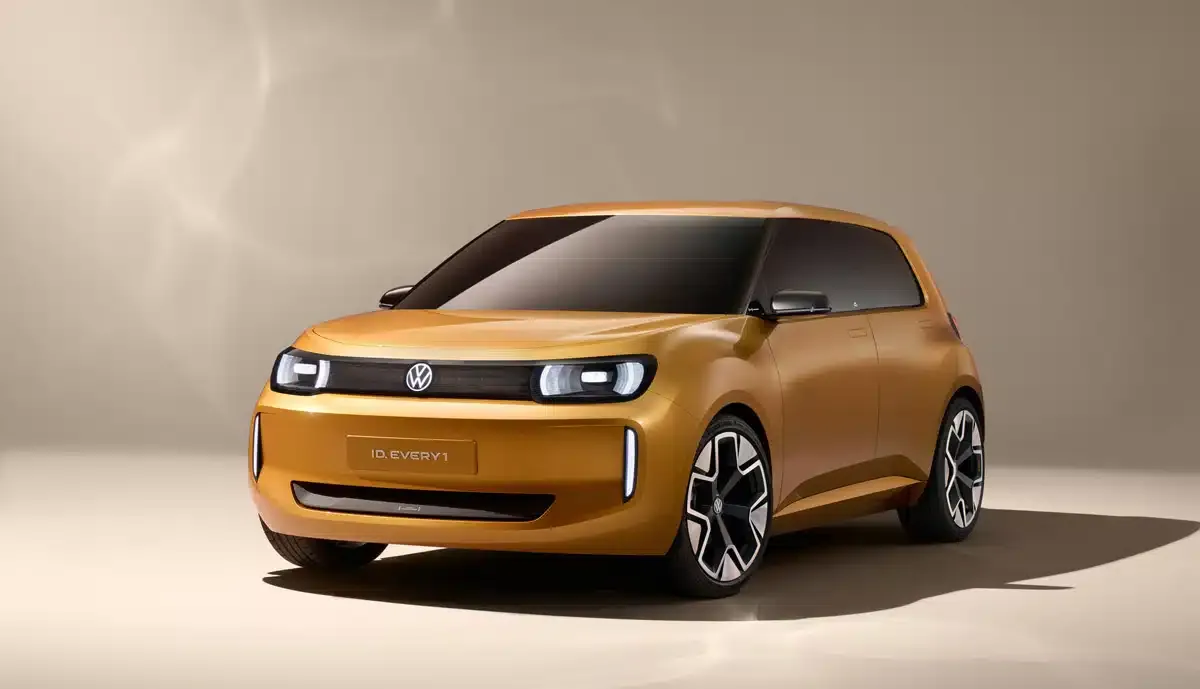
Image: VW
Volkswagen is changing the development process for the upcoming production version of the electric microcar ID. Every1. For the first time, the manufacturer relies almost exclusively on simulations and skips building a full-scale prototype before starting pre-production, according to the website Elektroauto-News.Net.
The planned development time is thus reduced from 36 to 24 months. This reduction comes despite technical advancements such as a new platform, new powertrain, new battery, and the introduction of a zonal electronics architecture developed in collaboration with the U.S. electric vehicle manufacturer Rivian.
The time savings, according to chief engineer Tomas Kamla, stem from continuous simulation and an optimized work organization. By combining aerodynamicists, designers, and engineers into a single team, the design cycles were reduced from four to two.
Although there is no complete prototype, individual components such as the battery, drive system, and thermal management have already been tested physically in modified versions of the electric VW compact car ID.3. The manufacturing process was also designed virtually. Over 100 new development methods were used in the simulations, including a technique for evaluating reflections on the windshield.
The use of artificial intelligence (AI) is currently primarily applied to text and image processing, such as for automatically generating test cases from requirement documents. The transition from design to construction is still carried out by humans. According to Kamla, development will not become entirely virtual, as customers expect a tangible feel and quality in physical products.
Currently, simulations are limited to crash tests required by regulations and the digitization of winter testing. However, engineer Kamla aims to develop AI tools that can create initial designs along with calculations using historical data in the future.
Also interesting
About the author
Thomas Langenbucher is an expert in electromobility with professional experience in the automotive and financial industries. Since 2011, he has been covering electric vehicles, sustainable technologies, and mobility solutions for ecomento.de. Learn more.
Reader interactions