
VW could bring Chinese tech to Europe amid cost-saving pressures
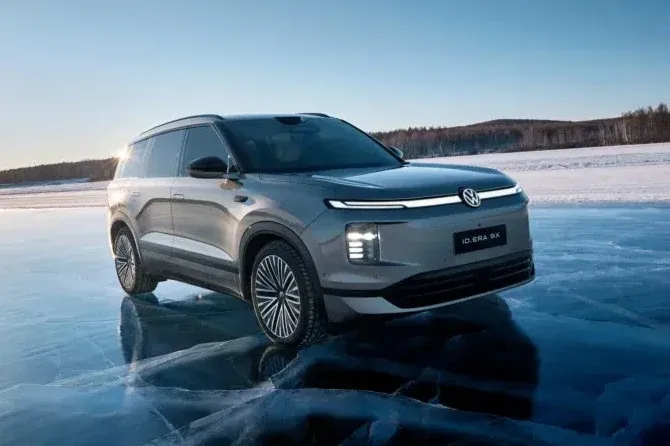
Volkswagen Group could save up to five billion euros if it adopted the China-developed CEA electronic architecture in its European volume models. However, the plan is to form a software alliance with Rivian for models outside China. This has sparked debate on the Board of Management.
Image: VW
The Volkswagen Core brand group, which includes VW, Škoda and Cupra, must improve its financial results by around €12 billion euros by 2030 and reduce planned investments by nearly €15 billion. Against this backdrop, brand chief Thomas Schäfer and China board member Ralf Brandstätter have proposed using the CEA electronic architecture – developed for the Chinese market – in future European vehicles such as the ID.Golf, ID.Passat or Škoda Enyaq. According to _Manager Magazin_, insiders say that the focus is on high-volume segments on the new SSP platform, ranging from models the size of an ID. Polo up to those the size of a Tiguan. Estimates suggest this covers three-quarters of all future electric vehicles in the group.
Chinese tech cheaper than Rivian architecture
The CEA architecture was developed at the Volkswagen China Technology Company (VCTC) in Hefei in collaboration with Xpeng. With VCTC CEO Thomas Ulbrich – who implemented the partnership with Xpeng and made the CEA system production-ready for the VW Group – Schäfer has another advocate. The system has already been successfully deployed in China in models like the ID. Aura and ID. Era, while European software platforms at Audi and Porsche have repeatedly caused delays.
The architecture planned for future use from Rivian is also significantly more expensive than the solution from China. According to _Manager Magazin_, one developer hour at the Californian Rivian joint venture RVT costs around €174. In China, it is around €60. For comparison, the German hourly rate is €120. Advocates for switching to Chinese development argue that an electric vehicle like the upcoming new Tiguan would be around €8,000 more expensive with Rivian software. Switching volume models to the CEA architecture could save between four and five billion euros.
The competition is already stepping up the pace. Opel CEO Florian Hüttl has announced a fully electric C-segment SUV for 2028, based on the electric architecture of the Leapmotor B10. Within the VW Group, there are concerns that Stellantis, after the first Opel project, will gradually transition its entire range of volume brands to the more cost-effective Leapmotor technology.
A switch could lead to high costs for Rivian
There is resistance to Schäfer’s plan within the board. Audi CEO Gernot Döllner helped build the Rivian alliance and relies on US software outside China. If the volume brands switch to Chinese tech, the Rivian project would lose significant production volumes. This threatens to drive up fixed costs per vehicle for the remaining brands like Audi or Porsche. According to Schäfer’s strategists, the core brand group would still save a net three billion euros even if it continues to co-finance the Rivian joint venture.
Another obstacle is adapting the Chinese software to European cybersecurity and approval standards, as this requires additional development work and incurs costs. Furthermore, Chinese software is unlikely to gain traction in the US for political reasons alone. Additionally, if development activities are systematically relocated to Hefei, jobs in European software development could come under even greater pressure.
The final decision rests with the Volkswagen AG Executive Board, led by Group CEO Oliver Blume. The deciding factor is expected to be CFO Arno Antlitz, whose opinion carries particular weight given the immense cost-cutting requirements.