
VW ‘centralising’ ADAS development under Audi’s leadership
Volkswagen is apparently establishing a unit called 'OneTeam' to accelerate the development of driver assistance systems (ADAS) and autonomous driving. Cariad manager Manuel Birke will reportedly take over the leadership and will report to Audi development board member Rouven Mohr in the future.
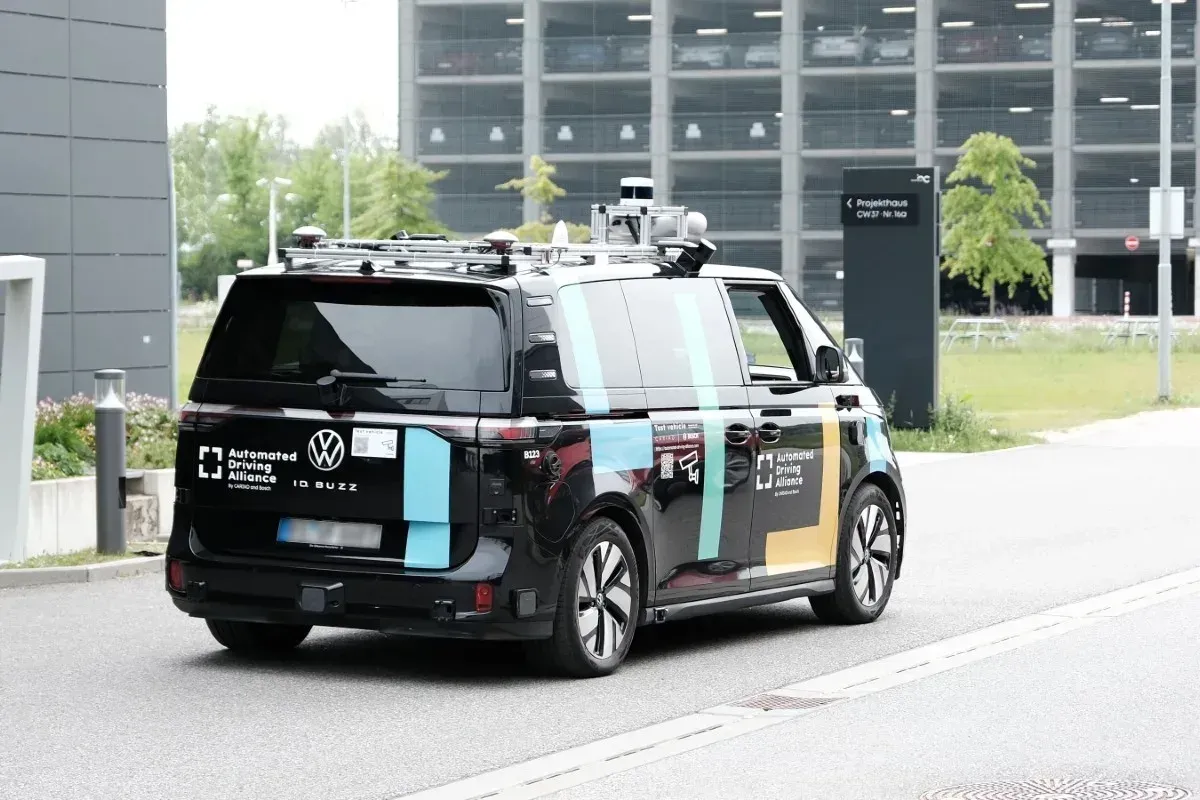
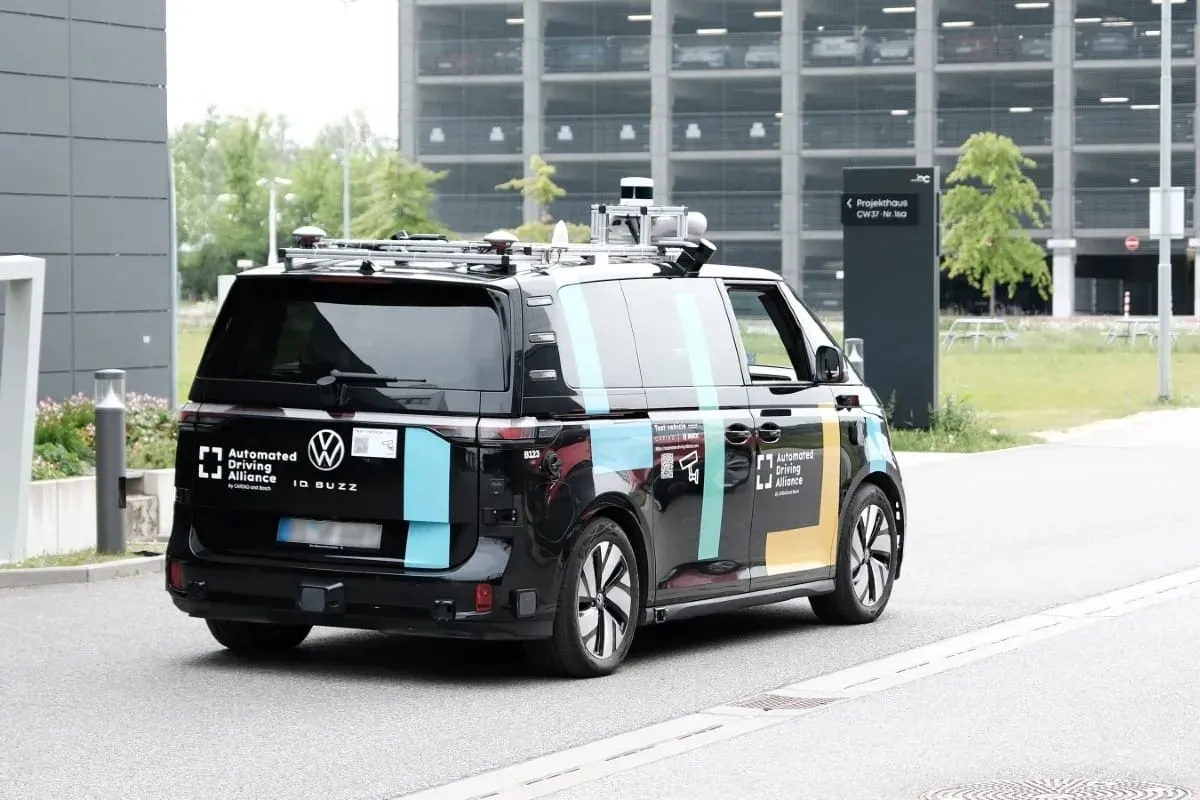
Test vehicle from Cariad and former partner Bosch (archive)
Image: CARIAD
Volkswagen is reportedly restructuring the development of driver assistance systems and automated driving functions in Europe. In the future, ADAS specialists from the software subsidiary Cariad and the Group brands will collaborate more closely within a new organisational unit called ‘OneTeam’. The unit is set to begin operations in November and will be led by Manuel Birke, the current head of driver assistance systems technology at Cariad. This is according to reports from _dpa_ news agency as well as _Automobilwoche_, which cite an internal message to employees on Volkswagen’s intranet.
The most notable aspect of this restructuring is the new hierarchy: in his role, Birke will report to Audi’s development board member Rouven Mohr. This means Audi will take the lead and assume responsibility for Group-wide ADAS development. “We are creating clear accountability through the leadership of the lead brand Audi and are jointly leveraging our technological expertise for everyone,” wrote Volkswagen Group development chief Werner Tietz in the intranet, as quoted by _Automobilwoche_. The new structure is intended to accelerate development and enable a Group-wide usable technology platform.
A new approach to collaboration
With OneTeam, Volkswagen is also attempting to ease tensions between Audi and Cariad. Audi CEO Gernot Döllner is known as a critic of the software subsidiary. In the past, issues with software development have delayed the launch of key models, such as the Audi Q6 e-tron, which arrived on the market later than originally planned. The reorganisation can therefore also be seen as an attempt to more clearly assign responsibility for progress and delays.
It remains unclear whether Audi will primarily exert stronger control over development within the Group or whether it will itself face greater accountability. The new unit is intended to consolidate expertise so that each brand does not have to develop its driver assistance systems independently. Details such as how many employees will join OneTeam and how responsibilities will change in relation to Cariad are not yet known. For now, the establishment of a separate company does not appear to be planned.
Cariad seeks a new technology partner
The restructuring comes at a difficult time for Cariad. Volkswagen originally established the software subsidiary to develop software across the Group and reduce dependence on external providers. Meanwhile, the Group is increasingly focusing on partnerships. The collaboration between Cariad and Bosch on automated driving functions was terminated prematurely in July. At the same time, Cariad is cutting around 1,000 jobs in Germany.
For driver assistance systems up to SAE Level 2+, Cariad and Bosch had jointly developed a technology stack, which is set to be used for the first time in the planned electric compact car ID. Every1. For higher automation levels up to SAE Level 4, however, Volkswagen requires further technological advancements. According to a report by _der Spiegel_, the Group has reportedly decided to work with the British AI start-up Wayve in future. A final contract had not yet been confirmed at the time of reporting.
Nvidia also part of the technology ecosystem
Volkswagen’s broad approach to technology partnerships was also evident at the Nvidia GTC conference in Berlin on 21 and 22 October. The US company presented new collaborations focused on automated driving. Volkswagen Commercial Vehicles unveiled the autonomous ID. Buzz AD based on Nvidia’s Hyperion platform. This combines computing hardware with a standardised sensor architecture and is designed to simplify the integration of different driving software.
However, this does not mean that Volkswagen will now use Nvidia instead of Wayve for its production passenger cars. The two approaches are distinct: according to previous media reports, Wayve is primarily expected to provide driving software, while Nvidia offers not only its own software but also a technical platform and tools for development and simulation. Nvidia is also an investor in Wayve and supplies computing hardware for the start-up’s autonomous driving projects. A specific combination of Wayve software and Nvidia hardware for Volkswagen has not yet been confirmed.
In addition, Volkswagen, Porsche, and Cariad are working together with Nvidia, Microsoft Azure, and data platform provider Voxel51 on a platform that will use real-world driving data for the training and validation of automated driving systems. Nvidia is contributing tools for processing training data and for the virtual reconstruction of real-world driving situations, among other things. Such methods are intended to shorten development cycles and reduce the need for repeated test drives.