
Vulcan advances Ludwig lithium project
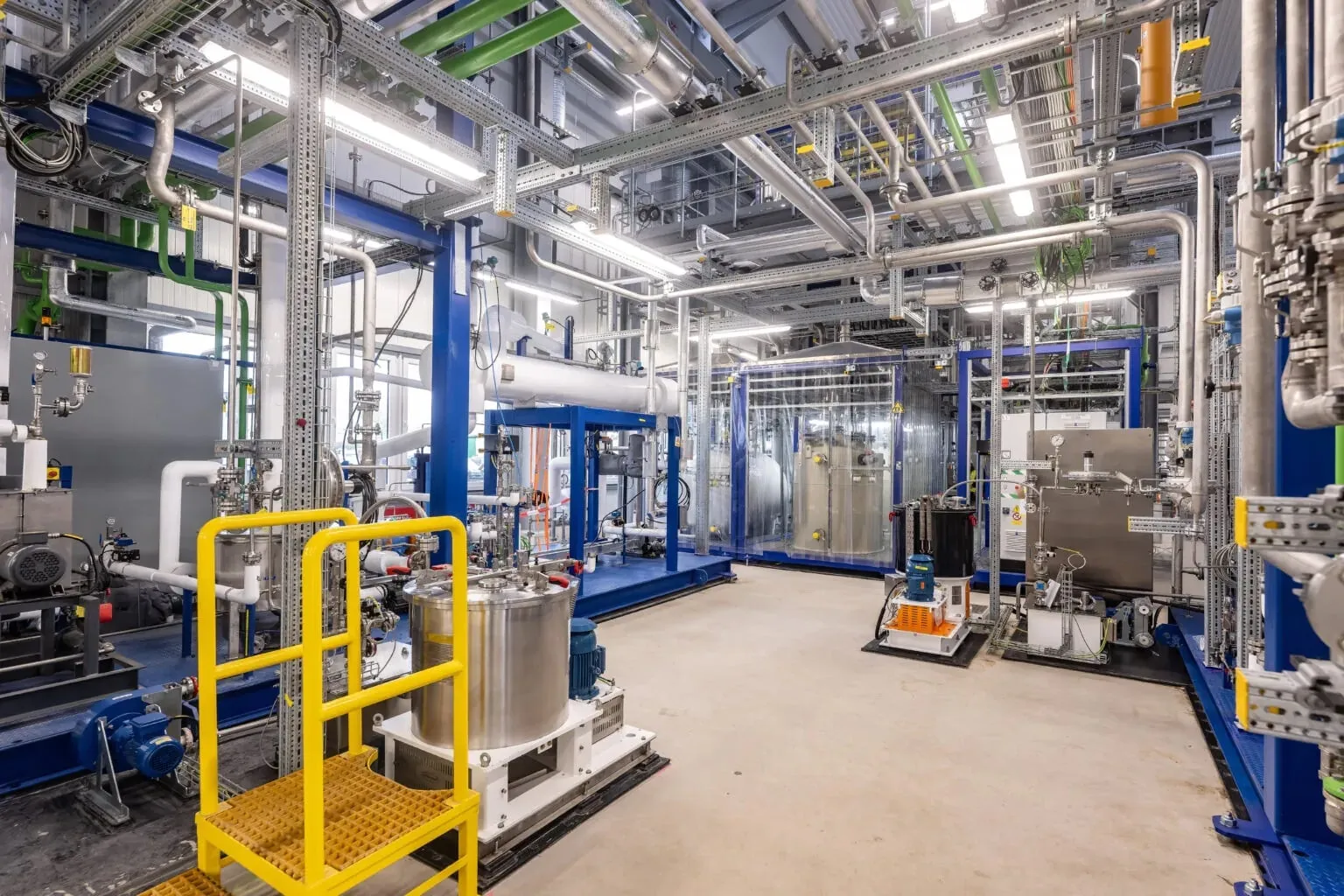
Vulcan Energy has presented a pre-feasibility study for its second lithium project in the Upper Rhine Valley. The Ludwigshafen region is expected to produce 21,100 tons of lithium carbonate annually. However, several development steps are still required before an investment decision can be made.
Vulcan Energy is advancing plans for a second lithium and geothermal project in the Upper Rhine Valley. The project, named Ludwig, will be located in the Ludwigshafen region and builds on the experience gained from the more advanced Lionheart project near Landau. The German-Australian company has now published a pre-feasibility study (PFS) for Ludwig.
As with Lionheart, Vulcan intends to extract lithium-rich geothermal brine from underground while simultaneously harnessing its geothermal energy. For Ludwig, the brine will be transported to a central processing plant. There, Vulcan plans to first use its proprietary Direct Lithium Extraction (DLE) technology to produce lithium chloride, which will then be further processed on-site into battery-grade lithium carbonate. In contrast, for Lionheart, lithium extraction and processing are split between Landau and Frankfurt-Höchst.
For Ludwig, the pre-feasibility study assumes an annual production of 21,100 tonnes of lithium carbonate. Additionally, up to 3,125 GWh of renewable heat per year is expected to be generated, intended for both the company’s own production processes and regional customers. Combined with the planned 24,000 tonnes of lithium hydroxide monohydrate (LHM) from Lionheart, Vulcan estimates it will produce enough lithium for the batteries of around one million electric vehicles per year. However, these figures are still purely indicative and based on the study’s projections.
Vulcan estimates investment of €1.26 billion
Vulcan currently estimates the investment required for Ludwig at €1.26 billion, approximately 15 per cent lower than for Lionheart. The company attributes the reduced investment to lessons learned from the first project and the integration of lithium extraction and processing at a single location. Operating costs are projected at €4,101 per tonne of lithium carbonate equivalent (LCE). Vulcan places Ludwig in the lowest quartile of the global cost curve. However, these figures are also based on assumptions from its own pre-feasibility study and have yet to be confirmed by commercial operations.
Vulcan is significantly further along with Lionheart. For this first project, the company has secured financing of €2.2 billion and obtained construction permits for the facilities in Landau and Frankfurt-Höchst. Commercial production is scheduled to begin in 2028. Offtake agreements are in place with companies including LG Energy Solution, Umicore, Stellantis, and Glencore. In April, Vulcan also brought Siemens on board as a strategic investor and technology partner. According to the companies, the agreement will also extend to later development phases.
Ludwig, on the other hand, is still in a much earlier phase. Vulcan’s next steps include 3D seismic surveys, exploration drilling, and further technical development of the project. A final investment decision (FID) is not expected until after the successful start of production at Lionheart. The company has not yet specified a potential start date for production at Ludwig.
The project is also relevant in the context of Europe’s dependence on battery raw materials. According to a Deloitte study published in August, 50 to 60 per cent of a battery’s value creation occurs in material extraction and processing. European companies are currently relatively weak in these areas. Projects like Vulcan’s planned lithium extraction aim to bring a larger share of this value creation to Europe.
Vulcan itself is pursuing a long-term expansion strategy in the Upper Rhine Valley. Following the start of production at Lionheart, the company plans to develop additional projects at intervals of two to three years. Ludwig would represent the second phase of this plan. However, whether the project will actually be implemented in the form now outlined—and whether the assumed extraction volumes, investment, and operating costs will be achieved—will only become clear with further geological investigations and more detailed project planning..v-er.eu