
VRR is funding 22 electric buses for new XBus routes in the Lower Rhine region
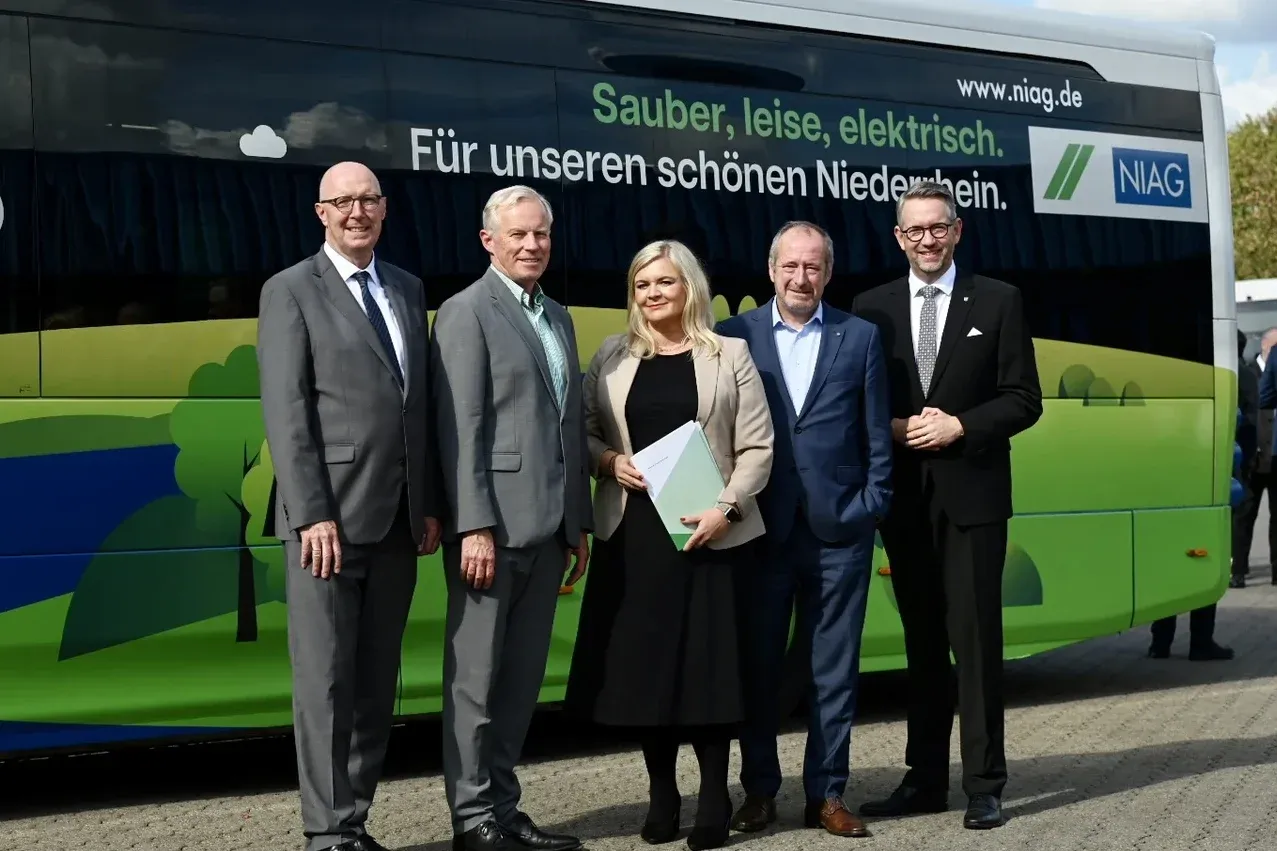
The Rhein-Ruhr Transport Association is providing approximately 16 million euros to Niederrheinische Verkehrsbetriebe AG for 22 battery-electric buses. These vehicles are set to be deployed on the new express bus lines X25 and X31 starting in December 2027, including on a cross-border route to the Dutch city of Nijmegen.
Handover of funding approvals for NIAG’s 22 electric buses.
Image: VRR
11.524 million euros have been allocated for 16 articulated buses on the future X25 route, with an additional 4.5 million euros designated for six single-aisle buses on the X31 route. The funding for these vehicles is provided under § 11 of NRW’s Public Transport Act. The X25 route is intended to connect Emmerich am Rhein, Kleve, and Kranenburg with Nijmegen. The planned annual mileage is around 930,000 kilometers, of which approximately 72 percent will be covered within North Rhine-Westphalia. According to the VRR, the funding amount corresponds to this domestic share of the planned purchase cost for the 16 articulated buses.
The X31 is set to operate between Kevelaer, Sonsbeck, and Xanten in the future. Six battery-electric single-aisle buses are planned for this route, with an annual total mileage of around 340,000 kilometers. Since all the mileage will be covered within North Rhine-Westphalia, VRR fully covers the planned purchase cost of 4.5 million euros.
According to current plans, both routes are scheduled to begin operating with these subsidized buses in December 2027. VRR has not yet specified a manufacturer or technical details for the new buses. It is only confirmed that the vehicles will meet the XBus standard and are therefore intended for use on longer regional routes as well.
NIAG expands electric bus fleet and charging infrastructure
For NIAG, the procurement is part of an ongoing fleet renovation. Twelve charging stations from Helioxin are already in use at the depot in Moers, with additional charging infrastructure planned for the locations in Wesel, Geldern, and Kleve. To manage its growing electric bus fleet, NIAG also hired PSI Transcom to develop a load and charging management system. This system is intended to coordinate charging processes, vehicle deployment, and peak loads.
In 2025, NIAG had planned its further electrification strategy more cautiously due to the expiration of the existing federal subsidies. With the subsidies now promised, fleet transformation is progressing again. According to NIAG’s CEO Patricia Pardulla, the share of electric buses at NIAG and LOOK is set to rise to around 50 percent of the total fleet in the next two years. Meanwhile, depots in Kleve and Geldern are being upgraded to support electric operation.
"The funding is the crucial foundation for us to operate the two new routes fully electric from the start," says Pardulla. With the 22 additional vehicles, the fleet transformation is accelerating. These two routes are also part of expanding regional express bus services in North Rhine-Westphalia. VRR, the NRW Ministry of Transport, Nahverkehr Westfalen-Lippe, and go.Rheinland intend to use any available funding for this purpose. According to the state, up to 140 million euros will be allocated for expanding express bus services by 2032. The buses are set to run in the future on battery or fuel cell power.
The example of Duisburg also shows that both technologies are supported in the VRR region. The Duisburger Verkehrsgesellschaft received around seven million euros in vehicle subsidies from North Rhine-Westphalia for 25 fuel cell buses from Solaris; additional funding was provided for refueling and workshop infrastructure.
In contrast, NIAG relies entirely on battery-powered vehicles for its new XBus lines. These routes are intended to fill gaps between existing rail connections and enable rural communities to connect more quickly to the regular train service. The X25 also adds an interborder route to Nijmegen.
