
Volvo XC60: hybrid almost as powerful as an electric car. 200 km without gasoline
In short:
The XC60 model is undergoing another update
The T6 and T8 PHEV versions will get larger batteries and more powerful electric motors
Range with a 41.2 kWh battery – up to 200 kilometers
Volvo has not included fast DC charging
With a full tank and battery, the manufacturer claims a range of over 1200 kilometers
It’s more expensive after the changes. The T6 AWD Long-range PHEV starts at 277,000 zł
Volvo is improving electric range
Volvo does not plan to retire the current generation of XC60 just yet. The SUV debuted in 2017, has already undergone several updates, and now it faces another modernization. This time, it won’t be limited to new headlights, colors, or a multimedia system.
The biggest change relates to the hybrid plug-in T6 and T8 models. Volvo has significantly increased their battery capacity, aiming to enable the vehicle to function almost like an electric car for most of everyday driving.
More than twice the battery capacity
The existing XC60 T6 and T8 models use batteries with a capacity of 18.8 kWh. In the new version, the battery capacity will be 41.2 kWh gross.
This is a capacity that was sufficient just recently to power a full-fledged urban electric car.
The outcome is easy to predict. The XC60 T6 AWD Long-range PHEV is expected to cover about 200 km on electric power alone, while the more powerful T8 AWD can cover around 189 km. The current XC60 with plug-in hybrid capability offers approximately 80 km of range according to WLTP standards.
The difference is therefore enormous. With typical daily driving distances of several dozen kilometers, the driver will be able to travel for several days without starting the gasoline engine, provided the car is charged regularly.
Volvo also reports an impressive total range. With a fully charged battery and fuel tank, the T6 can cover about 1240 km, while the T8 can cover around 1230 km.
More power from the electric motor as well
The drive system design remains familiar. A 2-liter, four-cylinder gasoline engine drives the front axle, while the electric motor powers the rear wheels. There is no mechanical connection between the two axles.
The new power unit delivers 177 HP and 309 Nm. This is significantly more than before, and it’s precisely because of this that the performance of both variants improves as well.
In the XC60 T6, the gasoline engine produces 180 HP and 280 Nm, with the entire system reaching 356 HP. The 0 to 100 km/h acceleration time is 5.7 seconds.
The T8 uses a more powerful version of the two-liter gasoline engine – 250 HP and 360 Nm. Together, this gives the driver 461 HP, with a 0 to 100 km/h acceleration time of 4.8 seconds.
Like in other modern Volvo models, the top speed of both versions is electronically limited to 180 km/h.
There’s one catch: charging
A battery capacity over 40 kWh sounds great, but its charging speed won’t be as fast as that of an electric vehicle.
Volvo does not offer fast charging via direct current. The manufacturer states that a full charge takes about four hours at 16 A, around six hours at 10 A, and even ten hours at 6 A.
This means that those who can charge the car regularly at home or at work will be able to make the most of its long range. On the other hand, an electric driving range of about 190-200 km means that plugging in the car may be necessary much less often than with previous plug-in hybrids.
The updated XC60 is already priced in Poland
The Polish pricing list is now available. The base XC60 B5 AWD costs 225,900 zł after the upgrades, which is 4,000 zł more than before. The higher increase applies to plug-in hybrids, whose prices rose by 7,000 zł. The new XC60 T6 AWD Long-range PHEV starts at 276,900 zł.
This means the premium for the version with the plug-in compared to the B5 is currently 51,000 zł. In return, the T6 offers 356 HP, a much larger battery, and even around 200 km of range on electric power alone. With such significant changes to the drivetrain, the increase compared to the previous PHEV version is relatively small. The more powerful T8 with 461 HP is also available, though its exact price depends on the chosen trim level.
The appearance will also change
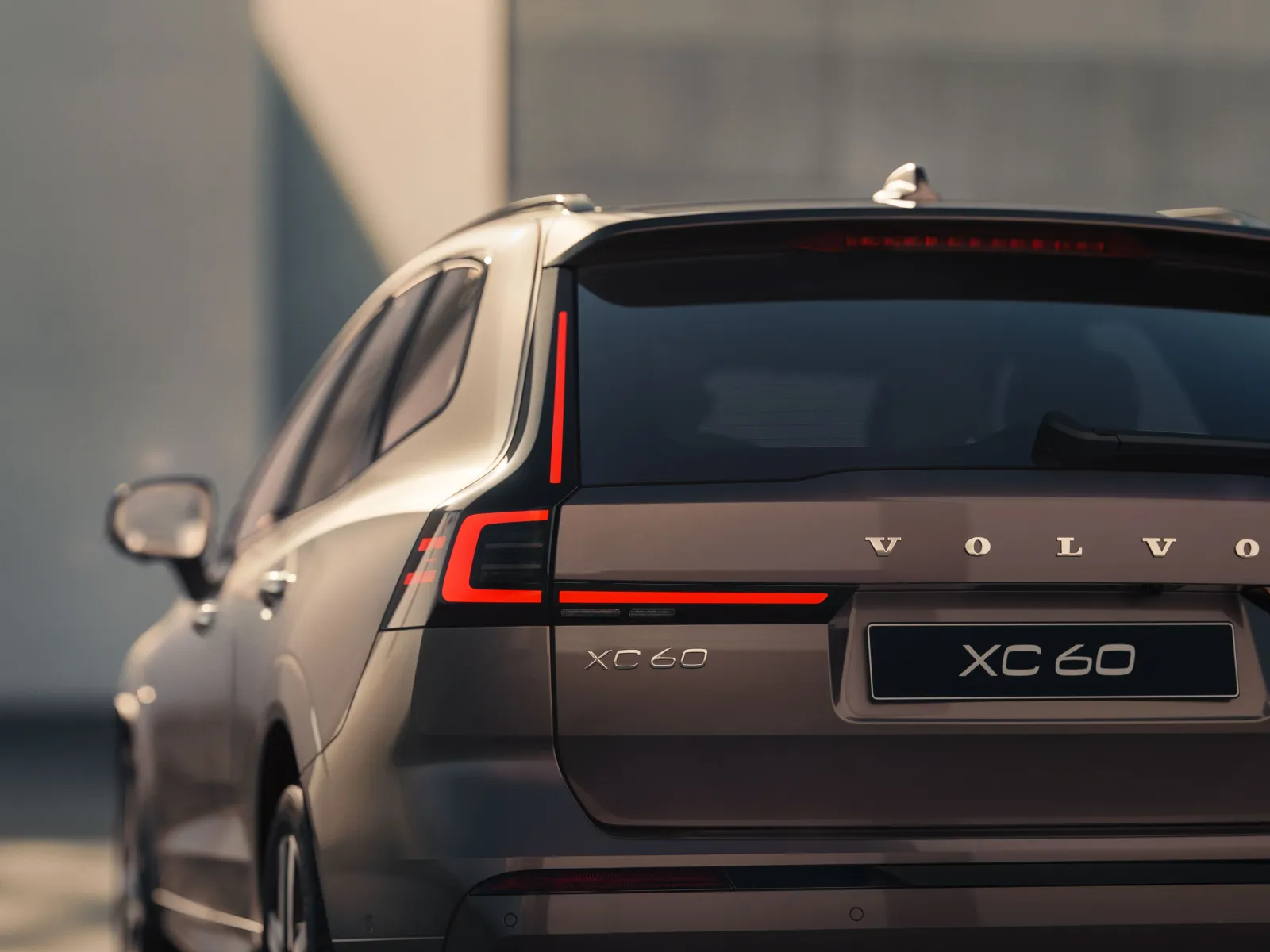
The new XC60 will be recognizable primarily by its redesigned front lights, which are stylistically similar to those of the refreshed XC90. The bumpers and the design of the rear lights have also been changed.
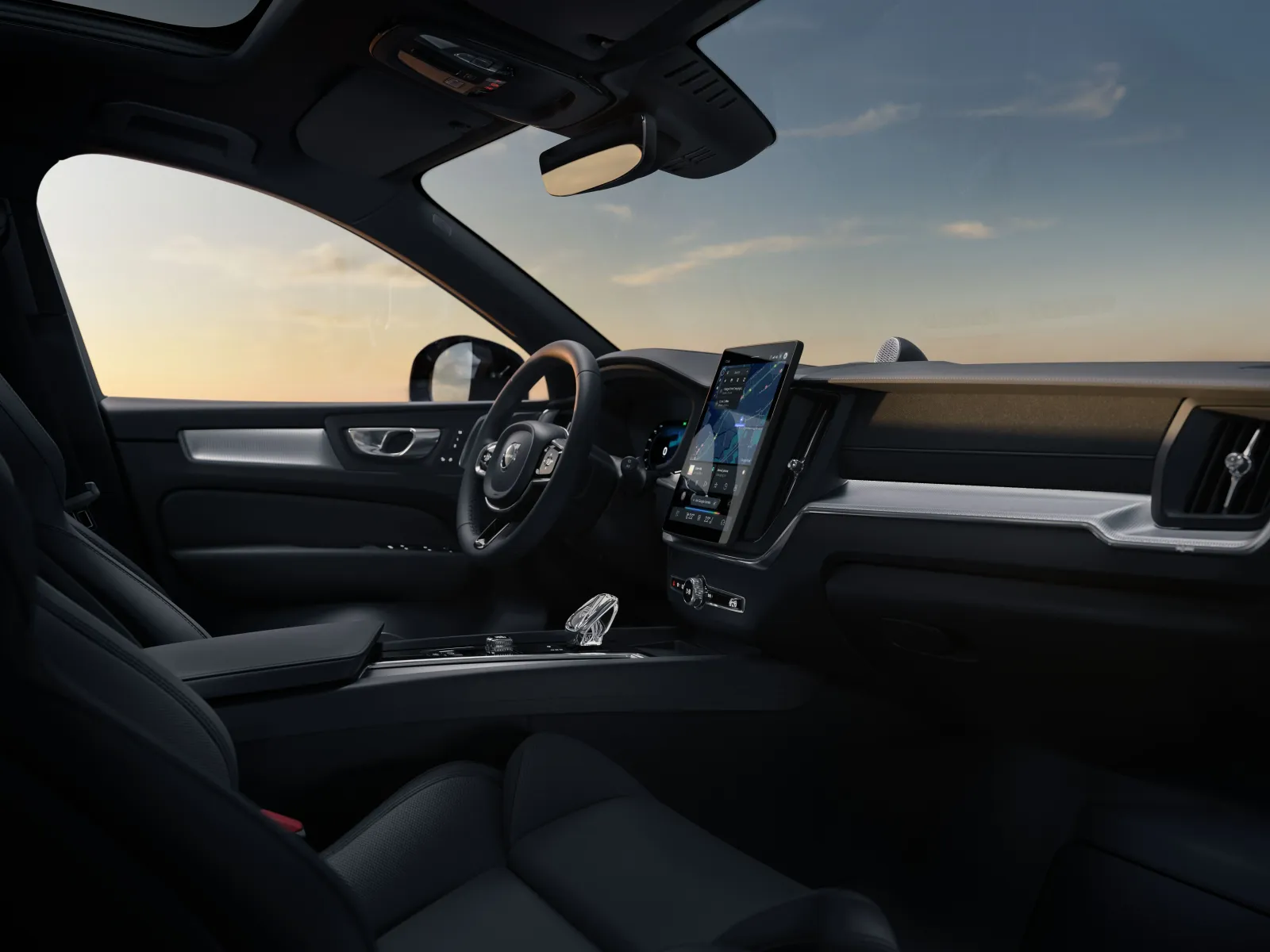
Changes will also affect the body colors and interior finishes. A new brown paint color, different decorative woods, and brown upholstery will be added to the lineup.
The car’s basic proportions remain largely unchanged. The XC60 is 4708 mm long, 1902 mm wide without mirrors, and has a wheelbase of 2865 mm. The maximum trailer weight for the T6 and T8 models is 2250 kg.
New radars, cameras, and Google Gemini
The updates also include driver assistance systems. Volvo will use a newer set of cameras, radars, and other sensors.
The car will automatically brake in front of obstacles, assist with avoiding them, and support the driver when changing lanes. It will also feature a 360-degree camera with 3D views and a system that warns of door opening when a cyclist is approaching from behind.
The central screen measures 11.2 inches and features Volvo Car UX’s latest interface. Google Gemini will also be integrated into the system, an AI-powered assistant that allows controlling certain vehicle functions, searching for locations, and planning trips using more natural voice commands.
Similar changes will come to the XC90
The new hybrid system won’t be reserved exclusively for the XC60. Volvo plans to apply similar solutions to the larger XC90, which will also receive a significantly larger battery and extended electric range.
For the XC60, however, this modernization could be particularly important. The model remains one of the brand’s most significant vehicles, and nearly 200 km of electric range transforms the plug-in hybrid concept far more than additional bumper or light updates.
Recall that for over a decade in a row, the XC60 has been not only the best-selling model of the brand but also the top-selling premium car in Poland. Customers overlook its long market presence — and things should only get better after the facelift. Are more successes ahead?
Piotr Sobczyk