
The Volvo EX30 received V2L via an OTA update. The cheapest electric Volvo can power devices up to 3 kW.
Volvo has released a new OTA update for the EX30, and starting this week the vehicle now features V2L capability, which allows it to power external devices using its traction battery. The system can deliver up to 3 kW at 16 A and will shut off automatically when the battery level drops below 20 percent.
For Polish drivers, this is a significant improvement, as the EX30 costs 169,990 PLN here and suddenly can do more than just transport people from point A to B.
V2L in the Volvo EX30 works through a CCS2 adapter
The new feature utilizes two-way charging, specifically the vehicle-to-load mode. In practice, a separate adapter needs to be connected to the charging port, and then devices such as laptops, coffee makers, refrigerators, or camping equipment can be powered via that adapter.
Volvo claims a maximum power output of 3 kW at 16 A, so it’s suitable for powering a wide range of home and outdoor devices. Not an entire house, not heat pumps, and not an induction cooker on high. But a fridge in case of a power outage or a small camping setup? Definitely.
There’s also a safety feature. When the battery drops below 20 percent, the car will cut off power to prevent the driver from being left with a dead battery. And that’s good, because such a feature without a limit would quickly lead to frustration in parking lots.
In Europe, the Middle East, and Africa, as well as in parts of Asia and the Pacific and Latin America, the EX30 will use the CCS2 port. V2L, however, will not be available in the US, Canada, Mexico, Korea, Taiwan, or Japan.
There’s also a new interface and Plug & Charge in parts of Europe
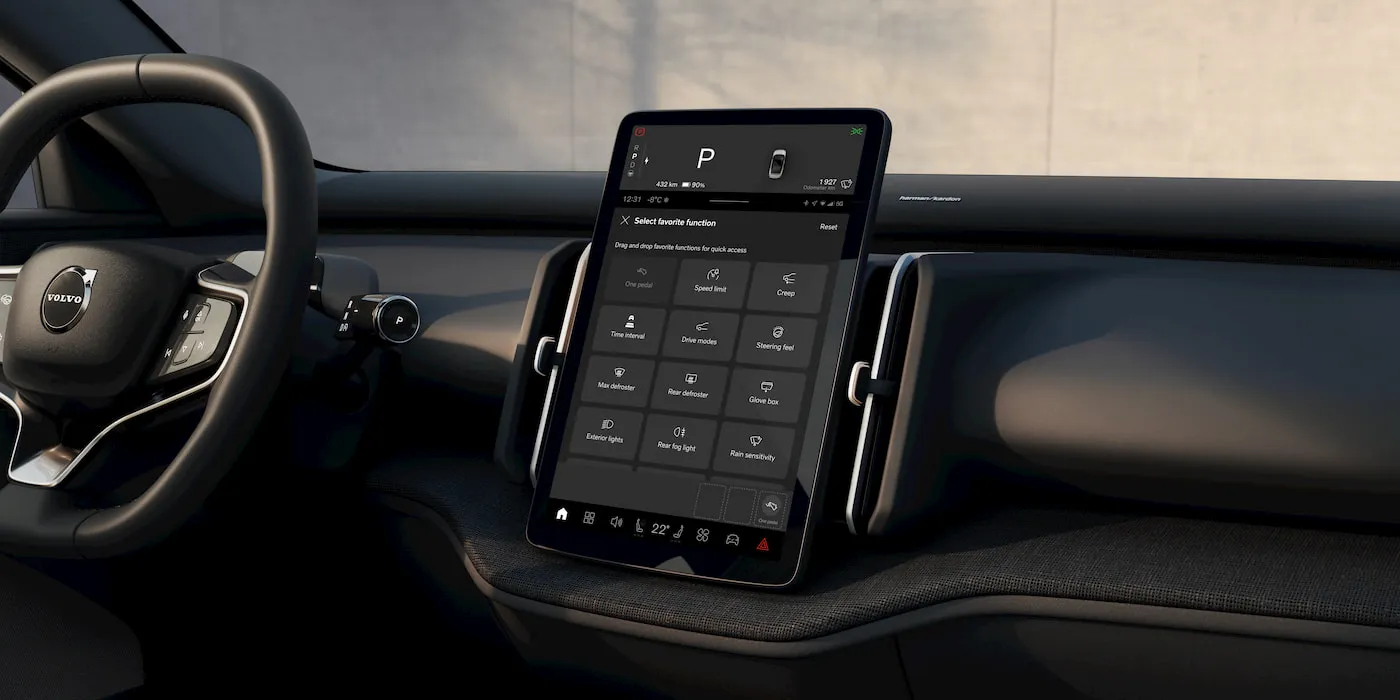
The same OTA update adds a redesigned settings menu and a new, customizable interface context bar. This is more of a cosmetic change than a hardware upgrade, but EX30 users will likely notice it as soon as they get into the car.
The second practical feature is Plug & Charge for selected European markets. This function simplifies public charging by allowing the car to authenticate itself without needing a card or launching an additional app. However, there’s a catch: this feature will only be available on models from 2026 and later.
This shows one thing: even in relatively inexpensive electric cars, features that were once only available as extras on more expensive models are starting to be offered through software. The question is whether 3 kW in the EX30 will suffice for real-world use, or if you’d expect something closer to full V2H capability?
LovEV Newsletter
Want more content like this?
Sign up — we’ll send you a weekly roundup once the newsletter starts.