
Volkswagen unveils electric ID.3 GTI with 326 PS and 373-mile range
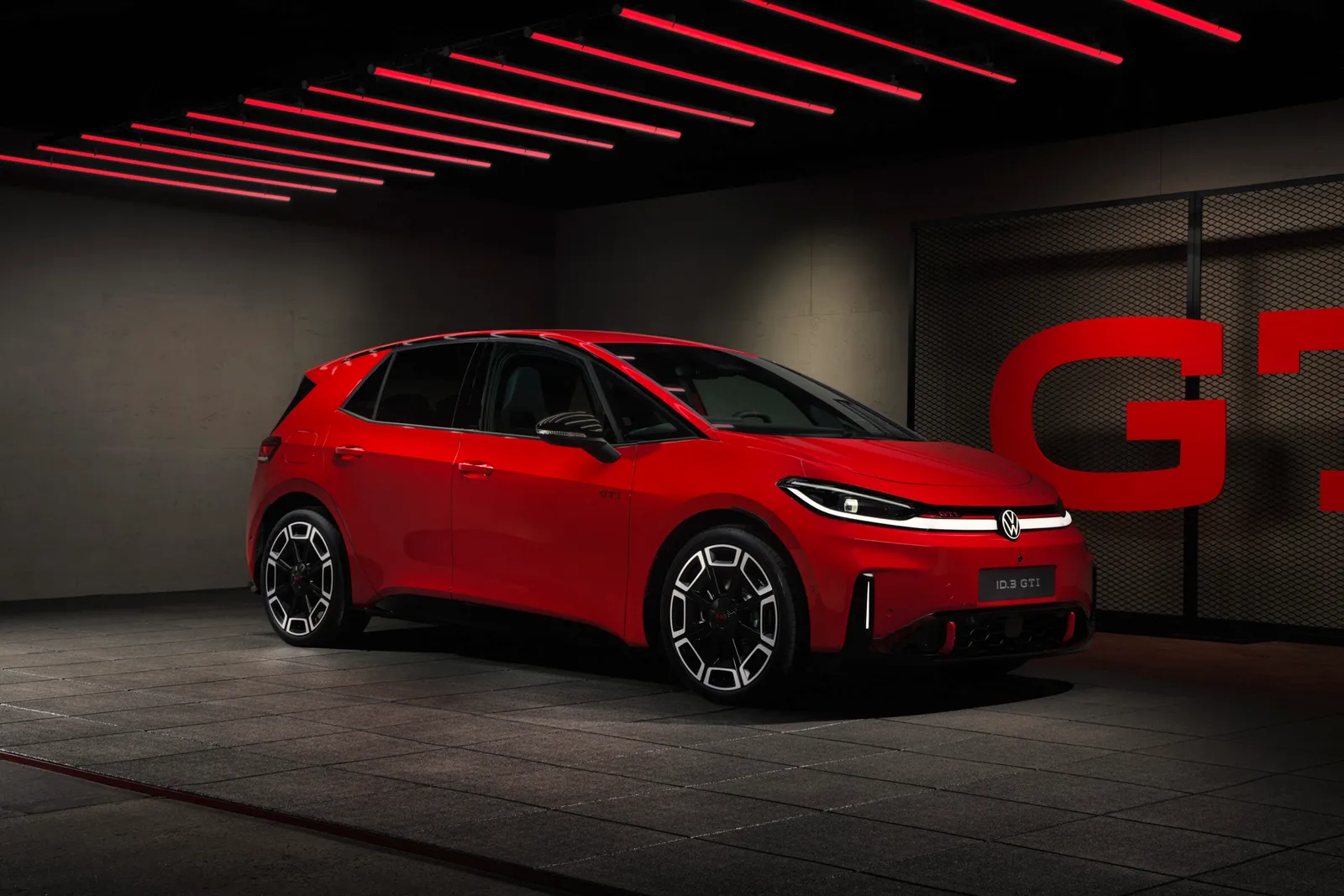
Volkswagen has unveiled the electric ID.3 GTI, bringing its best-known performance badge to a rear-wheel-drive hatchback with 326 PS, a forecast 373-mile range and a claimed 0–62mph time of 5.6 seconds. The company describes it as the most powerful GTI intended for series production in the badge’s 50-year history.
German pre-sales are scheduled to begin at the start of 2027, while UK prices and specifications will be confirmed soon. Volkswagen currently classifies the unveiled model as a near-production concept, meaning the performance, range and charging figures remain provisional and the car is not yet available to buy.
Based on the ID.3 Neo, and coming hot on the heels of the ID. Polo GTI, the new flagship combines a 240kW rear-mounted electric motor producing 545Nm of torque with a 79kWh usable battery. Volkswagen forecasts up to 601km between charges, equivalent to approximately 373 miles, pairing the performance credentials with the prospect of useful long-distance capability.
DC rapid charging peaks at a claimed 183kW, with a 10–80 per cent top-up expected to take around 29 minutes. The electronically limited maximum speed is 200km/h, or approximately 124mph. As with the acceleration and range figures, the charging time is a forecast rather than a final confirmed result.
Volkswagen also gives a preliminary combined electricity consumption figure of 14.5kWh per 100km, equivalent to roughly 4.3 miles per kWh. That is a forecast consumption figure, not a measured result from a road test. Buyers considering the car for motorway journeys will also need to see how its final range and charging performance translate into everyday use in different weather conditions and at speed.
The launch gives Volkswagen’s electric hatchback a more explicit connection to the Golf GTI’s heritage than its preceding ID.3 GTX. Alongside the extra attention to chassis settings and driver controls, the new model adopts familiar red detailing, tartan upholstery and a dedicated GTI driving mode with simulated combustion-engine sound.
Volkswagen lists adaptive DCC sports suspension, progressive steering and Launch Control as standard equipment for Germany. However, all equipment details in the announcement relate to that market, so British buyers will need to wait for confirmation of what is included on UK cars.
The dedicated GTI mode is selected using an illuminated button at the six o’clock position on the new multifunction sports steering wheel. It joins Eco, Comfort, Sport and Individual profiles, providing a single control for accessing the car’s most sporting configuration.
Selecting it changes the motor’s power delivery, progressive steering and adaptive suspension settings, while also allowing Launch Control to be activated. Volkswagen says the combination of the sports chassis, low centre of gravity and electric motor’s torque is central to the driving experience it wants the car to deliver.
There are visual and audible changes inside, too. Ambient lighting turns red, the ID.Light briefly flashes red and the Digital Cockpit switches to a GTI display. A power indicator with an integrated speedometer takes centre stage, accompanied by the sound of a combustion engine in the background.
Beyond the performance settings, the cabin introduces changes likely to matter during everyday driving. It follows the redesigned ID.3 Neo interior, with a larger Digital Cockpit and a 12.9-inch touchscreen for the new generation of Volkswagen’s Innovision infotainment system, positioned along the same visual axis.
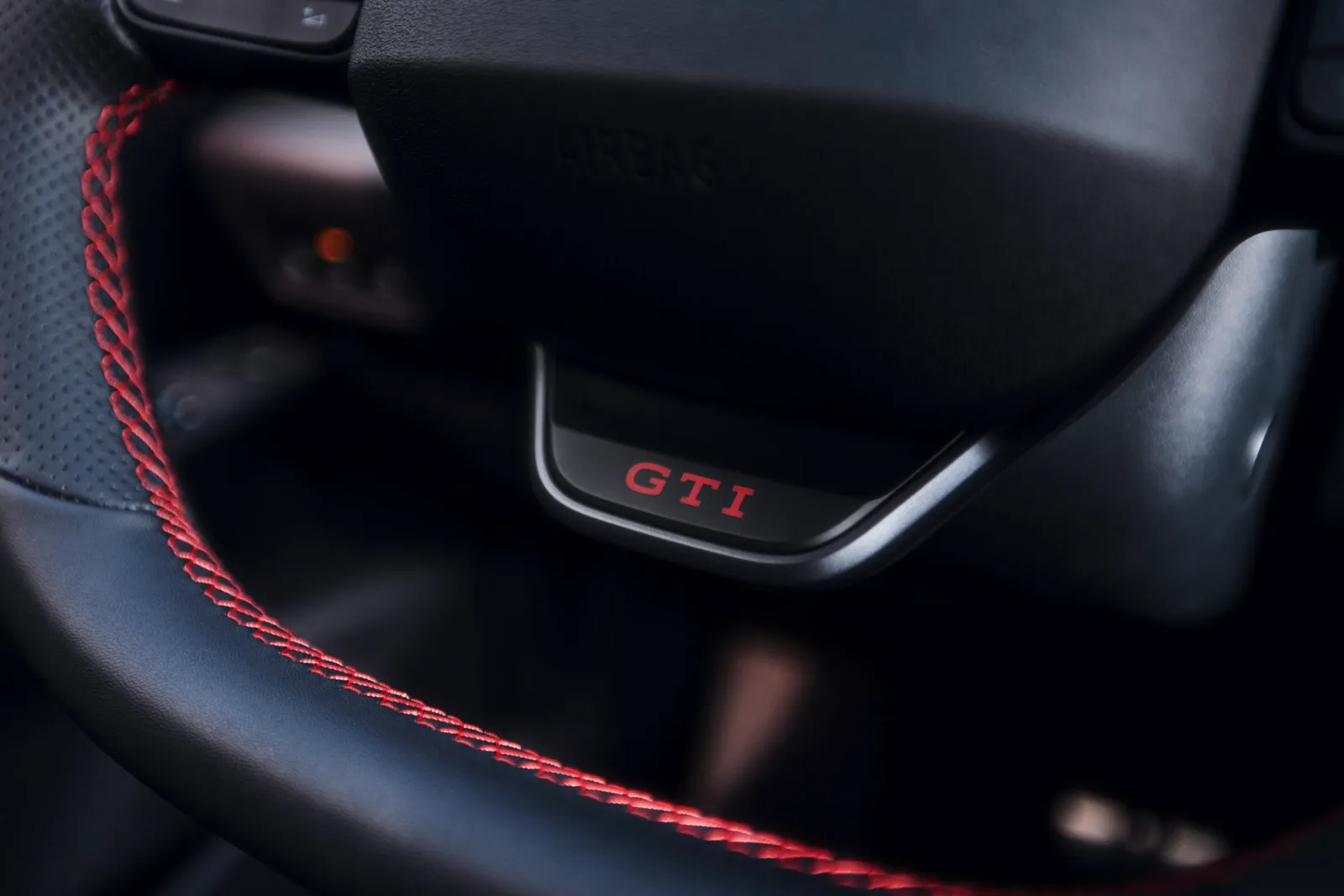
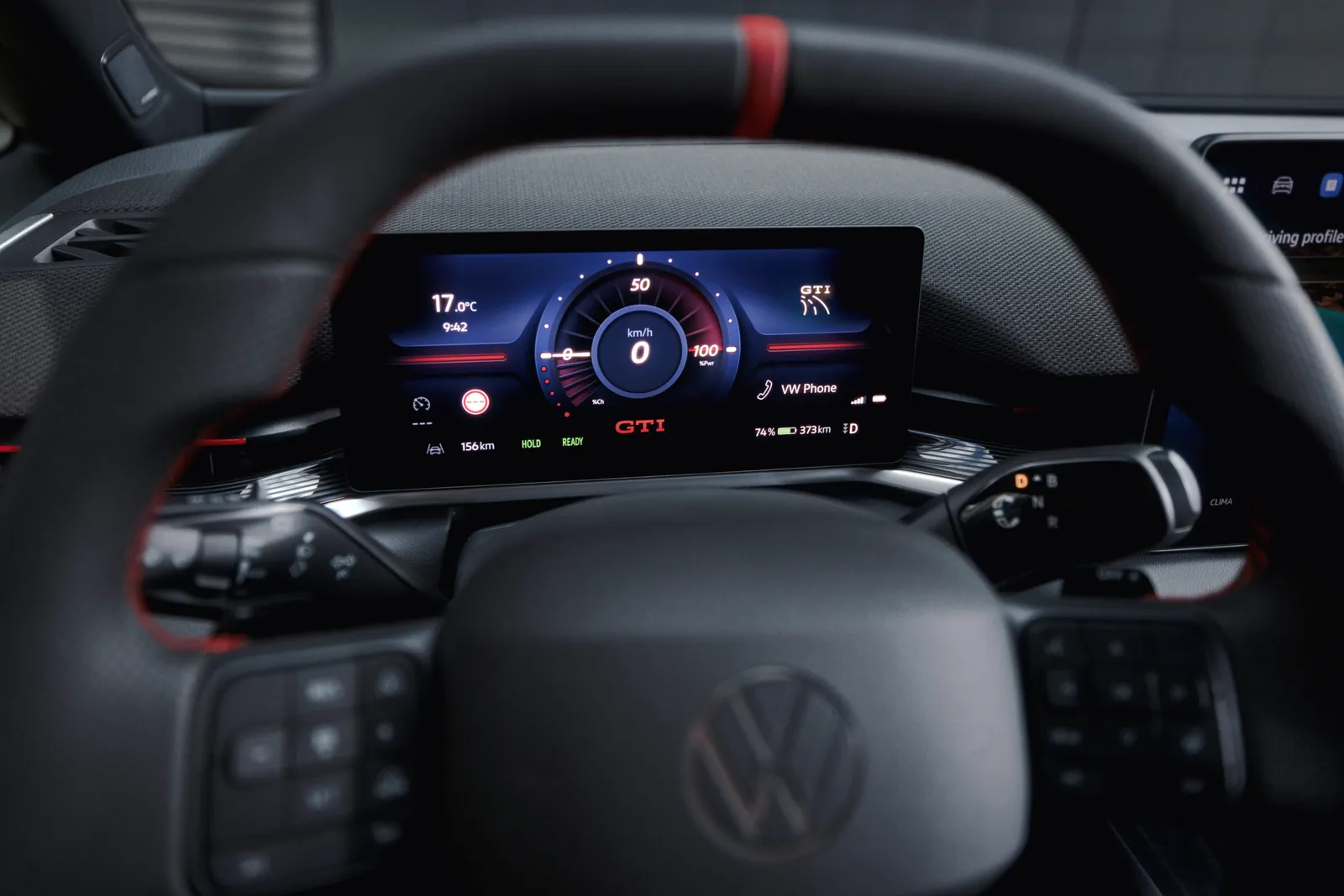
A separate button strip beneath the touchscreen houses air-conditioning controls and the hazard warning switch. The adjacent centre console gains a rotary control for audio volume, with a skip function for tracks and radio stations. These give drivers dedicated controls for frequently used functions alongside the main touchscreen.
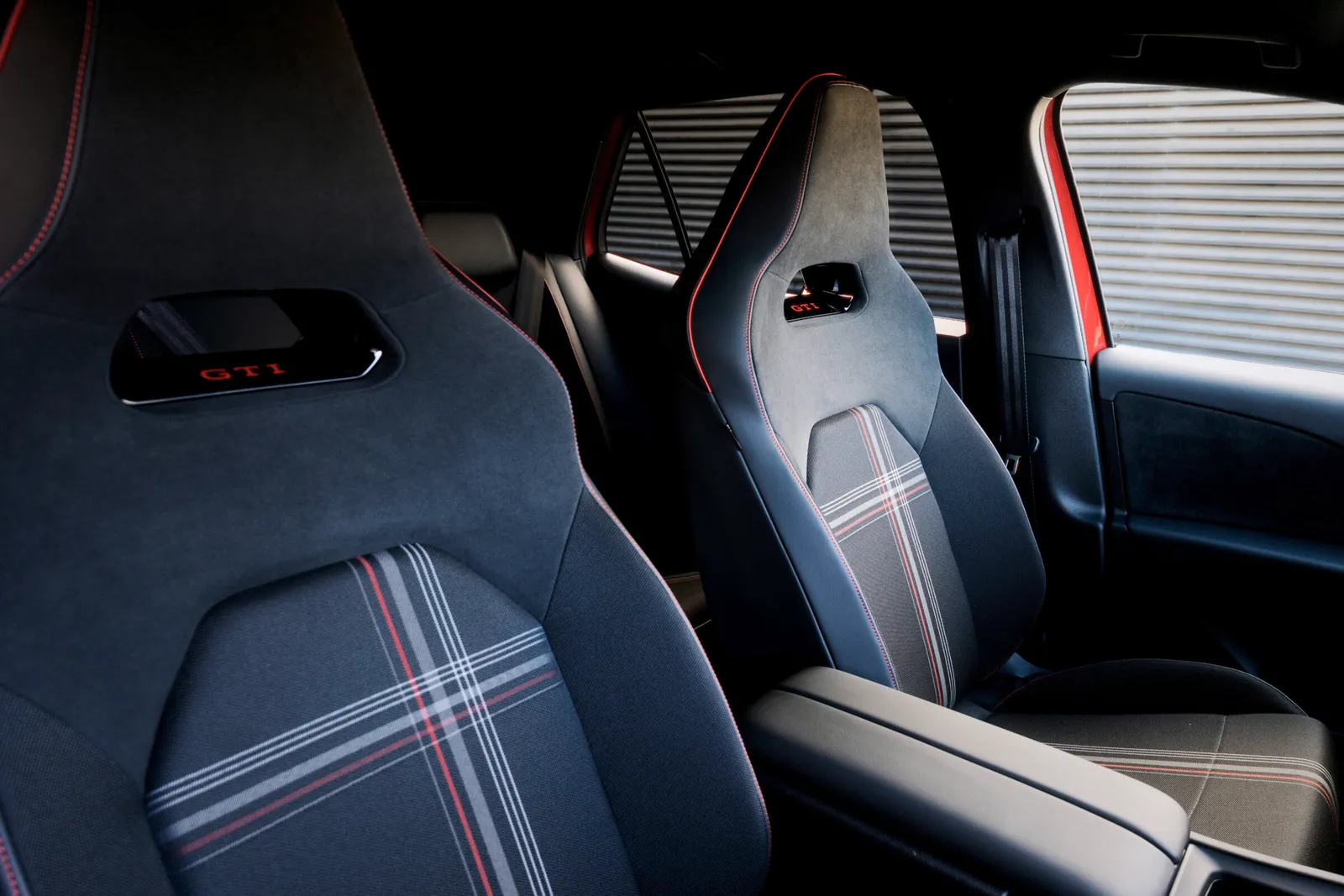
The GTI treatment adds a red stripe across the dashboard, red stitching and a red marker at the top of the steering wheel. Premium sports seats and the rear seats feature a “Superclark” tartan pattern, reinterpreting the checked upholstery associated with the original Golf GTI from 1976.
Practicality features include vehicle-to-load capability, allowing the traction battery to power or recharge external devices through an optional PowerSocket adapter connected to the charging port. Volkswagen highlights electric bicycles as one potential use, with owners able to recharge them from the car between rides on a weekend trip.
A removable mounting bracket for a bicycle carrier is also among the options, with a quoted 75kg drawbar load. The announcement describes this specifically as a carrier arrangement; it does not provide a trailer towing capacity. Nor does it specify the output available through the vehicle-to-load connection.
Other optional equipment includes a panoramic sunroof, massage and memory functions for the sports seats, a 480W Harman Kardon sound system and an augmented-reality head-up display. Volkswagen says the optional features available for the ID.3 Neo will also be offered on the GTI, subject to market specifications.
Driver assistance options include Park Assist Pro with a memory function and the latest Travel Assist system. The latter adds the ability to respond to traffic lights: if it detects a red signal, it can brake the car to a standstill within the system’s operating limits. The driver remains responsible.
Externally, the ID.3 GTI uses a redesigned front end to establish its identity. IQ.LIGHT LED matrix headlights, listed as standard in Germany, sit either side of a transparent light strip incorporating an illuminated Volkswagen badge. Above that strip is the red horizontal line that links the electric model to earlier GTIs.
The lower front end combines a gloss-black honeycomb air intake with red vertical elements at its outer edges and a splitter-style spoiler. Volkswagen says the intake serves the cabin climate-control and battery systems. Vertical LED elements towards the outside of the bumper provide a further identifying feature for the electric GTI.
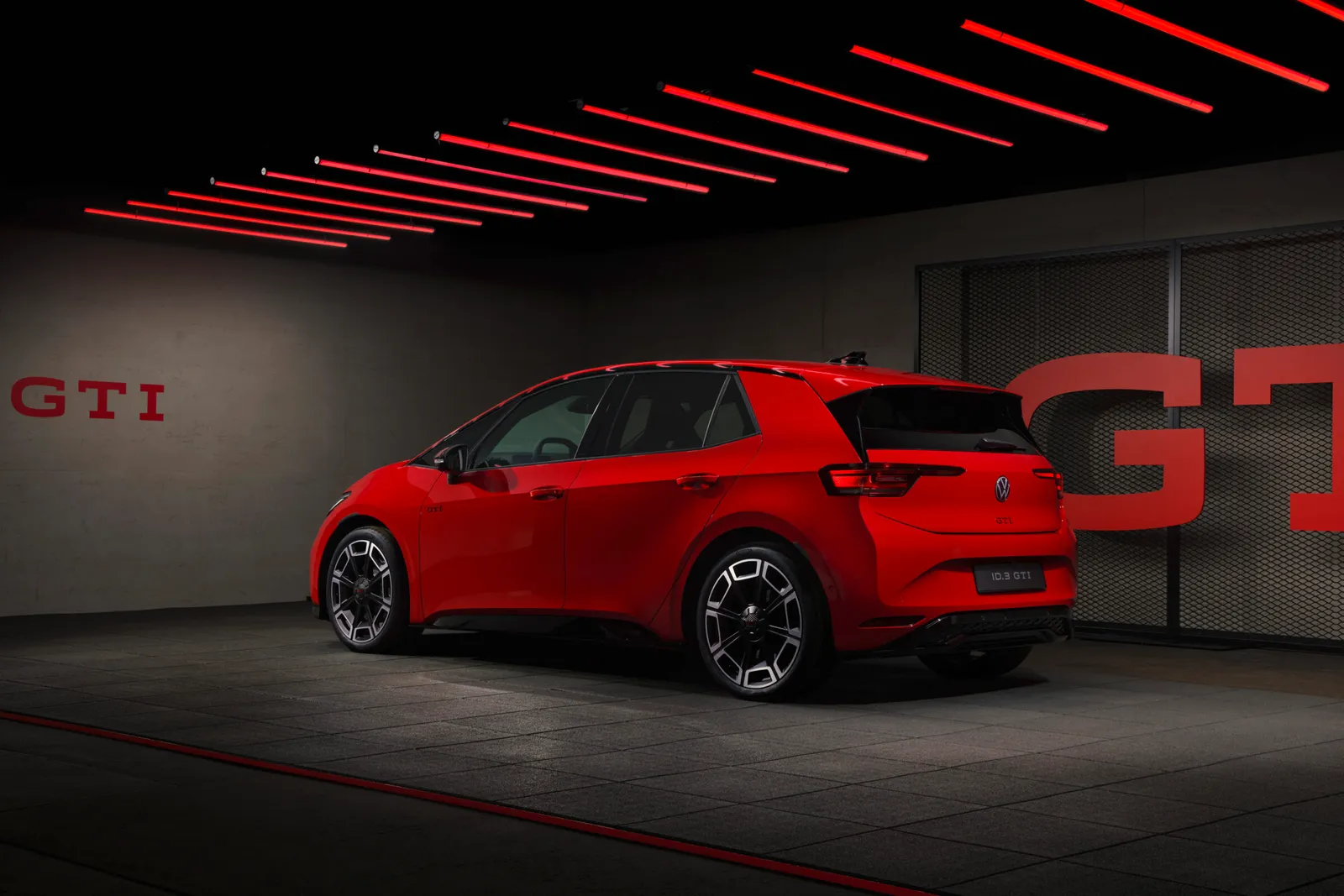
New 20-inch alloy wheels carry the Wörthersee name, referencing the Austrian location associated with GTI gatherings. Gloss-black mirror caps and side trim complete the profile, but Volkswagen has changed its approach to the upper bodywork compared with the ID.3 GTX.
Where that model used a black roof, roof spoiler and boot lid, the GTI finishes those areas in the body colour. Volkswagen says this makes the car appear longer and sleeker. That is a styling effect rather than an announced increase in dimensions; the release provides no new measurements.
Five exterior colours will be offered: Tornado red, Moonstone grey, Scale silver metallic, Grenadilla black metallic and Glacier white metallic. Tornado red provides another historical reference, having appeared on the facelifted first-generation Golf GTI and become closely associated with the badge.
The unveiling comes 50 years after the original Golf GTI, with Volkswagen drawing heavily on that car’s visual vocabulary while changing the source and delivery of its performance. Red trim, checked seats and familiar paint colours carry the heritage into an electric hatchback whose production details will follow ahead of sales.