
Volkswagen to cut 100,000 jobs. Four German EV factories will have no successors after 2031
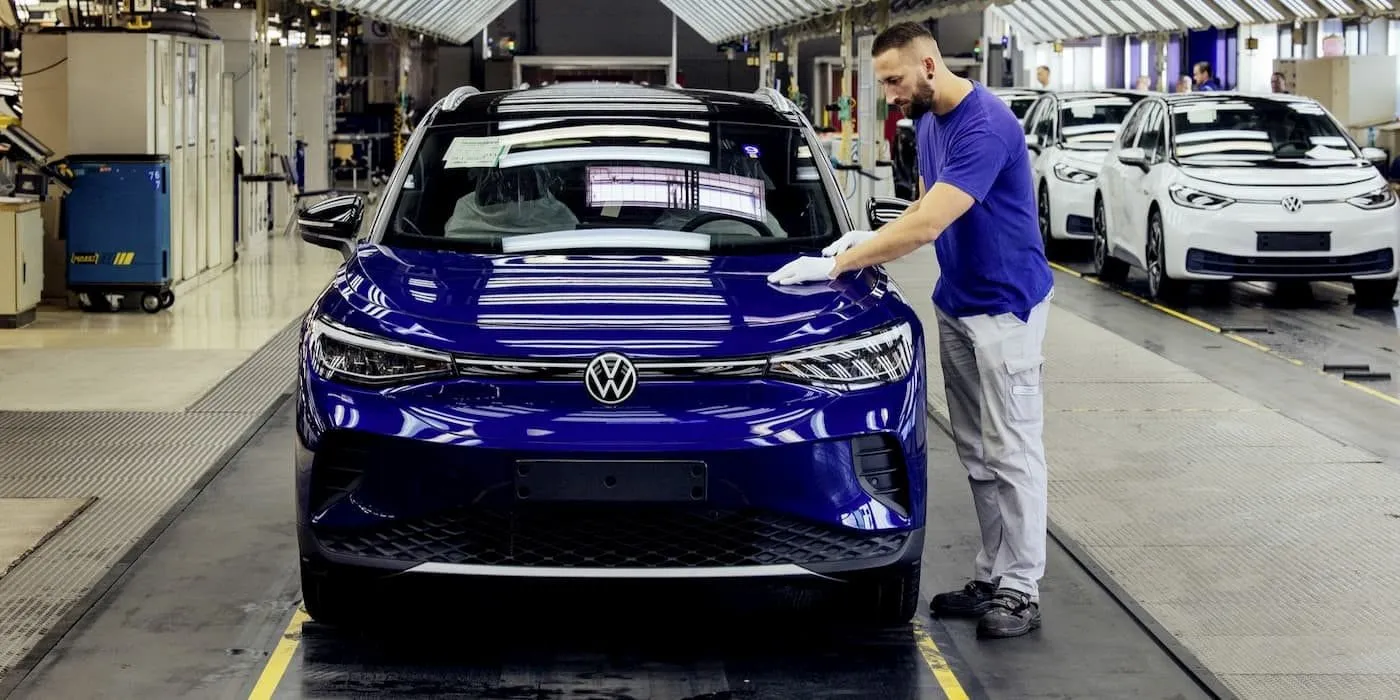
Volkswagen adopted its Future Plan 2030 on September 3, aiming to cut another 50,000 jobs and reduce its vehicle lineup by half by 2035. Combined with previously announced cuts, this amounts to about 100,000 positions, or nearly 15 percent of its global workforce of 650,000 people.
For EV drivers, the second part of this picture is more significant. Four German plants, including Emden and Zwickau, no longer have guaranteed production once current quotas expire between 2031 and 2034.
Four factories with heavy EV production at risk
The plants listed are Emden, Zwickau, Hanover, and Audi’s Neckarsulm facility. The company explicitly stated that it cannot currently ensure “competitive future production” for these plants once the manufacturing of models assigned to them ends.
This is not yet an official announcement of closure. But the message is simple: there are no new models planned to replace the current vehicles today. Volkswagen says it will find other uses for these plants, but car production at all four could come to an end.
This already threatens Volkswagen’s electric mobility efforts in Europe. Zwickau was the brand’s first large factory to fully shift from internal combustion engines to electric vehicles. Emden produces the ID.4 and ID.7, Hanover assembles the ID. Buzz and ID. Buzz Cargo, while Neckarsulm builds the Audi e-tron GT alongside its internal combustion and plug-in hybrid models.
VW also admitted that its European factories have a production capacity exceeding demand by over 500,000 cars per year. A new strategy for the European plants is set to be ready by the end of June 2027. On paper, it’s planning. In practice, it looks like a countdown.
The new restructuring involves cutting another 50,000 jobs across the Group, including in management positions. This adds to the approximately 50,000 cuts already planned at Volkswagen, Audi, Porsche, and the software company Cariad.
The company has not yet specified exactly where these new job losses will occur or when the entire process will be completed. It cites intensified global competition, changing demand, and new automotive technologies as reasons. Put simply: China is moving faster, and VW does not want to maintain such a large organizational structure any longer.
Daniela Cavallo, Volkswagen’s chief employee representative, previously strongly opposed the closure of factories. She eventually supported the plan but with a clear condition: “The Future Plan is a necessity to lead our Group successfully into the next decade, without placing the burden of that transformation solely on employees.” She also added that Volkswagen reaffirms that “job security and economic viability carry equal weight as shared corporate goals.” A nice quote. Only, given the scale of cuts, it’s hard to speak of employee comfort.
By 2035, Volkswagen also aims to reduce its global model lineup by about 50 percent and cut the number of trim levels and other variants by around 75 percent. The platforms, software, electronic architectures, and driver assistance systems are also set to be simplified. Additionally, the portfolio of businesses and investments is expected to shrink by about one-third.
For the years 2027-2031, the group plans to spend 135 billion euros on capital investments as well as research and development. The goal for 2030 is to sell 9 million cars per year with an operating margin of 9 percent, which amounts to around 31 billion euros in operating profit.
Volkswagen has just admitted that the issue is no longer only the pace of transitioning to electric vehicles, but also how many factories and models it actually still needs. Which models from the ID series or Audi are, in your opinion, most at risk within VW Group today?
LovEV Newsletter
Want more content like this?
Sign up — we’ll send you a weekly summary once the newsletter starts.