
Volkswagen launches industrial disassembly line in Zwickau
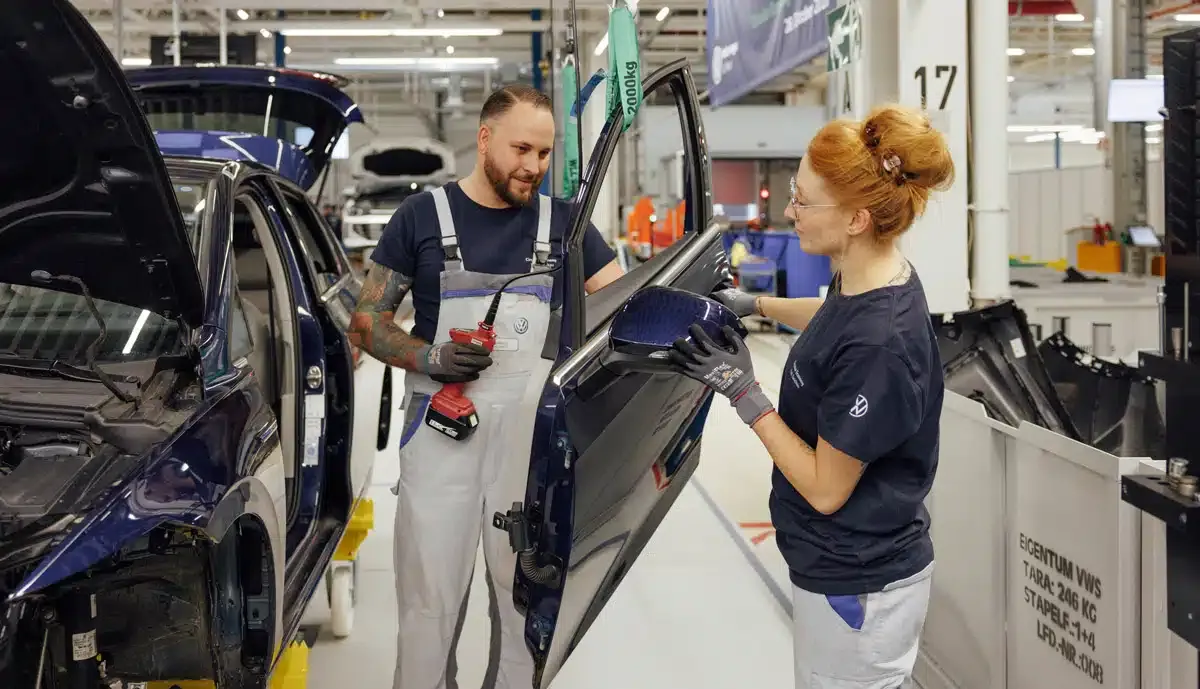
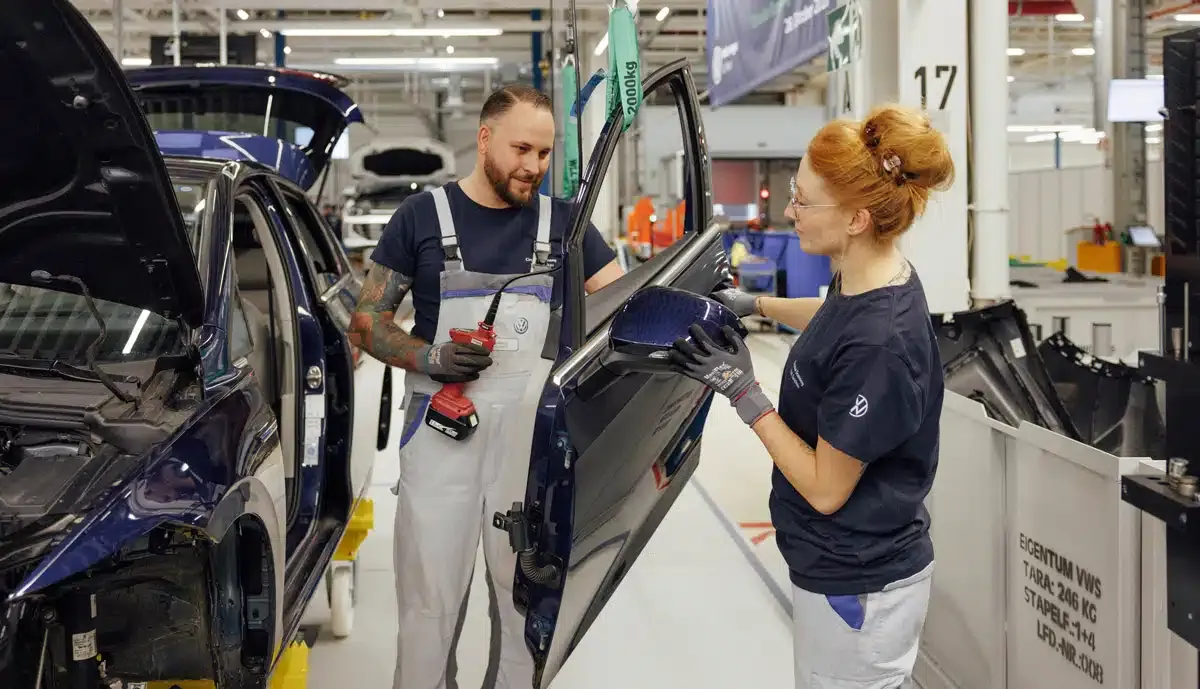
Image: VW
Volkswagen has put its first industrial disassembly line with eight stations into operation at its vehicle factory in Zwickau. The facility is initially used to dismantle pre-production vehicles and is intended to process used vehicles in the future as well. Starting in 2027, it is planned to disassemble 4,100 vehicles per year under a two-shift system, employing 100 workers. Volkswagen aims to collect used original parts from its group brands, make them available for sale, and recover raw materials.
The plant equipment was completed within nine months, including the approval process, three months ahead of schedule. For the renovation, 1200 square meters of floor were repainted, 94 tons of steel were installed, and 100 meters of high-voltage lines were set up for logistics operations. Additionally, areas were prepared for the environmentally sound storage of raw materials and waste, and existing equipment from vehicle manufacturing was reused for dismantling.
Volkswagen aims to create a new business area for used parts valued at their current worth and material recycling through industrial dismantling. Meanwhile, the recycling quotas for plastics and other raw materials set for Europe starting in 2032 require industrial, scalable dismantling processes according to the company. In the long term, the plastics recovered from end-of-life vehicles are expected to be sufficient for manufacturing three new cars. Volkswagen’s brand board member Thomas Schäfer views dismantling as an important component of future production, emphasizing that reuse ranges from recycled components to the development of new models.
With this new business unit, Volkswagen is expanding its after-sales portfolio to include used original parts, which will be distributed through existing dealer and service networks as well as independent workshops and parts suppliers. There is particularly high demand for body parts such as doors and bumpers, as well as for engine and transmission components. Marcus Edelmann, spokesperson for the management of Volkswagen Group OTLG, expects this offering to reduce economic total loss incidents and strengthen customer loyalty.
The establishment of a circular economy initiative at the Zwickau site was agreed upon during wage negotiations in December 2024. This new business unit is intended to employ up to 1,000 people and serve as a second source of employment and skill development in Central Germany, in addition to vehicle production. Zwickau will act as the company-wide center for circular economy expertise, where knowledge and skills across brands will be pooled. The Free State of Saxony supports this site in fulfilling this role.
In the long term, Volkswagen plans to establish a European partner network to expand its circular economy initiatives and optimize logistics costs. Through recycling, reprocessing, and second-life applications, the company aims to unlock new market and revenue opportunities, reduce material costs and dependence on primary raw materials, and enhance the resilience of its supply chains. The strategy follows the “Reduce & Grow” principle and includes approaches to cutting primary raw material use, addressing material-related emissions, and developing new business models.
"Electric, digital, and circular: This is the automotive industry of the future," said Andreas Walingen, head of Volkswagen Group Circular Economy. "Circular Economy is evolving from a sustainability concept into an industrial business model. The guiding principle is: One vehicle. Three value streams. One business model. To implement this successfully, we need speed, scaling through industrial processes and partnerships, as well as innovations for competitiveness. We have reached an important milestone in Zwickau with the start of vehicle dismantling even faster than planned, turning strategy into industrial reality."
Did you spot any errors? Please let us know
by email
about them. Thank you!
Also interesting
About the author
Thomas Langenbucher is an expert in electromobility with professional experience in the automotive industry and finance sector. Since 2011, he has been covering electric vehicles, sustainable technologies, and mobility solutions for ecomento.de. Learn more.
Reader interactions