
Volkswagen breaks labor agreements and prepares for another labor battle
Volkswagen is taking steps to try to survive a shift in the industry that is profoundly transforming German automakers. The company’s management believes the landscape facing the automotive industry has changed drastically in recent years, with increasing pressure on prices and profit margins. Now, this adjustment strategy has entered a new phase that directly affects the company’s labor relations.
The German manufacturer has decided to cancel almost all collective bargaining agreements in Germany, including one that sets much of the working conditions for its employees. This decision opens the door to new negotiations with IG Metall and the works council at a particularly delicate time for Volkswagen, which already has an extensive cost and job reduction program underway.
Volkswagen’s management justifies this move due to increasing pressure on its costs and the structural changes occurring in the market. According to Arne Meiswinkel, head of Human Resources at Volkswagen, the situation in the automotive industry and for the manufacturer itself has deteriorated significantly, with Chinese manufacturers entering the market and increasing pressure on prices and competition in Europe.
The union believes that the measures included in their so-called 2030 future plan must be implemented swiftly. Management argues that some of the conditions outlined in current agreements need to be adjusted to this new situation, while workers’ representatives see the decision as another attack on working conditions.
Volkswagen prepares another confrontation with its workers
In total, Volkswagen has 13 collective agreements under its own labor system. The company has not publicly specified how many it intends to cancel, but IG Metall claims it is ten, including the important framework agreement that governs numerous general conditions for workers.
This agreement sets forth aspects such as working conditions, working hours, and various wage supplements. In Germany, this system affects more than 100,000 Volkswagen workers, so any changes could have a significant impact on plant operations and the conditions of their employees.
The cancellation is scheduled for late 2026, and Volkswagen claims the goal is to open up new negotiating space. This means the current terms do not disappear automatically, but rather a period begins during which the company and union representatives must negotiate a new framework.
However, this move has triggered an immediate response from IG Metall and the works council. The union has announced it will oppose the decision, viewing it as another confrontation with the workforce. Its representative in Lower Saxony, Thorsten Gröger, described Volkswagen’s decision as an attack on workers and warned that they will not accept it.
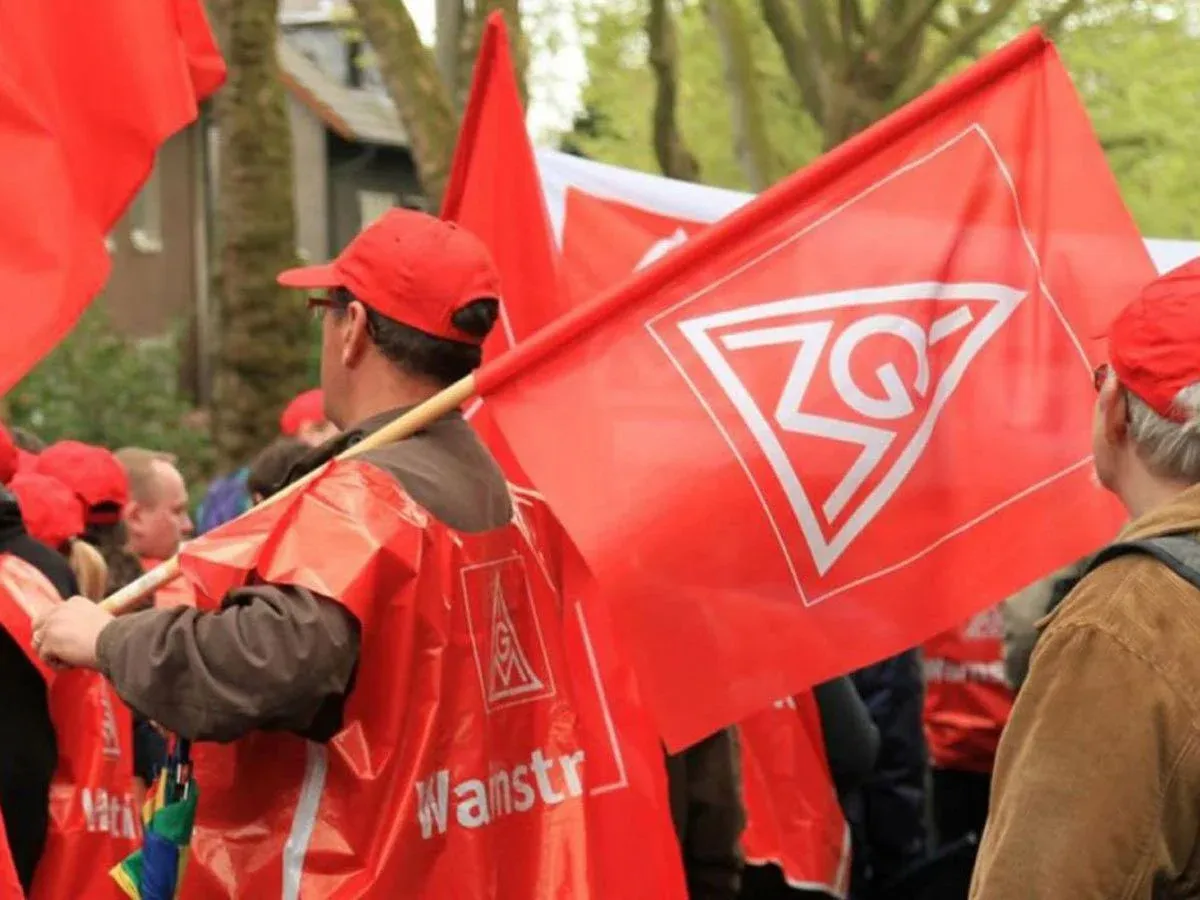
Daniela Cavallo, the president of Volkswagen’s works council, has also predicted a new conflict during the year change, following months of labor truce between the company and workers under the agreement reached at the end of 2024.
And that very agreement is one of the core elements of the new dispute. The 2024 pact was reached after several rounds of negotiations, protests, and warning strikes, and it established significant cost cuts for Volkswagen in exchange for concrete commitments to the workforce.
The agreement called for the reduction of over 35,000 jobs in Germany by 2030, along with cuts to bonuses and allowances and the postponement of certain wage increases. In exchange, Volkswagen agreed to maintain job guarantees until the end of 2030 and gave up on layoffs for business reasons and plant closures during that period.
Volkswagen itself explained that the agreement would allow it to permanently reduce its labor costs by about 1.5 billion euros per year, while the overall set of measures was expected to generate savings of over 15 billion euros annually in the medium term.
Now, workers’ representatives fear that the new savings program could call into question some of those commitments. Volkswagen, on the other hand, claims that market conditions have changed since that agreement and that the measures agreed upon at the time are no longer sufficient to address the current situation.
This new confrontation comes just weeks after Volkswagen’s supervisory board approved an ambitious transformation plan for the group. The company aims to further reduce its costs and streamline a structure it considers too complex to compete in a rapidly changing market.
The fate of several German factories remains uncertain as well. Volkswagen is evaluating the future of sites such as Emden, Hannover, and Zwickau, while there is also uncertainty regarding Neckarsulm, which belongs to Audi. Decisions about these facilities extend into the next decade and are part of a much broader industrial reorganization.
In the case of Volkswagen’s plants, the company had already agreed in 2024 to a significant reduction in its German production capacity. The agreement called for cutting output by 734,000 units and concentrating production at facilities deemed strategic for the coming years.
The new situation presents Volkswagen with an especially complex negotiation. On one hand, management wants more flexibility to reduce costs and adjust working conditions to its new industrial structure. On the other hand, IG Metall and the works council believe that the commitments made less than two years ago should be upheld.
The first consequences of the termination of these agreements could emerge by 2027, when the current labor framework for the affected deals expires. The conflict could intensify then if the two parties fail to reach a new agreement.
All of this is happening as Volkswagen attempts to accelerate a transformation that affects both its industrial structure and its model lineup. The company faces fierce international competition, especially in the Chinese market, and aims to reduce the complexity of its products and processes to improve its profit margins.
The company also remains committed to introducing new electric models and undergoing a thorough renewal of its product range. Volkswagen has announced new products for the coming years, including affordable electric models that will enable it to compete in higher-volume segments.
The labor dispute is therefore not an isolated issue. It is part of a much broader transformation affecting Volkswagen’s size, its factories, its product lineup, and its cost structure. The big question now is how far the negotiations between management and workers will go in the coming months and what conditions will ultimately replace the current ones.
