
Volkswagen, Renault, and Stellantis unite their forces to confront their greatest common enemy: the European Union
Unity makes strength, or so they say. The three major automobile conglomerates on the Old Continent are seeking to strengthen ties in order to confront their common enemy: Europe. Parliament and the Commission have established such strict environmental policies that they threaten to destroy the continent’s automotive industry. Meanwhile, China continues to expand its market share in Europe thanks to the constant flow of vehicles from the Far East. Renault, Stellantis, and Volkswagen are trying to reduce this pressure.
The proposal is quite clear: to create their own version of Detroit’s “Big Three” in order to pressure the European Union for rules on local content and exemptions from electrification mandates. The original European regulations proposed a ban on the sale of all internal combustion engine cars after 2035. This same year, Europe has relaxed its requirements, now proposing to reduce CO2 emissions from manufacturers’ fleets by 90% by 2035.
They account for 60% of cars manufactured in Europe
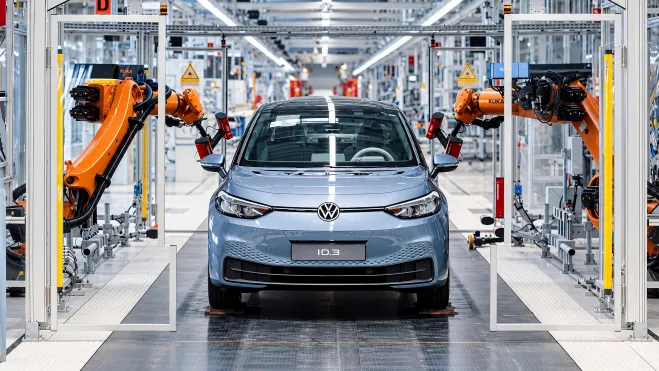
Even if it’s only 10%, it opens the door for the remaining portion of the fleet to still consist of hybrid cars or those with traditional engines, thanks to tools such as green credits. These green credits can be obtained by using recycled steel and materials, and most importantly, through local production (Made In Europe) of the key components, including batteries. The problem is that Europe isn’t prepared to manufacture such a large volume of batteries. The major energy projects planned for Europe are those from Chinese brands.
Faced with such a situation, Volkswagen, Stellantis, and Renault have decided to speak with one voice. Their CEOs, Oliver Blume, Antonio Filosa, and François Provost, appeared together in Paris and made it clear that they will jointly advocate before Brussels for reduced emission standards. Together, the three companies account for over 60% of cars manufactured in Europe, and traditionally each has operated independently. This change comes as Chinese brands now hold more than 13% of the European market, up from just under 2% at the beginning of 2024.
A united front with 90% agreement
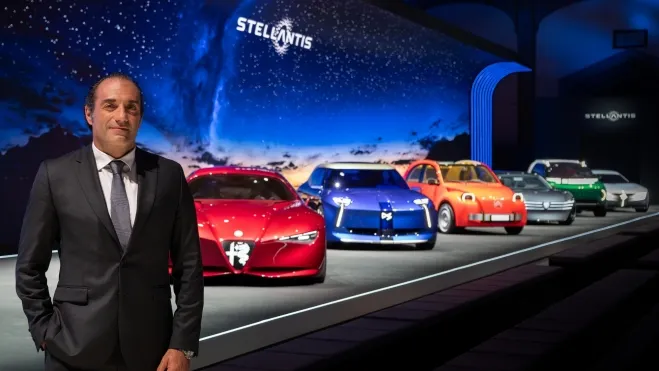
The meeting took place at the Paris Automotive Summit on October 13, held alongside the Paris Motor Show. There, Blume explained that the three groups are developing “common positions and concrete proposals” and called for an alliance among major European manufacturers. Filosa was equally clear: he is “absolutely” in favor of jointly defending common interests, estimating that they agree on 90% of issues. It is notable that BMW and Mercedes-Benz are absent from this group. The alliance consists of high-volume manufacturers, who are most affected by price pressure from Chinese competitors.
More room to meet CO2 targets
The core of the petition concerns emission targets. Blume wants the 2030 target to be measured using a multi-year average rather than a single year, to avoid massive fines or the need to purchase CO2 credits from Chinese manufacturers. Filosa requests that this average span five years, compared to the three proposed by the Commission.
Provost goes the farthest. He calls for freezing emission fines, calculating the target using the average from 2028 to 2032, and allowing plug-in hybrids to account for 20% of the market by 2035. Additionally, he proposes a ten-year moratorium on new regulations, arguing that such rules have increased the cost of each car by over 3,000 euros in six years. He warns that if no changes are made, he might suggest to his board eliminating certain models and cutting European production by about 300,000 cars per year.
Small Electric Vehicles and “Made in Europe”
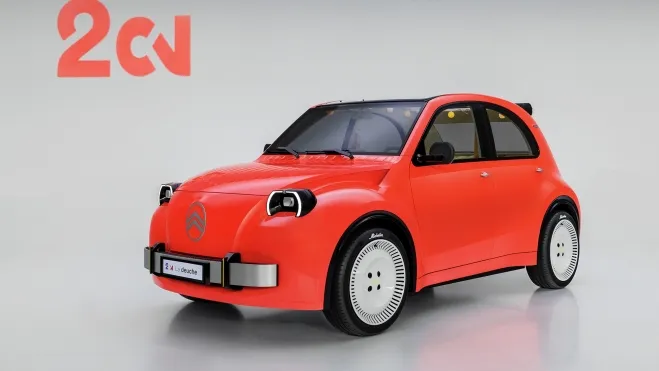
The second issue concerns urban cars. Blume acknowledges that electric vehicles under 4.2 meters in length leave little room for maneuver and calls for higher CO2 credits for them, so that each vehicle counts more heavily in emission calculations. Filosa supports this idea and ties it to an electric car priced around 15,000 euros, such as the Citroën 2CV Concept shown at the auto show.
The third point is the European preference. Blume proposes incentives for manufacturers that meet criteria for locally producing 70% of the cars they sell in Europe, along with direct support for battery production. Filosa notes that a European car should not be defined solely by where it is assembled, but also by where it is designed and developed. Provost adds that Chinese investment in Europe should use local suppliers.
Brussels is taking action, but slowly
The Commission already submitted in December 2025 a package that reduces the 2035 target from 100% to 90% CO2 reduction and creates a category for small electric vehicles up to 4.2 meters long. It also just reached an agreement with China on a limit of 350,000 hybrid vehicles imported per year. However, Provost regretted that there is still “no concrete decision” regarding the emissions pathway. For European buyers, what is decided in the coming months will determine car prices and availability. If Brussels does not provide more flexibility, the threat of fewer models and reduced production looms. If it does, the door opens slightly more for 15,000 euro electric vehicles manufactured locally, though at the cost of slower electrification progress.