
Volkswagen unveils VEGA, its ‘Made in China’ technology for electric cars with 800 km of range and a 13-minute charging time
29/10/2026 12:30
Updated to
29/10/2026 12:30
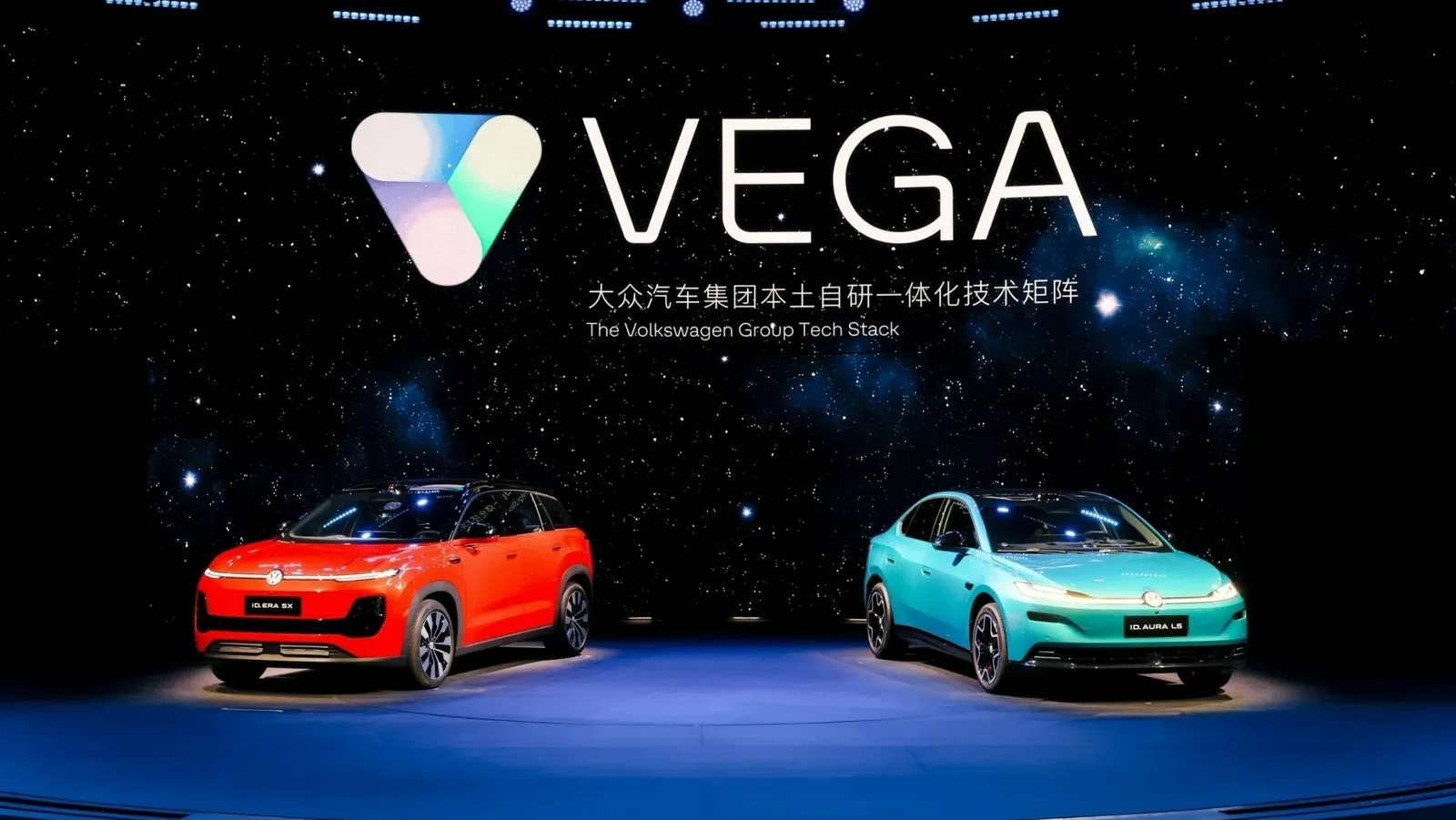
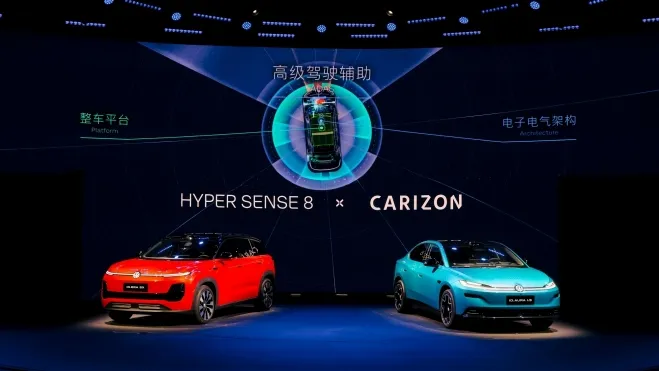
China has become the epicenter of the automotive world. The country captures all industry attention due to its rapid development and intense work pace. All manufacturers are focusing on China to reduce costs and development times. Volkswagen has just taken a significant step forward with its VEGA technology network. Named after Vega, one of the brightest stars in the northern hemisphere, the goal is to ensure its influence extends beyond China as well. It combines two platforms for electric vehicles, the CEA electronic architecture, and an advanced driver assistance system.
With its arrival, Volkswagen shifts from the slogan “in China, for China” to “in China, beyond China,” meaning it aims to use what it develops there to sell in other markets. This is another step forward in a relationship that took a turn in July 2023, when Volkswagen and Xpeng signed a major partnership worth $700 million (about 630 million euros), and it comes shortly after news emerged that the group is considering bringing the CEA platform to Europe.
Two platforms, one for compact cars and another for larger ones
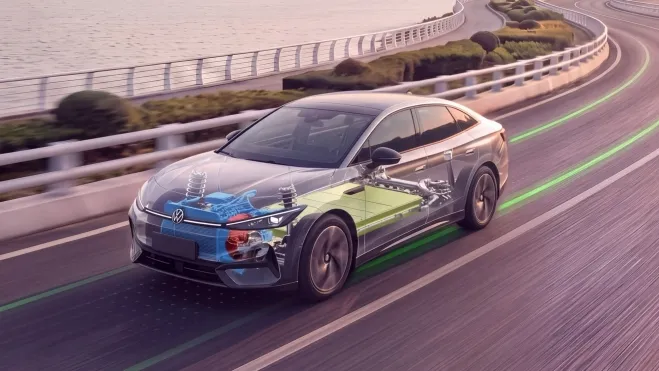
The CMP (China Main Platform) is designed for high-volume compact vehicles and supports pure electric and plug-in hybrid models. Its models will achieve over 600 kilometers of range in the Chinese CLTC cycle, with a fuel consumption of around 11 kWh per 100 kilometers. When the group announced it in 2024, the goal was to reduce costs by 40% to compete on price with Chinese brands.
The CSP (China Scalable Platform) targets larger and top-tier models, combining pure electric vehicles with extended-range electric vehicles where the gasoline engine only serves as a generator. Its electrical system exceeds 850 volts, allowing it to charge from 10% to 80% in just 13 minutes. Pure electric models will have a range of over 800 kilometers, while extended-range models will reach over 1,500 kilometers when including both the battery and fuel tank.
Stricter tests than those required by Chinese standards
Volkswagen claims that both platforms meet stricter validation requirements than Chinese regulations, including durability simulations on roads, high-speed stability tests, corrosion tests, and various rollover tests. As explained during the presentation, after a collision, the engine cuts power within 5 milliseconds and the high-voltage battery drops to a safe level in 5 seconds, compared to China’s requirement of 60 seconds. With this, the brand aims for five stars in C-NCAP, the Chinese equivalent of Euro NCAP.
The CEA architecture will also be used in internal combustion engines
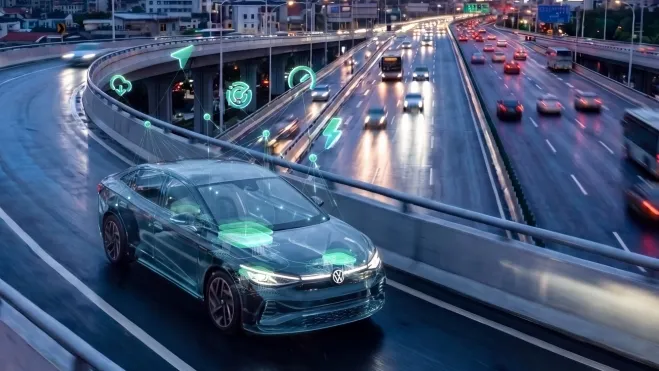
The CEA architecture is already in use this year in five Volkswagen vehicles manufactured in China, the first of which is the Volkswagen ID. UNYX 07. By 2027, it will be extended to plug-in hybrids and internal combustion engine models, integrating the functions of the cabin and driving assistance systems into a single central computer. The brand promises major software updates every three months and a complete overhaul of the architecture every two years. Additionally, it aims to have level 3 autonomous driving ready by 2027 and already holds a permit to test it on the roads of Hefei.
First the global South, what about Europe?
Volkswagen and Jetta models produced in China, with the latter being the group’s budget brand in that country, are already available in the Middle East, Uzbekistan, Kazakhstan, and Sub-Saharan Africa. By the end of 2026, they will also reach Mexico, Egypt, and Vietnam, bringing the total to seven markets. In the long term, the plan is to introduce the CMP platform and CEA architecture to more countries in the so-called Global South, starting with South America before 2030. Europe is not included in this roadmap, at least officially, although the group is already considering using the CEA architecture in around 75% of future Volkswagen, Skoda, and CUPRA models. Currently, the group’s smallest and cheapest electric vehicles are manufactured in Spain and Portugal, with significant production taking place at facilities in Navarra and Barcelona.