
Volkswagen prepares its most efficient electric car: 780 kilometers of real-world range
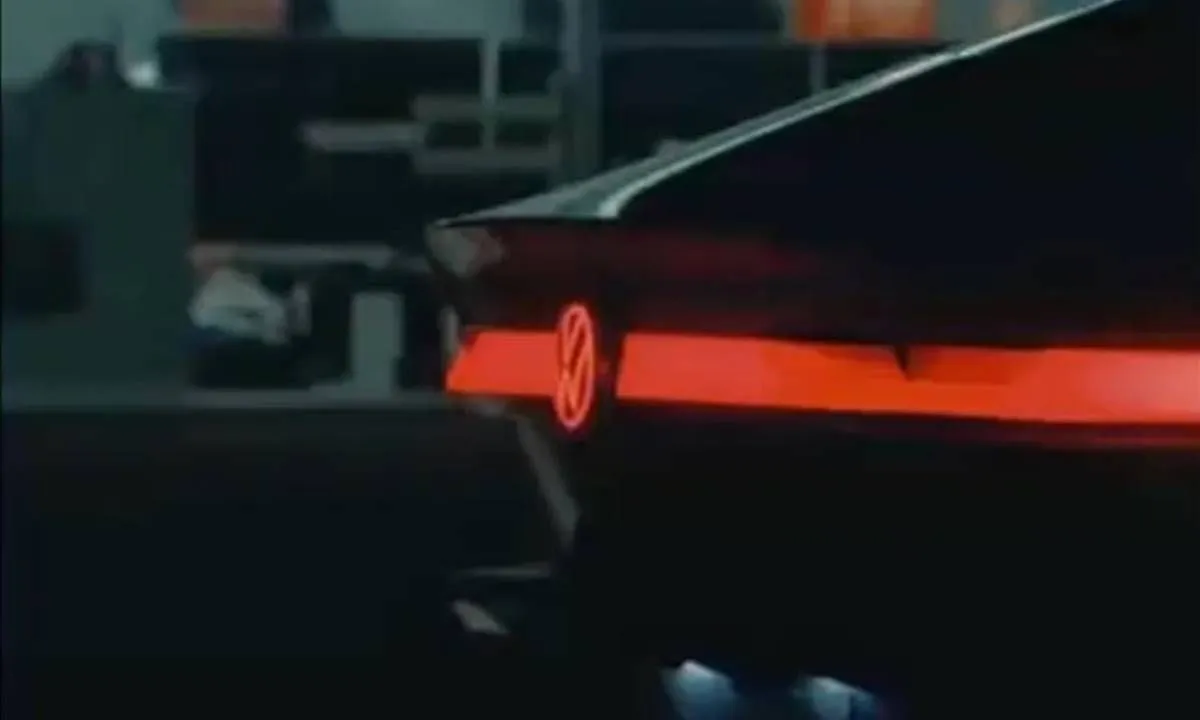
Volkswagen is developing an electric car designed to push efficiency to new limits. The German brand has begun showing the first images of the Mission Efficiency, a prototype created with a very specific goal: to determine how far energy consumption can be reduced in an electric car while maintaining characteristics fairly similar to those of a regular daily driver vehicle.
The project still holds many secrets, but Volkswagen has confirmed that the prototype is ready for a real-world test. The brand will undertake a journey of about 780 kilometers between Wolfsburg and Vienna, aiming to study the relationship between aerodynamics, energy consumption, and electric mobility on roads. A presentation with all the details is scheduled for September 14th.
So far, Volkswagen has not revealed the power output, battery capacity, range, or energy consumption figures for the Mission Efficiency. What we do know is that it is an electric car, and the prototype is already functional. The company states that the goal is to explore the limits of what’s possible using a fully operational vehicle based largely on components and technology from production lines. It will not be a model intended for sale, but rather a mobile laboratory to study solutions that could be applied to future electric cars.
The first images make it quite clear where the engineers’ efforts have gone. The Mission Efficiency features an extremely aerodynamic body design, with a very low and flat front end, a roof line that slopes downward gradually, and a clearly angled rear section. It also has tires designed to reduce turbulence and noticeably wide wheelbases—a combination aimed at minimizing drag.
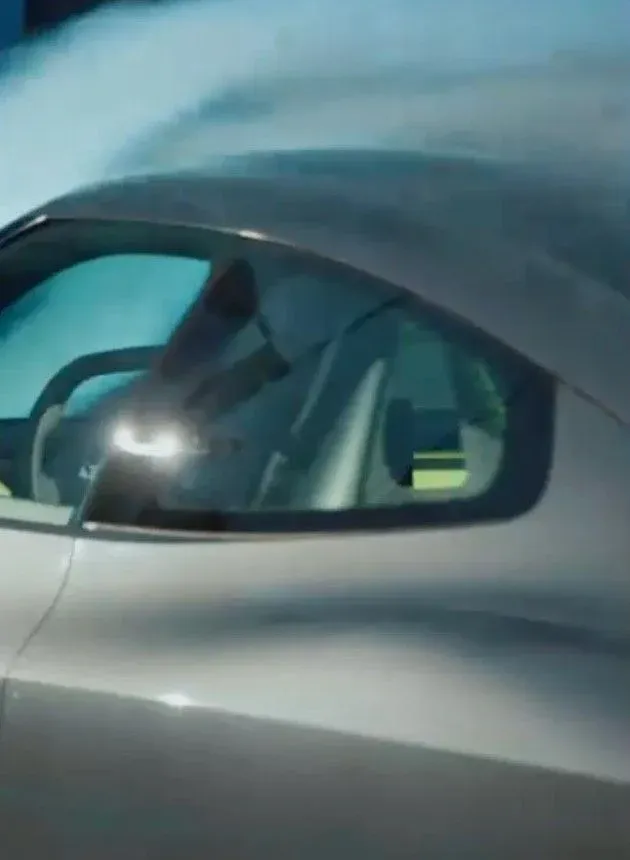
Although the dimensions of the prototype and its aerodynamic coefficient have not yet been released, its design inevitably recalls other experiments conducted by Volkswagen to create vehicles with exceptionally low energy consumption. The difference is that the manufacturer has now applied this approach to electric cars, where every small improvement in aerodynamics can have a direct impact on fuel consumption and, consequently, on range.
The most obvious precedent within Volkswagen itself is the XL1, introduced in 2013 as one of the brand’s most extreme efficiency projects. That model achieved an official fuel consumption of just 0.9 liters per 100 kilometers, thanks to a combination of low weight, highly optimized aerodynamics, and a plug-in hybrid system. Its drag coefficient was 0.189, and its weight was only 795 kilograms.
The XL1 used a 0.8-liter two-cylinder diesel engine with 48 horsepower, paired with an electric motor producing 27 horsepower. The combined power reached 51 kW during peak demand, and the battery had a capacity of 5.5 kWh. Volkswagen also managed to make the model travel up to 50 kilometers using electricity alone, while its combined range exceeded 500 kilometers.
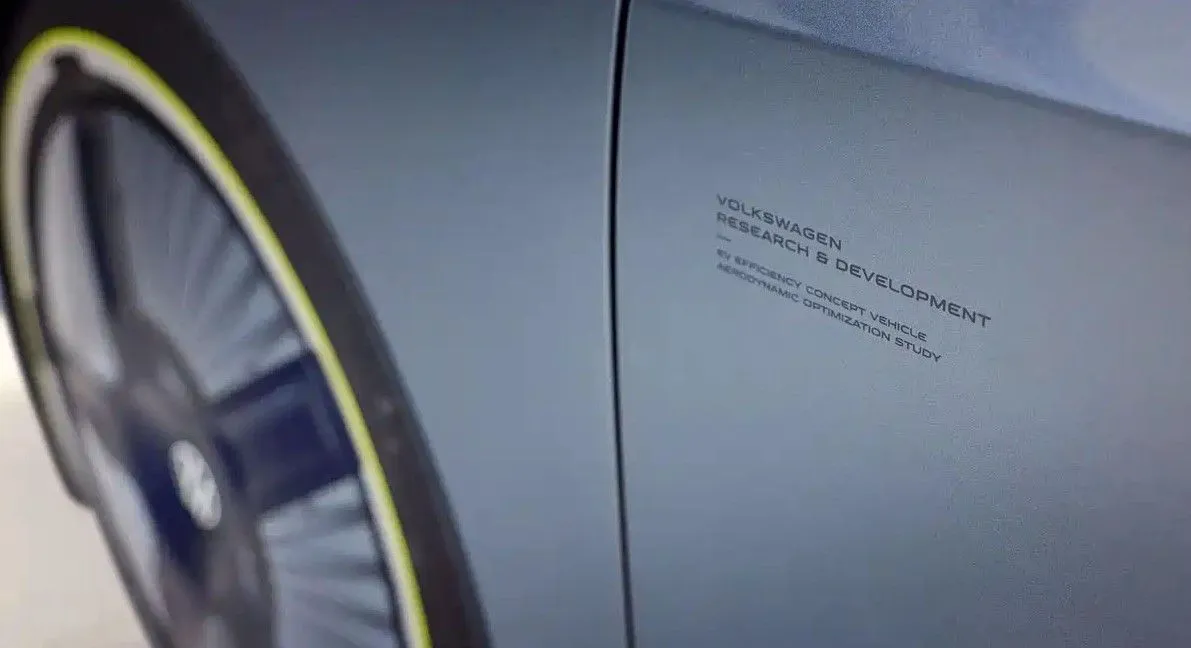
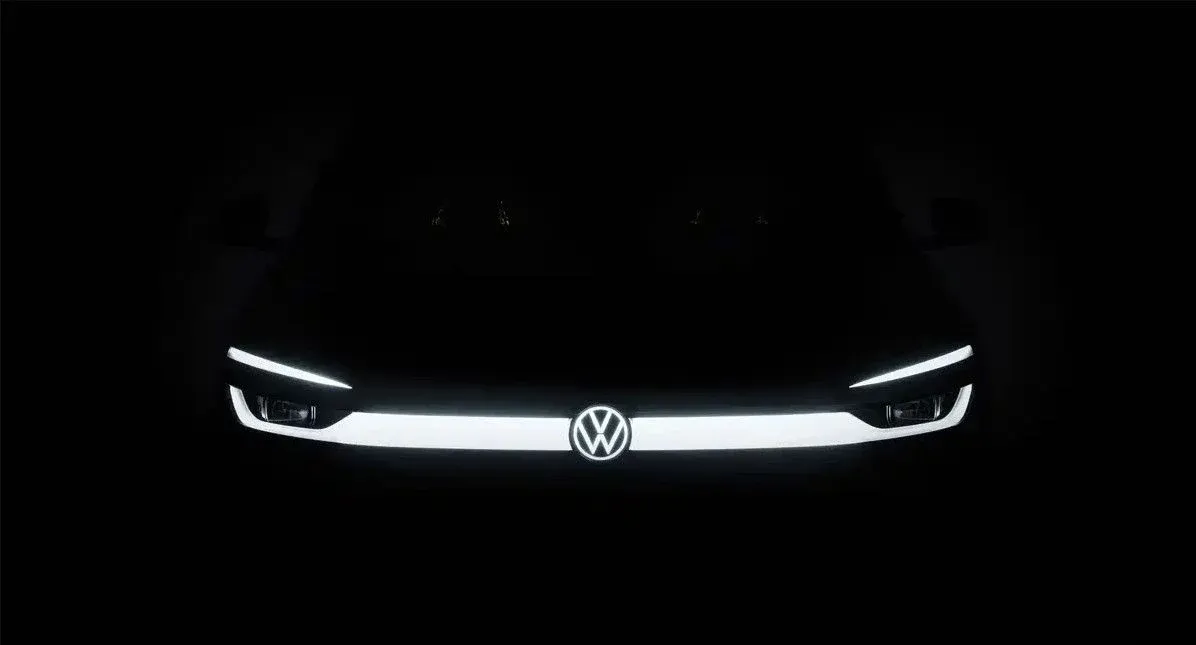
The Mission Efficiency follows a similar philosophy, but adapted to an era where the efficiency of electric cars has become one of the main battlegrounds among manufacturers. Rather than focusing solely on a higher-capacity battery, Volkswagen seems to be pursuing the opposite approach: ensuring that each kWh allows for as many kilometers as possible.
This also explains the significance of the test between Wolfsburg and Vienna. It’s not just about showcasing a prototype with an especially eye-catching body design; it’s about seeing what happens when all these solutions are put to the test on real roads. Volkswagen explicitly mentions analyzing aerodynamic performance, energy consumption, and electric mobility under actual conditions.
For now, we will have to wait to find out what details can truly make the Mission Efficiency a significant news story. Its battery capacity, weight, propulsion system power, fuel consumption during testing, and especially the technology Volkswagen used to achieve these results will be key factors in this project.
More details about a prototype that aims to revive Volkswagen’s focus on efficiency—exemplified by the XL1—will be revealed on September 14. This time, however, the goal is not to create a car that uses as little fuel as possible, but rather to demonstrate how far an electric vehicle can go when efficiency is the top priority.