
Volkswagen unveiled the ID.3 GTI, featuring 240 kW of power and rear-wheel drive, but it’s still based on the GTX platform.
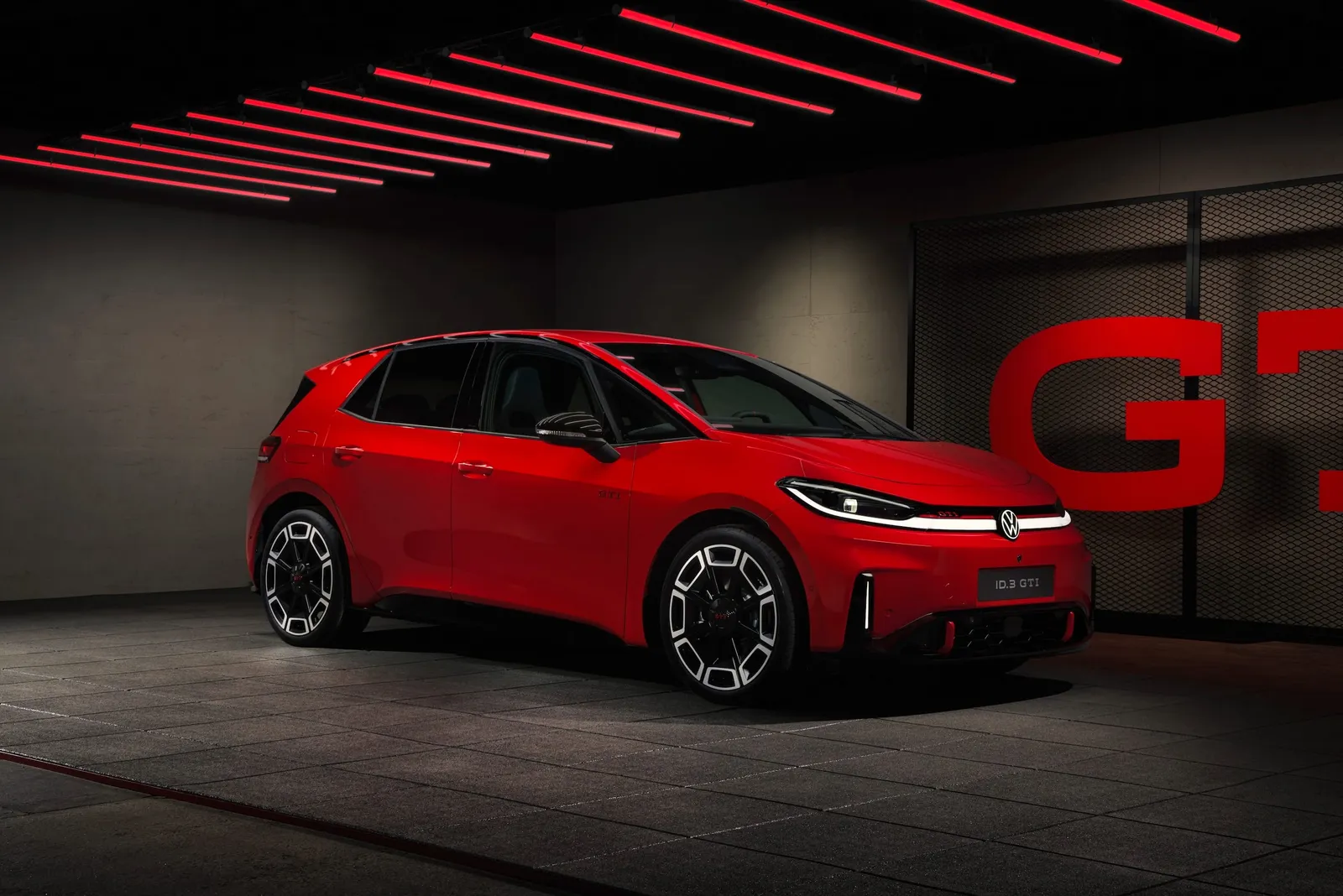
Volkswagen officially unveiled the ID.3 GTI, the second electric model from the legendary brand following the ID. Polo GTI. The car boasts 240 kW of power, 545 Nm of torque, a 0-100 km/h acceleration time of 5.6 seconds, and will go on sale in Europe in spring 2027.
Table of Contents
Show
Hide
However, something else is more important: this isn’t a completely new design but rather a highly refined version of the ID.3 GTX Performance. And it’s here that the more interesting part of this launch begins.
GTI for the first time without emissions and for the first time with rear-wheel drive
Volkswagen has long kept its sports electric vehicles under the GTX brand. Now it takes another step by bringing GTI into the EV world without any excuses. In practice, the ID.3 GTI is the second such vehicle after the previously unveiled ID. Polo GTI, but for many brand fans, this model will be more significant. After all, the ID.3 was from the start the electric counterpart to the Golf.
The new model has 240 kW, or 322 horsepower, and 545 Nm of torque. Power is delivered exclusively to the rear axle, making it the first rear-wheel-drive GTI in history. This is thanks to the MEB+ architecture, which retains the typical layout for Volkswagen electric vehicles with an engine at the rear in the ID.3.
The 0-100 km/h sprint takes 5.6 seconds, and the top speed is limited to 200 km/h. It sounds good, but one thing must be said honestly: in terms of performance, it’s not a knockout. For comparison, the gasoline-powered Golf GTI Edition 50 has 239 kW and, according to the manufacturer, reaches 0-100 km/h in 5.3 seconds. So, formally, the electric version is the most powerful production GTI in history, but only by 1 kW.
This sounds a bit like a record on paper. It is real, but minimal.
The same old core underneath, a new GTI on top
The biggest drawback of this launch is simple: the ID.3 GTI doesn’t get a new powertrain. Volkswagen relies on the already familiar APP550 engine, the same one that was used in the ID.3 GTX Performance. From a marketing perspective, it’s a new chapter; from a technical standpoint, it’s more like rewriting an old chapter in red and black.
That doesn’t mean the changes are merely cosmetic. The car is based on the refreshed ID.3 Neo, so it features a newer interior, an improved interface, and several features that were simply missing in the older ID models.
Volkswagen has added larger screens, physical buttons, and new elements typical of the GTI. Inside, there are sporty seats, red accents, a red 12 o’clock marker on the steering wheel, and a dashboard strip in the same color. The central screen is 12.9 inches large, while the gauge cluster has grown to around 10–10.25 inches depending on the market and material, with classic buttons returning beneath the screen. Yes, finally.
On the outside, there’s a new front bumper, red detailing inspired by the original 1976 Golf GTI, and 20-inch Wörthersee wheels. The standard tires have a width of 225 mm, with 235 mm available as an option.
The GTI will rely on its suspension, not just the badge, to stand out
Volkswagen knows that simply attaching a GTI badge to an electric vehicle isn’t enough. That’s why it emphasizes changes to the chassis more than ever before. Standard features include adaptive DCC suspension, a progressive steering system, and individually tuned springs, shock absorbers, and stabilizers.
The manufacturer also mentions changes to the kinematics of the front axle and specially developed tires. The goal is clear: the ID.3 GTI is intended to offer a significantly sharper driving experience than regular versions and one that differs slightly from its closely related GTX Performance model.
In addition, there’s a new GTI mode activated by a illuminated button on the steering wheel. Once activated, the car switches its powertrain, steering system, and suspension to the most sporty settings. Launch Control is also enabled.
Volkswagen adds digital sound effects styled after those of its gasoline-powered GTI models. Some will like it, while others will roll their eyes. Hyundai did something similar in the Ioniq 5 N and found customers for it, so the Germans clearly decided it was worth trying as well.
Range is good, charging is less impressive
The ID.3 GTI uses a battery with a net capacity of 79 kWh. The claimed range is up to 601 km under WLTP standards, which is about 10 km more than the previous GTX model. On paper, this looks good, especially for a compact hot hatch.
Fast charging is less impressive. The maximum charging power is 183 kW, which is only slightly higher than before. Worse still, the charging time from 10% to 80% is said to be around 29 minutes, whereas earlier information on the GTX indicated 26–27 minutes depending on the version and specifications.
This is the moment when it’s worth separating marketing from reality. 601 km WLTP doesn’t mean 601 km at higher speeds, and 183 kW says nothing about the entire charging curve. If Volkswagen doesn’t demonstrate better power retention, the ID.3 GTI won’t make as strong an impression on the road as it does in brochures.
Volkswagen ID.3 GTI Specifications
Parameter
Volkswagen ID.3 GTI
Power
240 kW
Torque
545 Nm
Drive Type
Rear-wheel drive
0-100 km/h
5.6 s
Top Speed
200 km/h
Net Battery Capacity
79 kWh
WLTP Range
up to 601 km
Fast DC Charging
up to 183 kW
Charging from 10-80%
about 29 minutes
Wheels
20 inches
Europe Launch
spring 2027
How much it might cost and whether it’s worth it compared to competitors
Volkswagen has not yet announced the price. Pre-sales are set to begin in early 2027, with a market launch planned for spring 2027. However, there is already a reference point: the ID. Polo GTI starts at 39,000 euros in Germany.
The ID.3 GTI is therefore expected to cost significantly more. A reasonable estimate would be around the price of higher trims of the current ID.3, at a level where it would compete with more powerful rivals. If Volkswagen overprices it, problems could arise. That’s because customers will then look not only at the Golf GTI but also at the Hyundai Ioniq 5 N, higher-powered versions of the Tesla Model 3, or used hot hatches in a higher segment.
In Poland, this model is unlikely to become a best-selling hit. It might, however, be important for brand image, as GTI carries much more weight for Volkswagen than GTX. The question is whether drivers will buy into this concept if they see that it relies largely on well-known technology beneath the guise of a legendary name.
The ID.3 GTI seems like an attempt to blend two worlds: the passion of the Golf GTI era with a platform designed from the start as an electric vehicle. Is that enough to stop people from treating it as just a facelifted GTX?