
Volkswagen showed off the ID. California Cruise. This electric camper will be available to customers in early 2027.
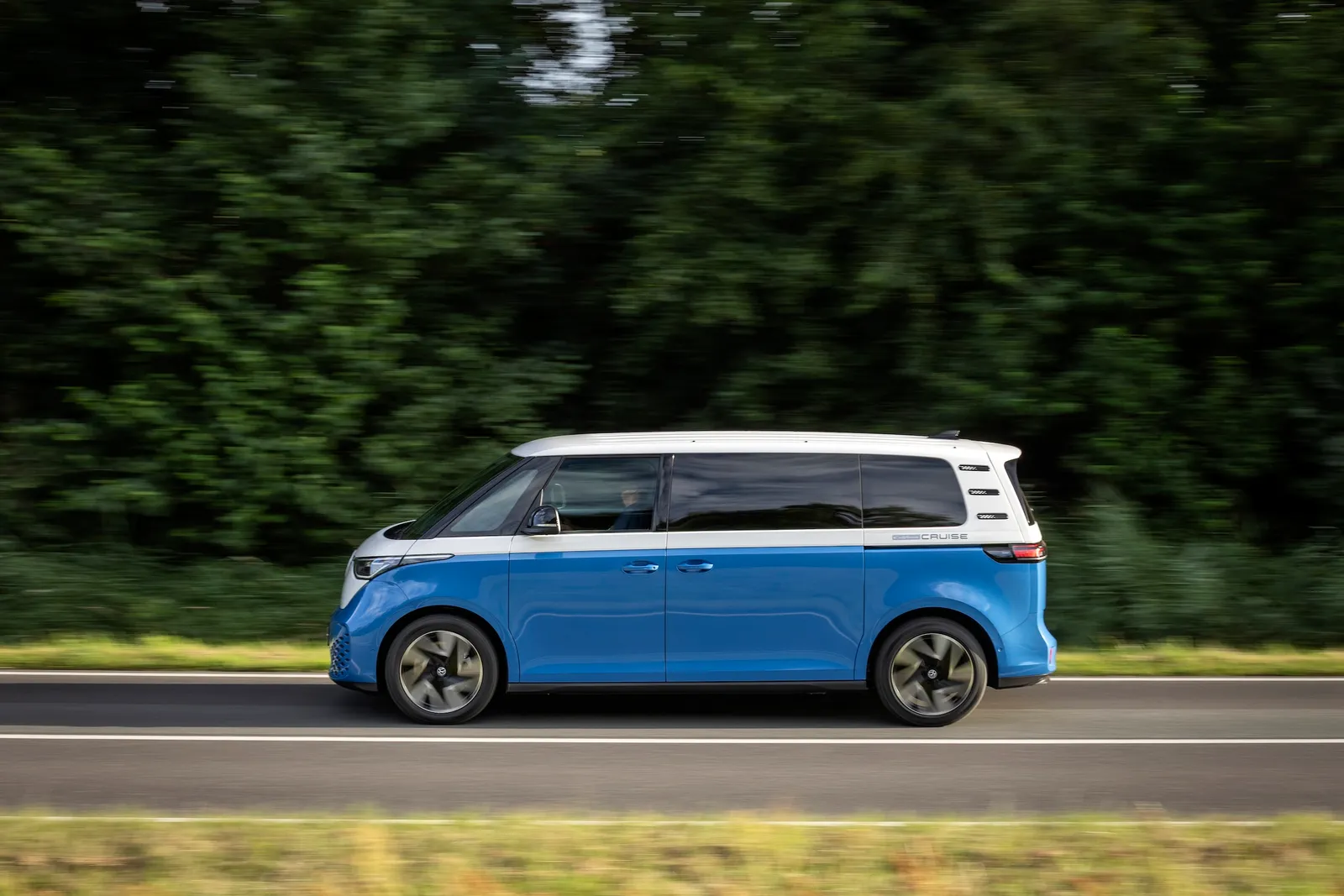
Volkswagen Commercial Vehicles unveiled the ID. California Cruise in Düsseldorf, the first all-electric version of the California model based on the ID. Buzz. It will make its debut at the Caravan Salon 2026, with first deliveries scheduled for early 2027. This is a significant move for the brand, but for now it is more of a practical weekend vehicle rather than a full-featured counterpart to the traditional California.
Table of Contents
Show
Hide
The ID. California Cruise is set to launch a new electric California family that Volkswagen plans to expand by 2028. So far, we mainly know about its camping equipment and onboard features. Prices and complete technical specifications are still unavailable.
Specifications
Volkswagen ID. California Cruise
Chassis
ID. Buzz Pro
Powertrain
electric
Availability
early 2027
Wheelbase
short and long
Sleeping spaces
2
Bed dimensions
2.03 x 1.20 m
Mattress
folding, 9 cm thick
Idle mode
California Mode
Air conditioning during stay
up to 48 hours, depending on conditions
V2L
2,000 W continuous, 3.6 kW peak power
Charging on the road
plan stops in California App
Plug & Charge
yes, at compatible stations
Two sleeping spaces with minimal interior space
The most important information is simple: it’s possible to sleep inside. Volkswagen has provided a bed that is 2.03 meters long and 1.20 meters wide, along with a folding mattress that is 9 cm thick. There are also ventilation grills for the front windows, a complete blackout system, and space for two chairs and a table.
This sounds reasonable for two people on a weekend or short road trip. It’s less suitable if someone is expecting an electric successor to the classic California with a liftgate and more spacious living area. That simply isn’t available here.
Volkswagen positions this model as more of a daily car with camping capabilities rather than a full-fledged camper. And honestly, that’s probably how it should be viewed.
California Mode and V2L Work Well When Stopped
A new feature is the special California mode. The car has a dedicated controller that manages selected lighting and comfort functions, maintains power to USB ports, and prepares the interior for camping overnight.
The manufacturer also claims that the air conditioning can heat or cool the cabin for up to 48 hours continuously. Here’s a caveat: the actual runtime depends on the battery level and outside temperature. In extreme cold or heat, this figure will be more of a wish than a reality.
The much more interesting feature is Vehicle-to-Load. The ID. California Cruise can deliver up to 2,000 W of continuous power and 3.6 kW of peak power, so it can power a coffee maker, an outdoor refrigerator, lighting, an e-bike charger, or a small camp kitchen. In a camper van, this isn’t just a gadget—it’s a real advantage of electric over diesel vans without additional wiring.
The app will show available chargers, but physics can’t be fooled
Volkswagen is also expanding the California App. During route planning, suitable charging stations will appear in it, and owners will have the option to schedule trips along with stops for recharging. Additionally, Plug & Charge is available at compatible stations.
This is good news because in an electric camper, planning charging isn’t an add-on but part of the entire journey. Especially if the vehicle needs to stay overnight, cool the interior, and power equipment via V2L.
It’s a shame that Volkswagen didn’t provide the most important details for EV drivers at launch: battery capacity, DC charging power, claimed range, or the vehicle’s weight after adding the camping package. Without this information, it’s hard to determine whether it’s a convenient companion for 300 km per day or a vehicle that will require a very relaxed travel plan.
The Polish accent is consistent and quite natural. The California family has a strong production base here, as the Caddy California is manufactured in Poznań, while the Grand California is based on the Crafter from Września.
Volkswagen took the first step toward an electric California, but the second one must be less showy and more focused on numbers. What do you think—today, in a camper, are V2L and sleeping space for two people more important, or is a classic liftback roof and greater independence from chargers more crucial?
LovEV Newsletter
Want more content like this?
Sign up—we’ll send you a weekly summary once the newsletter starts.