
Volkswagen Mission Efficiency leaves even the most fuel-efficient Tesla Model 3 far behind
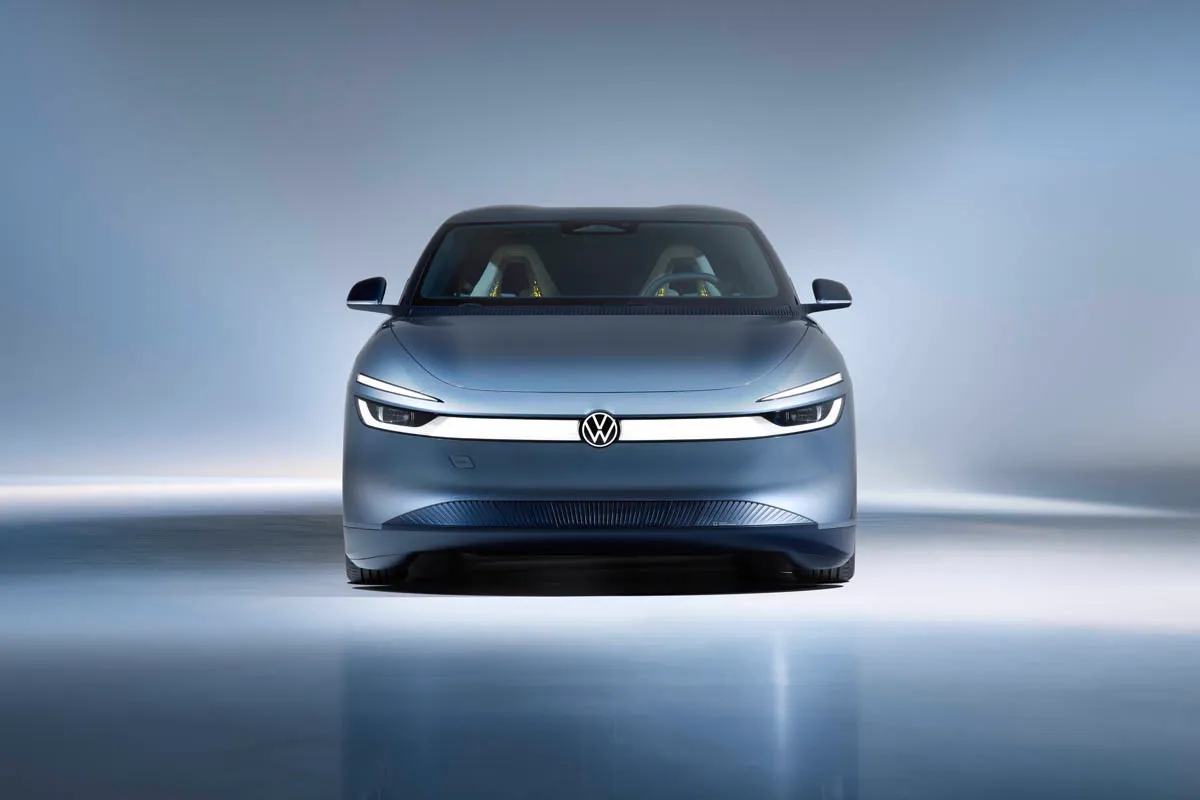
The Volkswagen Mission Efficiency achieves an impressive figure: just 8.4 kWh/100 km according to WLTP standards. This leaves even the most fuel-efficient Teslas far behind. Yet this record-breaking car isn’t just a mere experiment. It features four seats, 481 liters of cargo space, and plenty of technology borrowed from the new ID. Polo.
Volkswagen Mission Efficiency is not a production car
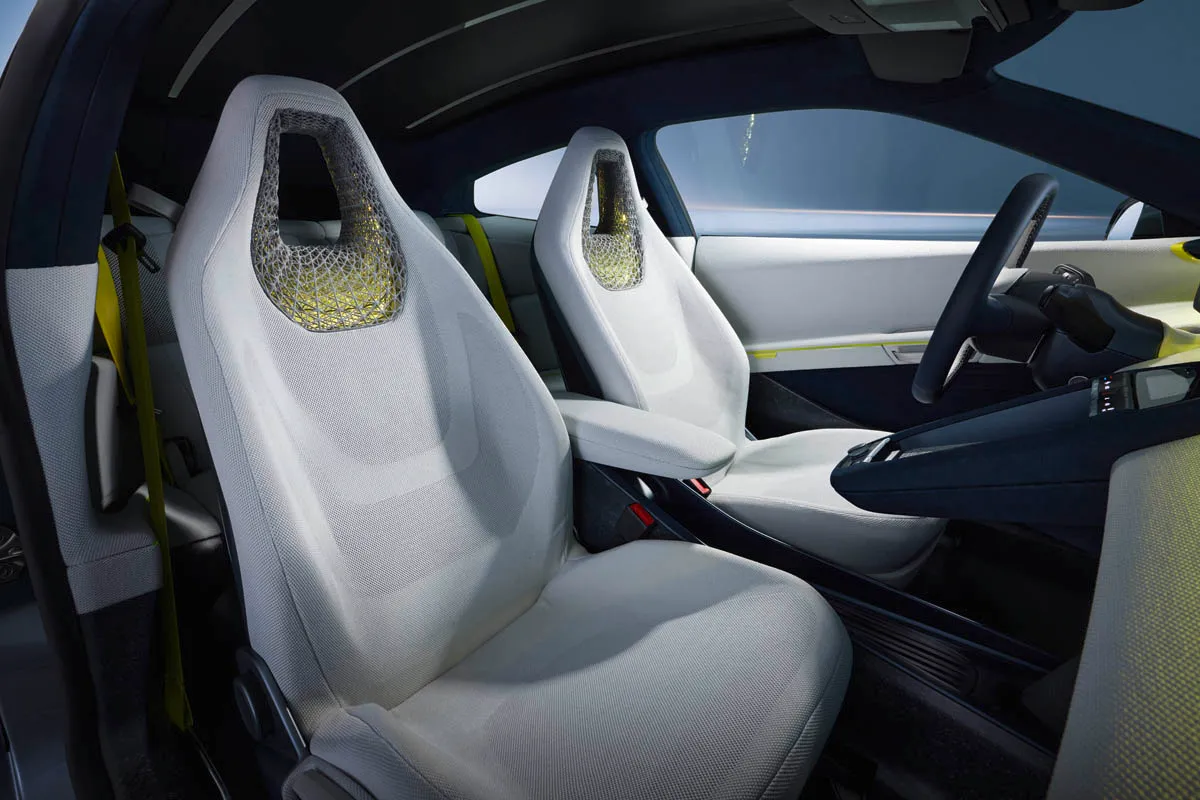
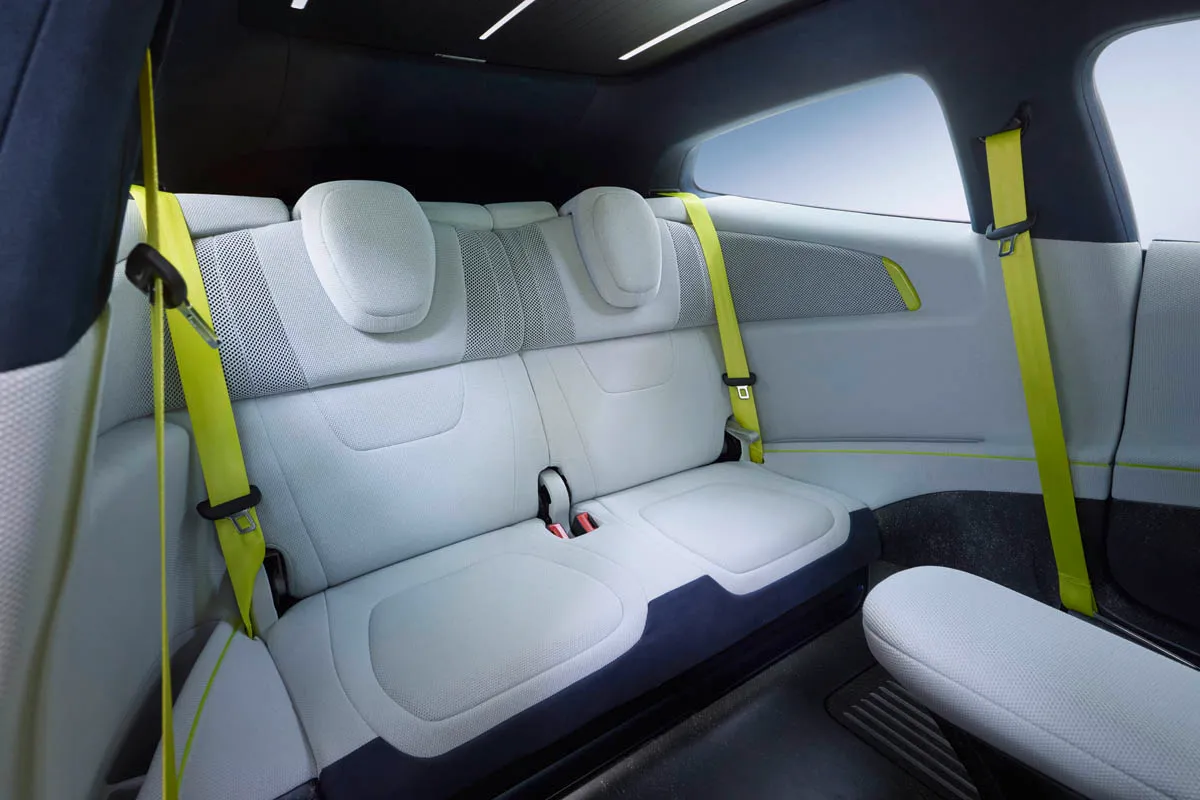
To start with the most important nuance right away: the Volkswagen Mission Efficiency cannot be ordered. Volkswagen itself describes it as a concept car that is nearly ready for production. It was developed to demonstrate how far electric vehicle fuel consumption can be reduced when aerodynamics, weight, and drive technology are fully optimized for efficiency. This makes it fundamentally different from many record-breaking cars. The Mission Efficiency is not built as a tiny one-seater designed to perform exceptionally only on a test track. It has European road approval, four seats, and a cargo space of 481 liters. Two adults can sit comfortably in the front seat. According to Volkswagen, the two rear seats are primarily intended for passengers who are about 1.60 meters tall. In reality, it is therefore a 2+2-seater vehicle.
The technology also makes it interesting. Volkswagen didn’t develop an exotic electric powertrain from scratch but uses many components from the new ID. Polo and MEB+ platforms. The Mission Efficiency is meant to show just how much further improvements are possible without simply adding a larger battery pack to an electric car. And that’s where one figure stands out immediately: 8.4 kWh/100 km according to WLTP.
Even Lightyear and the most fuel-efficient Tesla fall short
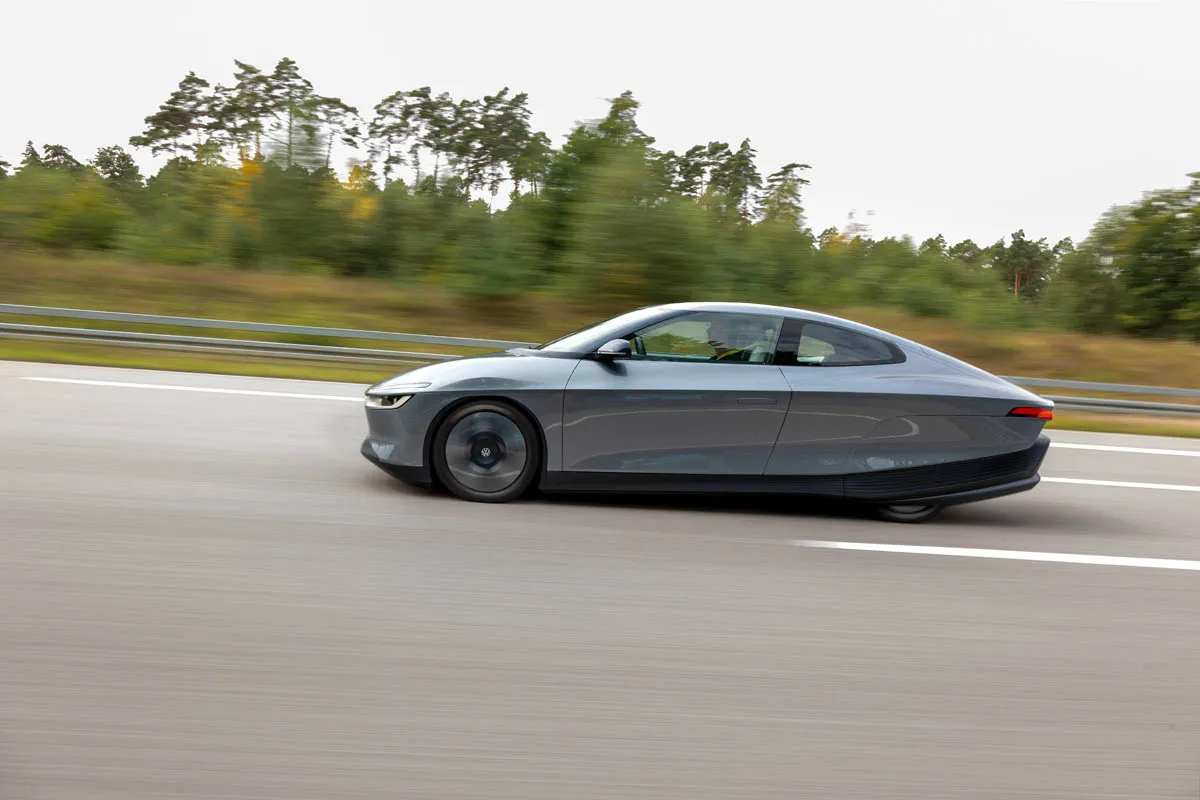
The extremely low fuel consumption becomes clear when we place the Volkswagen Mission Efficiency next to two of the most efficient electric production vehicles. We deliberately compare only official WLTP figures, so as not to contrast real-world fuel consumption with a laboratory value.
The Dutch Lightyear 0 is perhaps the most interesting comparison. Like the Volkswagen, this car was designed almost entirely around minimizing air resistance and reducing power consumption as much as possible. The final production version had an official WLTP fuel consumption of 10.5 kWh/100 km, which was exceptionally low, but the Volkswagen fell even further behind at 8.4 kWh/100 km—20 percent lower. The Lightyear 0 did enter limited series production, though that venture lasted only a very short time. The car was available from November 2022 to January 2023 before production was halted. As a result, this Dutch efficiency marvel remained primarily a fascinating chapter in the brief history of electric cars.
If we look at an electric car that you can order today, the Tesla Model 3 Standard RWD comes to mind. In this version, it ranks among the most fuel-efficient production electric cars available today, with an official WLTP fuel consumption of 13.0 kWh/100 km. When compared to the Mission Efficiency’s 8.4 kWh/100 km, the Volkswagen uses more than 35 percent less energy according to the same WLTP testing method.
That’s a huge difference. Of course, there’s another caveat: the Tesla is a full-sized five-seater production car that you can simply buy. The Volkswagen is a concept car where almost every technical decision was made with efficiency in mind. But precisely because the Mission Efficiency still has four seats, a substantial trunk space, and many production-oriented features, the difference remains interesting.
Record drive achieves 6.89 kWh/100 km
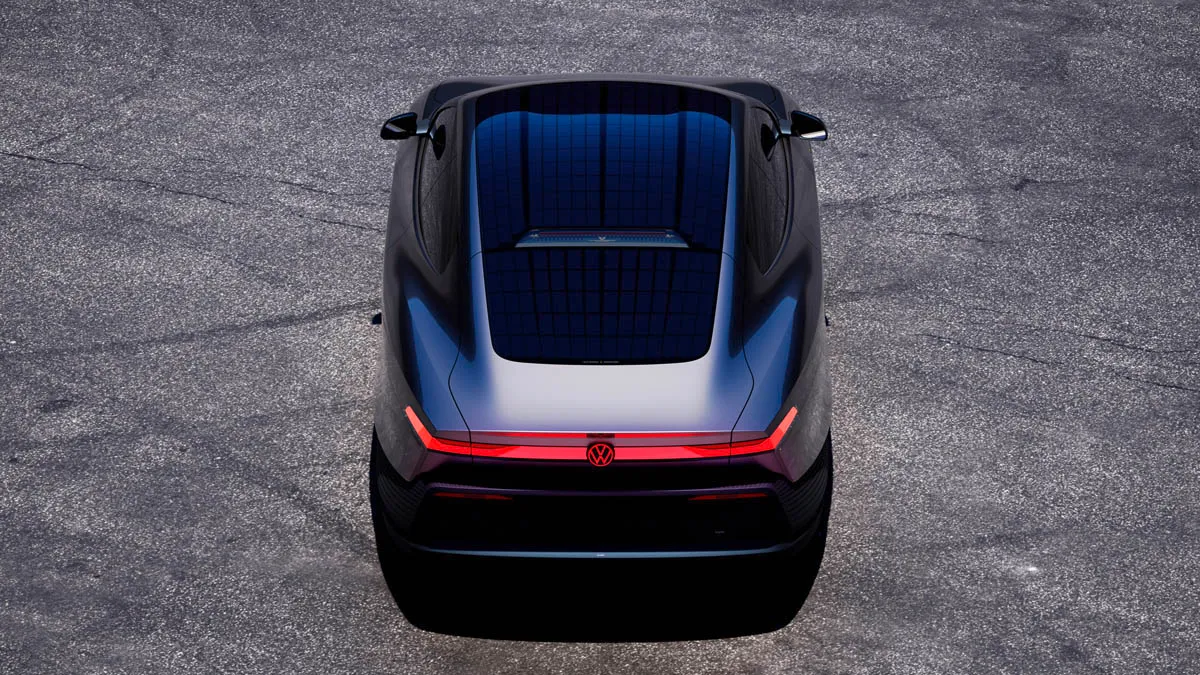
Volkswagen wasn’t satisfied with 8.4 kWh/100 km. The Mission Efficiency was also used for a long record drive from Wolfsburg via Poznan in Poland and Olomouc in the Czech Republic to Vienna. After exactly 1,278.36 kilometers, the average consumption was just 6.89 kWh/100 km, measured without accounting for charging losses.
Including charging losses, Volkswagen’s figure was 7.51 kWh/100 km. The average speed during the drive was 67.72 km/h, with a top speed of 138 km/h. The 54.9 kWh net battery pack only needed to be recharged once during the entire journey. Upon arriving in Vienna, the car still had 164 kilometers of range left.
Volkswagen claims to have set three records in the category of nearly production-ready electric four-seaters suitable for daily use with the Mission Efficiency. This description is important—Volkswagen isn’t simply claiming that no vehicle has ever used less electricity.
The record drive is also not directly comparable to WLTP. That’s why we might find the official figure of 8.4 kWh/100 km actually more interesting in the end. At least with this value, we can make reasonable comparisons with cars like the Tesla Model 3 and Lightyear 0.
A Cw value of 0.158 makes a difference
The secret lies largely in the body design. The Mission Efficiency has a Cw value of just 0.158 and a frontal area of 2.08 square meters—extremely low.
The chassis is 4,775 meters long but only 1,392 meters high. Towards the back, the car becomes both lower and narrower. This allows air flow to remain along the chassis for as long as possible without causing significant turbulence behind the car.
The rear wheels are completely covered, and the undercarriage is almost entirely enclosed. At the front, there are three active cooling valves. They open individually and only to the extent necessary for cooling at that moment. The smaller the opening, the lower the air resistance.
Volkswagen also developed special air guides on the inside of the wheels. These are designed to prevent air from entering the rims and causing additional turbulence. The tires were likewise developed specifically for this project, combining very low rolling resistance with aerodynamically optimized sidewalls. Interestingly, Volkswagen installed regular exterior mirrors. Calculations and wind tunnel tests showed that cameras were hardly more efficient. Moreover, cameras and the associated screens consume energy and increase the car’s cost. In a project where every watt counts, the traditional mirror turned out to be far from outdated after all.
The technology largely comes from the ID. Polo.
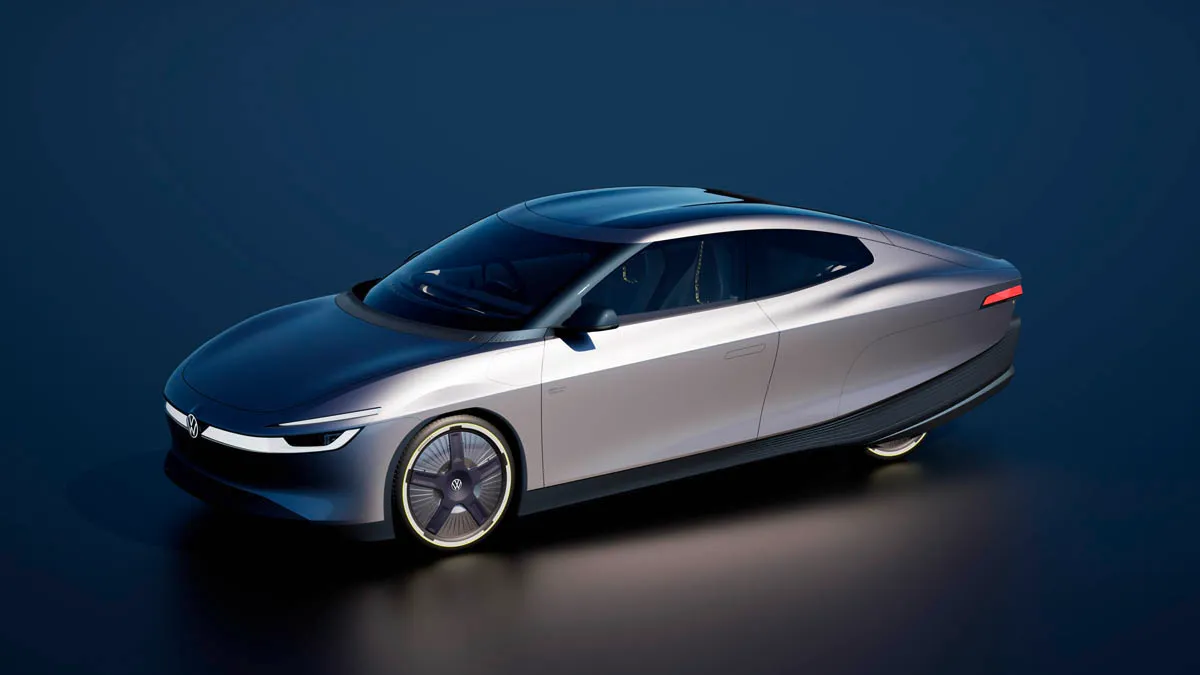
Beneath its streamlined body lies technology that is much closer to mass production. The Volkswagen Mission Efficiency is based on MEB+ with front-wheel drive and uses the APP290 electric motor from the new ID. Polo. It delivers 99 kW, or 135 horsepower, and a maximum torque of 264 Nm. The 0 to 100 km/h acceleration time is 9.0 seconds, with a top speed of 160 km/h. These aren’t figures meant to outperform a Tesla at traffic lights, but performance is clearly secondary here.
The NMC battery pack has a net capacity of 54.9 kWh. This is also based on technology from the new ID. Polo. For this record-breaking car, Volkswagen has made 2.9 kWh of additional usable energy available through software. In a regular production car, a safety margin is intentionally maintained to protect factors such as the battery pack’s lifespan.
Fast charging is possible at a maximum of 105 kW. Nowadays, no one makes much of a fuss about this feature, but that is precisely what makes this car interesting. Volkswagen aims not to achieve a long range by using an enormous battery pack or extreme charging capacity, but rather by wasting as little electricity as possible.
Aerodynamics pay off especially on the highway
The advantage of the body design grows as speed increases. Starting at around 80 km/h, the Mission Efficiency uses more than 30 percent less energy than the production version of the ID. Polo, according to Volkswagen.
Volkswagen illustrates this difference with a striking comparison. The Mission Efficiency would consume roughly the same amount of energy at 140 km/h as an ID. Polo does at 100 km/h.
This highlights why aerodynamics is so important in electric cars. At low speeds, factors such as weight and rolling resistance play a major role. As speed increases, the energy needed to push air aside becomes increasingly crucial. Therefore, achieving a longer range doesn’t always require a larger battery pack. A car that uses less energy can simply drive farther with the same amount of stored electricity.
Four seats and 481 liters of cargo space
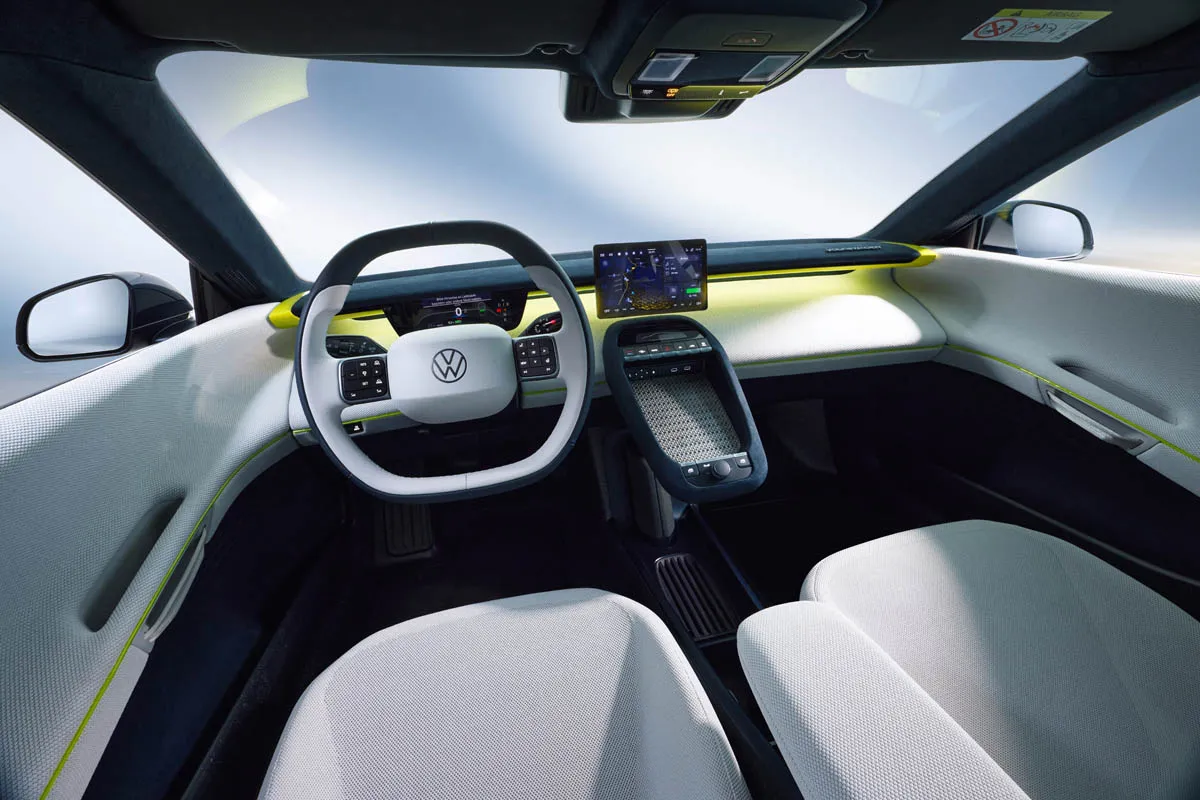
The fact that Volkswagen built the Mission Efficiency not solely as a record-breaking vehicle is evident especially in its interior. Despite its extreme design, the car has four seats and a cargo area of 481 liters.
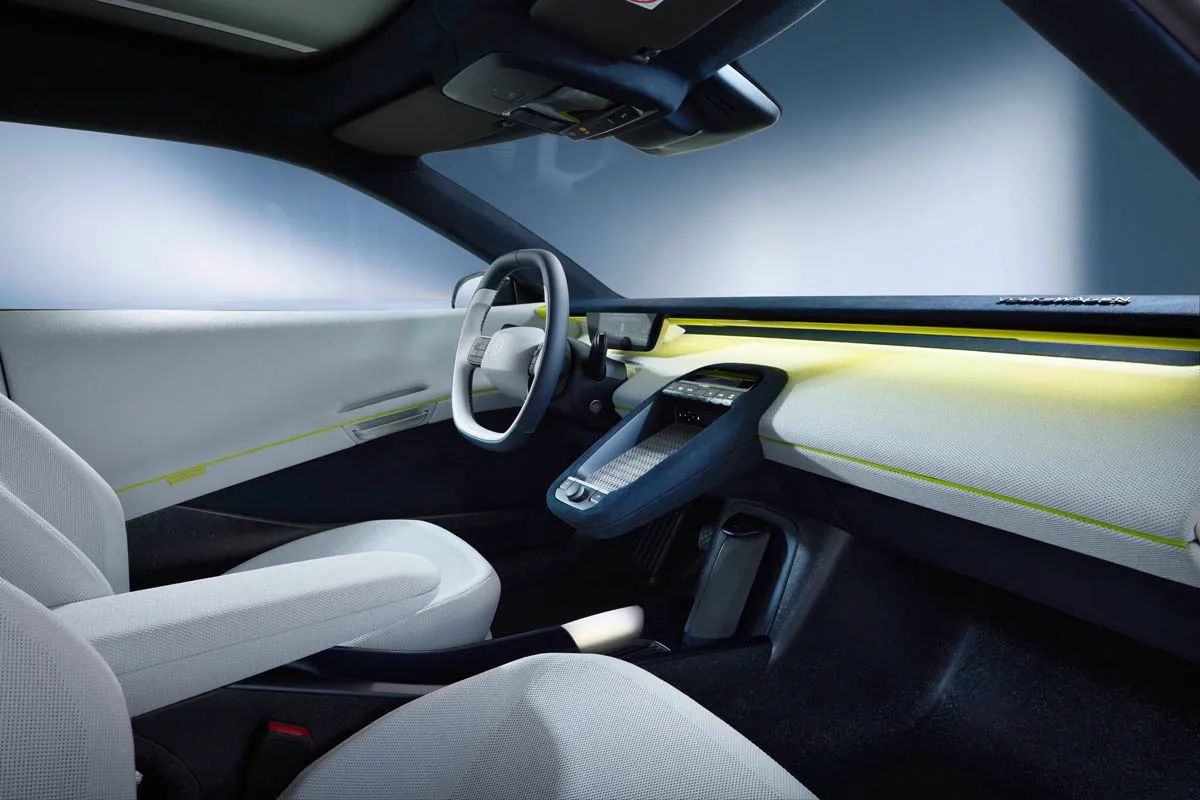
There are also two small storage compartments under the rear seat, each holding four liters. Behind the body panels next to the rear wheels, there are two additional compartments with a capacity of sixteen liters each—perfect for storing items like the charging cable. When the rear seat is folded down, the loading length reaches 1.80 meters. At the same time, efforts have been made everywhere to reduce weight and energy consumption. There is no fixed central infotainment screen; instead, the driver attaches their own smartphone or tablet to a holder, with navigation and media functions running on that device. Fixed speakers were also eliminated, as Volkswagen uses a separate Bluetooth speaker. This is almost the opposite of the current trend, where manufacturers install increasingly larger screens and audio systems with dozens of speakers.
Solar panels also help
The glass roof and rear hatch house a photovoltaic system with a capacity of 370 watts. The solar panels power the car’s electrical systems, reducing the amount of energy needed from the high-voltage battery pack.
Depending on the season, location, and weather conditions, Volkswagen claims an additional 30 kilometers of range per day. This is clearly a figure under favorable conditions, but it aligns with the car’s philosophy of finding small sources of energy that don’t rely on the battery pack.
The brakes also contribute to this. Volkswagen uses hydraulic brakes from the ID. Polo for the front, but a new electromechanical braking system is installed at the rear. This allows friction losses in the rear axle to be reduced almost to zero, eliminating the need for conventional brake lines with brake fluid.
8.4 kWh/100 km is ultimately the most interesting record
The 6.89 kWh/100 km figure from the record drive undoubtedly draws the most attention. Yet, the official WLTP fuel consumption of 8.4 kWh/100 km ultimately tells us more about what Volkswagen has achieved with Mission Efficiency. The comparison speaks for itself. The former Dutch efficiency champion, Lightyear 0, had a figure of 10.5 kWh/100 km. The current Tesla Model 3 Standard RWD comes in at 13.0 kWh/100 km. Even compared to that particularly fuel-efficient Tesla, it’s over 35 percent lower.
Naturally, the Volkswagen Mission Efficiency remains a concept car rather than a model that will soon be available at dealerships at an attractive starting price. Nor will fully covered rear wheels, a separate Bluetooth speaker, and two cramped rear seats be the solution for every future Volkswagen owner. But that’s not what this project is about. The electric motor, power electronics, battery technology, and parts of the chassis come from technologies that Volkswagen intends to produce in large quantities. Add to this lessons learned in aerodynamics and weight reduction, and the Mission Efficiency becomes much more than just a record-breaking car.
After all, it’s relatively easy to extend the range of an electric car by adding a larger and heavier battery pack. Achieving greater mileage with less electricity is much more interesting.
Text: Marc Verweij