
The Volkswagen ID. Tiguan will replace the ID.4 and ID.5 models. It will make its debut in October and go on sale in 2027.
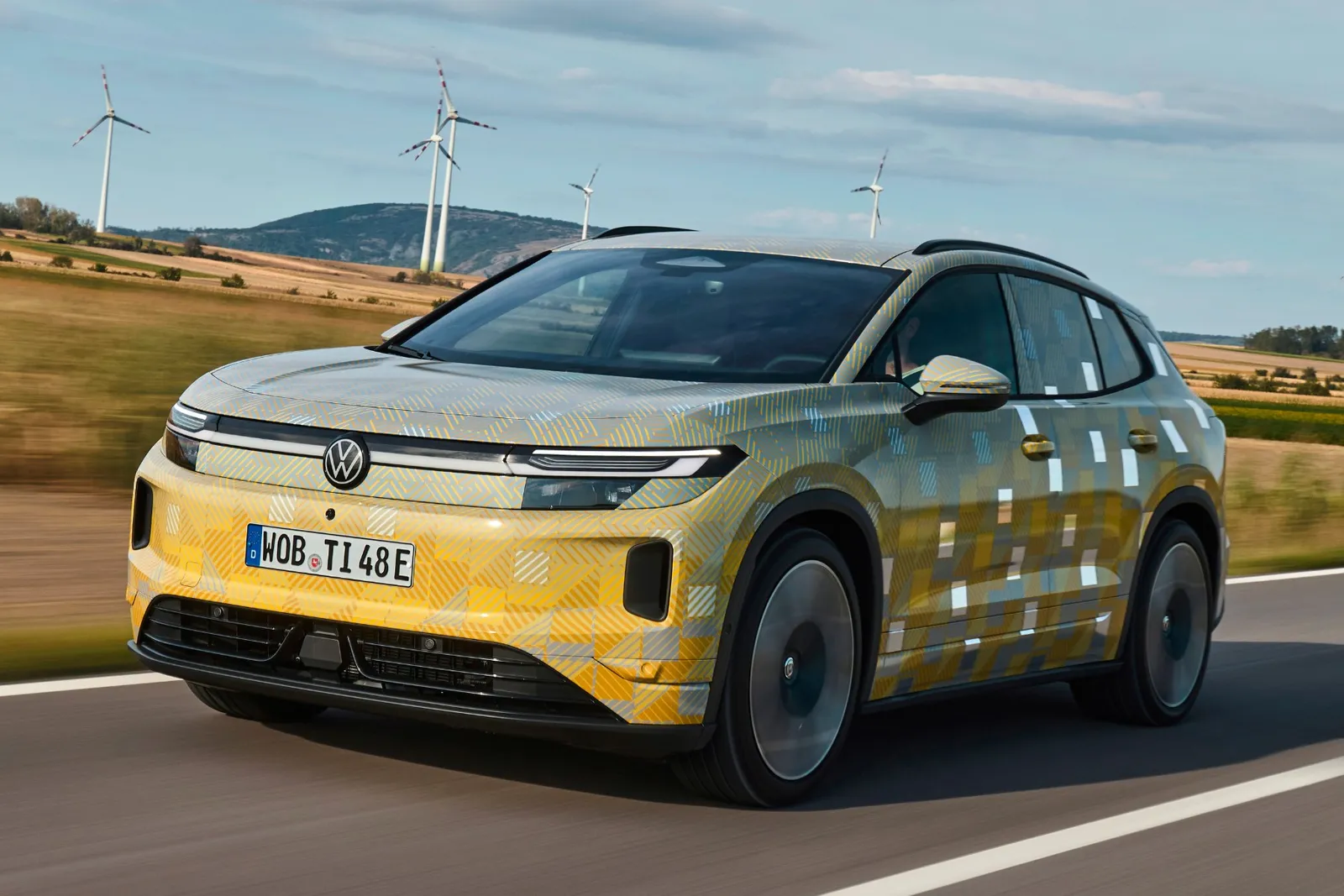
Volkswagen has officially confirmed that the ID.4 and ID.5 models will be replaced by the ID. Tiguan. This electric SUV is set to debut in early October 2026, with first deliveries to Europe starting in early 2027. A recognizable name is intended to be more effective than another number, but the vehicle also needs to address several shortcomings of its predecessor.
The ID. Tiguan moves away from using numbers and instead relies on the ID. family name.
The ID. Tiguan will be sold alongside its gasoline and hybrid versions of the Tiguan. Thus, Volkswagen isn’t abandoning the ID. designation but pairing it with names that customers have known for years. The ID. Polo followed a similar approach, having been developed earlier as the ID.2.
The Tiguan is a far more valuable name for VW than the ID.4. Over 8.3 million units of this gasoline-powered SUV have been produced since its launch. The ID.4 only had six years to build its own reputation, and its early days were hampered by software issues, a spartan interior, and controls based almost entirely on screens and touch panels.
The manufacturer explicitly states that the new model will take over from the ID.4 and ID.5. It has not announced a separate successor to the ID.5 with a sloping roofline. Therefore, it is possible that the two existing body styles will be replaced by one more practical SUV.
More Tiguan, less experimentation
Photos of the disguised prototypes show a vehicle that is clearly closer to the gasoline-powered Tiguan than to the rounded ID.4. The front end is more angular, the headlights are connected by a light bar, and the lower part of the bumper features a large black intake along with side air intakes.
Classic handles have appeared on the sides, replacing the flat grips seen on the ID.4. Railing, a clearly defined shoulder line, and aerodynamic rings are also visible. At the back, a new trunk lid, windshield, and light strip running across the entire width of the car have been used. The lights seen in the prototypes may still differ from those in the production version.
Volkswagen showed two variants of the front bumper. One features small side intakes, while the other has vertical daytime running lights and a differently shaped grille. These could represent different trim levels or a sportier version, but the company has not yet clarified this.
More changes are expected to make their way to the cabin. The ID. Tiguan is set to follow the design direction established by the ID. Polo and the refreshed models in the ID family. This would include physical buttons for controlling all windows, volume, and climate control. Given the criticism of the ID.4’s interior, it would be difficult to take steps backward.
A multimedia system based on Android Automotive OS, with the ability to install native apps, is also anticipated. However, Volkswagen has not yet confirmed the standard equipment or screen sizes.
MEB+ will offer a larger battery and faster charging
The ID. Tiguan is planned to be built on the upgraded MEB+ platform. It won’t be a completely new design but rather a significantly revised successor to the ID.4. Official details regarding batteries, power output, and charging speeds have not been released yet.
The reference point remains the ID.4. In its 2026 American version, it featured a battery with a usable capacity of 77 kWh, or about 79 kWh on a gross basis. The rear-wheel-drive variant delivered 282 horsepower and an EPA range of 291 miles, which is roughly 468 kilometers. The AWD version had 335 horsepower and a range of 263 miles, about 423 kilometers. Older versions also came with a 58 kWh battery.
Following the ID. Tiguan, one can expect greater capacity, higher charging speeds, and more efficient engines, but for now these are expectations based on the platform’s development. It will be the October presentation that shows whether MEB+ brings about changes beyond a new look and improved menus.
The model will arrive in Europe at the beginning of 2027. Volkswagen has also confirmed sales in North America, but later and without a specific date. Production of the ID.4 in Chattanooga ended in April 2026, while other models received discounts of up to $12,500.
The well-known name will offer the ID. Tiguan more doors than the ID.4 designation, but it will be the battery, charging speed, and price that convince customers. Will physical buttons and a larger battery be enough to make people choose it over the Tesla Model Y or Skoda Enyaq?
LovEV Newsletter
Want more content like this?
Sign up — we’ll send you a weekly summary once the newsletter starts.